


Vasso Apostolopoulos, Victoria University; Athina (Tina) Soulis, The University of Melbourne; Jack Feehan, Victoria University, and Maja Husaric, Victoria University
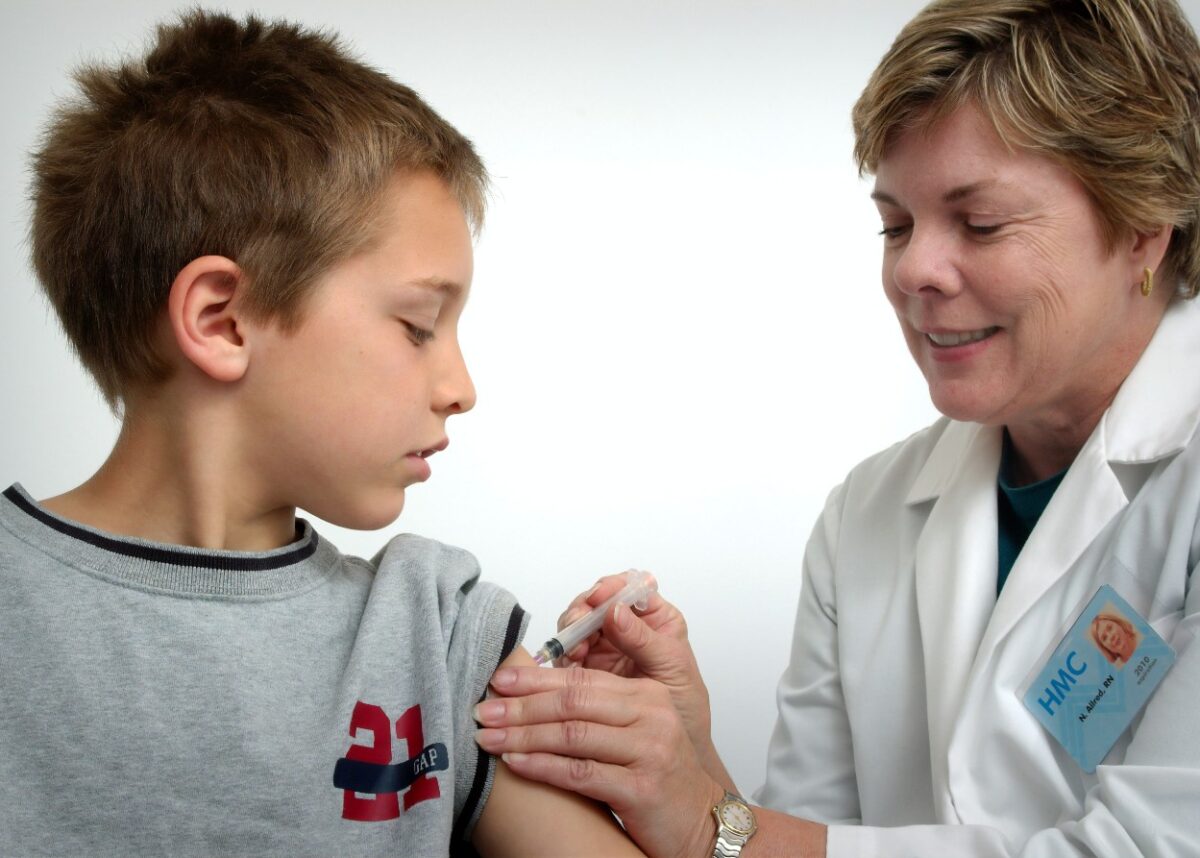
Australian children aged five to 11 could begin receiving the Pfizer vaccine by the end of November, with the nation’s regulator currently reviewing the health and safety data.
Pfizer submitted a partial application to Australia’s Therapeutic Goods Administration (TGA) this week and will supply the remaining data over the next two weeks. The TGA will then review all the information and make a decision about whether to approve the vaccine for use in this age group.
Barring any issues, TGA head John Skerritt expects a decision will be made by the end of November. The Australian Technical Advisory Group on Immunisation (ATAGI), will then advise the government on timing of the rollout.
So what does the data say so far on safety and efficacy? And what are the benefits of vaccinating children aged five to 11?
Why vaccinate children?
While the risk of severe COVID in children is low, a small proportion of children who are infected will become severely unwell, and some of them will die from the virus.
As Delta case numbers rise, so too will the number of serious cases and fatalities. In the United States, children represented more than six million (16.4%) of the total COVID reported cases (8,208 cases per 100,000 children). More than 23,582 US children have been hospitalised and 558 children died (0.01% of child COVID cases).


Multi-system inflammatory syndrome in children (MIS-C) has been reported in children following COVID infection. This can cause multiple parts of the body to become inflamed, including the heart, lungs, eyes, brain, kidneys, skin and gastrointestinal system.
Since May 2020, 5,217 cases of MIS-C have been reported in the United States, with a median patient age of nine years; 46 children have died from the condition.
Thankfully, although MIS-C can be serious, most children who are diagnosed with MIS-C recover with medical care.

The long term effects of COVID are still unknown. In adults, even mild infection can cause a range of ongoing symptoms of long COVID. These include fatigue, shortness of breath, joint and muscle pain, loss of smell, chest pain and problems with memory, concentration and sleep.
Data from the UK found 9.8% of children aged 2–11 years reported at least one long COVID symptom five weeks after, with other research suggesting they rarely last more than 12 weeks.
However, data from Russia which is yet to be peer reviewed found one-quarter of children discharged from hospital had symptoms more than five months later.
Even if a small proportion of children have long-term symptoms, this is of concern, and further studies are required.
There are also other factors to consider. With children under 12 completely unvaccinated, these children can potentially spread the virus to older, vulnerable people.
This may be a particular risk where extended family live together or older relatives care for younger family members.
Are the vaccines safe for children?
This week, the US Food and Drug Administration’s (FDA) independent advisory committee recommended Pfizer be made available to children aged 5-11 years.
When approved, children will receive a reduced dose (one-third of the adult dose) and will receive two doses, at the same schedule as adults: approximately three weeks apart.
In order for the new vaccines to gain approval for a new use, they must undertake their own trials to show they are safe and effective in that population specifically.
A recent submission to the FDA showed a robust immune response following the vaccine. It also provided a good safety profile, with side effects comparable to those seen in a study of 16-25 year olds.
So far, no cases of myocarditis or pericarditis (inflammation of the heart and around the heart) have occurred among the children aged 5-11 in the three months after their second dose.
However, as the vaccination is rolled out to larger groups, there is a small risk of myocarditis and pericarditis.
But the benefits of being vaccinated – in preventing severe disease, hospitalisation and death – outweigh the risk of the rare inflammatory heart conditions, as you can see in the data below.
While the initial studies were not designed to measure efficacy, they showed the vaccine regimen was 90.7% effective at preventing COVID infection.
Of the vaccinated children who developed COVID, symptoms tended to be very mild and didn’t include a fever. Non-vaccinated children generally presented with headaches and fever.
What about the other vaccines?
Early data on Moderna, another mRNA based vaccine, found it was safe and induced strong antibody responses in 6-11 year olds. Children aged 6-11 were given half the adult Moderna dose, twice, 28 days apart.
As with adults and adolescents, the most common side effects in children aged 6-11 from Moderna were fatigue, headache, fever and pain at injection site; the majority were mild or moderate.
Moderna plans to submit the data to the FDA, European Medicines Agency and other regulators in the near future.
The protein-based vaccine Novavax, (currently under evaluaton by the TGA), has plans to evaluate its use in younger children, however the necessary trials are long from completion. So far, no preliminary data is available.
A study evaluating the AstraZeneca vaccine in children was paused due to safety concerns about blood clots and is unlikely to continue.
Should I vaccinate my children?
Given the strong safety and efficacy of the vaccines, and the increasing risk of children contracting COVID as the only remaining population of unvaccinated people, the benefits significantly outweigh the risks.
Vaccination will also play an important role in ensuring vulnerable children can continue to participate in social and educational activities with their peers, and reduce their role in spreading the virus.
It’s OK for parents to have questions about the vaccines. If you do, talk to your GP who can listen your concerns and discuss the evidence and how that relates to your circumstances.
Vasso Apostolopoulos, Professor of Immunology and Associate Provost, Research Partnerships, Victoria University; Athina (Tina) Soulis, Strategic Advisor, Neuroscience Trials Australia, Florey Institute of Neuroscience and Mental Health, The University of Melbourne; Jack Feehan, Research Officer – Immunology and Translational Research, Victoria University, and Maja Husaric, Senior Lecturer; MD, Victoria University
This article is republished from The Conversation under a Creative Commons license. Read the original article.