

• Advertise
  • About us
  • Terms and Conditions
  • Contact us
Saturday, December 6, 2025
Australian Times News
  • News
    • Weather
    • Sport
    • Technology
    • Business & Finance
      • Currency Zone
    • Lotto Results
      • The Lott
  • Lifestyle
    • Entertainment
    • Horoscopes
    • Health & Wellness
    • Recipes
  • Travel
  • Expat Life
  • Move to Australia
No Result
View All Result
  • News
    • Weather
    • Sport
    • Technology
    • Business & Finance
      • Currency Zone
    • Lotto Results
      • The Lott
  • Lifestyle
    • Entertainment
    • Horoscopes
    • Health & Wellness
    • Recipes
  • Travel
  • Expat Life
  • Move to Australia
No Result
View All Result
Australian Times News
No Result
View All Result
Home News

Social media is reducing climate change debates to your views on veganism

Around 30% of the tweets we analysed were firmly pro-vegan, while 20% of tweets used Veganuary-related hashtags to express their protest against veganism. More importantly, many Twitter users who tweeted about Veganuary explicitly said if it wasn’t for the Greggs story, they wouldn’t have gotten involved.

The Conversation by The Conversation
05-10-2021 06:23
in News
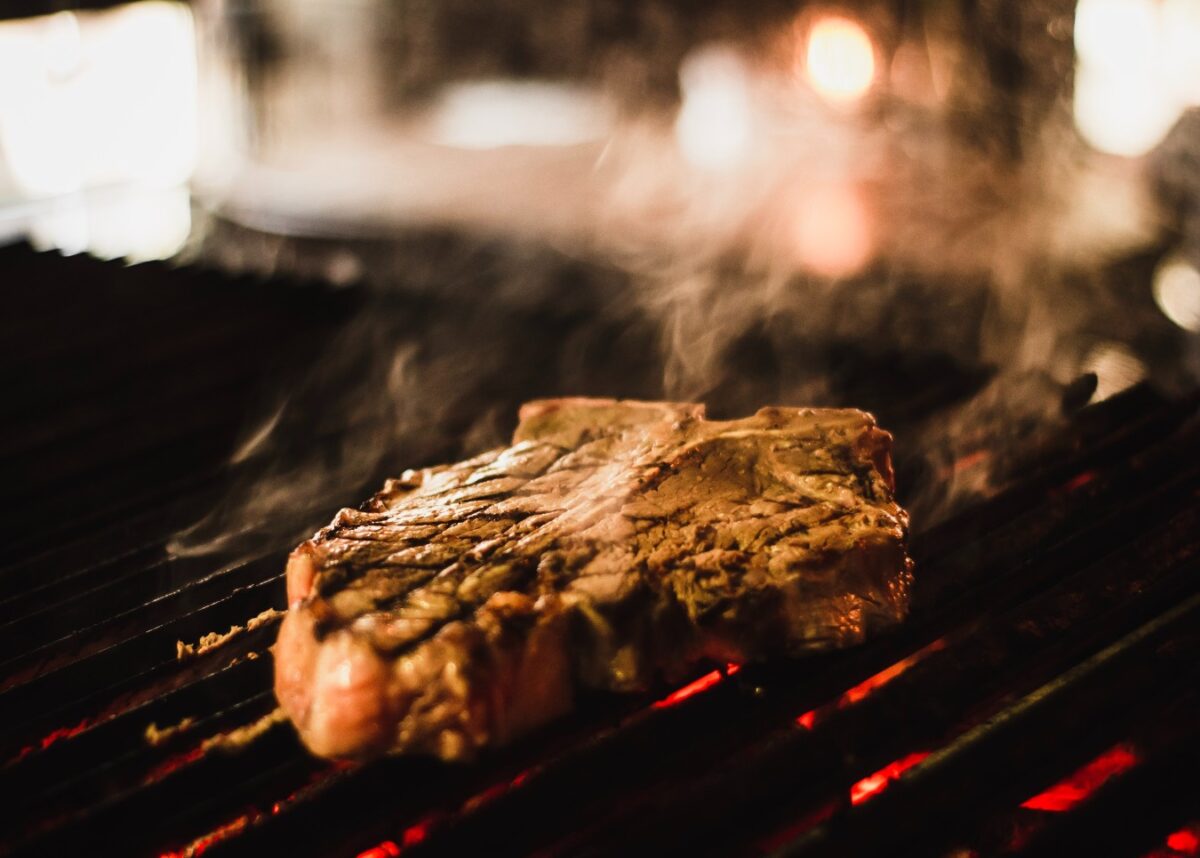
Photo by Louis Hansel on Unsplash

Photo by Louis Hansel on Unsplash

Taha Yasseri, University College Dublin and Mary Sanford, University of Oxford

Ten years ago, when we ranked the most controversial articles on Wikipedia, George W. Bush was at the top of the list with global warming at number five. The article on global warming has now been re-titled as climate change, but this remains among the most polarising issues of our time – and one frequently debated on social media.

This might seem like it’s due to the way climate change is often presented primarily as a political issue: something you can choose whether or not to support. But perhaps it’s as much a result of the way social media works. Our recent research shows that polarisation on social media is mathematically inevitable.

What’s more, this polarisation is allowing online discussions about climate change to be overridden by culturally-focused arguments about things like diet. This appears to be further cementing the idea that climate change is a matter of ideology, making it harder to convince people to support action to tackle it.

The fact that it’s so easy to unfriend or unfollow people you disagree with on social media has accelerated the formation of online echo chambers to the extent that even an algorithmic tool designed to break the bubbles won’t be able to help.

Don’t get us wrong: we’re big fans of social media and most likely have already tweeted this article by the time you read it. Social media can be seen as a marketplace of ideas, providing an open forum to exchange facts and opinions and, importantly for scientists, to inform the public about their research. But polarisation can ruin it for everyone.

An example of this relates to the UK bakery chain Greggs’ vegan sausage roll, which ignited days of social media turmoil when it was introduced to the UK in January 2019 to coincide with Veganuary, a month-long UK-based charity campaign designed to encourage veganism. Veganuary-oriented social media discussions that year were dominated by arguments over the sausage roll’s relative merits.


AlsoRead...

Ryan: Building real freedom through e-commerce

Ryan: Building real freedom through e-commerce

27 November 2025
Design Australia Group: Redefining Drafting as the engine of housing growth

Design Australia Group: Redefining Drafting as the engine of housing growth

26 November 2025

To understand the extent of this interference, we analysed about half a million tweets posted between 28 December 2018 and 28 January 2019 containing any of the hashtags “#vegan”, “#veganuary” and “#veganuary2019” to map out the prevalence of extreme opinions among the tweets.

Around 30% of the tweets we analysed were firmly pro-vegan, while 20% of tweets used Veganuary-related hashtags to express their protest against veganism. More importantly, many Twitter users who tweeted about Veganuary explicitly said if it wasn’t for the Greggs story, they wouldn’t have gotten involved.

On one hand, bringing extra attention to the campaign might be considered a blessing. On the other, the polarised nature of online arguments disproportionately focused on the issue of the vegan sausage roll.

This shifted what could have been a fruitful and logical discussion around the pros and cons of veganism towards unproductive fights centred around perceived threats to people’s identities tied up with what they do or don’t eat and what that means. Many quickly took sides, refusing to engage in conversation and instead attacking the personal qualities or intelligence of the “other side”.

This conflict surfaced again on social media a few months later, when the Intergovernmental Panel on Climate Change (IPCC), a UN-endorsed organisation, published its Special Report on Climate Change and Land in August 2019. In order to gauge the level of public engagement with the report, we collected all tweets sent in August 2019 which contained the phrase “IPCC”. We then used software to analyse the content of some 6,000 tweets in English in order to extract the main topics of discussion.

We found that not only were a large portion of the tweets in response to the IPCC report specifically about diet, but these tweets contained the most toxic and polarised language in the sample. This is even more surprising when considering that diet was only mentioned briefly in the original IPCC report, without any explicit recommendations about meat or dairy consumption.

Evidence like this suggests that diet and cooking are now forming the core of a new culture war around climate.

This could be catastrophic for climate action. Politicians and policy makers traditionally tend to avoid issues that are culturally controversial, and polarisation of public opinion has been shown to weaken politicians’ accountability when it comes to making major decisions.
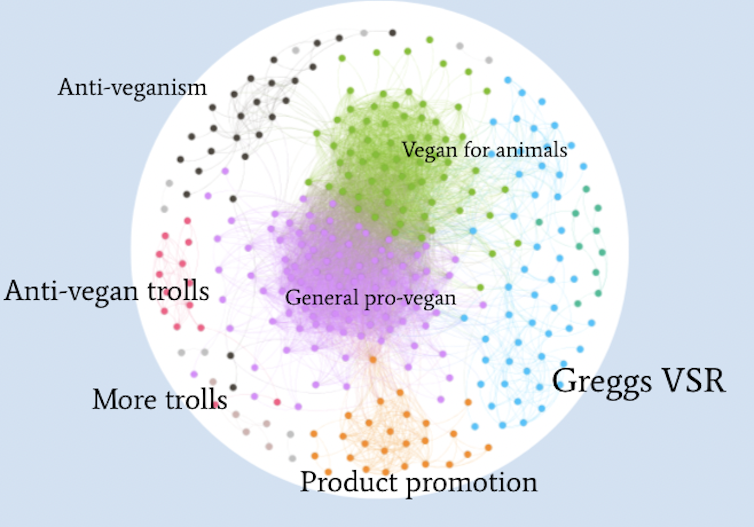
A map of Twitter users and those they retweet, from our Veganuary dataset.
A map of Twitter users and those they retweet, from our Veganuary dataset. Author provided

Our work recently published in Climatic Change shows how tools such as computational topic modelling and sentiment analysis can be used to monitor public discourse about topics like climate events, diet and climate policies. This could help policymakers plan more engaging communication strategies: in other words, to help them read the room.

Both scientists and science communicators who discuss reports like that produced by the IPCC must understand, and anticipate, the likelihood of emotionally charged, potentially negative responses to such polarising issues as climate change – as well as specific areas of polarisation, such as diet, that are currently more popular. This way, they can work to communicate key information in ways that allow readers to focus on what really matters.

Taha Yasseri, Associate Professor, School of Sociology; Geary Fellow, Geary Institute for Public Policy, University College Dublin and Mary Sanford, PhD Candidate in Social Data Science, University of Oxford

This article is republished from The Conversation under a Creative Commons license. Read the original article.


Tags: SB001
DMCA.com Protection Status

SUBSCRIBE to our NEWSLETTER

[mc4wp_form id=”2384248″]

Don't Miss

The evolution of Aesthetic Surgery through the lens of Dr Kourosh Tavakoli

by Pauline Torongo
4 December 2025
The evolution of Aesthetic Surgery through the lens of Dr. Kourosh Tavakoli
Health & Wellness

As global interest in Australian cosmetic surgery continues to grow, the combination of regulation, research and emerging digital tools is...

Read moreDetails

Ryan: Building real freedom through e-commerce

by Pauline Torongo
27 November 2025
Ryan: Building real freedom through e-commerce
Business & Finance

Ryan’s greatest achievement isn’t any single business or revenue milestone — it’s the ecosystem he’s built through the Change community.

Read moreDetails

Design Australia Group: Redefining Drafting as the engine of housing growth

by Pauline Torongo
26 November 2025
Design Australia Group: Redefining Drafting as the engine of housing growth
Business & Finance

Australia is under pressure to build homes faster, but design bottlenecks slow progress. Design Australia Group is fixing this by...

Read moreDetails

Louis Guy Detata builds Global Trading Empires through autonomous systems and disciplined leadership

by Pauline Torongo
25 November 2025
Louis Guy Detata builds Global Trading Empires through autonomous systems and disciplined leadership
Business & Finance

The path from investment banking to leading a global trading platform has taught Louis Detata that sustainable success requires more...

Read moreDetails

Burning Eucalyptus Wood: Tips, Advantages, Disadvantages & Alternatives

by Fazila Olla-Logday
20 November 2025
Image Supplied
Enviroment

Learn about burning eucalyptus wood for stoves and fireplaces. Discover benefits, drawbacks, harvesting tips, and better alternative firewood options for...

Read moreDetails

Everything Parents Need to Know About Baby Soft Play and Why It’s a Game Changer

by Fazila Olla-Logday
11 November 2025
Everything Parents Need to Know About Baby Soft Play
Health & Wellness

Baby soft play is a fun, safe, and educational way for little ones to explore and grow. Discover the benefits...

Read moreDetails

WOMAD Sets Up a New Camp in Wiltshire – Australian festival fans take note!

by Kris Griffiths
11 November 2025
Kumbia Boruka brought their reggae and dancehall flavour to the Taste the World Stage at WOMAD 2024 - Credit - Mike Massaro
Entertainment

With its 2026 edition moving to Neston Park in England, WOMAD offers Aussie music lovers a chance to reconnect with global...

Read moreDetails
Load More

Copyright © Blue Sky Publications Ltd. All Rights Reserved.
australiantimes.co.uk is a division of Blue Sky Publications Ltd. Reproduction without permission prohibited. DMCA.com Protection Status

  • About us
  • Write for Us
  • Advertise
  • Contact us
  • T&Cs, Privacy and GDPR
No Result
View All Result
  • News
    • Weather
    • Sport
    • Technology
    • Business & Finance
      • Currency Zone
    • Lotto Results
      • The Lott
  • Lifestyle
    • Entertainment
    • Horoscopes
    • Health & Wellness
    • Recipes
  • Travel
  • Expat Life
  • Move to Australia

Copyright © Blue Sky Publications Ltd. All Rights Reserved.
australiantimes.co.uk is a division of Blue Sky Publications Ltd. Reproduction without permission prohibited. DMCA.com Protection Status

No Result
View All Result
  • News
    • Weather
    • Sport
    • Technology
    • Business & Finance
      • Currency Zone
    • Lotto Results
      • The Lott
  • Lifestyle
    • Entertainment
    • Horoscopes
    • Health & Wellness
    • Recipes
  • Travel
  • Expat Life
  • Move to Australia

Copyright © Blue Sky Publications Ltd. All Rights Reserved.
australiantimes.co.uk is a division of Blue Sky Publications Ltd. Reproduction without permission prohibited. DMCA.com Protection Status





