

• Advertise
  • About us
  • Terms and Conditions
  • Contact us
Wednesday, May 13, 2026
Australian Times News
  • News
    • Weather
    • Sport
    • Technology
    • Business & Finance
      • Currency Zone
    • Lotto Results
      • The Lott
  • Lifestyle
    • Entertainment
    • Horoscopes
    • Health & Wellness
    • Recipes
  • Travel
  • Expat Life
  • Move to Australia
No Result
View All Result
  • News
    • Weather
    • Sport
    • Technology
    • Business & Finance
      • Currency Zone
    • Lotto Results
      • The Lott
  • Lifestyle
    • Entertainment
    • Horoscopes
    • Health & Wellness
    • Recipes
  • Travel
  • Expat Life
  • Move to Australia
No Result
View All Result
Australian Times News
No Result
View All Result
Home News

Why global food prices are higher today than for most of modern history

Global food prices shot up nearly 33% in September 2021 compared with the same period the year before.

The Conversation by The Conversation
28-09-2021 18:07
in News
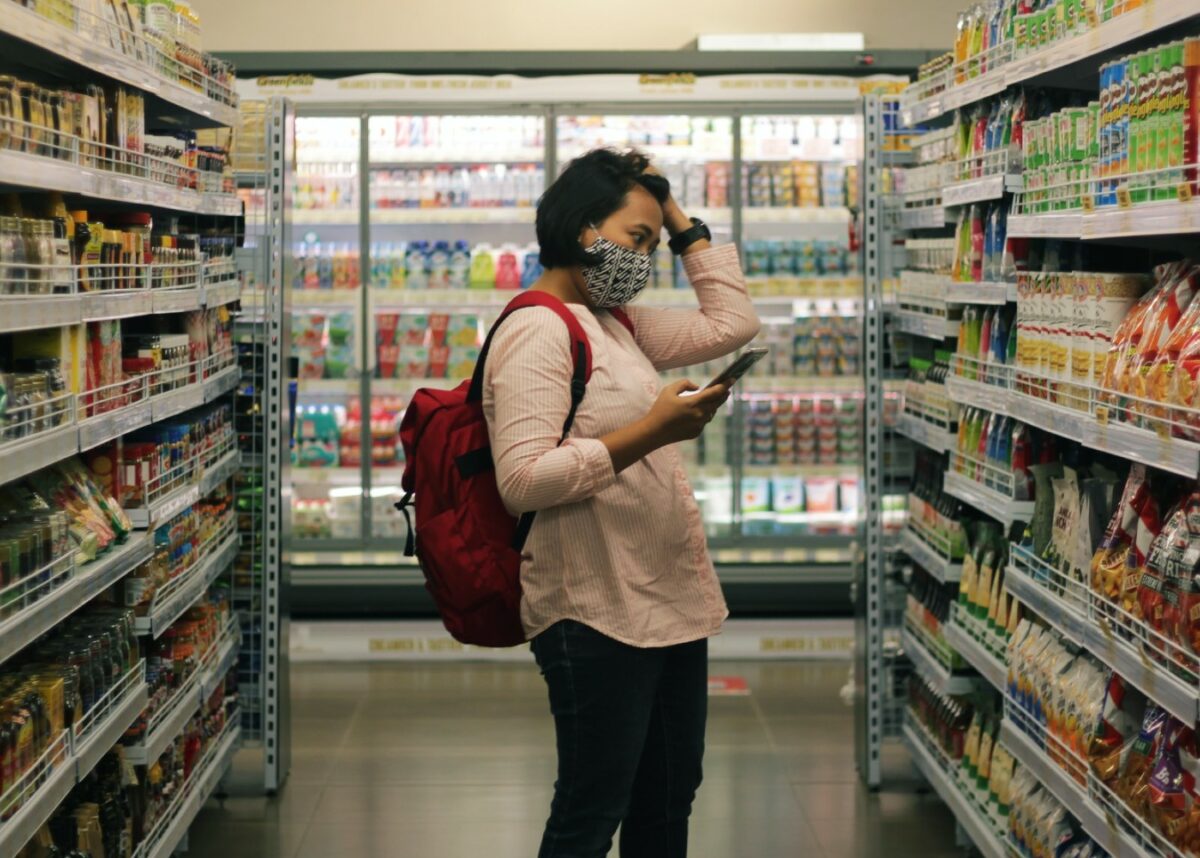
Photo by Viki Mohamad on Unsplash

Photo by Viki Mohamad on Unsplash

Alastair Smith, University of Warwick

Global food prices shot up nearly 33% in September 2021 compared with the same period the year before. That’s according to the UN Food and Agriculture Organisation (FAO)‘s monthly Food Price Index, which also found that global prices have risen by more than 3% since July, reaching levels not seen since 2011.

The Food Price Index is designed to capture the combined outcome of changes in a range of food commodities, including vegetable oils, cereals, meat and sugar, and compare them month to month. It converts actual prices to an index, relative to average price levels between 2002 and 2004. This is the standard source for tracking food prices – nominal prices, as they’re known, which means they’re not adjusted for inflation.

While nominal prices tell us the monetary cost of buying food in the market, prices adjusted for inflation (what economists call “real” prices) are much more relevant to food security – how easily people can access appropriate nutrition. The prices of all goods and services tend to rise faster than average incomes (though not always). Inflation means that not only do buyers need to pay more per unit for food (due to its nominal price increase), but they have proportionately less money to spend on it, given the parallel price increases of everything else, except their wages and other incomes.

Back in August, I analysed the FAO’s inflation-adjusted Food Price Index and found that real global food prices were actually higher than in 2011, when food riots contributed to the overthrow of governments in Libya and Egypt.
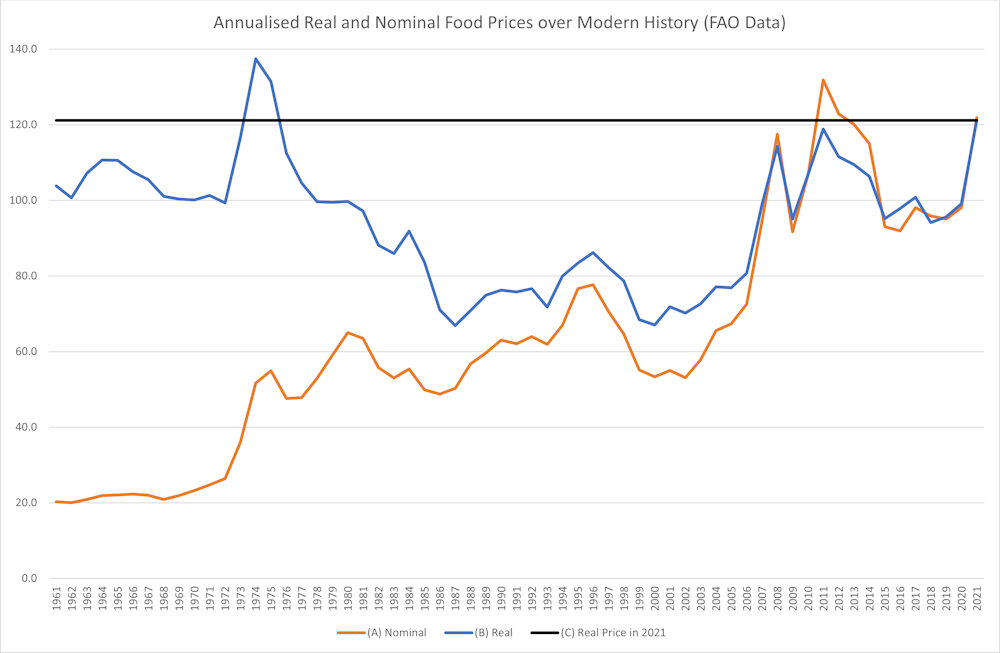
A graph comparing nominal and real food prices between 1961 and 2021.
Nominal prices are lower today than in 2011, but real prices are higher. Alastair Smith/FAO data, Author provided

Based on real prices, it is currently harder to buy food on the international market than in almost every other year since UN record keeping began in 1961. The only exceptions are 1974 and 1975. Those food price peaks occurred following the oil price spike of 1973, which drove rapid inflation in many parts of the global economy, including the production and distribution of food.

So what’s now pushing food prices to historic levels?

AlsoRead...

Svitla Systems

Svitla Systems acquires Australia’s Kiandra IT to expand Global Engineering Footprint and Accelerate AI-Driven delivery

11 May 2026
How Clevero is helping Australian Service Businesses compete with Enterprises on a Fraction of the Budget

How Clevero is helping Australian Service Businesses compete with Enterprises on a Fraction of the Budget

28 April 2026

Fuel prices, bad weather and COVID-19

The drivers of average international food prices are always complicated. The prices of different commodities rise and fall based on universal factors, as well as those specific to each commodity and region.

For example, the oil price rise which started in April 2020 has affected the prices of all food commodities on the FAO index, by increasing the costs of producing and transporting food. Labour shortages resulting from the COVID pandemic have reduced the availability of workers to grow, harvest, process and distribute food, another universal cause of commodity price rises.

The real average price of food has actually been increasing since the year 2000, reversing the previous trend of a steady decline from the start of the 1960s. Despite global efforts – that have, in part, responded to targets set by both the UN Millennium Development and the subsequent Sustainable Development Goals to reduce hunger – prices have made food steadily less accessible.

No single commodity has been continually responsible for the average real price increase from 2000. But the price index of edible oil crops has grown significantly since March 2020, driven mainly by the price of vegetable oils shooting up by 16.9% between 2019 and 2020. According to FAO crop reports, this was due to the growing demand for biodiesel and unsupportive weather patterns.

A graph depicting commodity price change between 1960 and 2021.
Food oil prices recently hit a 20-year high. Alastair Smith/FAO data, Author provided

The other food category adding most to the overall food price rise is sugar. Here, again, unfavourable weather, including frost damage in Brazil, has reduced supply and inflated prices.

Cereals have added less to overall price increases, but their accessibility worldwide is particularly important for food security. Wheat, barley, maize, sorghum and rice account for at least 50% of global nutrition, and as much as 80% in the poorest countries. Global buffer stocks of these crops have been shrinking since 2017, as demand has outstripped supply. Running down stores has helped stabilise global markets, but prices have increased sharply from 2019.

Again, the reasons for individual fluctuations are complicated. But something that deserves attention is the number of times since the year 2000 “unpredictable” and “unfavourable weather” has been reported by the FAO to have caused “reduced harvest expectations”, “weather-stricken harvests” and “production decrease”.


Europeans might worry about the price of pasta as Canadian droughts slash wheat harvests. But, as the real price index for cereals creeps towards levels that escalated riots over the price of bread into general uprisings in 2011, there is an urgent need to consider how communities in less affluent regions can weather these stresses and avoid unrest.

Our technological capacity and socioeconomic organisation cannot successfully manage unpredictable and unfavourable weather. Now would be a good time to imagine food supply in a world warmer by more than 2°C – an outcome now considered increasingly likely according to the most recent Intergovernmental Panel on Climate Change report.

Without radical changes, climate breakdown will continue to reduce international access to imported food, well beyond any historical precedent. Higher prices will reduce food security, and if there is one solid law of social science, it’s that hungry people take radical steps to secure their livelihoods – especially where leaders are perceived to have failed.

Alastair Smith, Senior Teaching Fellow in Global Sustainable Development, University of Warwick

This article is republished from The Conversation under a Creative Commons license. Read the original article.


Tags: SB001
DMCA.com Protection Status

SUBSCRIBE to our NEWSLETTER

[mc4wp_form id=”2384248″]

Don't Miss

Svitla Systems acquires Australia’s Kiandra IT to expand Global Engineering Footprint and Accelerate AI-Driven delivery

by Pauline Torongo
11 May 2026
Svitla Systems
Business & Finance

Acquisition marks Svitla’s entry into the Australian market and strengthens capabilities in low-code, Microsoft technologies, and enterprise software engineering.

Read moreDetails

Residential Healthcare Practices: Revolution or Evolution?

by Pauline Torongo
11 May 2026
Residential Healthcare Practices: Revolution or Evolution?
Lifestyle

President Bill Lutz’s "revolution" was born from his background in fine dining, which instilled a disciplined, customer-focused approach.

Read moreDetails

Medicana Health Group launches HPV vaccination campaign to support cervical cancer prevention

by Pauline Torongo
28 April 2026
Medicana Health Group launches HPV vaccination campaign to support cervical cancer prevention
Health & Wellness

The Türkiye-based healthcare group has introduced a new awareness campaign focused on HPV vaccination, regular check-ups and early detection, with...

Read moreDetails

How Clevero is helping Australian Service Businesses compete with Enterprises on a Fraction of the Budget

by Pauline Torongo
28 April 2026
How Clevero is helping Australian Service Businesses compete with Enterprises on a Fraction of the Budget
Business & Finance

By consolidating CRM, scheduling, workflow automation, invoicing, reporting, and client communications into a single platform, Clevero gives smaller operators the...

Read moreDetails

How CJAM Group is building 1,100 homes across Southeast Queensland

by Pauline Torongo
24 March 2026
How CJAM Group is building 1,100 homes across Southeast Queensland
Lifestyle

The CJAM Group founder is quietly building a 1,100+ home pipeline, with projects in Hervey Bay and Toowoomba, using a...

Read moreDetails

Design Without Compromise: Where Gutter Protection Meets Modern Architecture

by Fazila Olla-Logday
20 March 2026
Design Without Compromise: Where Gutter Protection Meets Modern Architecture
Business & Finance

Design without compromise by integrating gutter protection seamlessly into modern architecture. Discover how innovative gutter systems enhance your home’s aesthetics...

Read moreDetails

How WageSafe Secured Australia’s Most Reputable Retail Business Among Its Premium Clients

by Fazila Olla-Logday
12 March 2026
How WageSafe Secured Australia’s Most Reputable Retail Business Among Its Premium Clients
at

Learn how WageSafe helps businesses stay compliant with payroll and wage regulations through reliable monitoring, risk management, and expert support—protecting...

Read moreDetails
Load More

Copyright © Blue Sky Publications Ltd. All Rights Reserved.
australiantimes.co.uk is a division of Blue Sky Publications Ltd. Reproduction without permission prohibited. DMCA.com Protection Status

  • About us
  • Write for Us
  • Advertise
  • Contact us
  • T&Cs, Privacy and GDPR
No Result
View All Result
  • News
    • Weather
    • Sport
    • Technology
    • Business & Finance
      • Currency Zone
    • Lotto Results
      • The Lott
  • Lifestyle
    • Entertainment
    • Horoscopes
    • Health & Wellness
    • Recipes
  • Travel
  • Expat Life
  • Move to Australia

Copyright © Blue Sky Publications Ltd. All Rights Reserved.
australiantimes.co.uk is a division of Blue Sky Publications Ltd. Reproduction without permission prohibited. DMCA.com Protection Status

No Result
View All Result
  • News
    • Weather
    • Sport
    • Technology
    • Business & Finance
      • Currency Zone
    • Lotto Results
      • The Lott
  • Lifestyle
    • Entertainment
    • Horoscopes
    • Health & Wellness
    • Recipes
  • Travel
  • Expat Life
  • Move to Australia

Copyright © Blue Sky Publications Ltd. All Rights Reserved.
australiantimes.co.uk is a division of Blue Sky Publications Ltd. Reproduction without permission prohibited. DMCA.com Protection Status






