


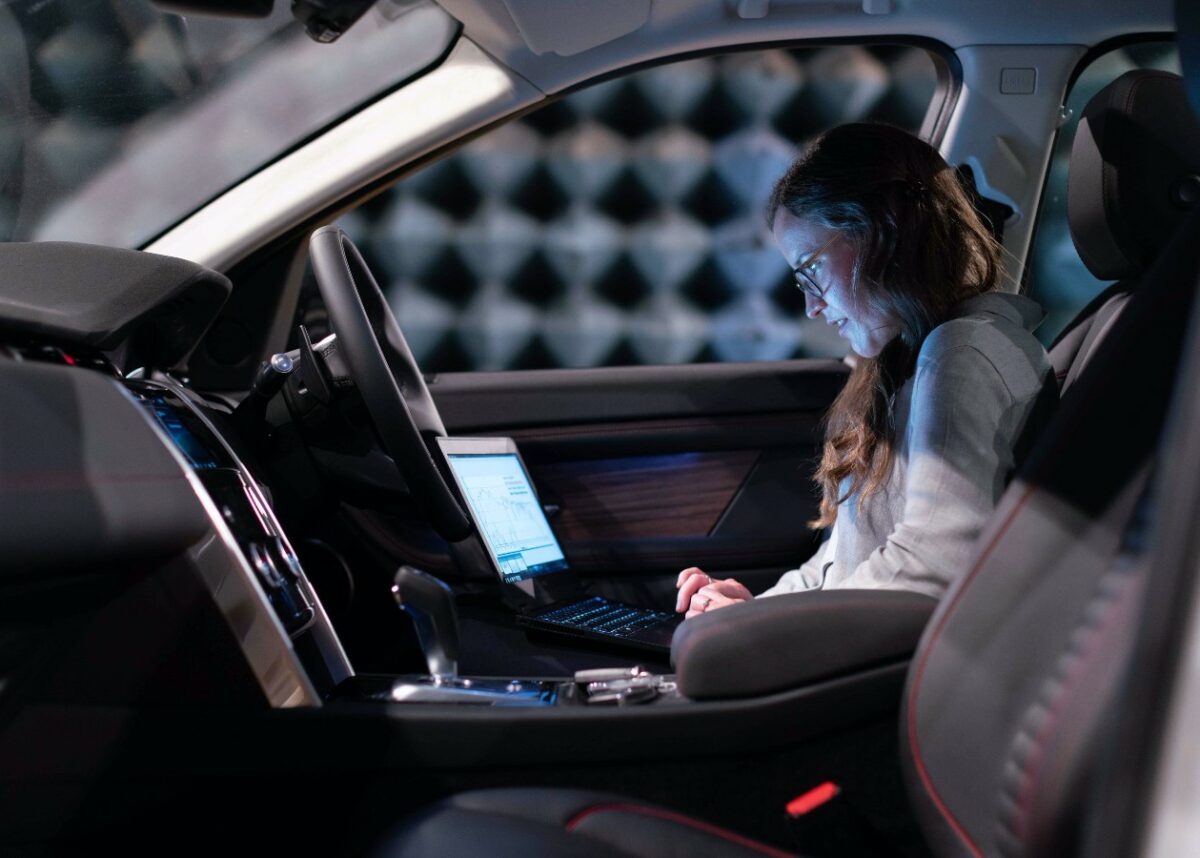
Adaptive cruise control, lane change assistance, collision avoidance, blind spot monitoring, autopilots: These are just a few of the driver-assist features that are arriving in new cars. As technology races ahead with the aim of making driving safer, drivers are left with the daunting task of figuring out how it all works.
Many dealerships offer car buyers a brief orientation to these advanced driver-assist technologies. The glovebox manual, now thicker than ever, provides many of the technical details. But as car technology continues to advance, scientists are making important discoveries about the human side of the equation, particularly what happens when drivers are asked to perform familiar driving tasks in new ways.
This aspect of new cars is seldom discussed during orientations or covered in manuals. Here are some findings about using advanced driver-assist technologies that every driver should know.
Staying alert
A recent study that observed new car owners during their first month of ownership found that drivers paid close attention as they acquired a sense of what their driver-assist systems can and cannot do. But by the end of the month, many drivers began to allow their attention to drift from the road in uncomplicated driving situations – seemingly impossible-to-get-wrong scenarios such as open stretches of highway.
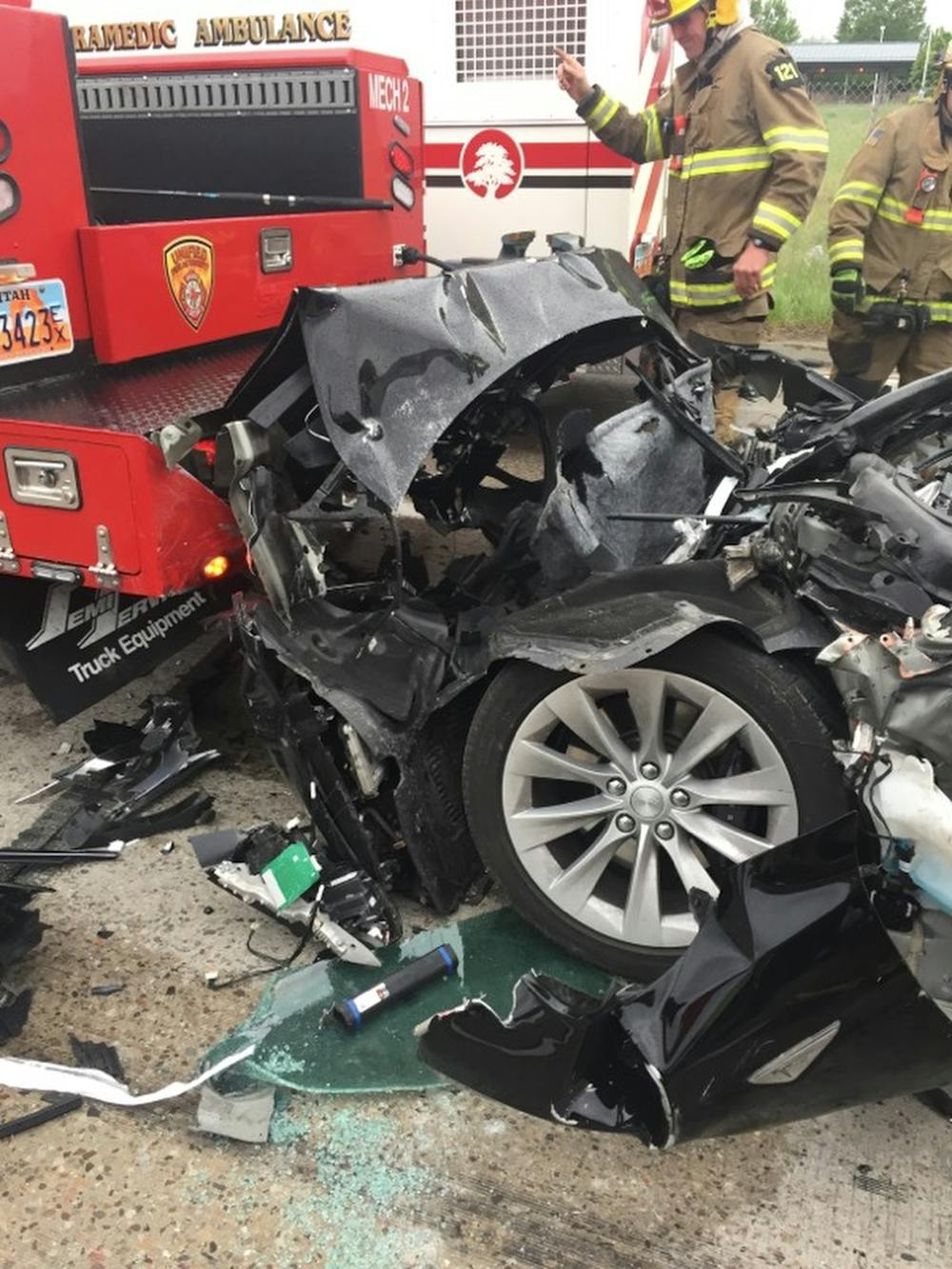
It may sound harmless enough, but here’s the catch: While an open stretch of road seems safe to a human, it can sometimes push the car’s computer vision system to its limits and beyond.
That’s why the federal government opened an investigation into Tesla’s Autopilot driver-assist technology after 11 Teslas being operated on Autopilot smashed into police cars and firetrucks that had their emergency lights flashing.


Computers don’t see and understand the world as humans do. Sure, today’s artificial intelligence systems can beat the world’s greatest chess masters, but they can also miss a flashing firetruck that’s sitting right in front of them. We humans draw upon a powerful and flexible commonsense understanding of the world. Our cars possess nothing like that. They know the world as data compiled from video footage.
With that in mind, how do you know when to relax and when to be nervous while using a driver-assist system? The short answer is that you don’t.
The hazard detection systems in your new car are designed for those rarest of occasions in which something eludes your watchful eye. But studies of drivers tell us that, after a time, many begin to rely on these systems as more than a backup. One recent study documented that drivers looked at the road less often and focused their attention on non-driving areas more often while using Tesla’s Autopilot system.
Without even realizing it, and slowly over time, simply knowing that a backup system exists can coax people into letting down their guard. In the most extreme cases, listening for an alarm to sound can become some people’s primary means of detecting a hazard. So instead of having two entities watching the road, it’s down to one.
Shared driving is hard work
Maybe you are the type of driver who commits yourself to paying attention at all times, no matter how capable your car may seem. It turns out that watching a computer drive your car is harder than it looks.
What seems like a leisurely activity at first can be oddly tiring. It’s hard to keep your mind focused on what’s happening in front of you – especially along familiar routes and when all is going as expected. Prolonged sitting and staring, waiting for improbable disaster to strike, is not something that humans are naturally good at. https://www.youtube.com/embed/fc-ZWkcltec?wmode=transparent&start=0 Drivers apparently asleep behind the wheel of Teslas is practically a genre of viral video.
It’s hard to imagine ever pushing an autopilot button and taking a nap like those drivers you’ve seen on the evening news, but here is where misunderstanding strikes again. Did these drivers plan to take a nap or did it just happen?
To find out, researchers in another study outfitted drivers with brain and vision monitoring systems and found that drivers who used the autopilot were more likely to drift into early stages of sleep without ever realizing it. Today’s busy schedules can cause a great many people to accumulate sleep debt. People tend to fight off that sleep debt by staying busy. But pushing a button and freeing yourself from the activity of driving may give that lurking sleepiness an opportunity to catch up and overtake you.
[Over 110,000 readers rely on The Conversation’s newsletter to understand the world. Sign up today.]
Literal and figurative blind spots
Your new rearview camera seems like a lifesaver. It allows you to see into your worst blind spot. But a study of drivers using these cameras found something unsettling. Having the cameras prompts many drivers to skip the traditional over-the-shoulder checks. What these drivers generally don’t realize is that back-over crashes unfold over time and often begin to the side of a car. For example, kids can run out of a house and around the back of a car to say goodbye to the driver.
When you swivel your head around to the back in addition to checking the camera, you see it all. You can catch the beginning and the middle of these unfolding events, and then ensure a safe ending. But among a population of drivers who may not understand this, another study estimated that rearview cameras only reduce back-over crashes by about 17% despite largely eliminating the rear blind spot.
A new kind of driver training
Driver assistance systems are powerful tools that promise to save a great many lives, but they will require people to adjust their understanding of a familiar driving task to align with one that is new and different in important ways. The challenge is getting everyone to make that adjustment, and there are 250 million drivers in the U.S. alone.
My colleagues and I have pushed for standardized training for new car buyers that includes the human element of partially automated driving. Part of the challenge is having to approach drivers with some fairly counterintuitive ideas.
Imagine suggesting to someone that they don’t understand the difference between a safe situation and a dangerous one, or that they really don’t know when they are tired, or that watching a car drive itself is more tiring than driving. For many drivers, this advice might not sink in when they first use driver-assist technologies. It may take some profound and personal reconsideration of what you think you know.
And what about the youngest drivers, the ones who account for a disproportionate number of crashes? More than a decade after driver education was virtually eliminated from high school curricula, along came smartphones, apps and now driver-assist technologies. It might be a good time to start teaching some new safety concepts, in the classroom if not behind the wheel of a car.
For now, after you’ve learned to push the buttons and interpret the displays in your new car, keep in mind that there is more to using these technologies than meets the eye.
Steve Casner, Research Psychologist, NASA
This article is republished from The Conversation under a Creative Commons license. Read the original article.







