


• Advertise
  • About us
  • Terms and Conditions
  • Contact us
Friday, December 5, 2025
Australian Times News
  • News
    • Weather
    • Sport
    • Technology
    • Business & Finance
      • Currency Zone
    • Lotto Results
      • The Lott
  • Lifestyle
    • Entertainment
    • Horoscopes
    • Health & Wellness
    • Recipes
  • Travel
  • Expat Life
  • Move to Australia
No Result
View All Result
  • News
    • Weather
    • Sport
    • Technology
    • Business & Finance
      • Currency Zone
    • Lotto Results
      • The Lott
  • Lifestyle
    • Entertainment
    • Horoscopes
    • Health & Wellness
    • Recipes
  • Travel
  • Expat Life
  • Move to Australia
No Result
View All Result
Australian Times News
No Result
View All Result
Home News

Electricity prices have reached record highs – and the time-poor could suffer most

The soaring cost of natural gas and a warm, dry and windless start to autumn 2021 have conspired to create one almighty headache for energy consumers in the UK and the rest of Europe.

The Conversation by The Conversation
14-09-2021 22:11
in News
Photo by Nastya Dulhiier on Unsplash

Photo by Nastya Dulhiier on Unsplash

Jacopo Torriti, University of Reading and Timur Yunusov, University of Reading

The soaring cost of natural gas and a warm, dry and windless start to autumn 2021 have conspired to create one almighty headache for energy consumers in the UK and the rest of Europe.

Renewable sources of power, such as wind, are generating less energy than expected and networks are burning more fossil fuels which are rapidly rising in price. Combined with the fact that some generators are mothballed over summer and have yet to restart, the result is wholesale electricity prices surpassing their highest ever level.

Customers on varying tariffs, which charge more or less depending on the time of day, can escape the price crunch if they can shift their energy demand away from periods when prices are highest. But those who pay a flat rate will probably see bills rise.

Ofgem, the UK energy regulator, estimates that there will be overall savings for most consumers on such tariffs. But those who have little choice to consume electricity at more expensive peak periods could end up paying significantly more.

In a recent study, we showed that people on low incomes with little free time – like a single parent nurse caring for more than one child and working long hours – are set to lose out most as energy prices rise.

Comparing households

We analysed energy activity data from the UK Office for National Statistics and gathered information about the times of day when different groups of people are home and doing things using energy.


AlsoRead...

Ryan: Building real freedom through e-commerce

Ryan: Building real freedom through e-commerce

27 November 2025
Design Australia Group: Redefining Drafting as the engine of housing growth

Design Australia Group: Redefining Drafting as the engine of housing growth

26 November 2025

We estimated how consumer bills will change for different groups of consumers – from single households to retired couples – on different prices associated with varying time-of-use tariffs. The results show that, as we suspected, the single parent nurse is more likely to be worse off on a time-of-use tariff compared to a flat tariff.
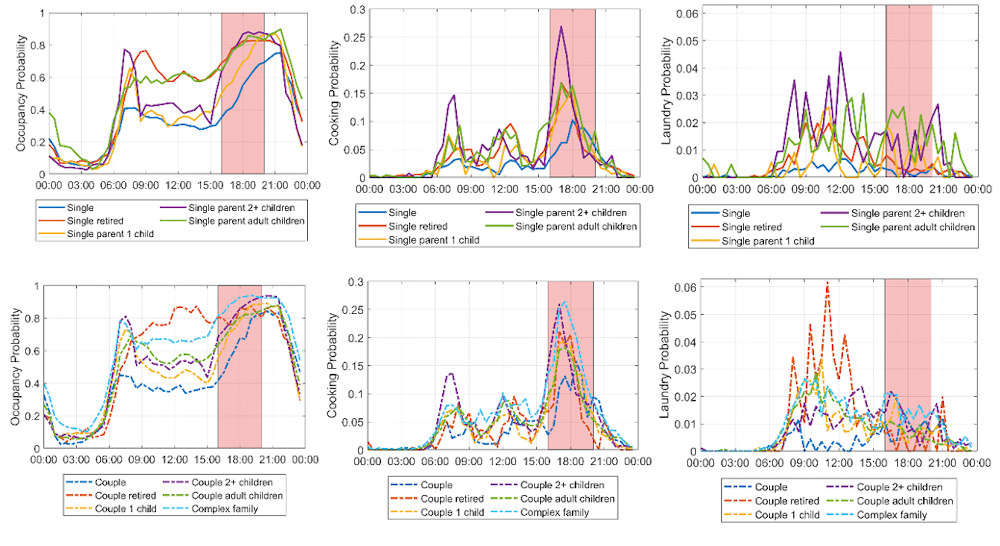
Six graphs comparing time of peak energy demand in different households.
The presence of children in households generally intensifies peak-time activities. Torriti & Yunusov (2020)/Energy Research & Social Science, Author provided

We looked into how many of the activities are repeatedly carried out at peak compared with off-peak times in order to get a better sense of what the effects of time-of-use tariffs might be. For example, single-parent households and those without children are almost five times more likely to cook a meal during the evening peak (between 4PM and 8PM) than during the rest of the day.

Why else are single parent households less able to shift their energy use to cheaper times of the day? In order to understand that, you have to appreciate the typical routine in such a home and how energy systems work.

Evening peaks

After a long shift at the hospital, it’s finally time to return home to the kids. There’s a massive laundry pile, a sink full of dishes, showers to be had and dinner to be cooked. It all needs to be done so that everyone can get to bed at the appropriate hour. For single working parents balancing a tight household budget, time can be as precious as money.

Evenings are when a lot tends to happen in every home. The lights go on, the heating is turned up and the TV blares. That’s why there are peaks in electricity demand on weeknights. Meeting these evening peaks has always been difficult for electricity systems. When demand is high, more generation is needed. For decades, energy suppliers have met peak demand by adding sources to the supply mix which can be easily powered up and down, such as coal and gas power plants.

A London skyline with suburbs in the foreground and city in the background.
Weekday evenings are when energy costs tend to be highest. Tim M/Shutterstock

The UK government aims to break this dependence on fossil power and replace it with renewables, setting legal incentives to decarbonise the grid. Renewable sources, like wind and solar, are intermittent and depend on the weather.

Demand regularly exceeds available renewable generation during the evening, so the cost of generating extra electricity will remain higher then compared to the rest of the day. In order to reduce demand during evening peaks, time-of-use tariffs are being gradually introduced so that consumers are charged less for consuming energy outside of these periods.

But for our single parent nurse, these tariffs mean paying approximately two-to-three times more for electricity used at peak time (between 4pm and 8pm on a weekday) compared with other times of the day and the weekend. At other times of the day, the nurse may be sleeping after a night shift or at work. Shifting electricity consumption to other times of the day, which is what the time-of-use tariff is supposed to encourage, is simply not possible.

If time-of-use tariffs are likely to benefit most consumers on average, but hit the time-poor hardest, what should be done about it? The answer might be to introduce support measures, like a discount for vulnerable customers on energy bills.

Time is money, they say. And having less time is particularly expensive for those with less money.

Jacopo Torriti, Professor of Energy Economics and Policy, University of Reading and Timur Yunusov, Postdoctoral Researcher on Flexibility in Energy Demand, University of Reading

This article is republished from The Conversation under a Creative Commons license. Read the original article.


Tags: SB001
DMCA.com Protection Status

SUBSCRIBE to our NEWSLETTER

[mc4wp_form id=”2384248″]

Don't Miss

The evolution of Aesthetic Surgery through the lens of Dr Kourosh Tavakoli

by Pauline Torongo
4 December 2025
The evolution of Aesthetic Surgery through the lens of Dr. Kourosh Tavakoli
Health & Wellness

As global interest in Australian cosmetic surgery continues to grow, the combination of regulation, research and emerging digital tools is...

Read moreDetails

Ryan: Building real freedom through e-commerce

by Pauline Torongo
27 November 2025
Ryan: Building real freedom through e-commerce
Business & Finance

Ryan’s greatest achievement isn’t any single business or revenue milestone — it’s the ecosystem he’s built through the Change community.

Read moreDetails

Design Australia Group: Redefining Drafting as the engine of housing growth

by Pauline Torongo
26 November 2025
Design Australia Group: Redefining Drafting as the engine of housing growth
Business & Finance

Australia is under pressure to build homes faster, but design bottlenecks slow progress. Design Australia Group is fixing this by...

Read moreDetails

Louis Guy Detata builds Global Trading Empires through autonomous systems and disciplined leadership

by Pauline Torongo
25 November 2025
Louis Guy Detata builds Global Trading Empires through autonomous systems and disciplined leadership
Business & Finance

The path from investment banking to leading a global trading platform has taught Louis Detata that sustainable success requires more...

Read moreDetails

Burning Eucalyptus Wood: Tips, Advantages, Disadvantages & Alternatives

by Fazila Olla-Logday
20 November 2025
Image Supplied
Enviroment

Learn about burning eucalyptus wood for stoves and fireplaces. Discover benefits, drawbacks, harvesting tips, and better alternative firewood options for...

Read moreDetails

Everything Parents Need to Know About Baby Soft Play and Why It’s a Game Changer

by Fazila Olla-Logday
11 November 2025
Everything Parents Need to Know About Baby Soft Play
Health & Wellness

Baby soft play is a fun, safe, and educational way for little ones to explore and grow. Discover the benefits...

Read moreDetails

WOMAD Sets Up a New Camp in Wiltshire – Australian festival fans take note!

by Kris Griffiths
11 November 2025
Kumbia Boruka brought their reggae and dancehall flavour to the Taste the World Stage at WOMAD 2024 - Credit - Mike Massaro
Entertainment

With its 2026 edition moving to Neston Park in England, WOMAD offers Aussie music lovers a chance to reconnect with global...

Read moreDetails
Load More

Copyright © Blue Sky Publications Ltd. All Rights Reserved.
australiantimes.co.uk is a division of Blue Sky Publications Ltd. Reproduction without permission prohibited. DMCA.com Protection Status

  • About us
  • Write for Us
  • Advertise
  • Contact us
  • T&Cs, Privacy and GDPR
No Result
View All Result
  • News
    • Weather
    • Sport
    • Technology
    • Business & Finance
      • Currency Zone
    • Lotto Results
      • The Lott
  • Lifestyle
    • Entertainment
    • Horoscopes
    • Health & Wellness
    • Recipes
  • Travel
  • Expat Life
  • Move to Australia

Copyright © Blue Sky Publications Ltd. All Rights Reserved.
australiantimes.co.uk is a division of Blue Sky Publications Ltd. Reproduction without permission prohibited. DMCA.com Protection Status

No Result
View All Result
  • News
    • Weather
    • Sport
    • Technology
    • Business & Finance
      • Currency Zone
    • Lotto Results
      • The Lott
  • Lifestyle
    • Entertainment
    • Horoscopes
    • Health & Wellness
    • Recipes
  • Travel
  • Expat Life
  • Move to Australia

Copyright © Blue Sky Publications Ltd. All Rights Reserved.
australiantimes.co.uk is a division of Blue Sky Publications Ltd. Reproduction without permission prohibited. DMCA.com Protection Status





