


• Advertise
  • About us
  • Terms and Conditions
  • Contact us
Saturday, December 6, 2025
Australian Times News
  • News
    • Weather
    • Sport
    • Technology
    • Business & Finance
      • Currency Zone
    • Lotto Results
      • The Lott
  • Lifestyle
    • Entertainment
    • Horoscopes
    • Health & Wellness
    • Recipes
  • Travel
  • Expat Life
  • Move to Australia
No Result
View All Result
  • News
    • Weather
    • Sport
    • Technology
    • Business & Finance
      • Currency Zone
    • Lotto Results
      • The Lott
  • Lifestyle
    • Entertainment
    • Horoscopes
    • Health & Wellness
    • Recipes
  • Travel
  • Expat Life
  • Move to Australia
No Result
View All Result
Australian Times News
No Result
View All Result
Home News

Universities lost 6% of their revenue in 2020 — and the next 2 years are looking worse

The report, Australian investment in higher education, analyses over a decade of data to trace changes in university policy and the impact of the COVID-19 pandemic.

The Conversation by The Conversation
30-08-2021 09:17
in News
Photo by Good Free Photos on Unsplash

Photo by Good Free Photos on Unsplash

Peter Hurley, Victoria University; Melinda Hildebrandt, Victoria University, and Sam Hoang, Victoria University

With a 6% drop in revenue, 2020 was a year Australian universities would prefer to forget, a report released today by the Mitchell Institute shows.
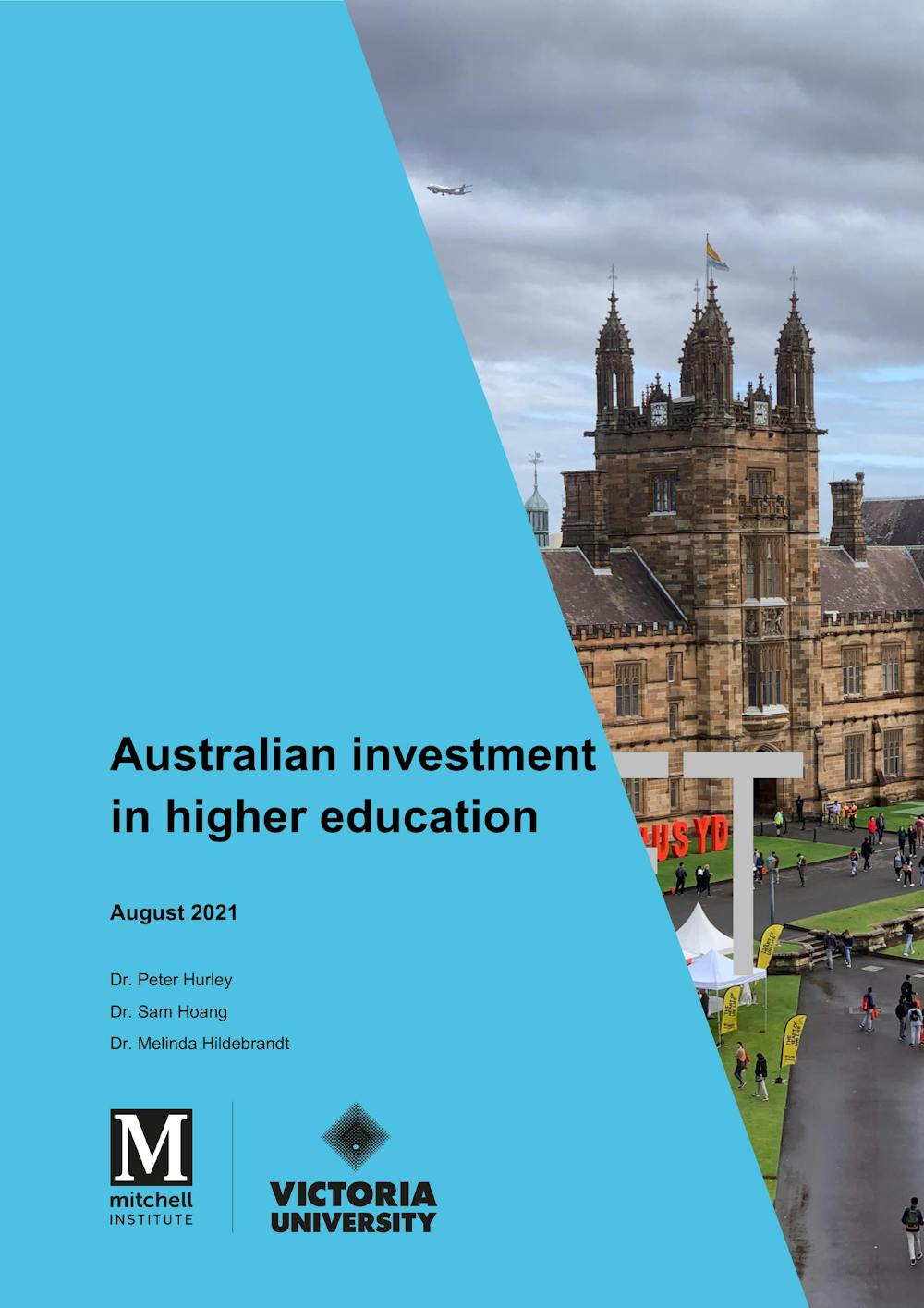
Mitchell Institute report into investment in higher education.

The report, Australian investment in higher education, analyses over a decade of data to trace changes in university policy and the impact of the COVID-19 pandemic. It shows university revenue fell by A$2.2 billion, down 6% from 2019. Operating surpluses across the sector fell by A$1.6 billion.

The main cause of the falls was reduced international student revenue and income from investments, such as dividends.

The silver lining to the clouds over 2020 was the losses were not as bad as expected. But our analysis points to some very dark clouds on the horizon for Australia’s universities.

Special government support for the sector ends in 2021. Continuing border closures mean international student revenue is likely to keep falling.

In 2022 and 2023, universities will have to navigate some of the most challenging conditions they have ever faced.


AlsoRead...

Ryan: Building real freedom through e-commerce

Ryan: Building real freedom through e-commerce

27 November 2025
Design Australia Group: Redefining Drafting as the engine of housing growth

Design Australia Group: Redefining Drafting as the engine of housing growth

26 November 2025

Decades of strong revenue growth ended abruptly

Universities had experienced an almost unbroken run of growth in revenue since 1995. The chart below shows increases in total revenue from 2009 to 2019, before the pandemic caused a fall in 2020.

There are two main reasons for the growth universities experienced.

The first was the introduction of demand-driven funding in 2012. This uncapped the number of government-funded places for domestic students. The result was increases in enrolments.

The second was the growth in international student numbers.

By 2020, both these sources of growth had come to a halt. However, investment income was the biggest contributor to the drop in revenue in 2020, falling by A$1.1 billion compared to 2019.

As the chart below shows, the combined impact of these factors meant university surpluses fell.

In 2020, operating results across the sector were a total surplus of A$680 million, a 1.6% margin. This is well below the 6% margin generally considered to be financially prudent.

Fifteen of the 38 universities included in the analysis reported a deficit in 2020. Operating surpluses were concentrated in the three largest universities – Monash (A$267 million), Melbourne (A$178 million) and Sydney (A$107 million).

The extent of losses and shrinking surpluses in 2020 suggests the pandemic has already made it difficult for universities to cope with further falls in revenue forecast for 2021 and beyond.


What has happened to international student revenue?

In the short term, the greatest challenge universities face is continuing problems with enrolling international students. Since 2015, revenue from this source had almost doubled. In 2019, it totalled about A$10 billion.

In 2020, international student revenue fell in real terms by A$868 million, or 8.6%, to A$9.2 billion.

This fall was less than expected. We suggest the timing of border closures and students deferring their courses (but remaining enrolled) mean it has taken time for the disruption to international student enrolments to be fully felt.

The chart below shows how international student enrolments at universities began to fall in 2020. By December 2020, trend levels were about 10% below what they were in December 2019.

As the pandemic progresses, the drop in international enrolments is accelerating. In the first six months of 2021, international student enrolments at public higher education institutions fell at an annualised trend rate of between 20% and 24%.


This suggests every missed six-monthly intake of international students is collectively costing universities about A$1 billion to A$1.2 billion.

What lies ahead?

With border closures set to continue, universities face a difficult future.

Federal government support of an extra A$1 billion in research funding is due to finish in 2021.

The Job-Ready Graduates Package introduced in 2020 means universities are likely to be asked to enrol more domestic students for less money if they wish to maintain government funding levels.

Our report highlights that Australian universities have increasingly been encouraged to collect fee-for-service and commercial revenue. Government support as a proportion of total revenue has fallen.


This has made universities more vulnerable to economic shocks, like the one caused by the pandemic and international border closures.

Universities play very important roles in Australia’s society and economy. Without further support, parts of the university sector are likely to face very difficult choices that will mean further cuts to staffing, courses and research.

Peter Hurley, Policy Fellow, Mitchell Institute, Victoria University; Melinda Hildebrandt, Policy Fellow, Mitchell Institute, Victoria University, and Sam Hoang, Project Officer, Victoria University

This article is republished from The Conversation under a Creative Commons license. Read the original article.


Tags: SB001
DMCA.com Protection Status

SUBSCRIBE to our NEWSLETTER

[mc4wp_form id=”2384248″]

Don't Miss

The evolution of Aesthetic Surgery through the lens of Dr Kourosh Tavakoli

by Pauline Torongo
4 December 2025
The evolution of Aesthetic Surgery through the lens of Dr. Kourosh Tavakoli
Health & Wellness

As global interest in Australian cosmetic surgery continues to grow, the combination of regulation, research and emerging digital tools is...

Read moreDetails

Ryan: Building real freedom through e-commerce

by Pauline Torongo
27 November 2025
Ryan: Building real freedom through e-commerce
Business & Finance

Ryan’s greatest achievement isn’t any single business or revenue milestone — it’s the ecosystem he’s built through the Change community.

Read moreDetails

Design Australia Group: Redefining Drafting as the engine of housing growth

by Pauline Torongo
26 November 2025
Design Australia Group: Redefining Drafting as the engine of housing growth
Business & Finance

Australia is under pressure to build homes faster, but design bottlenecks slow progress. Design Australia Group is fixing this by...

Read moreDetails

Louis Guy Detata builds Global Trading Empires through autonomous systems and disciplined leadership

by Pauline Torongo
25 November 2025
Louis Guy Detata builds Global Trading Empires through autonomous systems and disciplined leadership
Business & Finance

The path from investment banking to leading a global trading platform has taught Louis Detata that sustainable success requires more...

Read moreDetails

Burning Eucalyptus Wood: Tips, Advantages, Disadvantages & Alternatives

by Fazila Olla-Logday
20 November 2025
Image Supplied
Enviroment

Learn about burning eucalyptus wood for stoves and fireplaces. Discover benefits, drawbacks, harvesting tips, and better alternative firewood options for...

Read moreDetails

Everything Parents Need to Know About Baby Soft Play and Why It’s a Game Changer

by Fazila Olla-Logday
11 November 2025
Everything Parents Need to Know About Baby Soft Play
Health & Wellness

Baby soft play is a fun, safe, and educational way for little ones to explore and grow. Discover the benefits...

Read moreDetails

WOMAD Sets Up a New Camp in Wiltshire – Australian festival fans take note!

by Kris Griffiths
11 November 2025
Kumbia Boruka brought their reggae and dancehall flavour to the Taste the World Stage at WOMAD 2024 - Credit - Mike Massaro
Entertainment

With its 2026 edition moving to Neston Park in England, WOMAD offers Aussie music lovers a chance to reconnect with global...

Read moreDetails
Load More

Copyright © Blue Sky Publications Ltd. All Rights Reserved.
australiantimes.co.uk is a division of Blue Sky Publications Ltd. Reproduction without permission prohibited. DMCA.com Protection Status

  • About us
  • Write for Us
  • Advertise
  • Contact us
  • T&Cs, Privacy and GDPR
No Result
View All Result
  • News
    • Weather
    • Sport
    • Technology
    • Business & Finance
      • Currency Zone
    • Lotto Results
      • The Lott
  • Lifestyle
    • Entertainment
    • Horoscopes
    • Health & Wellness
    • Recipes
  • Travel
  • Expat Life
  • Move to Australia

Copyright © Blue Sky Publications Ltd. All Rights Reserved.
australiantimes.co.uk is a division of Blue Sky Publications Ltd. Reproduction without permission prohibited. DMCA.com Protection Status

No Result
View All Result
  • News
    • Weather
    • Sport
    • Technology
    • Business & Finance
      • Currency Zone
    • Lotto Results
      • The Lott
  • Lifestyle
    • Entertainment
    • Horoscopes
    • Health & Wellness
    • Recipes
  • Travel
  • Expat Life
  • Move to Australia

Copyright © Blue Sky Publications Ltd. All Rights Reserved.
australiantimes.co.uk is a division of Blue Sky Publications Ltd. Reproduction without permission prohibited. DMCA.com Protection Status





