


• Advertise
  • About us
  • Terms and Conditions
  • Contact us
Saturday, December 6, 2025
Australian Times News
  • News
    • Weather
    • Sport
    • Technology
    • Business & Finance
      • Currency Zone
    • Lotto Results
      • The Lott
  • Lifestyle
    • Entertainment
    • Horoscopes
    • Health & Wellness
    • Recipes
  • Travel
  • Expat Life
  • Move to Australia
No Result
View All Result
  • News
    • Weather
    • Sport
    • Technology
    • Business & Finance
      • Currency Zone
    • Lotto Results
      • The Lott
  • Lifestyle
    • Entertainment
    • Horoscopes
    • Health & Wellness
    • Recipes
  • Travel
  • Expat Life
  • Move to Australia
No Result
View All Result
Australian Times News
No Result
View All Result
Home News

Jackson Hole: the world’s central bankers have plenty to discuss after such an expensive pandemic

The world’s central bankers won’t be riding into town to save the world this year. Their annual gathering in the US, at Jackson Hole, Wyoming, is taking place online due to COVID-19.

The Conversation by The Conversation
28-08-2021 06:25
in News
Photo by Bermix Studio on Unsplash

Photo by Bermix Studio on Unsplash

Alan Shipman, The Open University

The world’s central bankers won’t be riding into town to save the world this year. Their annual gathering in the US, at Jackson Hole, Wyoming, is taking place online due to COVID-19. But with major economies starting to revive, the pandemic’s impact on the global economy may not even be the biggest of their concerns.

Instead, they are likely to be taking on resurgent inflation, asset and property bubbles, the unfinished repair job from the global financial crisis of 2007-09, and the urgent action needed to halt climate change. This expansive remit underlines how central banks have outgrown their traditionally narrow mission, making public figures of the technocrats who run them.

The most prominent – the Bank of England (founded 1694), the US Federal Reserve (1913) and the European Central Bank (1998) – were set up to watch over the workings of commercial banks and government debt markets. And to use their hold over interest rates to keep inflation close to a target level (typically 2% for higher-income economies). Their power has grown with each financial crisis, an increasingly regular occurrence as the world economy becomes ever more interconnected.

Fiscal attraction

In the 1980s and 1990s, when policymakers believed that controlling the money supply was the key to lower inflation and faster growth, central banks were given greater responsibility for managing the economy. Then, after the financial crisis in 2008, and again after the pandemic in 2020, governments rediscovered the power of fiscal policy, running unprecedented deficits to finance business and household support.

Central banks have played a central role in enabling this rise in public spending while tax revenues are down, by buying up government debt in record amounts through quantitative easing. As a result of these efforts, global long-term interest rates fell to historical lows in 2008 and have continued falling since.


The subsequent claim by one influential economist that central banks are now the “dealers of last resort”, underwriting the markets for public debt, is still controversial. But no one denies the huge growth in central banks’ balance sheets since 2008, as they buy both government debt and also some private debt so that financial systems can absorb vast amounts of new borrowing.


AlsoRead...

Ryan: Building real freedom through e-commerce

Ryan: Building real freedom through e-commerce

27 November 2025
Design Australia Group: Redefining Drafting as the engine of housing growth

Design Australia Group: Redefining Drafting as the engine of housing growth

26 November 2025

After more than a decade of this extreme monetary relaxation, some see inflationary clouds above Jackson Hole’s famous snowy peak. With annual US inflation now above 5%, the Federal Reserve is under particular pressure to raise interest rates (or signal such an intention) to help curb inflation before it rises so far ahead of wages that the whole government stimulus starts to fall flat.

But even in a luxury ski resort, the Fed is on very thin ice when it considers any rise in interest rates. Efforts to tighten monetary policy in 2013 sparked the infamous so-called “taper tantrum”, which left rich countries’ stock markets teetering, and some emerging economies caught between their exchange rates weakening and their debts becoming more expensive because they were priced in foreign currency.

Now, once again, central bankers from America, Europe and China know that interest rate rises could mean debt-exposed regions – especially in Africa and central Asia – are brought to a shuddering halt for similar reasons.

Point of interest

Some leading economists argue that it will not play out like this. They suggest that the “natural” level of interest rates has fallen and need not return to previous heights. Environmentalists, meanwhile, argue that low interest rates are essential to borrow cheaply to fund massive carbon-reduction investments.

Contrary voices, heard more loudly by those who play the markets, believe a short-term rise is unavoidable. Chronically low interest rates are under fire for exacerbating inequality, as the rich gain more from swollen asset prices than the rest do from higher output and employment.
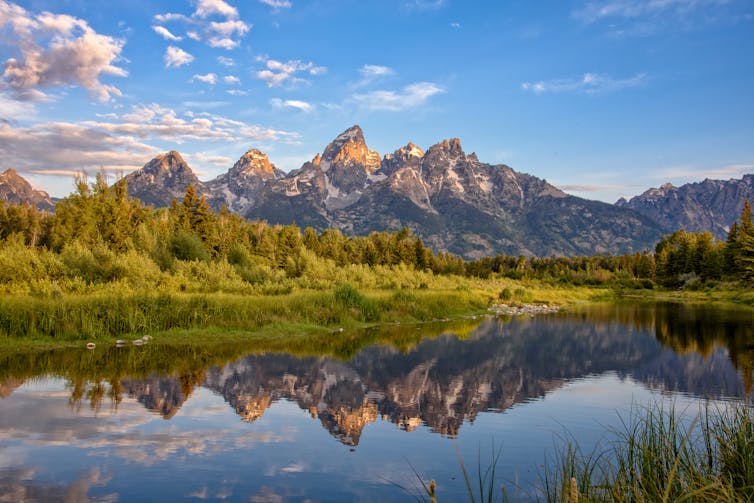
Mountain range in Wyoming.
Monetary mountains to climb?

With such a weight on their shoulders, those logging on to Jackson Hole may be secretly relieved that “modern monetary theory” – which sees nothing inherently unsustainable in governments continually borrowing heavily at low interest rates – now gets a respectful hearing in places that once flatly rejected it. They would never concede that quantitative easing is essentially MMT in action, but the more that these ideas are tolerated, the less their ultra-loose monetary policies come in for criticism.

But at the same time, other economists – including one who correctly called the “death of inflation” 25 years ago – now see a significant risk of its re-emergence.

As COVID-19 spread last year, central bankers demanded a bigger fiscal response to spread the burden of sparking a recovery. Governments duly complied with an expensive round of stimulus packages. Now the pressure is back on the bankers, to keep the money flowing without making everyone pay a higher price.

Alan Shipman, Senior Lecturer in Economics, The Open University

This article is republished from The Conversation under a Creative Commons license. Read the original article.


Tags: SB001
DMCA.com Protection Status

SUBSCRIBE to our NEWSLETTER

[mc4wp_form id=”2384248″]

Don't Miss

The evolution of Aesthetic Surgery through the lens of Dr Kourosh Tavakoli

by Pauline Torongo
4 December 2025
The evolution of Aesthetic Surgery through the lens of Dr. Kourosh Tavakoli
Health & Wellness

As global interest in Australian cosmetic surgery continues to grow, the combination of regulation, research and emerging digital tools is...

Read moreDetails

Ryan: Building real freedom through e-commerce

by Pauline Torongo
27 November 2025
Ryan: Building real freedom through e-commerce
Business & Finance

Ryan’s greatest achievement isn’t any single business or revenue milestone — it’s the ecosystem he’s built through the Change community.

Read moreDetails

Design Australia Group: Redefining Drafting as the engine of housing growth

by Pauline Torongo
26 November 2025
Design Australia Group: Redefining Drafting as the engine of housing growth
Business & Finance

Australia is under pressure to build homes faster, but design bottlenecks slow progress. Design Australia Group is fixing this by...

Read moreDetails

Louis Guy Detata builds Global Trading Empires through autonomous systems and disciplined leadership

by Pauline Torongo
25 November 2025
Louis Guy Detata builds Global Trading Empires through autonomous systems and disciplined leadership
Business & Finance

The path from investment banking to leading a global trading platform has taught Louis Detata that sustainable success requires more...

Read moreDetails

Burning Eucalyptus Wood: Tips, Advantages, Disadvantages & Alternatives

by Fazila Olla-Logday
20 November 2025
Image Supplied
Enviroment

Learn about burning eucalyptus wood for stoves and fireplaces. Discover benefits, drawbacks, harvesting tips, and better alternative firewood options for...

Read moreDetails

Everything Parents Need to Know About Baby Soft Play and Why It’s a Game Changer

by Fazila Olla-Logday
11 November 2025
Everything Parents Need to Know About Baby Soft Play
Health & Wellness

Baby soft play is a fun, safe, and educational way for little ones to explore and grow. Discover the benefits...

Read moreDetails

WOMAD Sets Up a New Camp in Wiltshire – Australian festival fans take note!

by Kris Griffiths
11 November 2025
Kumbia Boruka brought their reggae and dancehall flavour to the Taste the World Stage at WOMAD 2024 - Credit - Mike Massaro
Entertainment

With its 2026 edition moving to Neston Park in England, WOMAD offers Aussie music lovers a chance to reconnect with global...

Read moreDetails
Load More

Copyright © Blue Sky Publications Ltd. All Rights Reserved.
australiantimes.co.uk is a division of Blue Sky Publications Ltd. Reproduction without permission prohibited. DMCA.com Protection Status

  • About us
  • Write for Us
  • Advertise
  • Contact us
  • T&Cs, Privacy and GDPR
No Result
View All Result
  • News
    • Weather
    • Sport
    • Technology
    • Business & Finance
      • Currency Zone
    • Lotto Results
      • The Lott
  • Lifestyle
    • Entertainment
    • Horoscopes
    • Health & Wellness
    • Recipes
  • Travel
  • Expat Life
  • Move to Australia

Copyright © Blue Sky Publications Ltd. All Rights Reserved.
australiantimes.co.uk is a division of Blue Sky Publications Ltd. Reproduction without permission prohibited. DMCA.com Protection Status

No Result
View All Result
  • News
    • Weather
    • Sport
    • Technology
    • Business & Finance
      • Currency Zone
    • Lotto Results
      • The Lott
  • Lifestyle
    • Entertainment
    • Horoscopes
    • Health & Wellness
    • Recipes
  • Travel
  • Expat Life
  • Move to Australia

Copyright © Blue Sky Publications Ltd. All Rights Reserved.
australiantimes.co.uk is a division of Blue Sky Publications Ltd. Reproduction without permission prohibited. DMCA.com Protection Status





