


Frank Jotzo, Australian National University and David Lindenmayer, Australian National University
The European Union is pressing ahead with carbon border levies – charges on carbon-intensive goods from countries such as Australia that haven’t taken strong action to reduce emissions. The EU will impose such measures on a range of imported industrial materials including aluminium, steel and cement.
But what if these tariffs are one day applied to another key Australian export industry: agriculture? As National Farmers’ Federation chief executive Tony Mahar said last month:
Business and governments across the world are embedding carbon abatement considerations into their trade negotiations and relationships. As an industry dependent on exporting, Australian agriculture must be ready to adjust to a more carbon-conscious trading future.
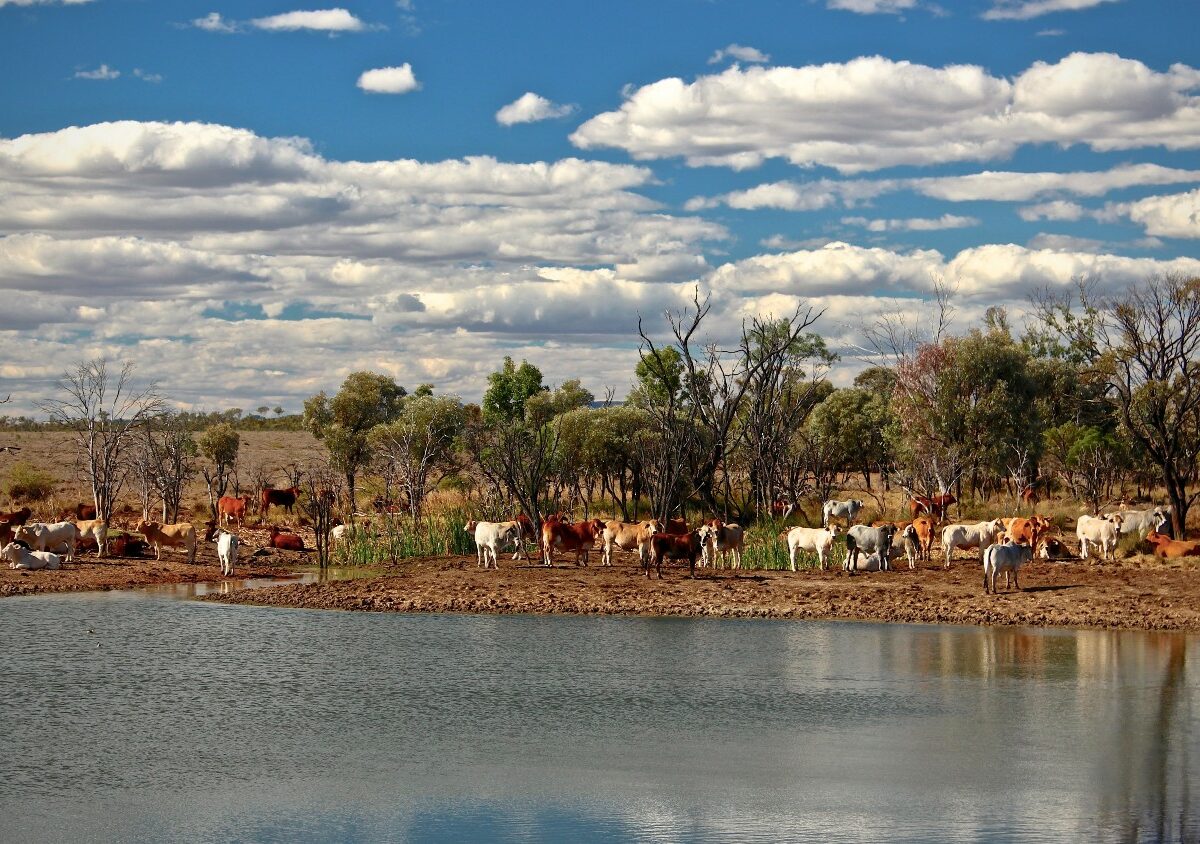
In addition to a substantial greenhouse gas footprint from agriculture, Australia also has a truly terrible record on biodiversity loss. The argument for farmers to adopt more sustainable practices – and for governments to help the shift – is growing ever more compelling. Not only would it safeguard our exports, it would cut emissions and help protect nature.
Looming carbon tariffs
The EU policy, known formally as the Carbon Border Adjustment Measure, aims to shield local industries operating under the EU’s emissions trading scheme and other similar policies.
From 2026, EU importers of some commodities must buy carbon certificates equivalent to the cost that would have been incurred had the goods been produced under the EU’s emissions trading scheme.
The measure is meant to level the playing field – protecting EU companies from competition by producers in countries that don’t have carbon price regimes. The policy also pressures exporting countries to implement their own effective emissions policies.


Australia does not export large volumes of industrial commodities to Europe, so the immediate effect of the carbon tariff will be small. However, in 2026 the EU will consider extending the measure’s scope to other products.
Carbon tariffs could also be imposed by other countries Australia exports to, as they increasingly demand cleaner production of goods, and as the principle of free trade seemingly diminishes in importance. These tariffs could also apply to goods subject to regulation, in addition to emissions trading schemes.
There is no immediate prospect of a carbon tariff on agriculture. But as many countries toughen their emissions targets to 2030 and adopt or strengthen net-zero targets, agriculture could become part of the mix.

Carbon levies on agriculture?
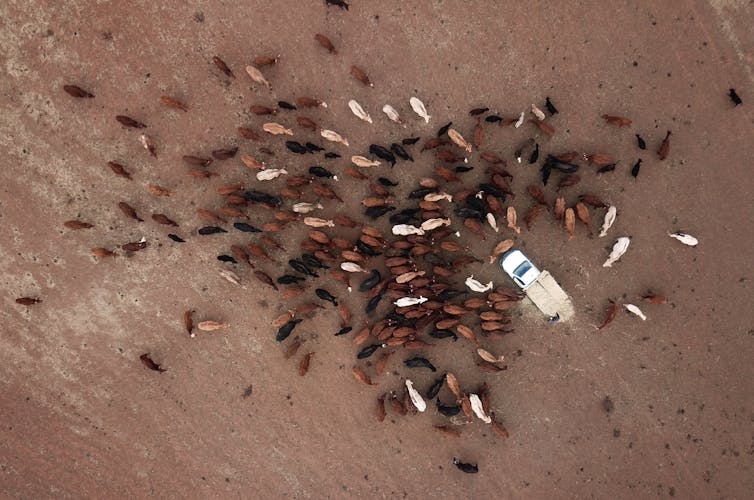
Agriculture accounts for about 13% of Australia’s total greenhouse gas emissions. The main source of emissions is methane from cattle and sheep. Others include rice fields, fertiliser use, agricultural waste and fuel use.
The industry is clearly sensitive to the problem. The National Farmers’ Federation has endorsed an economy-wide net-zero “aspiration”. It’s also calling for investments in carbon-neutral agricultural technologies to, among other goals, develop new export markets. Meat and Livestock Australia has set a 2030 carbon-neutral goal for the red meat industry.
If Australia’s major trading partners apply carbon tariffs to agricultural products in future, Australian farmers will have a big incentive to make production less emissions-intensive. Potential ways to achieve this include:
- better soil and native vegetation cover management
- less fertiliser use
- switching to lower-emitting sheep and cattle breeds
- feed additives which make livestock emit less methane
- moving from ruminant livestock to other sources of meat, such as kangaroo.
Such measures can result in increased agricultural productivity.
There are two ways Australia can avoid a carbon tariff on agriculture exports. First, agriculture can adopt cleaner production methods and have its goods certified as produced with low emissions. Second, the federal government can implement a comprehensive emissions-reduction policy, which in agriculture might mean minimum production standards to avoid high emissions practices or a carbon price where practicable.
The existing Emissions Reductions Fund would not help avoid carbon tariffs. This is because it applies only to businesses that opt in, and it subsidises emission-reduction projects rather that placing obligations on those who generate emissions.
Tariffs on biodiversity loss?
In future, environmental border tariffs could well extend to a broader set of environmental harms, such as biodiversity loss.
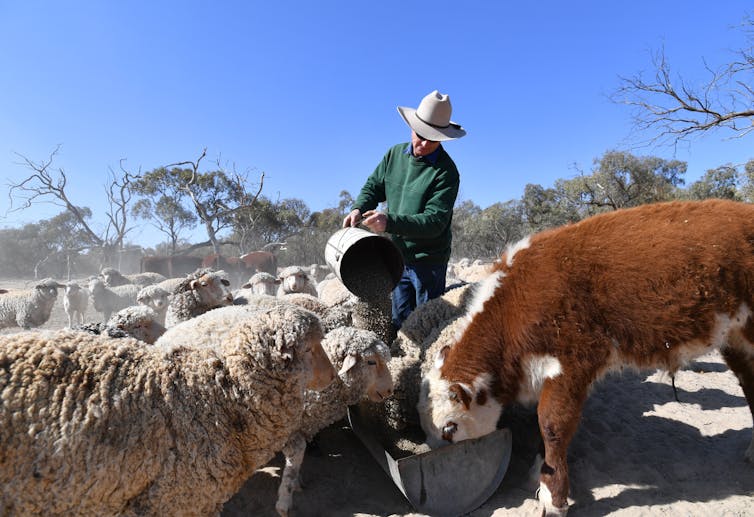
Australia’s record on species loss is truly appalling – including in agricultural landscapes which have been heavily modified.
Some countries are already using financial incentives to reduce damage to nature. For example, plans by the UK government would require farmers to demonstrate environmental improvements to receive farming subsidies.
A key challenge for the agriculture sector is to simultaneously reduce greenhouse gas emissions and improve biodiversity outcomes. There are proven, science-based ways to do this, such as:
- protecting patches of remnant native vegetation which provides habitat for animals and helps draw down and store carbon from the atmosphere
- creating healthy farm dams which can provide higher-quality drinking water for livestock, improve farm productivity and create wildlife habitat
- planting “shelterbelts” – strips of woody vegetation that shelter livestock from wind and sun, provide wildlife habitat (when well designed and managed), and prevent moisture loss from soil.
This integrated approach to agricultural production, climate change mitigation and biodiversity conservation is being researched and championed by the Australian National University’s Sustainable Farms project.
Future-proofing Australian farming
The Australian government has recognised the need for farming solutions to both climate change and biodiversity loss. For example, it’s currently developing a stewardship program to encourage farmers to improve environmental conditions on their land.
A crucial part of this and similar schemes will be establishing reliable systems for estimating and certifying farm emissions and biodiversity outcomes. Indeed, robust long-term monitoring is vital for such schemes to be seen as credible, nationally and internationally.
The opportunities are ripe for Australian farmers to adopt far more environmentally sustainable land management practices, and in the process, safeguard or even expand Australian agricultural exports.
Frank Jotzo, Professor, Crawford School of Public Policy and Head of Energy, Institute for Climate Energy and Disaster Solutions, Australian National University and David Lindenmayer, Professor, The Fenner School of Environment and Society, Australian National University
This article is republished from The Conversation under a Creative Commons license. Read the original article.







