


• Advertise
  • About us
  • Terms and Conditions
  • Contact us
Saturday, December 6, 2025
Australian Times News
  • News
    • Weather
    • Sport
    • Technology
    • Business & Finance
      • Currency Zone
    • Lotto Results
      • The Lott
  • Lifestyle
    • Entertainment
    • Horoscopes
    • Health & Wellness
    • Recipes
  • Travel
  • Expat Life
  • Move to Australia
No Result
View All Result
  • News
    • Weather
    • Sport
    • Technology
    • Business & Finance
      • Currency Zone
    • Lotto Results
      • The Lott
  • Lifestyle
    • Entertainment
    • Horoscopes
    • Health & Wellness
    • Recipes
  • Travel
  • Expat Life
  • Move to Australia
No Result
View All Result
Australian Times News
No Result
View All Result
Home News

Afghan troops sought safety in numbers – igniting a cascade of surrender

In the months after President Joe Biden’s April 2021 announcement of the troop withdrawal, intelligence reports warned that the Afghan military might not fight on its own, opening the way for a Taliban takeover after U.S. forces withdrew.

The Conversation by The Conversation
23-08-2021 01:47
in News
Photo by Zaur Ibrahimov on Unsplash

Photo by Zaur Ibrahimov on Unsplash

Todd Lehmann, University of Michigan

The swift collapse of the Afghan military in recent days caught many in the U.S. by surprise, including the chairman of the Joint Chiefs of Staff.

In the months after President Joe Biden’s April 2021 announcement of the troop withdrawal, intelligence reports warned that the Afghan military might not fight on its own, opening the way for a Taliban takeover after U.S. forces withdrew.

Yet few expected that the Taliban would succeed so quickly.

On Aug. 10, a U.S. intelligence assessment had predicted a Taliban takeover within 90 days. It took just five.

My research into what game theorists and academics call “commitment problems” identifies the problem, and it’s not one that most experts are talking about, like poor planning or corruption. The patterns of the Afghan military’s collapse indicate it was the collective result of individual soldiers making rational decisions about their own situations and deciding not to fight.

Looking for the right cause

Throughout the conflict, the perennial emphasis on a U.S. “exit strategy” meant U.S. politicians always focused on whether it was time to leave yet. For 20 years, U.S. efforts focused on short-term thinking and problem-solving that shifted both military and political goals over time, rather than investing the time and effort to develop a comprehensive long-term strategy for the war. An arguably lukewarm U.S. commitment steadily created many of the underlying conditions for the Afghan military’s collapse. However, it did not entirely determine the outcome.


AlsoRead...

Ryan: Building real freedom through e-commerce

Ryan: Building real freedom through e-commerce

27 November 2025
Design Australia Group: Redefining Drafting as the engine of housing growth

Design Australia Group: Redefining Drafting as the engine of housing growth

26 November 2025

Biden claimed that the Afghan military lacked the will to fight. Others have blamed possible training problems, incompetent or corrupt Afghan soldiers, and too much reliance on private contractors to prop up Afghan forces.

Based on my research and analysis, the primary cause of what happened in the Afghan military is not any of those, nor was it a failure of character. Instead, soldiers encountered a “commitment problem,” seeing rapidly shifting conditions that changed their minds from being willing to fight to realizing it was a bad – and dangerous – idea now.
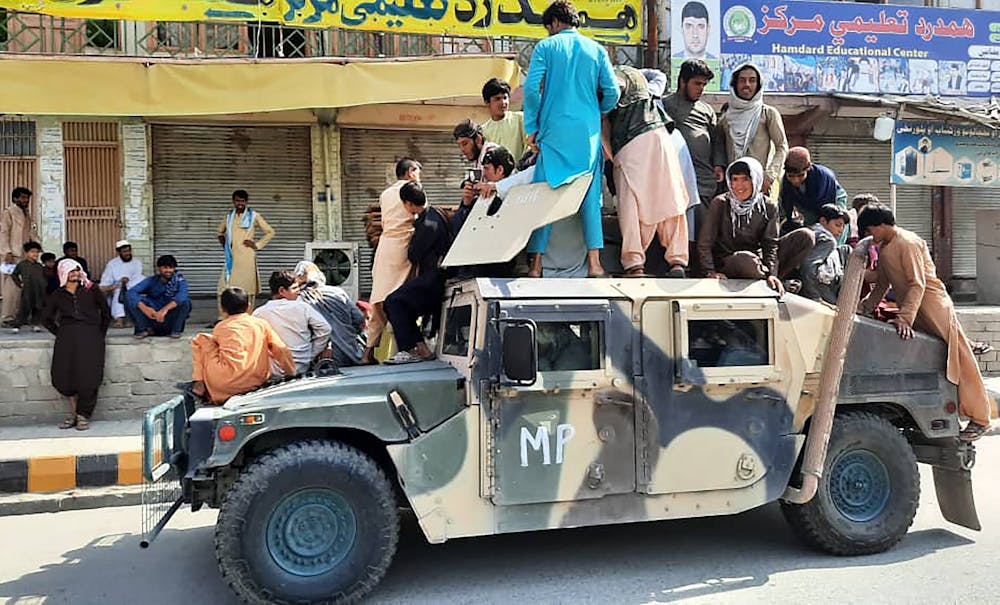
Men in civilian attire stand and sit atop a military vehicle
The rapid collapse of the Afghan military meant the Taliban seized large amounts of military equipment, including this vehicle. AFP via Getty Images

A cascade of surrender

Soldiers seek strength in numbers. When soldiers fight in battle, they only succeed if they fight as a unit. However, individual decisions to fight or flee depend on mutual expectations. If they expect most of their comrades will fight, soldiers’ best interest is also to fight.

But if they expect most of their comrades will surrender, soldiers may find it more attractive to surrender – which leads to a “collective action problem.” If soldiers learn that other units have actually surrendered, they expect their own comrades’ resolve to be low and will become less likely to fight. A few initial surrenders or desertions can spark a few more, and then more and more until an entire army collapses.

This is precisely what happened to the Afghan military. As the U.S. withdrawal began in May, the Taliban started gaining territory. As they advanced, the Taliban also negotiated with groups of Afghan forces stationed at outposts and in towns, and convinced some troops to surrender. Once the first bout of surrendering occurred and the news began to spread, others quickly followed, facilitating accelerating momentum to the Taliban as they advanced without facing major resistance. In the end, Afghan soldiers chose safety in numbers by surrendering together.

[Understand key political developments, each week. Subscribe to The Conversation’s politics newsletter.]

Todd Lehmann, Ph.D. Candidate in Political Science, University of Michigan

This article is republished from The Conversation under a Creative Commons license. Read the original article.


Tags: SB001
DMCA.com Protection Status

SUBSCRIBE to our NEWSLETTER

[mc4wp_form id=”2384248″]

Don't Miss

The evolution of Aesthetic Surgery through the lens of Dr Kourosh Tavakoli

by Pauline Torongo
4 December 2025
The evolution of Aesthetic Surgery through the lens of Dr. Kourosh Tavakoli
Health & Wellness

As global interest in Australian cosmetic surgery continues to grow, the combination of regulation, research and emerging digital tools is...

Read moreDetails

Ryan: Building real freedom through e-commerce

by Pauline Torongo
27 November 2025
Ryan: Building real freedom through e-commerce
Business & Finance

Ryan’s greatest achievement isn’t any single business or revenue milestone — it’s the ecosystem he’s built through the Change community.

Read moreDetails

Design Australia Group: Redefining Drafting as the engine of housing growth

by Pauline Torongo
26 November 2025
Design Australia Group: Redefining Drafting as the engine of housing growth
Business & Finance

Australia is under pressure to build homes faster, but design bottlenecks slow progress. Design Australia Group is fixing this by...

Read moreDetails

Louis Guy Detata builds Global Trading Empires through autonomous systems and disciplined leadership

by Pauline Torongo
25 November 2025
Louis Guy Detata builds Global Trading Empires through autonomous systems and disciplined leadership
Business & Finance

The path from investment banking to leading a global trading platform has taught Louis Detata that sustainable success requires more...

Read moreDetails

Burning Eucalyptus Wood: Tips, Advantages, Disadvantages & Alternatives

by Fazila Olla-Logday
20 November 2025
Image Supplied
Enviroment

Learn about burning eucalyptus wood for stoves and fireplaces. Discover benefits, drawbacks, harvesting tips, and better alternative firewood options for...

Read moreDetails

Everything Parents Need to Know About Baby Soft Play and Why It’s a Game Changer

by Fazila Olla-Logday
11 November 2025
Everything Parents Need to Know About Baby Soft Play
Health & Wellness

Baby soft play is a fun, safe, and educational way for little ones to explore and grow. Discover the benefits...

Read moreDetails

WOMAD Sets Up a New Camp in Wiltshire – Australian festival fans take note!

by Kris Griffiths
11 November 2025
Kumbia Boruka brought their reggae and dancehall flavour to the Taste the World Stage at WOMAD 2024 - Credit - Mike Massaro
Entertainment

With its 2026 edition moving to Neston Park in England, WOMAD offers Aussie music lovers a chance to reconnect with global...

Read moreDetails
Load More

Copyright © Blue Sky Publications Ltd. All Rights Reserved.
australiantimes.co.uk is a division of Blue Sky Publications Ltd. Reproduction without permission prohibited. DMCA.com Protection Status

  • About us
  • Write for Us
  • Advertise
  • Contact us
  • T&Cs, Privacy and GDPR
No Result
View All Result
  • News
    • Weather
    • Sport
    • Technology
    • Business & Finance
      • Currency Zone
    • Lotto Results
      • The Lott
  • Lifestyle
    • Entertainment
    • Horoscopes
    • Health & Wellness
    • Recipes
  • Travel
  • Expat Life
  • Move to Australia

Copyright © Blue Sky Publications Ltd. All Rights Reserved.
australiantimes.co.uk is a division of Blue Sky Publications Ltd. Reproduction without permission prohibited. DMCA.com Protection Status

No Result
View All Result
  • News
    • Weather
    • Sport
    • Technology
    • Business & Finance
      • Currency Zone
    • Lotto Results
      • The Lott
  • Lifestyle
    • Entertainment
    • Horoscopes
    • Health & Wellness
    • Recipes
  • Travel
  • Expat Life
  • Move to Australia

Copyright © Blue Sky Publications Ltd. All Rights Reserved.
australiantimes.co.uk is a division of Blue Sky Publications Ltd. Reproduction without permission prohibited. DMCA.com Protection Status





