

• Advertise
  • About us
  • Terms and Conditions
  • Contact us
Thursday, May 14, 2026
Australian Times News
  • News
    • Weather
    • Sport
    • Technology
    • Business & Finance
      • Currency Zone
    • Lotto Results
      • The Lott
  • Lifestyle
    • Entertainment
    • Horoscopes
    • Health & Wellness
    • Recipes
  • Travel
  • Expat Life
  • Move to Australia
No Result
View All Result
  • News
    • Weather
    • Sport
    • Technology
    • Business & Finance
      • Currency Zone
    • Lotto Results
      • The Lott
  • Lifestyle
    • Entertainment
    • Horoscopes
    • Health & Wellness
    • Recipes
  • Travel
  • Expat Life
  • Move to Australia
No Result
View All Result
Australian Times News
No Result
View All Result
Home News

Why Cubans took to the streets: 3 questions about Cuba’s economic crisis answered

Cuba’s economy relies largely on tourism and raw exports such as rum, tobacco, sugar and minerals. Before the pandemic, tourism made up the biggest share of the country’s gross domestic product, or about 40% to 50%, and contributed significantly to the Cuban government’s foreign exchange reserves.

The Conversation by The Conversation
13-08-2021 18:07
in News
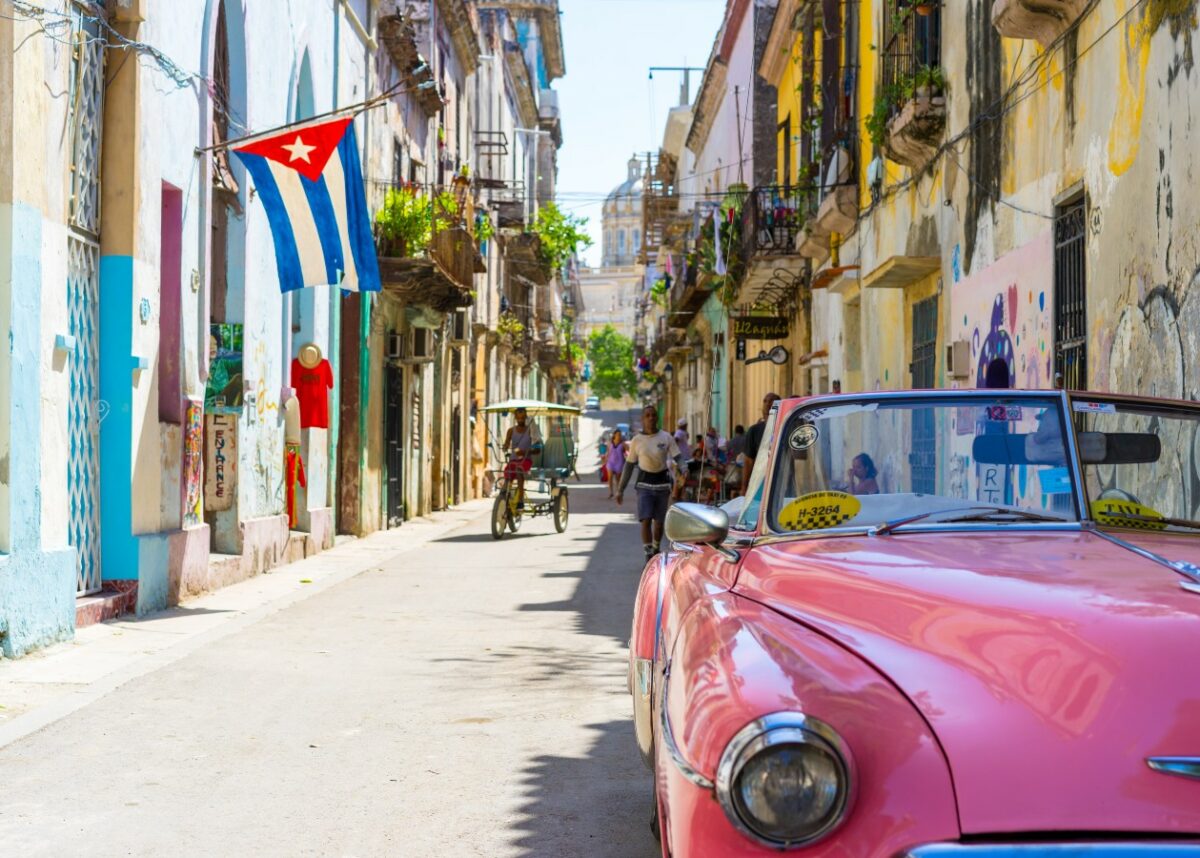
Photo by Alexander Kunze on Unsplash

Photo by Alexander Kunze on Unsplash

Jorge Salazar-Carrillo, Florida International University

Thousands of Cubans took to the streets across the island around mid-July 2021 in a rare mass expression of dissent in a country known for repressive crackdowns. The government has cracked down by arresting hundreds of dissidents and clamped down on the internet, prompting new sanctions from the U.S.

One of the main drivers of the protests is an economic crisis caused by a mixture of factors, including the pandemic. We asked Jorge Salazar-Carrillo, an economist at Florida International University who worked in the Cuban government’s Finance Ministry in the early days following the 1959 revolution, to provide some background on Cuba’s socialist economy and the current crisis.

The answers have been edited for clarity and length.

1. What’s causing Cuba’s economic crisis?

Cuba’s economy relies largely on tourism and raw exports such as rum, tobacco, sugar and minerals. Before the pandemic, tourism made up the biggest share of the country’s gross domestic product, or about 40% to 50%, and contributed significantly to the Cuban government’s foreign exchange reserves.

In addition, Cuba imports more than half of the fuel, food, medicine and other goods people consume.

All of that is now in crisis. Tourism had already collapsed because of pandemic-related domestic restrictions on travel, as well as Trump-era efforts to curtail American visits to the island. Both exports and imports have plunged, in part due to other recent U.S. sanctions, resulting in food and power shortages and long lines for fuel. The Trump administration’s November 2020 ban on using Western Union to send remittances from the U.S. to Cuba – a policy so far kept in place by President Joe Biden – resulted in a large drop in the amount of money being sent home by Cuban Americans. I estimate remittances fell about a tenth from levels they were at a few years ago.


AlsoRead...

Svitla Systems

Svitla Systems acquires Australia’s Kiandra IT to expand Global Engineering Footprint and Accelerate AI-Driven delivery

11 May 2026
How Clevero is helping Australian Service Businesses compete with Enterprises on a Fraction of the Budget

How Clevero is helping Australian Service Businesses compete with Enterprises on a Fraction of the Budget

28 April 2026

To top it off, however, the Cuban government launched a calamitous monetary reform in January 2021 that led to high inflation and a plunge in the black market value of the peso.

2. What did the monetary reform do exactly?

Cuba has for decades used two official currencies: the Cuban peso and the convertible Cuban peso. The convertible peso was pegged to the U.S. dollar, which itself is accepted almost everywhere on the island for purchases.

In January, the government eliminated the covertible peso, forcing Cubans to exchange them for regular pesos by the end of June 2021. The long-planned reform – adopted by the government a decade ago to tighten links with the international economy – had the effect of devaluing the Cuban peso.

While the peso, officially, can be exchanged for a dollar at a rate of 24 to 1, the rate is almost triple that on the black market – which is a more accurate reflection of its real worth for most Cubans.

The government increased salaries to state employees to try to compensate for the peso’s dropping worth, but private workers who haven’t seen their wages rise saw the real value of their pay plunge.

At the same time, prices on most goods, especially foreign imports like oil and medicines, have soared. Some economists predict inflation in Cuba will exceed 400% this year.

This has made it much harder for most people to purchase basic necessities such as food and medicine – if they can find them.

3. What can the government do to address the crisis?

Before cracking down on the protesters in the days after the July 11 uprising, President Miguel Díaz-Canel first tried to placate them by acknowledging the Cuban government bore some blame for the economic crisis. And he made it a little easier to physically bring goods into the country from abroad.

But the economic problems afflicting Cuba run much deeper. For perspective, consider that Cuba’s income per capita back in the 1950s was one of the highest in the Western Hemisphere. Today it has one of the lowest.

In large part, that is the result of decades of failed policies and promised reforms that never materialized. While many analysts and activists – and the Cuban government – argue that this is due to American sanctions on Cuban goods, the embargo is not the main reason Cubans are in dire straits now.

From the start, the revolutionary government of Cuba chose to run the economy unsustainably. I was an early supporter of the revolution while studying economics in Miami. I returned to Cuba in 1959 to be the director of a newly created economic department at the Ministry of Finance. I recommended that the government adopt a balanced budget to control inflation and keep the currency stable. Instead, it chose to spend beyond its means – double its revenues – and then raise taxes. This created inflation, caused the real value of the peso to plunge and eventually forced Cuba to adopt foreign exchange controls. We’ve seen this same story play out again and again.

[Over 100,000 readers rely on The Conversation’s newsletter to understand the world. Sign up today.]

Feeling that the new finance minister distrusted me, in 1960 I fled with my American wife back to Miami.

For many years Cuba didn’t have to balance its books, because the Soviet Union or Venezuela subsidized its spending. And now the reforms come too late and at a high cost for the Cuban people.

Jorge Salazar-Carrillo, Professor of Economics, Florida International University

This article is republished from The Conversation under a Creative Commons license. Read the original article.


Tags: SB001
DMCA.com Protection Status

SUBSCRIBE to our NEWSLETTER

[mc4wp_form id=”2384248″]

Don't Miss

Svitla Systems acquires Australia’s Kiandra IT to expand Global Engineering Footprint and Accelerate AI-Driven delivery

by Pauline Torongo
11 May 2026
Svitla Systems
Business & Finance

Acquisition marks Svitla’s entry into the Australian market and strengthens capabilities in low-code, Microsoft technologies, and enterprise software engineering.

Read moreDetails

Residential Healthcare Practices: Revolution or Evolution?

by Pauline Torongo
11 May 2026
Residential Healthcare Practices: Revolution or Evolution?
Lifestyle

President Bill Lutz’s "revolution" was born from his background in fine dining, which instilled a disciplined, customer-focused approach.

Read moreDetails

Medicana Health Group launches HPV vaccination campaign to support cervical cancer prevention

by Pauline Torongo
28 April 2026
Medicana Health Group launches HPV vaccination campaign to support cervical cancer prevention
Health & Wellness

The Türkiye-based healthcare group has introduced a new awareness campaign focused on HPV vaccination, regular check-ups and early detection, with...

Read moreDetails

How Clevero is helping Australian Service Businesses compete with Enterprises on a Fraction of the Budget

by Pauline Torongo
28 April 2026
How Clevero is helping Australian Service Businesses compete with Enterprises on a Fraction of the Budget
Business & Finance

By consolidating CRM, scheduling, workflow automation, invoicing, reporting, and client communications into a single platform, Clevero gives smaller operators the...

Read moreDetails

How CJAM Group is building 1,100 homes across Southeast Queensland

by Pauline Torongo
24 March 2026
How CJAM Group is building 1,100 homes across Southeast Queensland
Lifestyle

The CJAM Group founder is quietly building a 1,100+ home pipeline, with projects in Hervey Bay and Toowoomba, using a...

Read moreDetails

Design Without Compromise: Where Gutter Protection Meets Modern Architecture

by Fazila Olla-Logday
20 March 2026
Design Without Compromise: Where Gutter Protection Meets Modern Architecture
Business & Finance

Design without compromise by integrating gutter protection seamlessly into modern architecture. Discover how innovative gutter systems enhance your home’s aesthetics...

Read moreDetails

How WageSafe Secured Australia’s Most Reputable Retail Business Among Its Premium Clients

by Fazila Olla-Logday
12 March 2026
How WageSafe Secured Australia’s Most Reputable Retail Business Among Its Premium Clients
at

Learn how WageSafe helps businesses stay compliant with payroll and wage regulations through reliable monitoring, risk management, and expert support—protecting...

Read moreDetails
Load More

Copyright © Blue Sky Publications Ltd. All Rights Reserved.
australiantimes.co.uk is a division of Blue Sky Publications Ltd. Reproduction without permission prohibited. DMCA.com Protection Status

  • About us
  • Write for Us
  • Advertise
  • Contact us
  • T&Cs, Privacy and GDPR
No Result
View All Result
  • News
    • Weather
    • Sport
    • Technology
    • Business & Finance
      • Currency Zone
    • Lotto Results
      • The Lott
  • Lifestyle
    • Entertainment
    • Horoscopes
    • Health & Wellness
    • Recipes
  • Travel
  • Expat Life
  • Move to Australia

Copyright © Blue Sky Publications Ltd. All Rights Reserved.
australiantimes.co.uk is a division of Blue Sky Publications Ltd. Reproduction without permission prohibited. DMCA.com Protection Status

No Result
View All Result
  • News
    • Weather
    • Sport
    • Technology
    • Business & Finance
      • Currency Zone
    • Lotto Results
      • The Lott
  • Lifestyle
    • Entertainment
    • Horoscopes
    • Health & Wellness
    • Recipes
  • Travel
  • Expat Life
  • Move to Australia

Copyright © Blue Sky Publications Ltd. All Rights Reserved.
australiantimes.co.uk is a division of Blue Sky Publications Ltd. Reproduction without permission prohibited. DMCA.com Protection Status





