


Katy Hayward, Queen’s University Belfast
If discomfort could be personified, it might be the figure of Lord David Frost before a committee of members of the Northern Ireland Assembly (MLAs) in Stormont on July 9. Sitting at considerable social distance from him, the assembly politicians took it in turns to present the bone they had to pick with the Brexit minister.
It was easy to see from their questions why a recent opinion poll conducted for my colleagues at Queen’s University Belfast and me on the protocol on Ireland/Northern Ireland found only 6% trust in the British government. People of all political views in the region – nationalists and unionists, Remainers and Leavers – are clearly now deeply suspicious of London. Coming in the centenary year of the creation of Northern Ireland and the partition of the island of Ireland, this sentiment is especially significant and particularly unsettling.
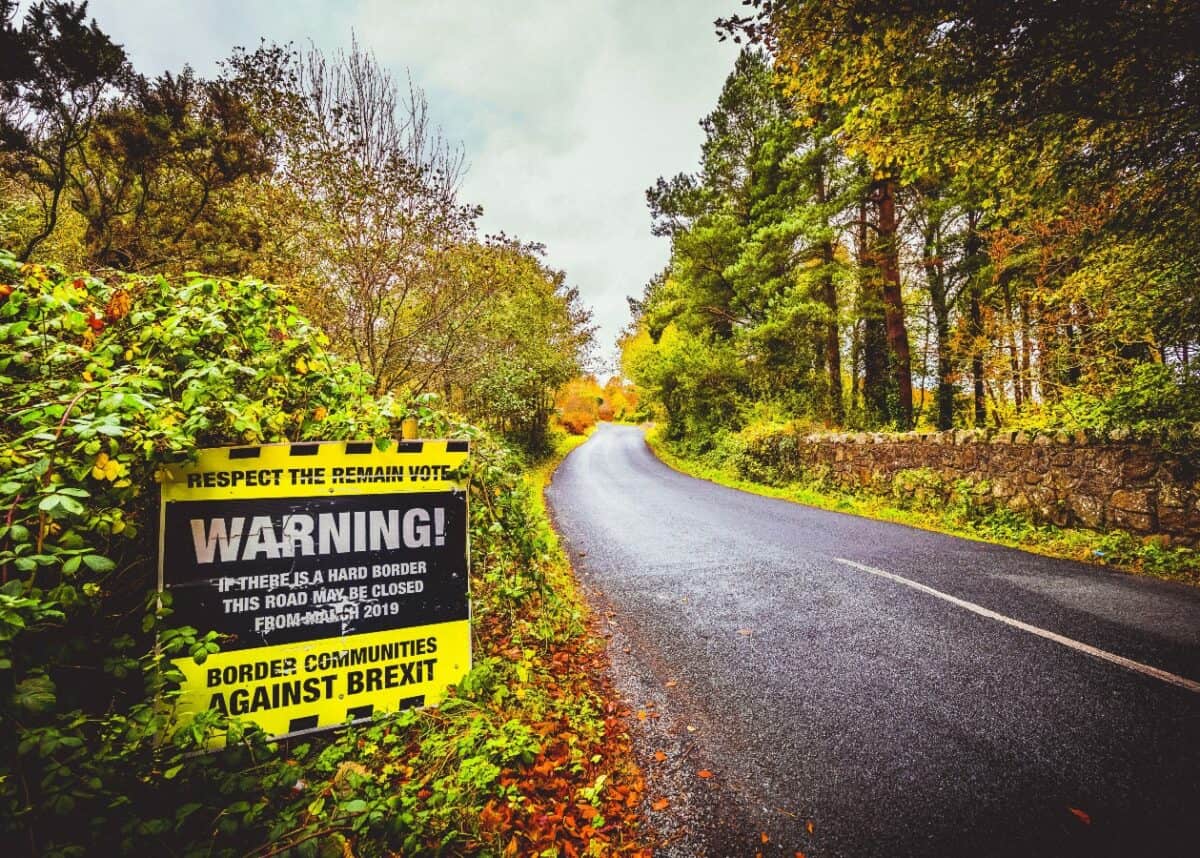
The unease centres upon the UK’s withdrawal from the EU and the Northern Ireland protocol that came with it. That was drawn up to avoid a hard Irish land border, but it came as part of the UK-EU withdrawal agreement, which was to bring to an end those very conditions which had softened the UK’s borders with its neighbours – including Ireland.
Because it affects the borders around Northern Ireland, that near-oxymoronic remit of the protocol gets to the very root of its political conflict. What the protocol has produced as a compromise is thus as contentious as it is complicated.
Trade deals and border checks
There are new trade frictions across the Irish land border, but not of the type that require checks and controls there (for example, the provision of services). Trade in goods requires such checks and controls – due to the protocol, these are now applying to goods coming from or via Britain into Northern Ireland.
Lord Frost, the UK’s chief negotiator, asserts that the UK didn’t expect such checks and controls. And, six months into its operation, the UK and the EU are still at odds over what the protocol should be in practice. As Frost put it to the assembly committee, in somewhat ambivalent terms: “We intend to implement what we signed up to, but it’s the fact of implementation that’s causing the problem.”


The extent of border checks and controls on goods is broadly determined by three things. First, the detail of a trade deal: the more expansive it is, the less the trade friction. There is currently speculation about an add-on to the UK-EU Trade and Cooperation Agreement to cover agri-food (for example, rules on pesticide use or cattle feed).
This would not only ease movement of these products across the Irish Sea but across the English Channel too. However, the UK government accepts GB-EU trade friction as a consequence of Brexit – it’s barriers to trade between Great Britain and Northern Ireland it is baulking at.
So to the second means of reducing border checks and controls under the protocol: further UK-EU decisions through the joint committee tasked with managing the withdrawal agreement, which Frost co-chairs. This is the place for flexibilities and adjustments to be found.
Some have been identified already. The committee has also agreed time-limited “grace periods” in the most tricky areas for border controls. But these aren’t lasting solutions. Lord Frost’s unilateral six-month extension of these in March is subject to ongoing EU legal proceedings.
This relates to the all-important third element at play: the degree to which the trading partners trust one another. Unfortunately for Northern Ireland, the UK and EU actively distrust one another at this point.
And the pressure remains intense. Lord Frost has promised a “new approach” to the matter, should the EU not offer further concessions within the next fortnight. What will the nature of that action be and what would it indicate about the UK’s reliability in negotiations and agreements?
Destructive ambiguity
These questions are being asked not only in Brussels but across Europe’s capitals, and even across the Atlantic. The US president, Joe Biden, took the opportunity of the G7 summit in June to remind the UK prime minister, Boris Johnson, of his enduring responsibilities to the 1998 Good Friday or Belfast Agreement as he seeks to manage new (UK-EU) and potential (UK-USA) international deals.
This is no easy task. The 1998 agreement was sold, on reasonable grounds, by both unionists and nationalists as making the future they hope for more secure. The fact that this means fundamentally different things to both sides has now come to the fore in a way it hasn’t for a generation.
The recent NI Life and Times Survey found that most people from all backgrounds in NI think the UK’s withdrawal from the EU has made a united Ireland more likely. In light of this, a temptation for unionists is to place as much weight as possible on any solution that thwarts the ambitions of Irish nationalism.
But the complexity of Northern Ireland’s position means that London cannot provide a straightforward counterweight to Dublin or, for that matter, Brussels. Nor can the problems raised (or indeed fixed) by the protocol be addressed unilaterally. The EU has made it clear that it will “step up” its legal action against the UK if it attempts any such move, which would hardly improve tensions.
More to the point, could unionists trust London? The recent judicial review brought by a coalition of unionist (and pro-Leave) politicians found against their claim that the Act of Union was breached by the protocol. This is not because that wasn’t in fact the case, but because, on voting for the Withdrawal Agreement Act in January 2020, they overwhelmingly endorsed it.
Tensions are high in Northern Ireland over the protocol, less because of the specificities of post-Brexit border controls and more because of ubiquitous distrust in the British government which brought them into being.
Katy Hayward, Professor of Political Sociology, Queen’s University Belfast
This article is republished from The Conversation under a Creative Commons license. Read the original article.







