


Christine Parker, The University of Melbourne and Lev Bromberg, The University of Melbourne
Eggs laid by battery hens would be phased out within 15 years under a plan to improve poultry welfare in Australia. The proposal signals some relief for the 15 million or so egg-laying hens still kept in battery cages in Australia. But it doesn’t go far enough.
Among the recommendations of an independent panel were to phase out battery cages between 2032 and 2036. Egg production would move to barns, or larger furnished cages.
Such recommendations may seem like a happy compromise – balancing the interests of farmers, consumers and the hens themselves.
But developing welfare standards for farmed animals involves more than just practical, scientific and economic considerations. Such decisions also have an ethical dimension: what level of animal welfare should society provide? On that measure, we believe the standards fall short.
An appetite for change
An panel drafted the proposal after consulting state and territory governments, industry, animal welfare groups and the public.
The draft standards cover poultry including chickens, ducks, emus, geese, quail and turkeys. Confining hens in battery cages is by far the industry’s most controversial practice, and we focus on those recommendations here.


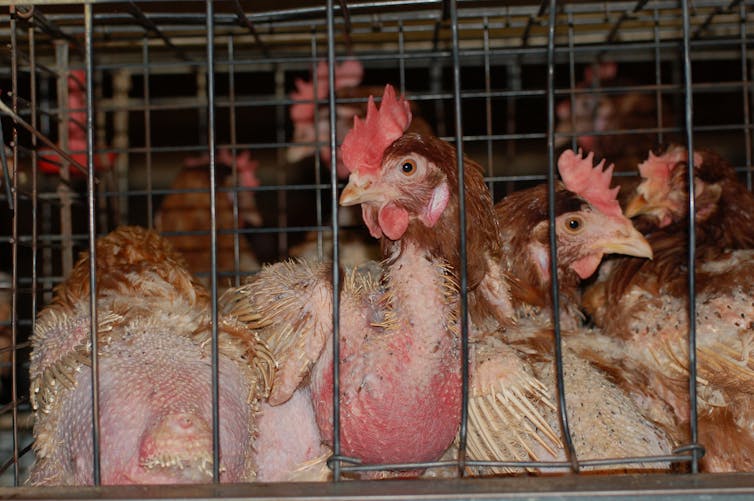
Research has found hens are intelligent, social animals. But confined to battery cages – often a space smaller than an A4 sheet of paper – they cannot stretch their wings or perform basic natural behaviours such as roost, nest, forage and dust-bathe.
Battery hens can also suffer severe health problems such as feather loss, fractured bones and haemorrhagic fatty liver syndrome. They can also experience more pain than those in cage-free systems.
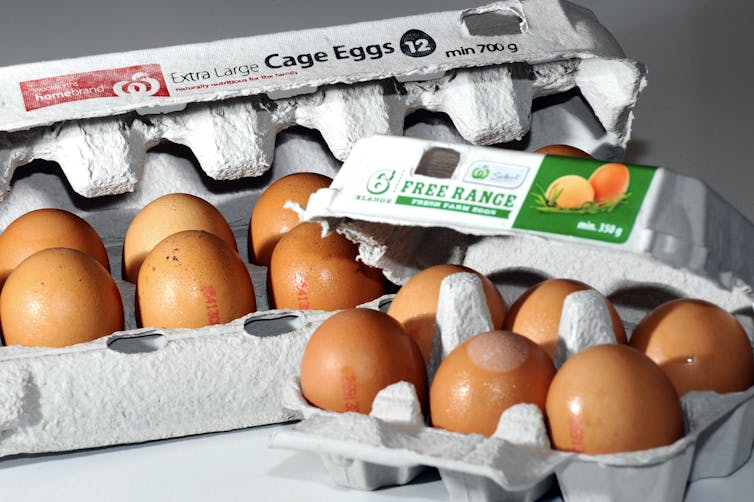
Industry figures show Australia produces around 17 million eggs each day. Of about half sold at supermarkets, 39% are from caged hens. Free-range (50%), barn-laid (10%) and specialty eggs (1%) make up the remainder.
Our analysis of the industry figures suggests about half of all eggs sold in Australia are used in processed foods and catering, where the proportion of cage eggs is thought to be higher than those sold in supermarkets.
Cage-free eggs are generally more expensive than cage eggs. Nonetheless, major supermarkets and other food companies have also vowed to phase out caged eggs, or already use cage-free eggs in their products.
A 2018 report prepared for the federal government found 95% of Australians view the welfare of farmed animals as a concern and 91% want law reform to address it.
It found Australians want regulation that prevents the suffering of farmed animals, which are increasingly seen as sentient beings with capabilities, rights and freedoms.
Keeping hens in cages is not consistent with these views. An unprecedented 170,000-odd public submissions were made on the draft poultry standards, reflecting the huge public interest in the issue. The vast majority supported a ban on battery cages.
How did we get here?
State and territory agriculture ministers must now endorse the standards and enact regulations to bring them into effect.
If enacted, the standards will replace the outdated 2002 code of practice. The independent panel was appointed to help re-draft those standards after previous attempts were mired in controversy, including allegations of collusion between farmers and the NSW government.
Scientists, animal welfare organisations and two state governments also raised concern about the integrity of the process.
The panel’s appointment was a positive step. Importantly, it was made up of independent experts, rather than dominated by industry and agriculture department representatives.
Where the proposal falls short
The proposed standards give egg producers ten to 15 years to transition away from battery cages. Animal welfare groups such as the RSPCA say this timeline is too slow and cages should be phased out sooner – and we agree.
The use of battery cages in Australia is certainly out of step internationally. Most OECD nations have banned battery cages or are in the process of doing so.
The lengthy period of transition prioritises the continued availability of cheap eggs, and the interests of cage-egg producers, over the welfare of millions of animals.
The standards will still allow the use of furnished cages: larger cages with features such as perches and scratch pads.
Furnished cages are better than battery cages. And some researchers say furnished cages, if well managed, are better than poorly run free-range and barn systems. But the behavioural needs of hens are not fully satisfied in furnished cages. And if lifetime confinement represents a “better” animal welfare outcome than many cage-free facilities, this reflects very poorly on the regulation of cage-free systems.
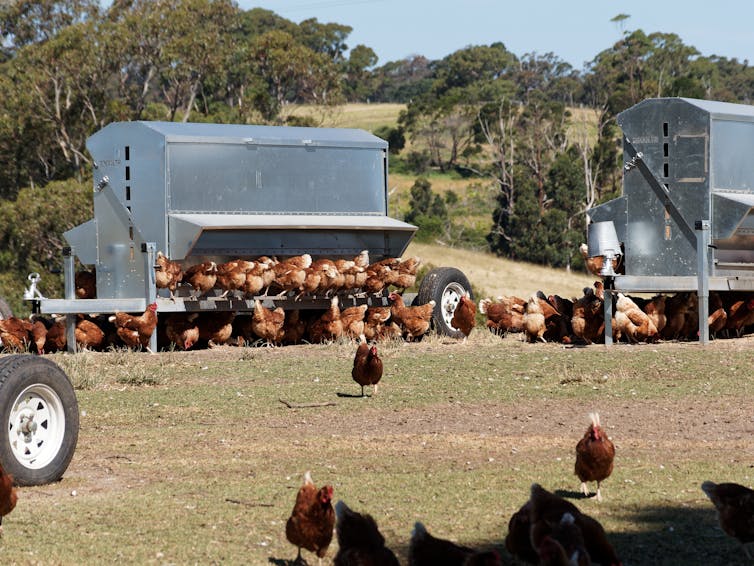
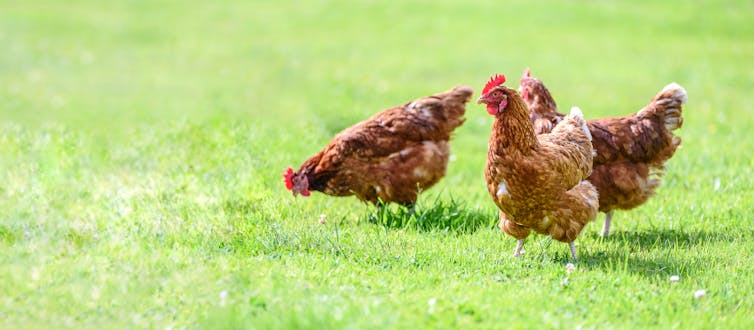
A more humane approach would keep hens in well-managed free-range or barn systems. In fact, the European Parliament last month voted overwhelmingly (but non-bindingly) in favour of phasing out all cages in farming.
And enacting new standards is not enough. To ensure standards are maintained and enforced, an independent animal welfare regulator is needed, as recommended by the Productivity Commission in 2017.
A fundamental moral question
The draft standards represent an important first step in freeing Australian hens from cages. While not perfect, they will bring Australian agriculture closer to international scientific consensus and public opinion on the issue.
However, developing animal welfare standards involves considering the practical, the economic, the scientific and the ethical. Deciding whether and when to ban cage production systems touches on fundamental moral questions, such as whether non-human animals deserve a “good life” and what this means in practice.
At the most fundamental level, Australians must ask themselves: should sentient, intelligent creatures have the freedom to access the outdoors? Or should they spend their lives in a barren cage so we can have the option of cheaper eggs?
Christine Parker, Professor of Law, The University of Melbourne and Lev Bromberg, PhD Candidate, The University of Melbourne
This article is republished from The Conversation under a Creative Commons license. Read the original article.







