

• Advertise
  • About us
  • Terms and Conditions
  • Contact us
Saturday, December 6, 2025
Australian Times News
  • News
    • Weather
    • Sport
    • Technology
    • Business & Finance
      • Currency Zone
    • Lotto Results
      • The Lott
  • Lifestyle
    • Entertainment
    • Horoscopes
    • Health & Wellness
    • Recipes
  • Travel
  • Expat Life
  • Move to Australia
No Result
View All Result
  • News
    • Weather
    • Sport
    • Technology
    • Business & Finance
      • Currency Zone
    • Lotto Results
      • The Lott
  • Lifestyle
    • Entertainment
    • Horoscopes
    • Health & Wellness
    • Recipes
  • Travel
  • Expat Life
  • Move to Australia
No Result
View All Result
Australian Times News
No Result
View All Result
Home News

Historic change: Arab political parties are now legitimate partners in Israel’s politics and government

The next government is not going to be a typical one for the citizens of the state of Israel, and especially for members of the Palestinian Arab minority, who are 20% of Israel’s population. This is the first time the Zionist political parties forming the government are including an Arab party.
The Conversation by The Conversation
12-06-2021 09:17
in News
Photo by Manny Becerra on Unsplash

Photo by Manny Becerra on Unsplash

Morad Elsana, American University

The next government is not going to be a typical one for the citizens of the state of Israel, and especially for members of the Palestinian Arab minority, who are 20% of Israel’s population. This is the first time the Zionist political parties forming the government are including an Arab party.

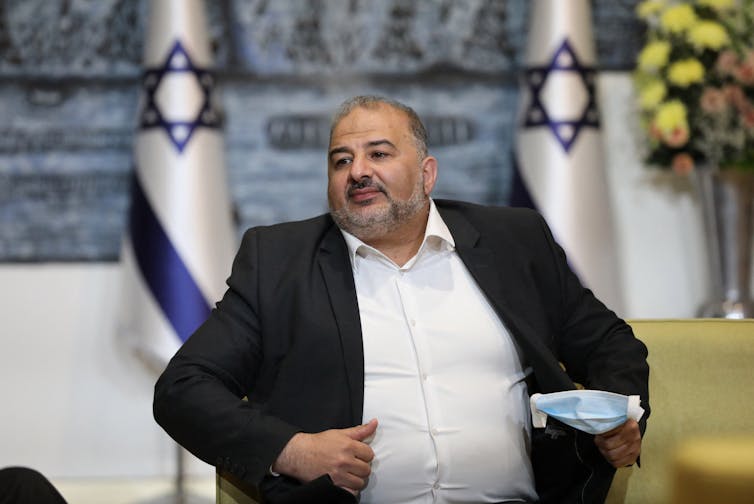
Mansour Abbas, Israeli Arab politician and leader of the Ra’am Party, in a meeting at the Israeli president’s residence in Jerusalem on April 5, 2021. Abir Sultan/Pool/ AFP/Getty Images

It is ironic that the prime minister of this government would be Naftali Bennett. Bennett is the leader of the radical right-wing political party Yamina, whose ideologies and interests contradict the Arab party’s interests, and which has opposed Arab participation in the coalition or government. His national-religious political movement, which represents many Jewish settlers, signed the coalition agreement with Ra’am, the Islamic Arab party.

In the 73-year history of Israel, it was an unwritten rule that any government coalition would be formed only by the Jewish Zionist parties. There was only one exception, when the late Prime Minister Yitzhak Rabin relied on the support of an Arab party in the wake of the Oslo Peace Accords in the 1990s. The agreement, however, did not formalize that party’s entry into the ruling coalition.

The chain of events Rabin triggered was considered an unforgivable sin by the Israeli right, which depicted Rabin as a traitor – as they do now with Bennett – and which ultimately led to Rabin’s assassination.
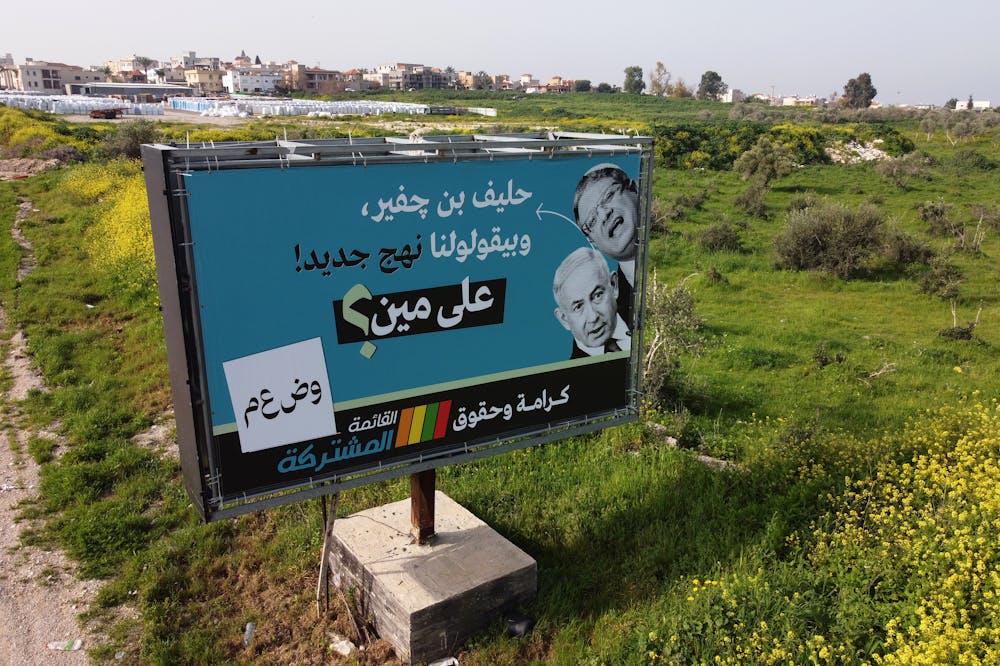
A campaign billboard for Arab parties in Arabic with pictures of Israeli Prime Minister Benjamin Netanyahu and Israeli far-right leader Itamar Ben Gvir.
A campaign billboard for the Joint List of Arab parties mocked Netanyahu’s promise of a ‘new approach.’ Amir Levy/Getty Images

Changing Israeli politics

What drove the first Arab party into a ruling coalition now was not the desire for a peace agreement. It was the poor state of Israeli politics after four election rounds in two years without a clear winner, combined with the strong desire of the opposition, called the “Change Bloc,” to oust longtime Prime Minister Benjamin Netanyahu.

The Arabs did not forget Netanyahu’s hostile remarks during the previous elections. That’s when he urged the settlers to cast their votes against the Arabs who “are voting in droves.”


AlsoRead...

Ryan: Building real freedom through e-commerce

Ryan: Building real freedom through e-commerce

27 November 2025
Design Australia Group: Redefining Drafting as the engine of housing growth

Design Australia Group: Redefining Drafting as the engine of housing growth

26 November 2025

After failing in the latest election to both discourage the Arab vote and ensure a majority of his own, it was Netanyahu who first understood the potential need to cooperate with the Arab parties. After all other efforts to form a ruling coalition failed, he tried to lure Ra’am leader Mansour Abbas to his side even before Bennett did, but to no avail.

For his part, Abbas proposed to change the way Arab parties deal with the Jewish parties and politics in Israel.

“I say here clearly and frankly: When the very establishment of this government is based on our support … we will be able to influence it and accomplish great things for our Arab society,” Abbas said.

For decades, Palestinian Arab political parties would not join Israeli governments that continued to support the occupation of their Palestinian brothers, oppressed them and denied their basic rights. And they were kept out of leadership coalitions by the Jewish parties’ fear of cooperating with them.

Abbas’ call for pragmatism means that he will support political coalitions committed to meeting the immediate and urgent demands of the Arab minority in Israel. Chief among those demands is addressing the issues of violence, house demolitions, planning in new Arab villages and towns, education and equality.
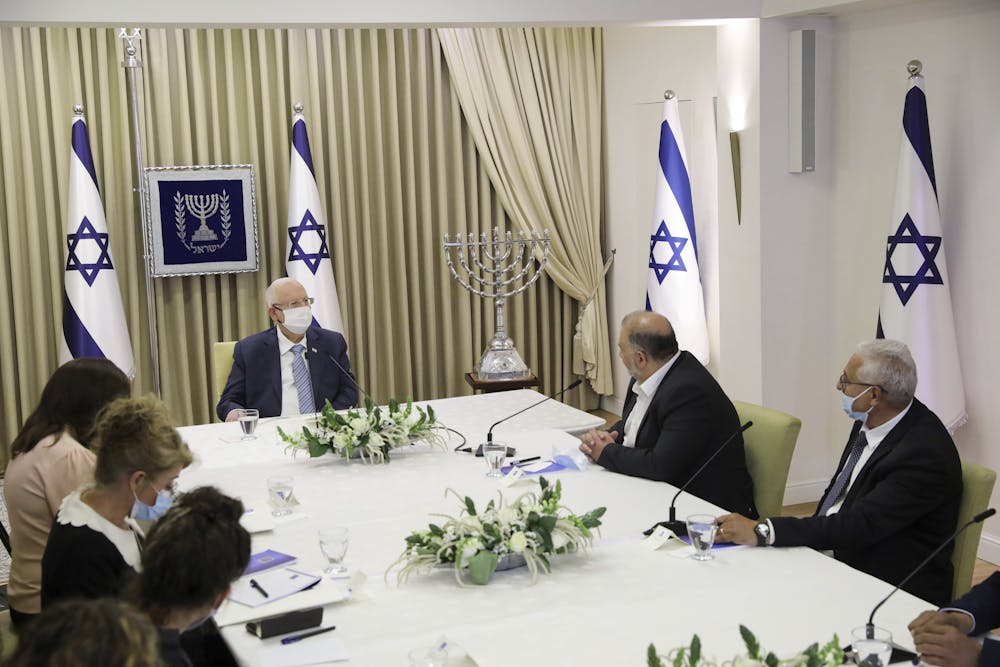
A group of people sit at a large table with white tablecloth and Israeli flags in the background.
Mansour Abbas, leader of the Ra’am Party, second from right, and fellow Arab politician Mazen Ghanayem, right, discuss with Israeli President Reuven Rivlin who might form the next coalition government, at the president’s residence in Jerusalem on April 5, 2021. Abir Sultan/Pool Photo via AP

Significant promises made

Abbas’ approach was rejected by the rest of the Palestinian political parties, and thus split up the Joint List, which was a political alliance of four of the Arab political parties in Israel: Balad, Hadash, Ta’al and Ra’am, that they had formed for the previous elections.

The February 2021 election results meant Ra’am entered Israel’s parliament, the Knesset, with four members. Those four can prove decisive in this politically fractured situation.

For now, it appears that Abbas achieved what he wanted. Despite the serious disagreement among the Arabs over his approach, he is convinced that his party’s governing responsibilities will change the face of Israeli politics in all matters related to the Arab minority and will show positive results for the rights and status of Arab citizens in Israel.

“We have reached a critical mass of agreements in various fields that serves the interest of Arab society and that provide solutions for the burning issues in Arab society – planning, the housing crisis, and of course, fighting violence and organized crime,” Abbas said.

To help the Arab sector, among the promises he got from his new partners in the incoming government are the adoption of a five-year economic development plan for the Arab community with a budget of 30 billion shekels, or $US9.3 billion, as well as plans to combat crime and violence in the Arab community, to improve infrastructure, to advance Arab local authorities, and to reconsider the Kaminitz Law, which has led to increased demolitions of, and evictions from, Palestinian property.

The agreement also includes recognition of several Bedouin villages in the Negev, the southern district of Israel where a majority of the country’s Bedouins live.

Historic achievement

Many in the Arab community, and especially among the Bedouins, see Abbas emerging from this election as a victorious leader. He has recorded for himself and the Islamic movement several historical achievements on many important levels.

On the material level, he has secured programs, budgets and decisions that support needs of the Arab minority.

But the most important achievement is the fundamental change signaled by the acceptance of Arab parties into Israeli politics and the recognition of Arab political parties as legitimate partners in the politics and power-sharing in Israel.

This is a paramount goal the Arab parties have failed to achieve since the establishment of the state of Israel in 1948. After two years with four elections, it’s not certain that this government will last either, but, regardless of what happens, this is a historic change.

Morad Elsana, Adjunct Professorial Lecturer Critical Race, Gender, and Culture Studies (CRGC)., American University

This article is republished from The Conversation under a Creative Commons license. Read the original article.


Tags: SB001
DMCA.com Protection Status

SUBSCRIBE to our NEWSLETTER

[mc4wp_form id=”2384248″]

Don't Miss

The evolution of Aesthetic Surgery through the lens of Dr Kourosh Tavakoli

by Pauline Torongo
4 December 2025
The evolution of Aesthetic Surgery through the lens of Dr. Kourosh Tavakoli
Health & Wellness

As global interest in Australian cosmetic surgery continues to grow, the combination of regulation, research and emerging digital tools is...

Read moreDetails

Ryan: Building real freedom through e-commerce

by Pauline Torongo
27 November 2025
Ryan: Building real freedom through e-commerce
Business & Finance

Ryan’s greatest achievement isn’t any single business or revenue milestone — it’s the ecosystem he’s built through the Change community.

Read moreDetails

Design Australia Group: Redefining Drafting as the engine of housing growth

by Pauline Torongo
26 November 2025
Design Australia Group: Redefining Drafting as the engine of housing growth
Business & Finance

Australia is under pressure to build homes faster, but design bottlenecks slow progress. Design Australia Group is fixing this by...

Read moreDetails

Louis Guy Detata builds Global Trading Empires through autonomous systems and disciplined leadership

by Pauline Torongo
25 November 2025
Louis Guy Detata builds Global Trading Empires through autonomous systems and disciplined leadership
Business & Finance

The path from investment banking to leading a global trading platform has taught Louis Detata that sustainable success requires more...

Read moreDetails

Burning Eucalyptus Wood: Tips, Advantages, Disadvantages & Alternatives

by Fazila Olla-Logday
20 November 2025
Image Supplied
Enviroment

Learn about burning eucalyptus wood for stoves and fireplaces. Discover benefits, drawbacks, harvesting tips, and better alternative firewood options for...

Read moreDetails

Everything Parents Need to Know About Baby Soft Play and Why It’s a Game Changer

by Fazila Olla-Logday
11 November 2025
Everything Parents Need to Know About Baby Soft Play
Health & Wellness

Baby soft play is a fun, safe, and educational way for little ones to explore and grow. Discover the benefits...

Read moreDetails

WOMAD Sets Up a New Camp in Wiltshire – Australian festival fans take note!

by Kris Griffiths
11 November 2025
Kumbia Boruka brought their reggae and dancehall flavour to the Taste the World Stage at WOMAD 2024 - Credit - Mike Massaro
Entertainment

With its 2026 edition moving to Neston Park in England, WOMAD offers Aussie music lovers a chance to reconnect with global...

Read moreDetails
Load More

Copyright © Blue Sky Publications Ltd. All Rights Reserved.
australiantimes.co.uk is a division of Blue Sky Publications Ltd. Reproduction without permission prohibited. DMCA.com Protection Status

  • About us
  • Write for Us
  • Advertise
  • Contact us
  • T&Cs, Privacy and GDPR
No Result
View All Result
  • News
    • Weather
    • Sport
    • Technology
    • Business & Finance
      • Currency Zone
    • Lotto Results
      • The Lott
  • Lifestyle
    • Entertainment
    • Horoscopes
    • Health & Wellness
    • Recipes
  • Travel
  • Expat Life
  • Move to Australia

Copyright © Blue Sky Publications Ltd. All Rights Reserved.
australiantimes.co.uk is a division of Blue Sky Publications Ltd. Reproduction without permission prohibited. DMCA.com Protection Status

No Result
View All Result
  • News
    • Weather
    • Sport
    • Technology
    • Business & Finance
      • Currency Zone
    • Lotto Results
      • The Lott
  • Lifestyle
    • Entertainment
    • Horoscopes
    • Health & Wellness
    • Recipes
  • Travel
  • Expat Life
  • Move to Australia

Copyright © Blue Sky Publications Ltd. All Rights Reserved.
australiantimes.co.uk is a division of Blue Sky Publications Ltd. Reproduction without permission prohibited. DMCA.com Protection Status





