

• Advertise
  • About us
  • Terms and Conditions
  • Contact us
Friday, December 5, 2025
Australian Times News
  • News
    • Weather
    • Sport
    • Technology
    • Business & Finance
      • Currency Zone
    • Lotto Results
      • The Lott
  • Lifestyle
    • Entertainment
    • Horoscopes
    • Health & Wellness
    • Recipes
  • Travel
  • Expat Life
  • Move to Australia
No Result
View All Result
  • News
    • Weather
    • Sport
    • Technology
    • Business & Finance
      • Currency Zone
    • Lotto Results
      • The Lott
  • Lifestyle
    • Entertainment
    • Horoscopes
    • Health & Wellness
    • Recipes
  • Travel
  • Expat Life
  • Move to Australia
No Result
View All Result
Australian Times News
No Result
View All Result
Home News

Simple strategy brings tiny wallabies back from brink of extinction

Scientists find a cheap and effective way to protect juvenile wallabies from feral cats, boosting their survival rate by almost 90 percent.

Mike Simpson by Mike Simpson
27-05-2021 09:59
in News
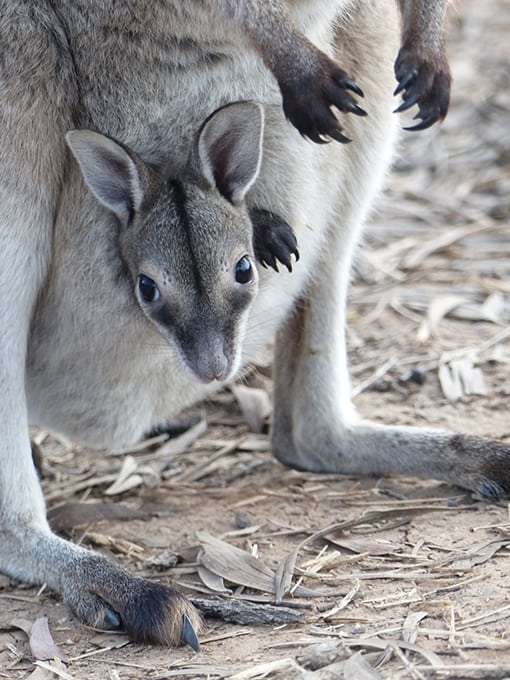
A bridled nailtail wallaby joey is vulnerable until it grows from 'football size' to 'medicine ball' size. Photo: Alexandra Ross/UNSW

A bridled nailtail wallaby joey is vulnerable until it grows from 'football size' to 'medicine ball' size. Photo: Alexandra Ross/UNSW

A population of bridled nailtail wallabies in Queensland has been brought back from the brink of extinction after conservation scientists led by University of New South Wales (UNSW) Sydney successfully trialled an intervention technique never before used on land-based mammals.

Using a method known as ‘headstarting’, the researchers rounded up bridled nailtail wallabies under a certain size and placed them within a protected area where they could live until adulthood without the threat of their main predators – feral cats – before being released back into the wild.

In an article published in Current Biology, the scientists describe how they decided on the strategy to protect only the juvenile wallabies from feral cats in Avocet Nature Refuge, south of Emerald in central Queensland, where they numbered just 16 animals in 2015.

For decades species was believed extinct

The bridled nailtail wallaby is a small micropod (part of the marsupial family) that grows up to a metre in length, half of which is the tail. It takes its name from the white ‘bridle’ line that runs down the back of the neck and shoulders and a tail spur about 3 to 6mm in length.

Experts believed the species to be extinct from 1937 until 1973. It was only when a fencing contractor reported he’d seen a population of the wallabies living on a property near Dingo in Queensland that the species was rediscovered.

Article lead author, Alexandra Ross, explained that juvenile wallabies under 3kg – or smaller than a rugby football – are easy prey for feral cats.

“Previous studies have shown that more than half of these young bridled nailtail wallabies were killed by feral cats before they could reach adulthood,” Ross said.


AlsoRead...

Ryan: Building real freedom through e-commerce

Ryan: Building real freedom through e-commerce

27 November 2025
Design Australia Group: Redefining Drafting as the engine of housing growth

Design Australia Group: Redefining Drafting as the engine of housing growth

26 November 2025

Size is a good predictor of animal’s survival

“But when you look at the numbers of adults, the survival rate goes up to 80 percent – which shows that size is a good predictor of survival.

“So we figured if we can just get them through that tough period – when they’re still little and an easy size for a cat to prey on – by putting them in feral-free protected areas, then we could make a positive difference to the population numbers.”

The results more than confirmed the scientists’ hunches. Of the 56 bridled nailtail wallabies that were raised within the headstart enclosure between 2015 and 2018, 89 percent survived to be large enough to be let back into the wild.

The 11 percent that didn’t make it included one that needed to be euthanised due to injury, two found dead from accidents or unknown causes, and four killed by birds of prey.


Tags: Australian wildlifeenvironmentUniversity of New South Waleswallabieswildlife
DMCA.com Protection Status

SUBSCRIBE to our NEWSLETTER

[mc4wp_form id=”2384248″]

Don't Miss

The evolution of Aesthetic Surgery through the lens of Dr Kourosh Tavakoli

by Pauline Torongo
4 December 2025
The evolution of Aesthetic Surgery through the lens of Dr. Kourosh Tavakoli
Health & Wellness

As global interest in Australian cosmetic surgery continues to grow, the combination of regulation, research and emerging digital tools is...

Read moreDetails

Ryan: Building real freedom through e-commerce

by Pauline Torongo
27 November 2025
Ryan: Building real freedom through e-commerce
Business & Finance

Ryan’s greatest achievement isn’t any single business or revenue milestone — it’s the ecosystem he’s built through the Change community.

Read moreDetails

Design Australia Group: Redefining Drafting as the engine of housing growth

by Pauline Torongo
26 November 2025
Design Australia Group: Redefining Drafting as the engine of housing growth
Business & Finance

Australia is under pressure to build homes faster, but design bottlenecks slow progress. Design Australia Group is fixing this by...

Read moreDetails

Louis Guy Detata builds Global Trading Empires through autonomous systems and disciplined leadership

by Pauline Torongo
25 November 2025
Louis Guy Detata builds Global Trading Empires through autonomous systems and disciplined leadership
Business & Finance

The path from investment banking to leading a global trading platform has taught Louis Detata that sustainable success requires more...

Read moreDetails

Burning Eucalyptus Wood: Tips, Advantages, Disadvantages & Alternatives

by Fazila Olla-Logday
20 November 2025
Image Supplied
Enviroment

Learn about burning eucalyptus wood for stoves and fireplaces. Discover benefits, drawbacks, harvesting tips, and better alternative firewood options for...

Read moreDetails

Everything Parents Need to Know About Baby Soft Play and Why It’s a Game Changer

by Fazila Olla-Logday
11 November 2025
Everything Parents Need to Know About Baby Soft Play
Health & Wellness

Baby soft play is a fun, safe, and educational way for little ones to explore and grow. Discover the benefits...

Read moreDetails

WOMAD Sets Up a New Camp in Wiltshire – Australian festival fans take note!

by Kris Griffiths
11 November 2025
Kumbia Boruka brought their reggae and dancehall flavour to the Taste the World Stage at WOMAD 2024 - Credit - Mike Massaro
Entertainment

With its 2026 edition moving to Neston Park in England, WOMAD offers Aussie music lovers a chance to reconnect with global...

Read moreDetails
Load More

Copyright © Blue Sky Publications Ltd. All Rights Reserved.
australiantimes.co.uk is a division of Blue Sky Publications Ltd. Reproduction without permission prohibited. DMCA.com Protection Status

  • About us
  • Write for Us
  • Advertise
  • Contact us
  • T&Cs, Privacy and GDPR
No Result
View All Result
  • News
    • Weather
    • Sport
    • Technology
    • Business & Finance
      • Currency Zone
    • Lotto Results
      • The Lott
  • Lifestyle
    • Entertainment
    • Horoscopes
    • Health & Wellness
    • Recipes
  • Travel
  • Expat Life
  • Move to Australia

Copyright © Blue Sky Publications Ltd. All Rights Reserved.
australiantimes.co.uk is a division of Blue Sky Publications Ltd. Reproduction without permission prohibited. DMCA.com Protection Status

No Result
View All Result
  • News
    • Weather
    • Sport
    • Technology
    • Business & Finance
      • Currency Zone
    • Lotto Results
      • The Lott
  • Lifestyle
    • Entertainment
    • Horoscopes
    • Health & Wellness
    • Recipes
  • Travel
  • Expat Life
  • Move to Australia

Copyright © Blue Sky Publications Ltd. All Rights Reserved.
australiantimes.co.uk is a division of Blue Sky Publications Ltd. Reproduction without permission prohibited. DMCA.com Protection Status





