

• Advertise
  • About us
  • Terms and Conditions
  • Contact us
Friday, February 6, 2026
Australian Times News
  • News
    • Weather
    • Sport
    • Technology
    • Business & Finance
      • Currency Zone
    • Lotto Results
      • The Lott
  • Lifestyle
    • Entertainment
    • Horoscopes
    • Health & Wellness
    • Recipes
  • Travel
  • Expat Life
  • Move to Australia
No Result
View All Result
  • News
    • Weather
    • Sport
    • Technology
    • Business & Finance
      • Currency Zone
    • Lotto Results
      • The Lott
  • Lifestyle
    • Entertainment
    • Horoscopes
    • Health & Wellness
    • Recipes
  • Travel
  • Expat Life
  • Move to Australia
No Result
View All Result
Australian Times News
No Result
View All Result
Home News

DNA ‘Lite-Brite’ is a promising way to archive data for decades or longer

We and our colleagues have developed a way to store data using pegs and pegboards made out of DNA and retrieving the data with a microscope – a molecular version of the Lite-Brite toy

The Conversation by The Conversation
11-05-2021 06:15
in News
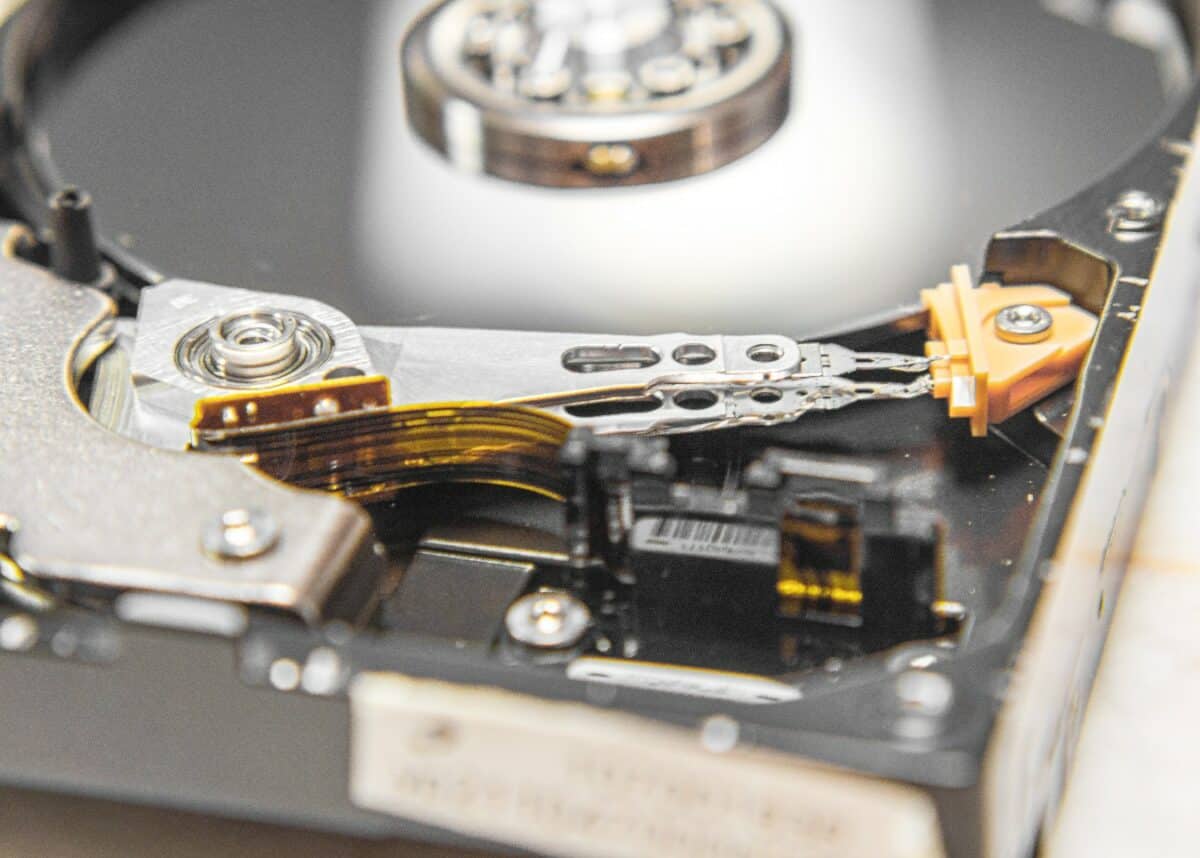
Photo by 铮 夏 on Unsplash

Photo by 铮 夏 on Unsplash

Will Hughes, Boise State University; George David Dickinson, Boise State University, and Luca Piantanida, Boise State University

The Research Brief is a short take about interesting academic work.

The big idea

We and our colleagues have developed a way to store data using pegs and pegboards made out of DNA and retrieving the data with a microscope – a molecular version of the Lite-Brite toy. Our prototype stores information in patterns using DNA strands spaced about 10 nanometers apart. Ten nanometers is more than a thousand times smaller than the diameter of a human hair and about 100 times smaller than the diameter of a bacterium.

A simple two-dimensional grid can convey a lot of information – whether making pictures with Lite-Brite or storing data in DNA. Justin Day/Flickr, CC BY-SA

We tested our digital nucleic acid memory (dNAM) by storing the statement “Data is in our DNA!\n.” We described the research in a paper published in the journal Nature Communications on April 22, 2021.

Previous methods for retrieving data in DNA require the DNA to be sequenced. Sequencing is the process of reading the genetic code of strands of DNA. Though it is a powerful tool in medicine and biology, it wasn’t designed with DNA memory in mind.

Our approach uses a microscope to read the data optically. Because the DNA pegs are positioned closer than half the wavelength of visible light, we used super-resolution microscopy, which circumvents the diffraction limit of light. This provides a way to read the encoded data without sequencing the DNA.
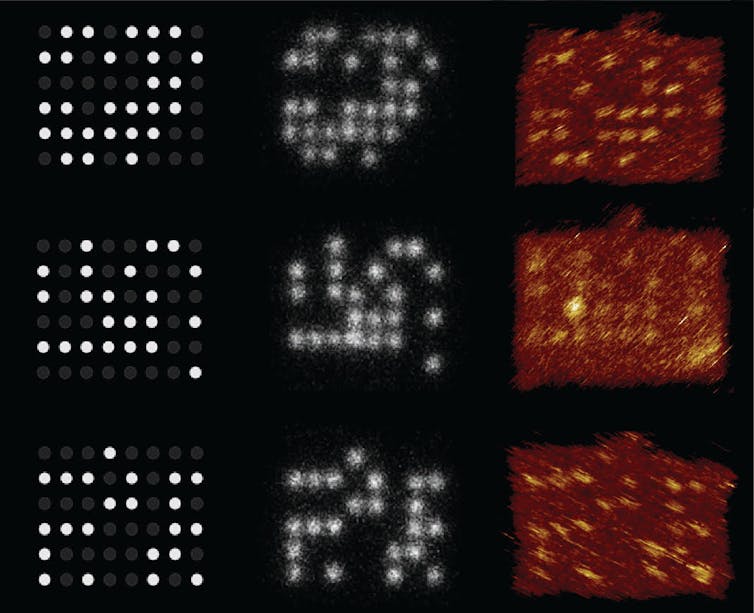
Three columns and three rows of dots against a dark background
Digital nucleic acid memory (dNAM) uses light-emitting DNA strands to read the data optically rather than requiring sequencing. The left column shows patterns designed for encoding data, the middle column shows optical readout of data stored in DNA using super-resolution microscopy, and the right column shows Atomic Force Microscope images of the DNA nanostructures. Each 6 x 8 pegboard is roughly 70 x 90 nanometers. Nucleic Acid Memory Institute at Boise State University, CC BY-ND

The patterns of DNA strands – the pegs – light up when fluorescently labeled DNA bind to them. Because the fluorescent strands are short, they rapidly bind and unbind. This causes them to blink, making it easier to separate one peg from another and read the stored information. We use the fluorescent patterns of each pegboard as a code to store chunks of data.


AlsoRead...

Brandon Willington: The Marketing Entrepreneur turning heads across Australia

Brandon Willington: The Marketing Entrepreneur Turning Heads Across Australia

8 January 2026
How Turnkey Building Group Is Restoring Trust In An Industry Known For Customer Disappointment

How Turnkey Building Group Is Restoring Trust In An Industry Known For Customer Disappointment

17 December 2025

The microscope can image hundreds of thousands of the DNA pegs in a single recording, and our error-correction algorithms ensure we recover all of the data. After accounting for the bits used by the algorithms, our prototype was able to read data at a density of 330 gigabits per square centimeter.

Why it matters

You’re not likely to have a DNA storage device in your phone or computer, at least anytime soon. DNA data storage is promising for archival storage – storing large amounts of information for long periods of time. DNA can store a lot of information in a small space. It would be possible to store every tweet, email, photo, song, movie and book ever created in a volume equivalent to a jewelry box. And data stored in DNA could last for centuries, given that the biomolecule has a half-life of over 500 years.

What other research is being done

Researchers have been developing methods of storing data in DNA for several decades. Those methods involve the design and synthesis of unique strings of information made from the DNA nucleotides adenine (A), thymine (T), cytosine (C) and guanine (G). This information is recovered by reading the strings using sequencing technology.

What’s next

From here, our goal is to increase the amount of data that we can store in dNAM, decrease the amount of time it takes to write and read the data, and use the technique to encrypt data.

[Get our best science, health and technology stories. Sign up for The Conversation’s science newsletter.]

Will Hughes, Professor of Materials Science & Engineering, Boise State University; George David Dickinson, Post-Doctoral Research Scientist in Materials Science and Engineering, Boise State University, and Luca Piantanida, Post-Doctoral Research Scientist in Materials Science and Engineering, Boise State University

This article is republished from The Conversation under a Creative Commons license. Read the original article.


Tags: SB001
DMCA.com Protection Status

SUBSCRIBE to our NEWSLETTER

[mc4wp_form id=”2384248″]

Don't Miss

Lyca Mobile Australia’s Customer-First Overhaul Pays Off with Finder Award Win

by Fazila Olla-Logday
2 February 2026
Lyca Mobile Australia's Customer-First Overhaul Pays Off with Finder Award Win
Technology

Lyca Mobile Australia’s customer-first overhaul has earned a Finder Award, recognising its improved value, service, and stronger focus on Australian...

Read moreDetails

From Driveway to Dream Court: The Rise of High-Performance Hoops at Home in 2026

by Fazila Olla-Logday
20 January 2026
The Rise of High-Performance Hoops at Home in 2026
Sport

High-performance home basketball hoops are gaining momentum in 2026, as more homeowners invest in durable, professional-grade systems that combine advanced...

Read moreDetails

Brandon Willington: The Marketing Entrepreneur Turning Heads Across Australia

by Pauline Torongo
8 January 2026
Brandon Willington: The Marketing Entrepreneur turning heads across Australia
Business & Finance

Brandon Willington, founder of “Where U?” is changing the narrative for Australian businesses tired of inconsistent leads and empty promises.

Read moreDetails

How Turnkey Building Group Is Restoring Trust In An Industry Known For Customer Disappointment

by Fazila Olla-Logday
17 December 2025
How Turnkey Building Group Is Restoring Trust In An Industry Known For Customer Disappointment
Business & Finance

Turnkey Building Group is changing the narrative in an industry often associated with missed deadlines and broken promises. By prioritizing...

Read moreDetails

Risk Awareness for International Travellers – What Australians Should Know Before Entering Multi-State Regions

by Fazila Olla-Logday
10 December 2025
Schengen
Travel

This guide helps Australian travellers understand cross-border requirements, assess political and environmental risks, manage health and safety considerations, and prepare...

Read moreDetails

The evolution of Aesthetic Surgery through the lens of Dr Kourosh Tavakoli

by Pauline Torongo
4 December 2025
The evolution of Aesthetic Surgery through the lens of Dr. Kourosh Tavakoli
Health & Wellness

As global interest in Australian cosmetic surgery continues to grow, the combination of regulation, research and emerging digital tools is...

Read moreDetails

Ryan: Building real freedom through e-commerce

by Pauline Torongo
27 November 2025
Ryan: Building real freedom through e-commerce
Business & Finance

Ryan’s greatest achievement isn’t any single business or revenue milestone — it’s the ecosystem he’s built through the Change community.

Read moreDetails
Load More

Copyright © Blue Sky Publications Ltd. All Rights Reserved.
australiantimes.co.uk is a division of Blue Sky Publications Ltd. Reproduction without permission prohibited. DMCA.com Protection Status

  • About us
  • Write for Us
  • Advertise
  • Contact us
  • T&Cs, Privacy and GDPR
No Result
View All Result
  • News
    • Weather
    • Sport
    • Technology
    • Business & Finance
      • Currency Zone
    • Lotto Results
      • The Lott
  • Lifestyle
    • Entertainment
    • Horoscopes
    • Health & Wellness
    • Recipes
  • Travel
  • Expat Life
  • Move to Australia

Copyright © Blue Sky Publications Ltd. All Rights Reserved.
australiantimes.co.uk is a division of Blue Sky Publications Ltd. Reproduction without permission prohibited. DMCA.com Protection Status

No Result
View All Result
  • News
    • Weather
    • Sport
    • Technology
    • Business & Finance
      • Currency Zone
    • Lotto Results
      • The Lott
  • Lifestyle
    • Entertainment
    • Horoscopes
    • Health & Wellness
    • Recipes
  • Travel
  • Expat Life
  • Move to Australia

Copyright © Blue Sky Publications Ltd. All Rights Reserved.
australiantimes.co.uk is a division of Blue Sky Publications Ltd. Reproduction without permission prohibited. DMCA.com Protection Status





