

• Advertise
  • About us
  • Terms and Conditions
  • Contact us
Saturday, December 6, 2025
Australian Times News
  • News
    • Weather
    • Sport
    • Technology
    • Business & Finance
      • Currency Zone
    • Lotto Results
      • The Lott
  • Lifestyle
    • Entertainment
    • Horoscopes
    • Health & Wellness
    • Recipes
  • Travel
  • Expat Life
  • Move to Australia
No Result
View All Result
  • News
    • Weather
    • Sport
    • Technology
    • Business & Finance
      • Currency Zone
    • Lotto Results
      • The Lott
  • Lifestyle
    • Entertainment
    • Horoscopes
    • Health & Wellness
    • Recipes
  • Travel
  • Expat Life
  • Move to Australia
No Result
View All Result
Australian Times News
No Result
View All Result
Home News

Why imported veg is still more sustainable than local meat

Local-food supporters like the colleague quoted above often claim that consuming food within a short radius (distance varies across countries) will enhance human wellbeing while also radically reducing greenhouse gas emissions. There is evidence to suggest that local food production and consumption has positive impacts on employment, health, community development, local economies, humanitarian aid, biodiversity and more.

The Conversation by The Conversation
09-05-2021 01:45
in News
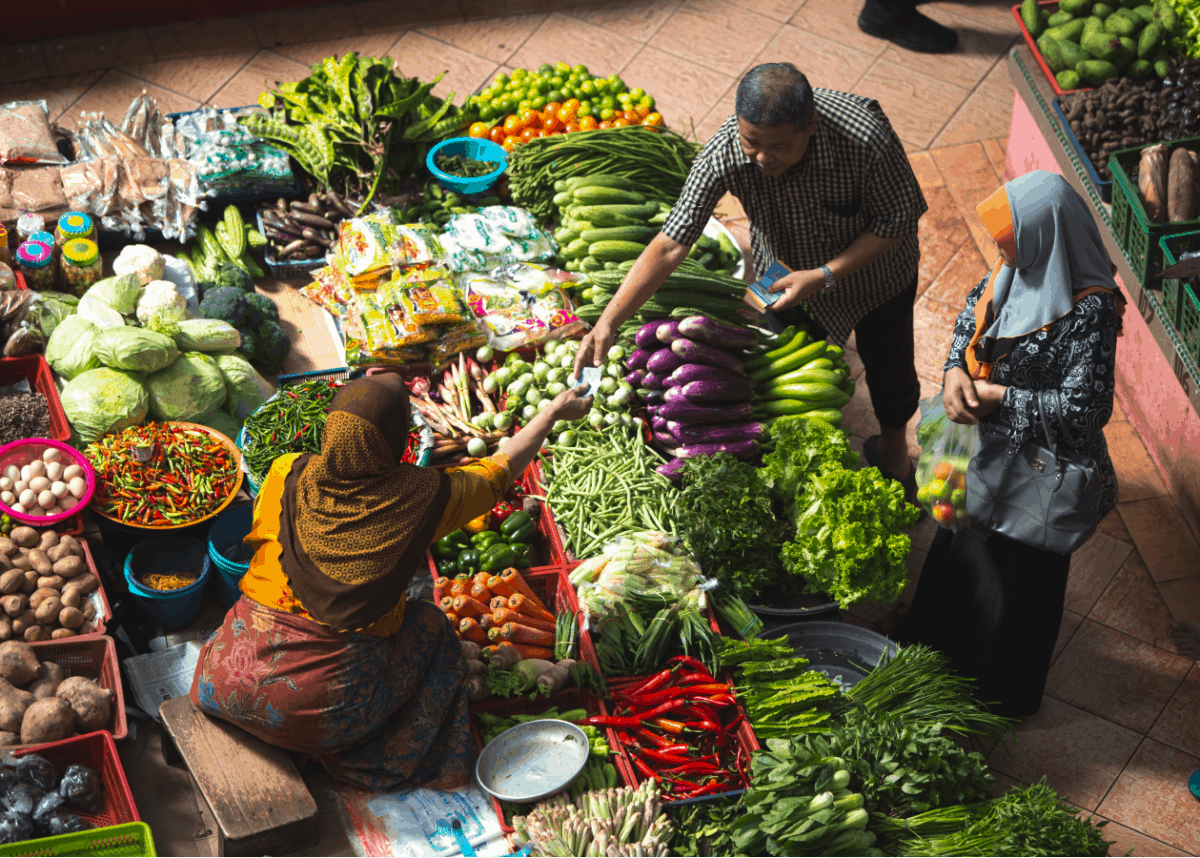
Photo by Alex Hudson on Unsplash

Photo by Alex Hudson on Unsplash

Tamas Lestar, University of Winchester

A former colleague who was a researcher and promoter of local food systems once argued that local meat markets connect children with reality. “If young people do not have a direct experience with food”, he told me, “they might think it originates on supermarket shelves. Local butcheries improve food literacy and reduce the disconnect between consumers and their choices.” Many would dispute this approach today, but I get the point. The question is: how does it sit with what we know about food and the environment?

Local-food supporters like the colleague quoted above often claim that consuming food within a short radius (distance varies across countries) will enhance human wellbeing while also radically reducing greenhouse gas emissions. There is evidence to suggest that local food production and consumption has positive impacts on employment, health, community development, local economies, humanitarian aid, biodiversity and more.

At the same time, it is not possible to regard all locally sourced products as more sustainable than food imported from distant places. Before it gets on our plate, food typically goes through several months of preparation, production, storage and distribution. The ecological efficiency of this cycle depends on several factors such as the quality of soil, weather conditions, suitability of climate, methods of production and storage.

So to better understand the planetary impact of our diet, we need to evaluate our food choices from a variety of perspectives. And while the shipping distance offers one variable, it is not the only one. As a matter of fact, transport emissions are relatively small for most food items, accounting only for about 10% of all emissions.

One stark exception is when food is airlifted instead of shipped via sea or road. In cases such as the Kenyan green beans or Mauritian pineapples that are flown around the world, transport can account for more than 90% of the items’ overall carbon footprint.
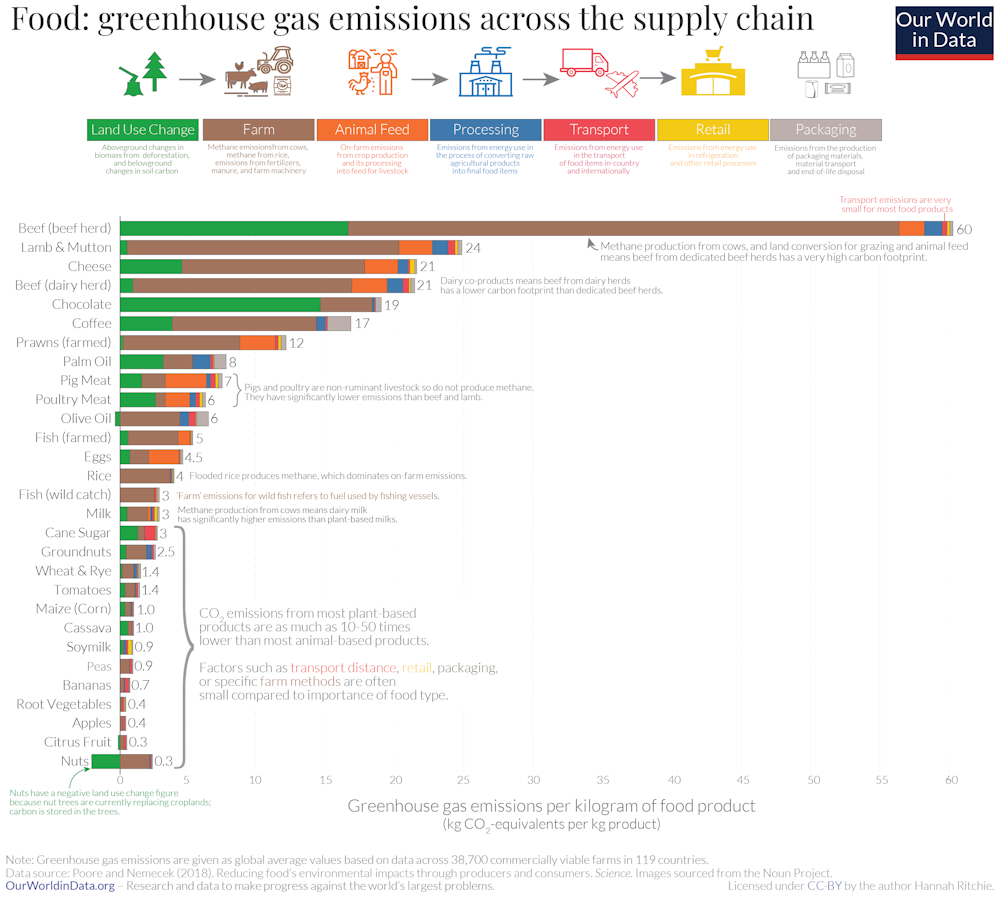
Chart showing greenhouse gas emissions for various foods
Beef, mutton and cheese cause the most greenhouse gas emissions per kilo. Our World In Data. Data: Poore and Nemecek (2018), Science, CC BY-SA

According to a study in Science, summarised by Our World in Data in the chart above, the two biggest culprits in greenhouse gas emissions are changes in land use such as converting forests into fields or pasture, and farming processes. The latter includes methane emissions from ruminating animals and rice production, emissions from organic or synthetic fertilisers, and machinery. Together, these two factors make up more than 80% of the footprint for most foods, a staggering amount compared to the 10% from transport. Likewise, emissions are comparatively negligible from all other post-production activities combined, including processing, retail, and packaging.


AlsoRead...

Ryan: Building real freedom through e-commerce

Ryan: Building real freedom through e-commerce

27 November 2025
Design Australia Group: Redefining Drafting as the engine of housing growth

Design Australia Group: Redefining Drafting as the engine of housing growth

26 November 2025

One major challenge today is an overall increase in demand for meat products. The infographic above clearly shows the vast emissions differences between plant-based and animal sources, with beef herd at the very top (60 kg CO₂ equivalent per kilo) and nut trees at the lowest end of the scale (just 0.3 kg CO₂ equivalent per kilo, partly because nut trees often replace croplands and then store carbon in the trees).

Almost without exception, meat items score extremely badly. Fishing seems to do better than other meat industries at 3-5 kg CO₂ equivalent per kilo, but it is now being intensely criticsed for plastic pollution and other harms. Nonetheless, while plant-based items are generally far more sustainable, some also score poorly such as coffee, cocoa and palm oil.

Another important point is that comparisons between the emission rates of identical food items often need to be made on a case-to-case basis. The UK cannot by default claim its tomatoes are more sustainable than those produced in Spain, for example, or vice versa. If they are grown in heated greenhouses in the UK and unheated ones in Spain, the latter will most probably cause far less environmental harm even if transported abroad. However, if they are produced in greenhouses in Spain and in open fields in the UK, the British ones could be the more optimal choice, subject to some other factors such as fertilising and energy use.
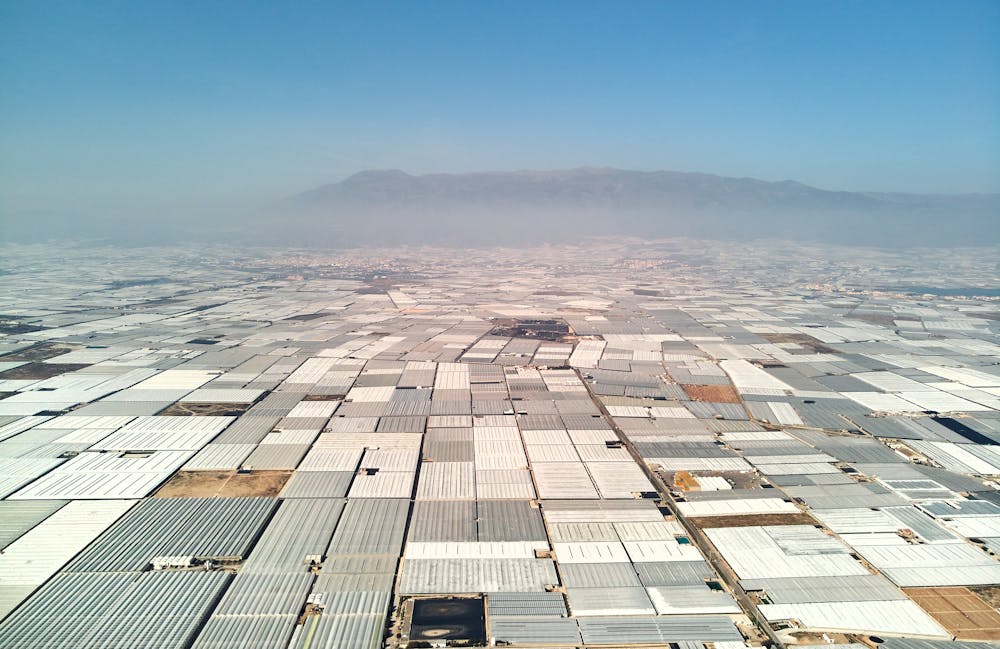
Lots of greenhouses seen from above
Spain’s huge greenhouses don’t need any extra heat. Alex Tihonovs

So sustainable buying is not as straightforward as simply checking whether an item is locally sourced or not. Due to the lack of a standardised footprint labelling system, catering more sustainable foods requires the consideration of multiple factors.

As a rule of thumb, one can be almost certain that meat products, local or not, are less sustainable than vegetables imported even from the furthest point of the globe. Medical or ethical considerations aside, emissions from meat are simply too high, a fact which makes food miles a negligible part of the comparison.

Of course, some plant-based items also cause lots of emissions, but this is not related to their transportation. The meat of grazing animals remains the worst choice from an emissions perspective. Let us remember this before we next chew on our local mutton. And for food literacy training, we can show children what real tomatoes look like before they land on their chips or pizza.

Tamas Lestar, Lecturer in Responsible Management, University of Winchester

This article is republished from The Conversation under a Creative Commons license. Read the original article.


Tags: SB001
DMCA.com Protection Status

SUBSCRIBE to our NEWSLETTER

[mc4wp_form id=”2384248″]

Don't Miss

The evolution of Aesthetic Surgery through the lens of Dr Kourosh Tavakoli

by Pauline Torongo
4 December 2025
The evolution of Aesthetic Surgery through the lens of Dr. Kourosh Tavakoli
Health & Wellness

As global interest in Australian cosmetic surgery continues to grow, the combination of regulation, research and emerging digital tools is...

Read moreDetails

Ryan: Building real freedom through e-commerce

by Pauline Torongo
27 November 2025
Ryan: Building real freedom through e-commerce
Business & Finance

Ryan’s greatest achievement isn’t any single business or revenue milestone — it’s the ecosystem he’s built through the Change community.

Read moreDetails

Design Australia Group: Redefining Drafting as the engine of housing growth

by Pauline Torongo
26 November 2025
Design Australia Group: Redefining Drafting as the engine of housing growth
Business & Finance

Australia is under pressure to build homes faster, but design bottlenecks slow progress. Design Australia Group is fixing this by...

Read moreDetails

Louis Guy Detata builds Global Trading Empires through autonomous systems and disciplined leadership

by Pauline Torongo
25 November 2025
Louis Guy Detata builds Global Trading Empires through autonomous systems and disciplined leadership
Business & Finance

The path from investment banking to leading a global trading platform has taught Louis Detata that sustainable success requires more...

Read moreDetails

Burning Eucalyptus Wood: Tips, Advantages, Disadvantages & Alternatives

by Fazila Olla-Logday
20 November 2025
Image Supplied
Enviroment

Learn about burning eucalyptus wood for stoves and fireplaces. Discover benefits, drawbacks, harvesting tips, and better alternative firewood options for...

Read moreDetails

Everything Parents Need to Know About Baby Soft Play and Why It’s a Game Changer

by Fazila Olla-Logday
11 November 2025
Everything Parents Need to Know About Baby Soft Play
Health & Wellness

Baby soft play is a fun, safe, and educational way for little ones to explore and grow. Discover the benefits...

Read moreDetails

WOMAD Sets Up a New Camp in Wiltshire – Australian festival fans take note!

by Kris Griffiths
11 November 2025
Kumbia Boruka brought their reggae and dancehall flavour to the Taste the World Stage at WOMAD 2024 - Credit - Mike Massaro
Entertainment

With its 2026 edition moving to Neston Park in England, WOMAD offers Aussie music lovers a chance to reconnect with global...

Read moreDetails
Load More

Copyright © Blue Sky Publications Ltd. All Rights Reserved.
australiantimes.co.uk is a division of Blue Sky Publications Ltd. Reproduction without permission prohibited. DMCA.com Protection Status

  • About us
  • Write for Us
  • Advertise
  • Contact us
  • T&Cs, Privacy and GDPR
No Result
View All Result
  • News
    • Weather
    • Sport
    • Technology
    • Business & Finance
      • Currency Zone
    • Lotto Results
      • The Lott
  • Lifestyle
    • Entertainment
    • Horoscopes
    • Health & Wellness
    • Recipes
  • Travel
  • Expat Life
  • Move to Australia

Copyright © Blue Sky Publications Ltd. All Rights Reserved.
australiantimes.co.uk is a division of Blue Sky Publications Ltd. Reproduction without permission prohibited. DMCA.com Protection Status

No Result
View All Result
  • News
    • Weather
    • Sport
    • Technology
    • Business & Finance
      • Currency Zone
    • Lotto Results
      • The Lott
  • Lifestyle
    • Entertainment
    • Horoscopes
    • Health & Wellness
    • Recipes
  • Travel
  • Expat Life
  • Move to Australia

Copyright © Blue Sky Publications Ltd. All Rights Reserved.
australiantimes.co.uk is a division of Blue Sky Publications Ltd. Reproduction without permission prohibited. DMCA.com Protection Status





