

• Advertise
  • About us
  • Terms and Conditions
  • Contact us
Sunday, December 7, 2025
Australian Times News
  • News
    • Weather
    • Sport
    • Technology
    • Business & Finance
      • Currency Zone
    • Lotto Results
      • The Lott
  • Lifestyle
    • Entertainment
    • Horoscopes
    • Health & Wellness
    • Recipes
  • Travel
  • Expat Life
  • Move to Australia
No Result
View All Result
  • News
    • Weather
    • Sport
    • Technology
    • Business & Finance
      • Currency Zone
    • Lotto Results
      • The Lott
  • Lifestyle
    • Entertainment
    • Horoscopes
    • Health & Wellness
    • Recipes
  • Travel
  • Expat Life
  • Move to Australia
No Result
View All Result
Australian Times News
No Result
View All Result
Home News

Submarines are designed to hide – so what happens when one goes missing?

In waters north of Bali, a frantic search is underway for the Indonesian submarine KRI Nanggala, missing with 53 crew since the boat failed to make a routine signal report on Wednesday morning.

The Conversation by The Conversation
24-04-2021 22:31
in News
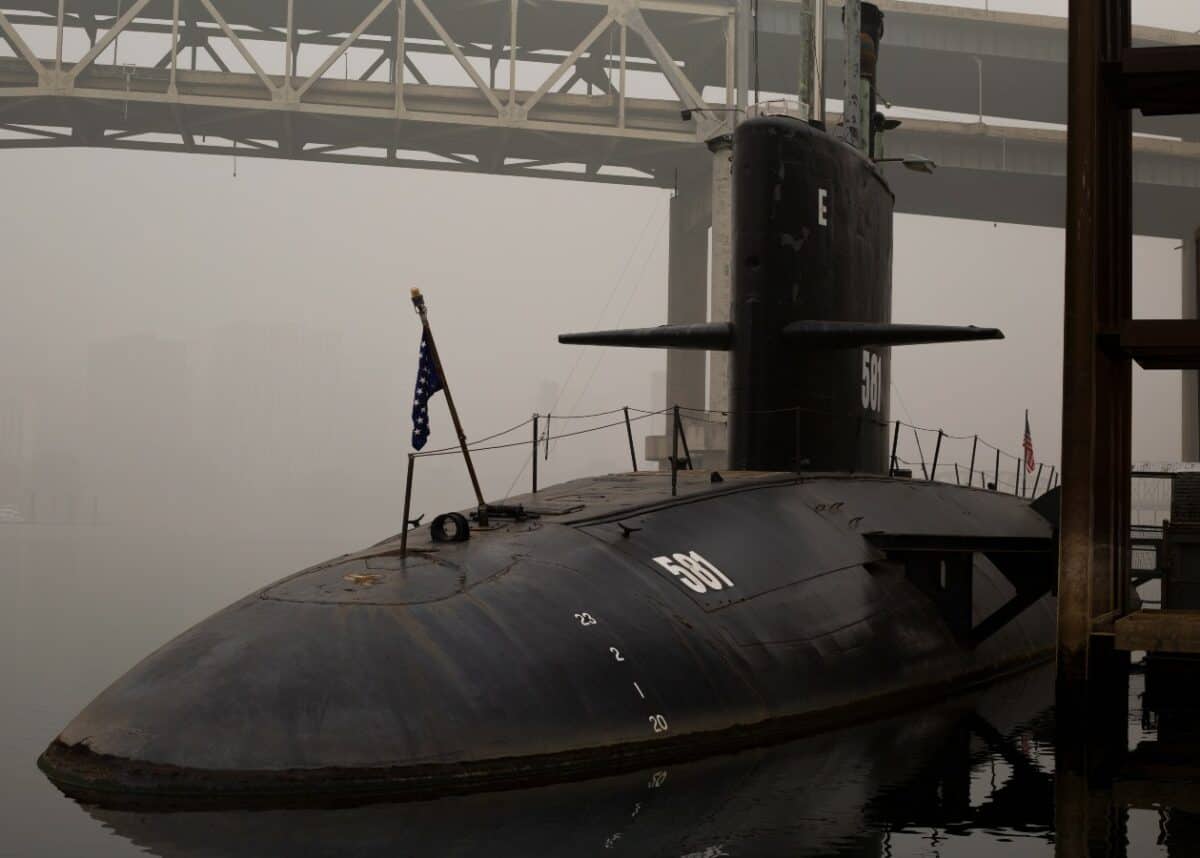
Photo by Darren Halstead on Unsplash

Photo by Darren Halstead on Unsplash

James Goldrick, Australian National University

In waters north of Bali, a frantic search is underway for the Indonesian submarine KRI Nanggala, missing with 53 crew since the boat failed to make a routine signal report on Wednesday morning.

How to hunt a submarine

There are two key challenges when a submarine goes missing. The first is finding it. A submarine is inherently covert. When the Nanggala dived as part of a routine exercise, it is unlikely the boat was being tracked. Even in a close-range exercise it can be very difficult to maintain sonar contact with a submarine.

While Nanggala may have had a known planned track, the only certainty is where the submarine was when it last reported on Wednesday. Typically, the first indication of a missing submarine, unless there has been an obvious collision with a surface vessel, is the absence of the routine “all is well” report.

Navies have pre-planned procedures for instituting checks and initiating searches if a submarine fails to call in. These are immediately activated when such a report is not received. They rapidly move from what have been termed “SUBLOOK” procedures (looking for a submarine) to “SUBMISS” (submarine is missing) and then, when hope has been lost or evidence of an accident comes in, the self-explanatory “SUBSUNK”.

A large area of uncertainty

However many searchers and however sophisticated their sensors, there will almost always be an area of uncertainty, and it can be very large. The faster the submarine has been moving and the longer the interval since its last check, the greater that area will be.

Submarines have emergency indicator buoys which can be released to mark their position in the event of an accident. That is provided, of course, the accident did not incapacitate the crew.


AlsoRead...

Ryan: Building real freedom through e-commerce

Ryan: Building real freedom through e-commerce

27 November 2025
Design Australia Group: Redefining Drafting as the engine of housing growth

Design Australia Group: Redefining Drafting as the engine of housing growth

26 November 2025

In shallow water, the buoys can remain tethered to the submarine. In deep water they become free-floating, so when the buoys are detected search units must calculate back to the estimated release position, with all the uncertainties that wind and currents bring. This is also the case for any debris or oil slicks on the sea surface – such as the one possibly detected by Indonesian units searching for the missing Nanggala.

Difficulties of deep water

The next problem is the ocean floor is rarely flat. Even if the waters are not deep enough to have collapsed the submarine hull under pressure – something that happened to the very similar Argentinian submarine San Juan in 2017 when it sank in 900 metres of water – it can be very hard to detect the vessel among seabed features.

The search for the San Juan, even though aided by triangulation of the seismic signature of its implosion at depth, took a whole year, with minute examination of the seabed using high-frequency sonar and underwater television cameras. It is conceivable the search for the Nanggala could take as long, or longer.

Once the submarine is found, there is no guarantee anyone aboard is still alive, even if the hull has not imploded. If one or more compartments have flooded, there may be survivors in other sections, but they will have limited air. And that is a key problem.

Too much depth, too little time

Time is not on survivors’ side. The problem is, as stated by the Indonesian Navy, that the 53 crewmembers of the Nanggala would have only about 72 hours of air once their submarine is disabled. This would mean air is likely to run out some time on Saturday morning.

It is possible to make individual free ascent escapes from a sunken submarine, but this inherently dangerous procedure becomes increasingly risky as water depth increases. Nanggala was operating in an area with depths of up to 700 metres. This is far, far too deep for such methods, although it is just possible the hull has not imploded.

Even if Nanggala is still intact, however, it is also likely 700 metres is too deep for rescue equipment. There are well-developed international procedures for providing help in the event of a submarine accident, and several rescue ships and systems are being activated by other nations as well as Indonesia.

Ideally, a deep-water rescue unit can be deployed to mate to a hatch on the submarine and embark the survivors – if the hatch is accessible and if the water is not too deep for the rescue unit concerned. But if the boat is near 700 metres, that may be too deep.

In any case, such a submersible has to travel to the scene. While systems such as the 24-person capacity American Deep Submergence Rescue Vehicle (DSRV) can be flown into a region, they then need to be placed aboard a mother ship and sailed to the location of the wreck.

In the case of Nanggala, the Indian Navy has despatched a submarine rescue vessel to help the Indonesians, but this will take around six days to reach the area, and practically every other rescue system that can be made available would also likely arrive too late to help the crew.

And Nanggala has yet to be found.


James Goldrick, Adjunct Professor in Naval and Maritime Strategy and Policy, Australian National University

This article is republished from The Conversation under a Creative Commons license. Read the original article.


Tags: SB001
DMCA.com Protection Status

SUBSCRIBE to our NEWSLETTER

[mc4wp_form id=”2384248″]

Don't Miss

The evolution of Aesthetic Surgery through the lens of Dr Kourosh Tavakoli

by Pauline Torongo
4 December 2025
The evolution of Aesthetic Surgery through the lens of Dr. Kourosh Tavakoli
Health & Wellness

As global interest in Australian cosmetic surgery continues to grow, the combination of regulation, research and emerging digital tools is...

Read moreDetails

Ryan: Building real freedom through e-commerce

by Pauline Torongo
27 November 2025
Ryan: Building real freedom through e-commerce
Business & Finance

Ryan’s greatest achievement isn’t any single business or revenue milestone — it’s the ecosystem he’s built through the Change community.

Read moreDetails

Design Australia Group: Redefining Drafting as the engine of housing growth

by Pauline Torongo
26 November 2025
Design Australia Group: Redefining Drafting as the engine of housing growth
Business & Finance

Australia is under pressure to build homes faster, but design bottlenecks slow progress. Design Australia Group is fixing this by...

Read moreDetails

Louis Guy Detata builds Global Trading Empires through autonomous systems and disciplined leadership

by Pauline Torongo
25 November 2025
Louis Guy Detata builds Global Trading Empires through autonomous systems and disciplined leadership
Business & Finance

The path from investment banking to leading a global trading platform has taught Louis Detata that sustainable success requires more...

Read moreDetails

Burning Eucalyptus Wood: Tips, Advantages, Disadvantages & Alternatives

by Fazila Olla-Logday
20 November 2025
Image Supplied
Enviroment

Learn about burning eucalyptus wood for stoves and fireplaces. Discover benefits, drawbacks, harvesting tips, and better alternative firewood options for...

Read moreDetails

Everything Parents Need to Know About Baby Soft Play and Why It’s a Game Changer

by Fazila Olla-Logday
11 November 2025
Everything Parents Need to Know About Baby Soft Play
Health & Wellness

Baby soft play is a fun, safe, and educational way for little ones to explore and grow. Discover the benefits...

Read moreDetails

WOMAD Sets Up a New Camp in Wiltshire – Australian festival fans take note!

by Kris Griffiths
11 November 2025
Kumbia Boruka brought their reggae and dancehall flavour to the Taste the World Stage at WOMAD 2024 - Credit - Mike Massaro
Entertainment

With its 2026 edition moving to Neston Park in England, WOMAD offers Aussie music lovers a chance to reconnect with global...

Read moreDetails
Load More

Copyright © Blue Sky Publications Ltd. All Rights Reserved.
australiantimes.co.uk is a division of Blue Sky Publications Ltd. Reproduction without permission prohibited. DMCA.com Protection Status

  • About us
  • Write for Us
  • Advertise
  • Contact us
  • T&Cs, Privacy and GDPR
No Result
View All Result
  • News
    • Weather
    • Sport
    • Technology
    • Business & Finance
      • Currency Zone
    • Lotto Results
      • The Lott
  • Lifestyle
    • Entertainment
    • Horoscopes
    • Health & Wellness
    • Recipes
  • Travel
  • Expat Life
  • Move to Australia

Copyright © Blue Sky Publications Ltd. All Rights Reserved.
australiantimes.co.uk is a division of Blue Sky Publications Ltd. Reproduction without permission prohibited. DMCA.com Protection Status

No Result
View All Result
  • News
    • Weather
    • Sport
    • Technology
    • Business & Finance
      • Currency Zone
    • Lotto Results
      • The Lott
  • Lifestyle
    • Entertainment
    • Horoscopes
    • Health & Wellness
    • Recipes
  • Travel
  • Expat Life
  • Move to Australia

Copyright © Blue Sky Publications Ltd. All Rights Reserved.
australiantimes.co.uk is a division of Blue Sky Publications Ltd. Reproduction without permission prohibited. DMCA.com Protection Status





