

• Advertise
  • About us
  • Terms and Conditions
  • Contact us
Saturday, December 6, 2025
Australian Times News
  • News
    • Weather
    • Sport
    • Technology
    • Business & Finance
      • Currency Zone
    • Lotto Results
      • The Lott
  • Lifestyle
    • Entertainment
    • Horoscopes
    • Health & Wellness
    • Recipes
  • Travel
  • Expat Life
  • Move to Australia
No Result
View All Result
  • News
    • Weather
    • Sport
    • Technology
    • Business & Finance
      • Currency Zone
    • Lotto Results
      • The Lott
  • Lifestyle
    • Entertainment
    • Horoscopes
    • Health & Wellness
    • Recipes
  • Travel
  • Expat Life
  • Move to Australia
No Result
View All Result
Australian Times News
No Result
View All Result
Home News

Environmental DNA – how a tool used to detect endangered wildlife ended up helping fight the COVID-19 pandemic

Imagine discovering an animal species you thought had gone extinct was still living – without laying eyes on it. Such was the case with the Brazilian frog species Megaelosia bocainensis, whose complete disappearance in 1968 led scientists to believe it had become extinct.

The Conversation by The Conversation
24-04-2021 09:17
in News
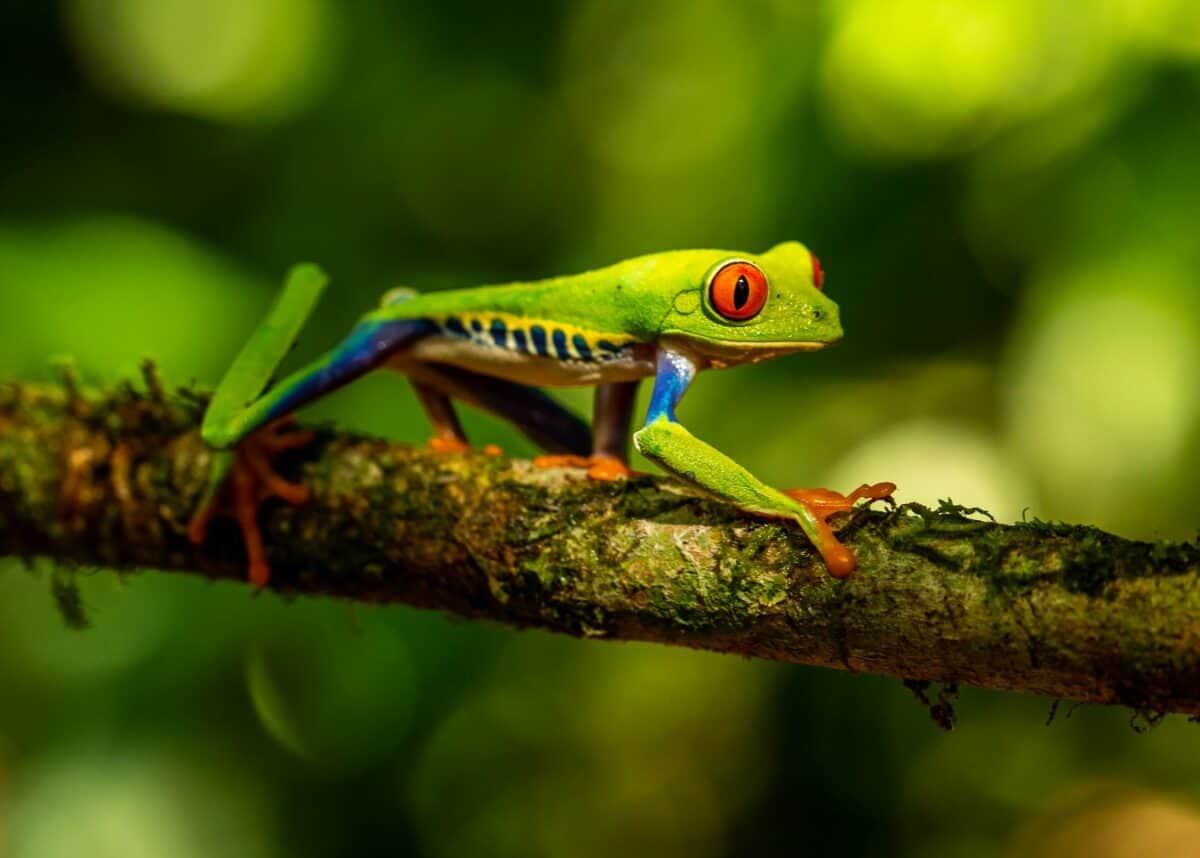
Photo by Zdeněk Macháček on Unsplash

Photo by Zdeněk Macháček on Unsplash

Jessica Alice Farrell, University of Florida; David Duffy, University of Florida, and Liam Whitmore, University of Limerick

Imagine discovering an animal species you thought had gone extinct was still living – without laying eyes on it. Such was the case with the Brazilian frog species Megaelosia bocainensis, whose complete disappearance in 1968 led scientists to believe it had become extinct. But through a novel genetic detection technique, it was rediscovered in 2020.

Such discoveries are now possible thanks to a new approach that recovers and reads the trace amounts of DNA released into the environment by animals. It’s called environmental DNA, or eDNA – and it takes advantage of the fact that every animal sheds DNA into its environment via skin, hair, scales, feces or bodily fluids as it moves through the world.

As wildlife biologists at the University of Florida’s Whitney Laboratory for Marine Bioscience & Sea Turtle Hospital, we use eDNA to track a virus responsible for a sea turtle pandemic called fibropapillomatosis, which causes debilitating tumors. We also use eDNA to detect sea turtles in the wild.

But in 2020, human health researchers began repurposing eDNA techniques to track the COVID-19 pandemic. This is a prime example of how research in one area – wildlife conservation – can be adapted to another area – human disease mitigation. Going forward, we believe eDNA will prove to be an essential tool for monitoring both human and animal health.

From soil microbes to sea turtles

Scientists in the 1980s began hunting for microbe DNA in soil samples. Over the next 20 years, the technique was adapted for use with air and water samples, and scientists started using eDNA to detect larger animals and plants.
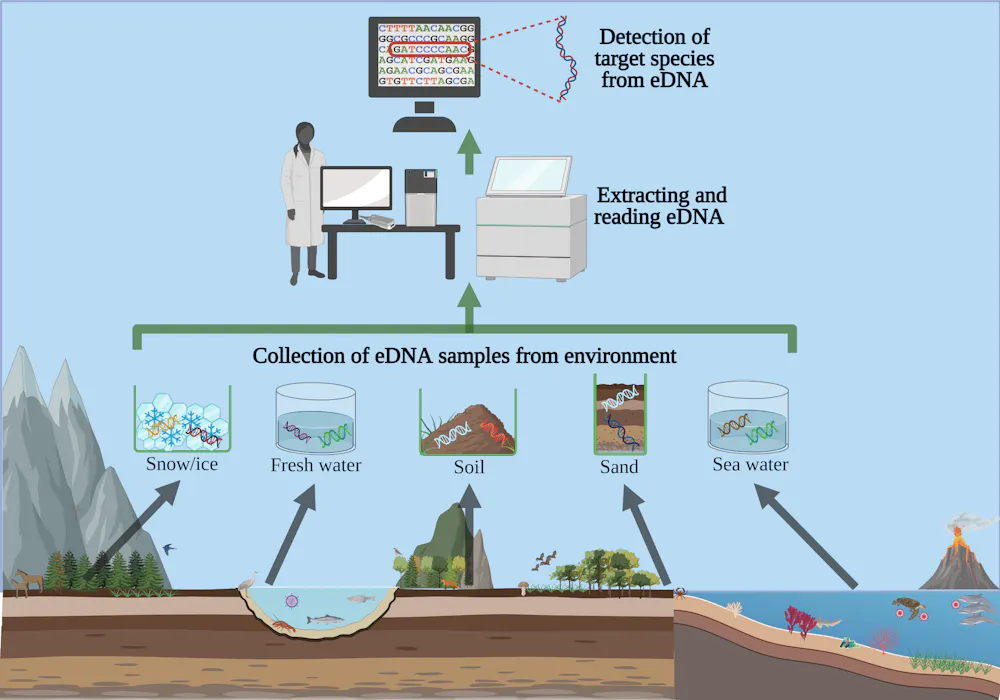
A flowchart of how snow/ice, freshwater, soil, sand or seawater samples can be collected and analyzed for their DNA.
Scientists now can detect DNA traces from many different environments. Liam Whitmore, University of Limerick, CC BY-ND

While the science behind eDNA techniques is complex, the actual process of collecting and testing a sample is relatively simple. Samples are filtered through very fine paper, which traps loose cells and strands of DNA. The techniques to read what DNA is present are the same as those used for tissue or blood samples, usually quantitative polymerase chain reaction or whole genome sequencing. Scientists can either read all of the DNA present from every organism – or target just the DNA from species of interest.


AlsoRead...

Ryan: Building real freedom through e-commerce

Ryan: Building real freedom through e-commerce

27 November 2025
Design Australia Group: Redefining Drafting as the engine of housing growth

Design Australia Group: Redefining Drafting as the engine of housing growth

26 November 2025

Scientists now routinely use eDNA to detect endangered wildlife and invasive species. The ability to tell whether an animal is present without ever needing to lay eyes or a lens on it is an incredible leap forward, decreasing the time, resources and human effort needed to monitor and protect vulnerable species.
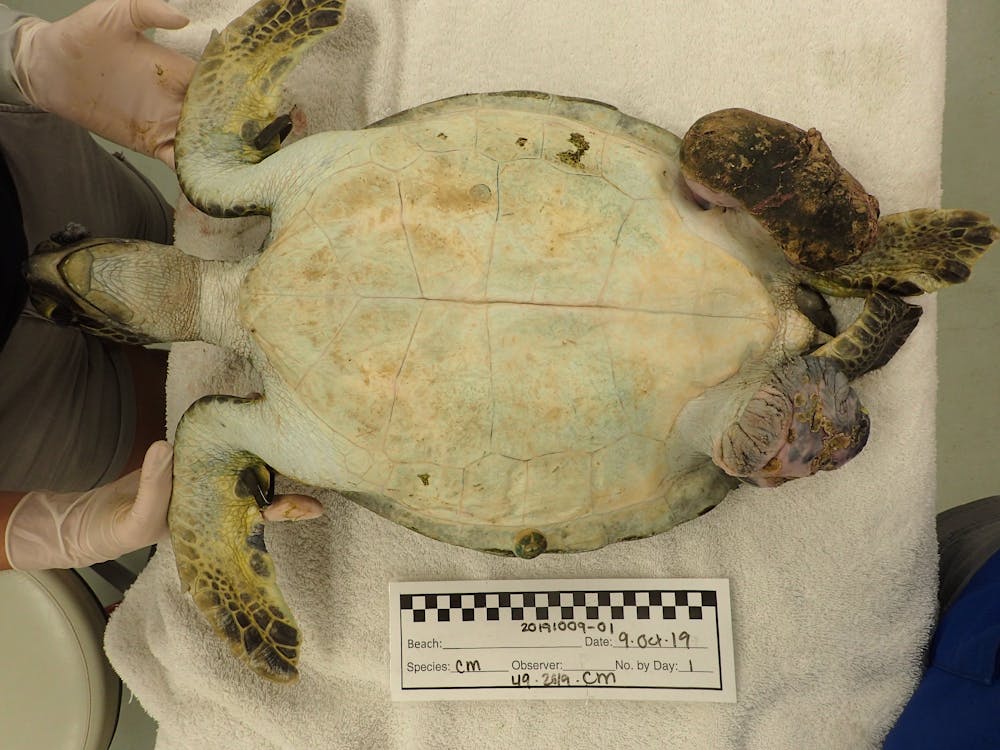
A sea turtle on its back in an exam room. One of its flippers is severely deformed.
Routine imaging of a juvenile green sea turtle patient afflicted with virus-triggered fibropapillomatosis at the Florida Whitney Sea Turtle Hospital. Devon Rollinson-Ramia, CC BY-ND

However, to truly protect endangered species, it’s not just the animals that need to be monitored, but the pathogens that threaten their survival. Environmental DNA is able to monitor the parasites, fungi and viruses that can cause disease in wildlife.

Tracking COVID-19

While scientists originally applied eDNA to human pathogen detection over a decade ago, it wasn’t until the beginning of the current COVID-19 human pandemic that the repurposing of eDNA took off on a large scale, allowing the technology to make staggering advancements in very short order.

Coronavirus genomes consist not of DNA, but rather its cousin molecule, RNA. So researchers have rapidly optimized a variation of eDNA – eRNA – to detect coronavirus RNA in air and human wastewater.

For example, at the University of Florida Health Shands Hospital, researchers collected air samples from the hospital room of two COVID-19 patients. Using eRNA, they successfully isolated and sequenced the virus. Confirming air as a key route of transmission directly influenced public health guidelines.
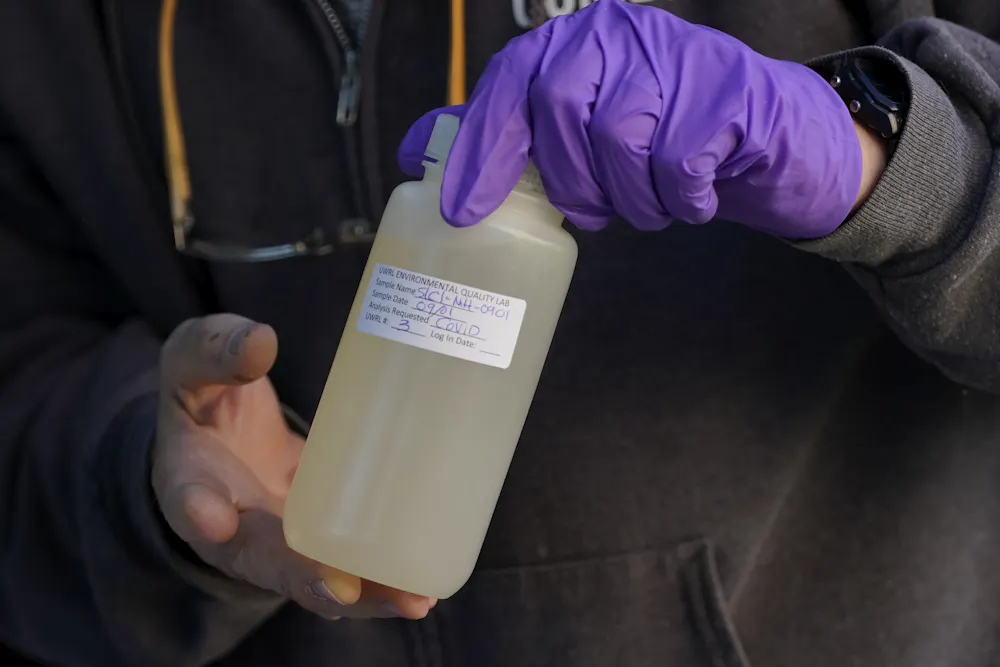
A gloved hand holds a sealed plastic bottle of murky-looking water.
Collecting sewage samples to test for SARS-CoV-2 at Utah State University in September 2020. AP Photo/Rick Bowmer

When scientists apply eRNA to archived wastewater samples, the true dates of SARS-CoV-2 appearance can be detected. SARS-CoV-2 concentration in wastewater in Valencia, Spain, peaked on March 9, 2020, but the number of clinical cases didn’t peak until the start of April 2020 because of the lag time between infection and severe clinical symptoms.

This sort of predictive monitoring has profound implications for health care systems, allowing time to prepare – not just for COVID-19, but for any future disease outbreaks that threaten human populations.

[Understand new developments in science, health and technology, each week. Subscribe to The Conversation’s science newsletter.]

Intersection of diseases

It’s vital that human and animal diseases are studied together. Sixty percent of emerging human pathogens come from animals – with many of these (42%) originating in wildlife populations, including Ebola, Zika, West Nile and Marburg viruses. Alternatively, people can also transmit pathogens to animals.

SARS-CoV-2 has already infected apes at a zoo in San Diego, large cats at a zoo in New York and minks at farms in Europe – the latter of which gave rise to new variants that could prove a new threat to people.

Medics, veterinarians and scientists call this convergence of human, animal and environmental well-being OneHealth or EcoHealth. Studying and treating human and wildlife disease together recognizes their commonalities and often yields breakthroughs.

With eDNA, all pathogens can be monitored in an environment regardless of where they come from. An integrated eDNA monitoring program could cost-effectively provide advanced warning of human, livestock and wildlife diseases.

Jessica Alice Farrell, PhD Candidate in Biology, University of Florida; David Duffy, Assistant Professor of Wildlife Disease Genomics, University of Florida, and Liam Whitmore, PhD Candidate, Department of Biological Sciences, University of Limerick

This article is republished from The Conversation under a Creative Commons license. Read the original article.


Tags: SB001
DMCA.com Protection Status

SUBSCRIBE to our NEWSLETTER

[mc4wp_form id=”2384248″]

Don't Miss

The evolution of Aesthetic Surgery through the lens of Dr Kourosh Tavakoli

by Pauline Torongo
4 December 2025
The evolution of Aesthetic Surgery through the lens of Dr. Kourosh Tavakoli
Health & Wellness

As global interest in Australian cosmetic surgery continues to grow, the combination of regulation, research and emerging digital tools is...

Read moreDetails

Ryan: Building real freedom through e-commerce

by Pauline Torongo
27 November 2025
Ryan: Building real freedom through e-commerce
Business & Finance

Ryan’s greatest achievement isn’t any single business or revenue milestone — it’s the ecosystem he’s built through the Change community.

Read moreDetails

Design Australia Group: Redefining Drafting as the engine of housing growth

by Pauline Torongo
26 November 2025
Design Australia Group: Redefining Drafting as the engine of housing growth
Business & Finance

Australia is under pressure to build homes faster, but design bottlenecks slow progress. Design Australia Group is fixing this by...

Read moreDetails

Louis Guy Detata builds Global Trading Empires through autonomous systems and disciplined leadership

by Pauline Torongo
25 November 2025
Louis Guy Detata builds Global Trading Empires through autonomous systems and disciplined leadership
Business & Finance

The path from investment banking to leading a global trading platform has taught Louis Detata that sustainable success requires more...

Read moreDetails

Burning Eucalyptus Wood: Tips, Advantages, Disadvantages & Alternatives

by Fazila Olla-Logday
20 November 2025
Image Supplied
Enviroment

Learn about burning eucalyptus wood for stoves and fireplaces. Discover benefits, drawbacks, harvesting tips, and better alternative firewood options for...

Read moreDetails

Everything Parents Need to Know About Baby Soft Play and Why It’s a Game Changer

by Fazila Olla-Logday
11 November 2025
Everything Parents Need to Know About Baby Soft Play
Health & Wellness

Baby soft play is a fun, safe, and educational way for little ones to explore and grow. Discover the benefits...

Read moreDetails

WOMAD Sets Up a New Camp in Wiltshire – Australian festival fans take note!

by Kris Griffiths
11 November 2025
Kumbia Boruka brought their reggae and dancehall flavour to the Taste the World Stage at WOMAD 2024 - Credit - Mike Massaro
Entertainment

With its 2026 edition moving to Neston Park in England, WOMAD offers Aussie music lovers a chance to reconnect with global...

Read moreDetails
Load More

Copyright © Blue Sky Publications Ltd. All Rights Reserved.
australiantimes.co.uk is a division of Blue Sky Publications Ltd. Reproduction without permission prohibited. DMCA.com Protection Status

  • About us
  • Write for Us
  • Advertise
  • Contact us
  • T&Cs, Privacy and GDPR
No Result
View All Result
  • News
    • Weather
    • Sport
    • Technology
    • Business & Finance
      • Currency Zone
    • Lotto Results
      • The Lott
  • Lifestyle
    • Entertainment
    • Horoscopes
    • Health & Wellness
    • Recipes
  • Travel
  • Expat Life
  • Move to Australia

Copyright © Blue Sky Publications Ltd. All Rights Reserved.
australiantimes.co.uk is a division of Blue Sky Publications Ltd. Reproduction without permission prohibited. DMCA.com Protection Status

No Result
View All Result
  • News
    • Weather
    • Sport
    • Technology
    • Business & Finance
      • Currency Zone
    • Lotto Results
      • The Lott
  • Lifestyle
    • Entertainment
    • Horoscopes
    • Health & Wellness
    • Recipes
  • Travel
  • Expat Life
  • Move to Australia

Copyright © Blue Sky Publications Ltd. All Rights Reserved.
australiantimes.co.uk is a division of Blue Sky Publications Ltd. Reproduction without permission prohibited. DMCA.com Protection Status





