

• Advertise
  • About us
  • Terms and Conditions
  • Contact us
Saturday, December 6, 2025
Australian Times News
  • News
    • Weather
    • Sport
    • Technology
    • Business & Finance
      • Currency Zone
    • Lotto Results
      • The Lott
  • Lifestyle
    • Entertainment
    • Horoscopes
    • Health & Wellness
    • Recipes
  • Travel
  • Expat Life
  • Move to Australia
No Result
View All Result
  • News
    • Weather
    • Sport
    • Technology
    • Business & Finance
      • Currency Zone
    • Lotto Results
      • The Lott
  • Lifestyle
    • Entertainment
    • Horoscopes
    • Health & Wellness
    • Recipes
  • Travel
  • Expat Life
  • Move to Australia
No Result
View All Result
Australian Times News
No Result
View All Result
Home News

UK land now stores 7% more carbon than 300 years ago – what that means for the environment

The soil and everything that grows in it, including all plants and trees, represents about half of all organic carbon globally. This is the carbon that’s bound up in living and decaying matter, as opposed to rocks and minerals.

The Conversation by The Conversation
17-04-2021 22:35
in News
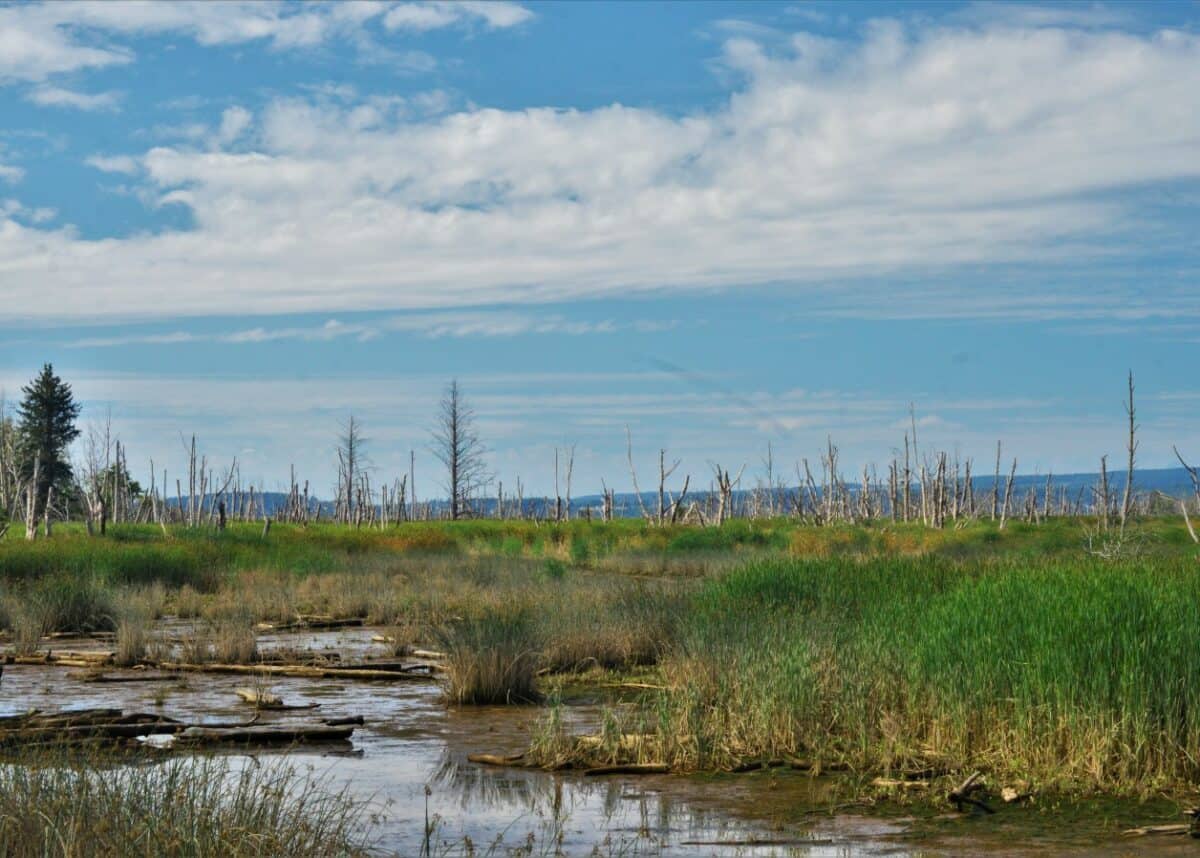
Photo by Bryan Hanson on Unsplash

Photo by Bryan Hanson on Unsplash

Victoria Janes-Bassett, Lancaster University and Jess Davies, Lancaster University

Limiting global warming to 1.5°C and avoiding the worst effects of climate change will take more than eliminating greenhouse gas emissions. The world will also need to capture and store a lot of carbon dioxide (CO₂) from the atmosphere.

Land offers one natural way of doing this. The soil and everything that grows in it, including all plants and trees, represents about half of all organic carbon globally. This is the carbon that’s bound up in living and decaying matter, as opposed to rocks and minerals. Depending on how humans treat it, the land can act as a net sink or source of carbon, either slowing or accelerating climate change. Planting trees can lock carbon away while deforestation and tilling the soil in agriculture can release it.

Since the dawn of the Industrial Revolution, the UK has emitted about 77 billion tonnes of CO₂. But how much has the country’s land area absorbed over the same period? Our new study set out to find an estimate by modelling natural cycles of carbon, nitrogen and phosphorus.

We found that over the last 300 years, the UK’s land carbon store has grown by about 7%, with vegetation storing 13% more carbon and soil 5% more than it did in the 18th century. Carbon storage increased most in forests and heathlands, and fell by the greatest amount in areas which were converted to arable farmland.

So the UK’s land carbon sink is working harder today than it was three centuries ago. Is that a good thing? As it turns out, not really.

Right direction, wrong reason

Since 1700, land carbon storage in the UK has increased by 233 million tonnes. That’s equivalent to 855 million tonnes of CO₂. The UK is one of the world’s largest historical emitters of carbon, so this only equates to 1.1% of the nation’s estimated emissions over the same period. But there’s a bigger problem: land-based carbon stores in the UK are unlikely to continue growing in the future for several reasons.


AlsoRead...

Ryan: Building real freedom through e-commerce

Ryan: Building real freedom through e-commerce

27 November 2025
Design Australia Group: Redefining Drafting as the engine of housing growth

Design Australia Group: Redefining Drafting as the engine of housing growth

26 November 2025

The biggest driver of the increase was pollution. When fertilisers are used in agriculture or fossil fuels are burned, these processes release reactive forms of nitrogen into the atmosphere. This is deposited on the land when it rains.

Since the availability of nitrogen normally limits how much plants can grow, this additional nitrogen acts like extra fertiliser, boosting the amount of carbon that vegetation can capture. More leaf and plant litter is produced, which rots and delivers carbon to the soil.

But areas which were converted to farmland showed steep declines in the size of their carbon stores. When land is cleared of vegetation, the carbon stored in it is lost. Even though farmers add more nitrogen to arable land through fertilisers, the crop plants that grow are harvested, and so their carbon doesn’t end up stored in the soil.

The net increase in the carbon that the UK’s land is storing came from the gains across natural habitats fertilised by nitrogen. These were only slightly larger than the carbon losses from land converted for agriculture. And plants won’t continue to respond to all the extra nitrogen from atmospheric pollution forever. Other factors, such as sunlight, or the availability of phosphorus and other important nutrients, will come into play and limit growth, restricting how much more carbon can be stored in vegetation.

To keep the land soaking up carbon this way, we’d need to continue releasing nitrogen into the atmosphere by burning fossil fuels and applying fertilisers to crops at the current rate. This isn’t a good solution. All that nitrogen seeps into waterways where it can deplete oxygen and kill aquatic wildlife. It also contributes to plant biodiversity loss, as few plant species are adapted to cope with the extra nitrogen, which also increases the acidity of the soil.

Soil on arable farmland is still losing carbon, while gains in natural habitats are slowing. If these trends continue, the small net gain in carbon storage that we’ve observed across the UK since the 18th century could be reversed.
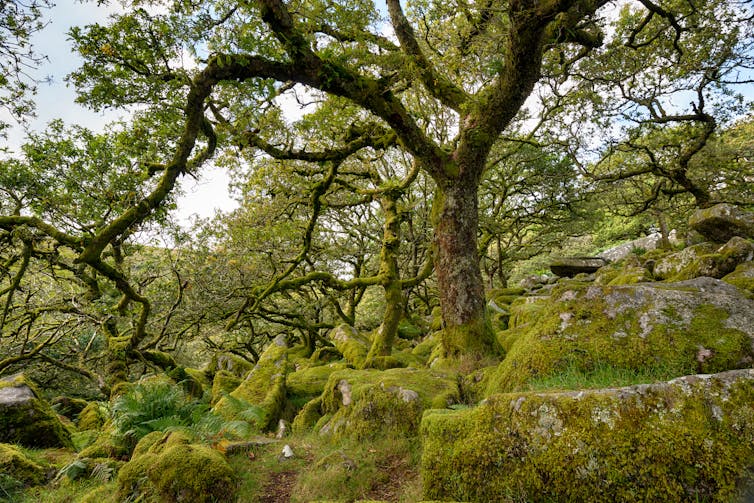
Gnarled oak trees grow out of mossy boulders.
A recent report suggested that just 7% of the UK’s woodlands are in a good condition. Helen Hotson/Shutterstock

Continuing to pollute just to maintain this thin advantage is not an option. But the news isn’t all bad. Changing the way people manage the land by reducing or preventing soil tillage, switching crops grown regularly and adding ones which can fix nitrogen like legumes and using manure-based fertilisers that add organic matter can sequester carbon in agricultural soils.

Housing, food and energy production: the demands on the world’s land are high, but they’re particularly acute in a small country like the UK. Practices like rewilding – where land ecosystems are allowed to naturally regenerate – can help permanently shift more carbon into the land without polluting the environment.


The country has a long way to go to meet its 2050 net zero emissions target, but taking better care of the UK’s soil is a critical first step.

Victoria Janes-Bassett, Senior Research Associate in Sustainable Land Management, Lancaster University and Jess Davies, Chair Professor in Sustainability, Lancaster University

This article is republished from The Conversation under a Creative Commons license. Read the original article.


Tags: SB001
DMCA.com Protection Status

SUBSCRIBE to our NEWSLETTER

[mc4wp_form id=”2384248″]

Don't Miss

The evolution of Aesthetic Surgery through the lens of Dr Kourosh Tavakoli

by Pauline Torongo
4 December 2025
The evolution of Aesthetic Surgery through the lens of Dr. Kourosh Tavakoli
Health & Wellness

As global interest in Australian cosmetic surgery continues to grow, the combination of regulation, research and emerging digital tools is...

Read moreDetails

Ryan: Building real freedom through e-commerce

by Pauline Torongo
27 November 2025
Ryan: Building real freedom through e-commerce
Business & Finance

Ryan’s greatest achievement isn’t any single business or revenue milestone — it’s the ecosystem he’s built through the Change community.

Read moreDetails

Design Australia Group: Redefining Drafting as the engine of housing growth

by Pauline Torongo
26 November 2025
Design Australia Group: Redefining Drafting as the engine of housing growth
Business & Finance

Australia is under pressure to build homes faster, but design bottlenecks slow progress. Design Australia Group is fixing this by...

Read moreDetails

Louis Guy Detata builds Global Trading Empires through autonomous systems and disciplined leadership

by Pauline Torongo
25 November 2025
Louis Guy Detata builds Global Trading Empires through autonomous systems and disciplined leadership
Business & Finance

The path from investment banking to leading a global trading platform has taught Louis Detata that sustainable success requires more...

Read moreDetails

Burning Eucalyptus Wood: Tips, Advantages, Disadvantages & Alternatives

by Fazila Olla-Logday
20 November 2025
Image Supplied
Enviroment

Learn about burning eucalyptus wood for stoves and fireplaces. Discover benefits, drawbacks, harvesting tips, and better alternative firewood options for...

Read moreDetails

Everything Parents Need to Know About Baby Soft Play and Why It’s a Game Changer

by Fazila Olla-Logday
11 November 2025
Everything Parents Need to Know About Baby Soft Play
Health & Wellness

Baby soft play is a fun, safe, and educational way for little ones to explore and grow. Discover the benefits...

Read moreDetails

WOMAD Sets Up a New Camp in Wiltshire – Australian festival fans take note!

by Kris Griffiths
11 November 2025
Kumbia Boruka brought their reggae and dancehall flavour to the Taste the World Stage at WOMAD 2024 - Credit - Mike Massaro
Entertainment

With its 2026 edition moving to Neston Park in England, WOMAD offers Aussie music lovers a chance to reconnect with global...

Read moreDetails
Load More

Copyright © Blue Sky Publications Ltd. All Rights Reserved.
australiantimes.co.uk is a division of Blue Sky Publications Ltd. Reproduction without permission prohibited. DMCA.com Protection Status

  • About us
  • Write for Us
  • Advertise
  • Contact us
  • T&Cs, Privacy and GDPR
No Result
View All Result
  • News
    • Weather
    • Sport
    • Technology
    • Business & Finance
      • Currency Zone
    • Lotto Results
      • The Lott
  • Lifestyle
    • Entertainment
    • Horoscopes
    • Health & Wellness
    • Recipes
  • Travel
  • Expat Life
  • Move to Australia

Copyright © Blue Sky Publications Ltd. All Rights Reserved.
australiantimes.co.uk is a division of Blue Sky Publications Ltd. Reproduction without permission prohibited. DMCA.com Protection Status

No Result
View All Result
  • News
    • Weather
    • Sport
    • Technology
    • Business & Finance
      • Currency Zone
    • Lotto Results
      • The Lott
  • Lifestyle
    • Entertainment
    • Horoscopes
    • Health & Wellness
    • Recipes
  • Travel
  • Expat Life
  • Move to Australia

Copyright © Blue Sky Publications Ltd. All Rights Reserved.
australiantimes.co.uk is a division of Blue Sky Publications Ltd. Reproduction without permission prohibited. DMCA.com Protection Status





