

• Advertise
  • About us
  • Terms and Conditions
  • Contact us
Saturday, December 6, 2025
Australian Times News
  • News
    • Weather
    • Sport
    • Technology
    • Business & Finance
      • Currency Zone
    • Lotto Results
      • The Lott
  • Lifestyle
    • Entertainment
    • Horoscopes
    • Health & Wellness
    • Recipes
  • Travel
  • Expat Life
  • Move to Australia
No Result
View All Result
  • News
    • Weather
    • Sport
    • Technology
    • Business & Finance
      • Currency Zone
    • Lotto Results
      • The Lott
  • Lifestyle
    • Entertainment
    • Horoscopes
    • Health & Wellness
    • Recipes
  • Travel
  • Expat Life
  • Move to Australia
No Result
View All Result
Australian Times News
No Result
View All Result
Home News

Polluting SUVs will be on roads for the next two decades – what should we do with them?

Known disparagingly as “Chelsea tractors”, sport utility vehicles – more commonly known as SUVs – are highly polluting. Petrol and diesel SUVs produce 25% more CO₂ on average than a medium-sized car and, since 2017, they’ve outsold fully electric vehicles in the UK at a rate of 37 to one.

The Conversation by The Conversation
13-04-2021 18:09
in News
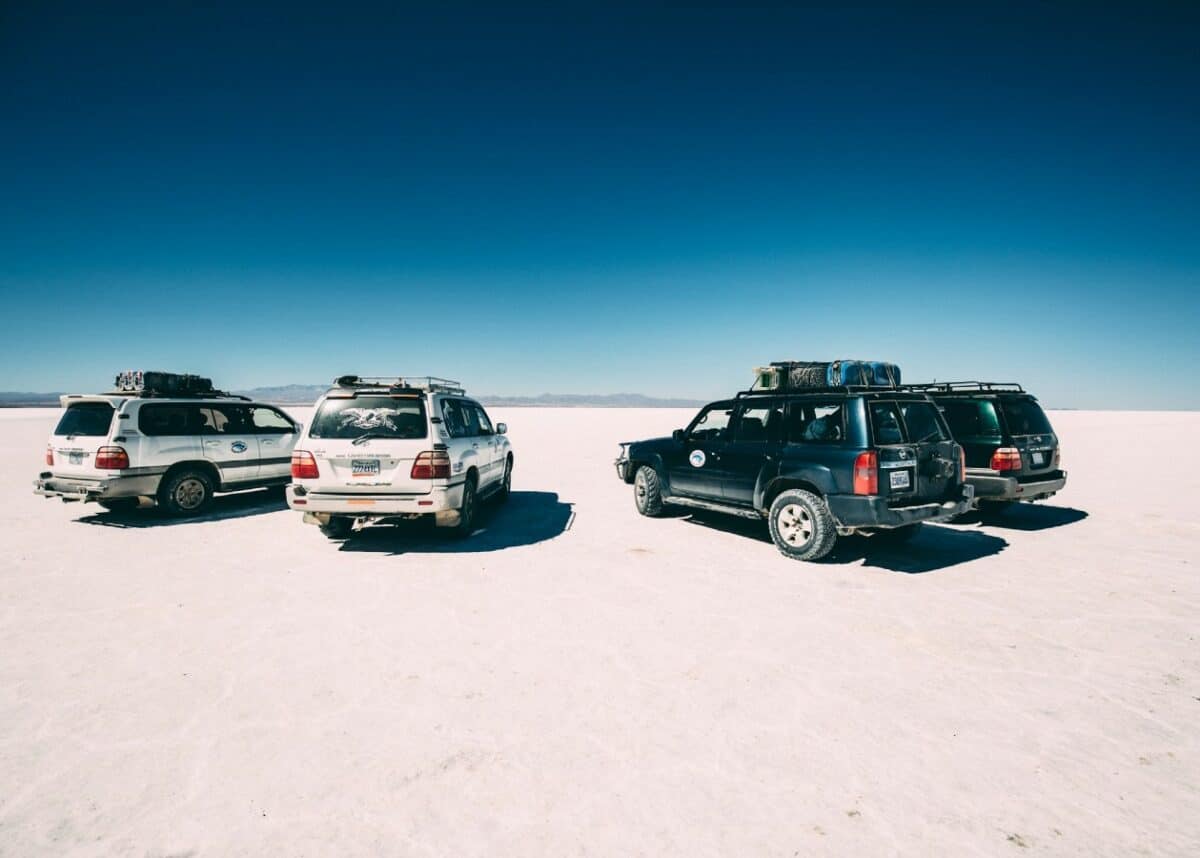
Photo by KAL VISUALS on Unsplash

Photo by KAL VISUALS on Unsplash

Tom Stacey, Anglia Ruskin University

The biggest source of air pollution in UK cities is traffic, and in a new report, researchers discovered that a major contributor to the problem is the popularity of unnecessarily large and fuel-hungry cars.

Known disparagingly as “Chelsea tractors”, sport utility vehicles – more commonly known as SUVs – are highly polluting. Petrol and diesel SUVs produce 25% more CO₂ on average than a medium-sized car and, since 2017, they’ve outsold fully electric vehicles in the UK at a rate of 37 to one. Globally, rising SUV sales are the second-biggest cause of increasing carbon emissions.

Despite often being too big to fit in a conventional parking space, 75% of SUVs sold in the UK in 2019 were bought by people living in urban areas. The New Weather Institute, the think tank which produced the report, argues that the marketing strategies of car manufacturers have convinced town and city dwellers that it’s normal to go “shopping in a two-tonne truck”, regardless of the consequences for human health and the environment.

For a lot of drivers though, these vehicles simply appeal. Their elevated driving position gives a clearer view of the road and they are large inside as well as out, offering plenty of room for families. Manufacturers should be criticised for marketing a vehicle designed for rugged, off-road travel to people living in leafy suburbs, but ultimately, they’ll build what they believe buyers want.

Petrol and diesel SUVs are sold in their thousands every month and you can expect a car bought today to still be on the road ten to 20 years from now. This will frustrate efforts to decarbonise Britain’s transport sector just as the most significant action needs to be taken. So what can be done?

Remove, replace, revamp

There are three possible solutions. The first involves moving all these vehicles out of urban areas and into the countryside – where they are arguably designed to be – by banning their use in densely populated places. This won’t be simple though. Diverting SUVs to rural areas could swamp villages with more cars than people need. More challenging still is the fact that many of these “city” SUVs are actually the wrong type of specification for off-road use, even though they appear rough and ready, and so might not adjust all that well to rural life.


AlsoRead...

Ryan: Building real freedom through e-commerce

Ryan: Building real freedom through e-commerce

27 November 2025
Design Australia Group: Redefining Drafting as the engine of housing growth

Design Australia Group: Redefining Drafting as the engine of housing growth

26 November 2025

Another option involves the government and manufacturers creating incentive schemes to get SUV drivers to switch to zero-emission alternatives. But this kind of funding is actually shrinking in the UK and it suffered a further cut in March 2021. Many large electric SUVs, such as Tesla’s Model X, no longer qualify for the UK plug-in car grant, leaving fewer subsidised choices for urban buyers determined to keep driving SUVs.
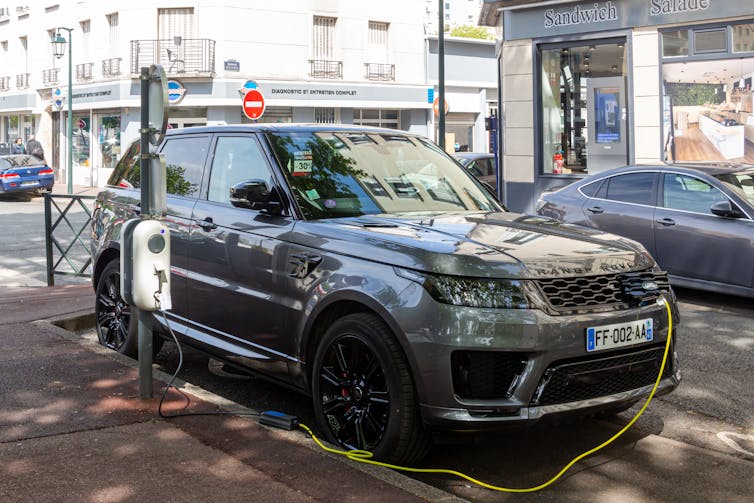
A Land Rover being charged on a Paris street.
Low-emission SUVs are on the market, but can they replace older models on the road fast enough? Alex Vivido/Shutterstock

The third option is more innovative. It’s possible that petrol and diesel cars can be converted to fully electric vehicles using bespoke or generic kits, depending on the model. This approach is not without its challenges, but a number of companies are carrying out such conversions already, and it’s perhaps the most sustainable way to eliminate the carbon footprint of vehicles that are already on the road.

In this scenario, no new cars would need to be built to replace the SUVs, saving an enormous amount of energy, and these once highly polluting cars end up with zero tailpipe emissions when converted. Most of the car can be used, and what isn’t, (generally recyclable steel and aluminium), can theoretically be turned into parts for new electric motors and batteries.

This approach is known as a circular economy, in which the old and defunct parts of a product are salvaged and turned into new ones. This will apply to the batteries in the newly converted electric vehicles too, which are highly recyclable. So while the rush to buy SUVs in recent years has piled up problems for the coming decades, some innovative thinking can prevent these white elephants blocking the road to a net-zero society.

Tom Stacey, Senior Lecturer in Operations and Supply Chain Management, Anglia Ruskin University

This article is republished from The Conversation under a Creative Commons license. Read the original article.


Tags: SB001
DMCA.com Protection Status

SUBSCRIBE to our NEWSLETTER

[mc4wp_form id=”2384248″]

Don't Miss

The evolution of Aesthetic Surgery through the lens of Dr Kourosh Tavakoli

by Pauline Torongo
4 December 2025
The evolution of Aesthetic Surgery through the lens of Dr. Kourosh Tavakoli
Health & Wellness

As global interest in Australian cosmetic surgery continues to grow, the combination of regulation, research and emerging digital tools is...

Read moreDetails

Ryan: Building real freedom through e-commerce

by Pauline Torongo
27 November 2025
Ryan: Building real freedom through e-commerce
Business & Finance

Ryan’s greatest achievement isn’t any single business or revenue milestone — it’s the ecosystem he’s built through the Change community.

Read moreDetails

Design Australia Group: Redefining Drafting as the engine of housing growth

by Pauline Torongo
26 November 2025
Design Australia Group: Redefining Drafting as the engine of housing growth
Business & Finance

Australia is under pressure to build homes faster, but design bottlenecks slow progress. Design Australia Group is fixing this by...

Read moreDetails

Louis Guy Detata builds Global Trading Empires through autonomous systems and disciplined leadership

by Pauline Torongo
25 November 2025
Louis Guy Detata builds Global Trading Empires through autonomous systems and disciplined leadership
Business & Finance

The path from investment banking to leading a global trading platform has taught Louis Detata that sustainable success requires more...

Read moreDetails

Burning Eucalyptus Wood: Tips, Advantages, Disadvantages & Alternatives

by Fazila Olla-Logday
20 November 2025
Image Supplied
Enviroment

Learn about burning eucalyptus wood for stoves and fireplaces. Discover benefits, drawbacks, harvesting tips, and better alternative firewood options for...

Read moreDetails

Everything Parents Need to Know About Baby Soft Play and Why It’s a Game Changer

by Fazila Olla-Logday
11 November 2025
Everything Parents Need to Know About Baby Soft Play
Health & Wellness

Baby soft play is a fun, safe, and educational way for little ones to explore and grow. Discover the benefits...

Read moreDetails

WOMAD Sets Up a New Camp in Wiltshire – Australian festival fans take note!

by Kris Griffiths
11 November 2025
Kumbia Boruka brought their reggae and dancehall flavour to the Taste the World Stage at WOMAD 2024 - Credit - Mike Massaro
Entertainment

With its 2026 edition moving to Neston Park in England, WOMAD offers Aussie music lovers a chance to reconnect with global...

Read moreDetails
Load More

Copyright © Blue Sky Publications Ltd. All Rights Reserved.
australiantimes.co.uk is a division of Blue Sky Publications Ltd. Reproduction without permission prohibited. DMCA.com Protection Status

  • About us
  • Write for Us
  • Advertise
  • Contact us
  • T&Cs, Privacy and GDPR
No Result
View All Result
  • News
    • Weather
    • Sport
    • Technology
    • Business & Finance
      • Currency Zone
    • Lotto Results
      • The Lott
  • Lifestyle
    • Entertainment
    • Horoscopes
    • Health & Wellness
    • Recipes
  • Travel
  • Expat Life
  • Move to Australia

Copyright © Blue Sky Publications Ltd. All Rights Reserved.
australiantimes.co.uk is a division of Blue Sky Publications Ltd. Reproduction without permission prohibited. DMCA.com Protection Status

No Result
View All Result
  • News
    • Weather
    • Sport
    • Technology
    • Business & Finance
      • Currency Zone
    • Lotto Results
      • The Lott
  • Lifestyle
    • Entertainment
    • Horoscopes
    • Health & Wellness
    • Recipes
  • Travel
  • Expat Life
  • Move to Australia

Copyright © Blue Sky Publications Ltd. All Rights Reserved.
australiantimes.co.uk is a division of Blue Sky Publications Ltd. Reproduction without permission prohibited. DMCA.com Protection Status





