• Advertise
  • About us
  • Terms and Conditions
  • Contact us
Friday, May 15, 2026
Australian Times News
  • News
    • Weather
    • Sport
    • Technology
    • Business & Finance
      • Currency Zone
    • Lotto Results
      • The Lott
  • Lifestyle
    • Entertainment
    • Horoscopes
    • Health & Wellness
    • Recipes
  • Travel
  • Expat Life
  • Move to Australia
No Result
View All Result
  • News
    • Weather
    • Sport
    • Technology
    • Business & Finance
      • Currency Zone
    • Lotto Results
      • The Lott
  • Lifestyle
    • Entertainment
    • Horoscopes
    • Health & Wellness
    • Recipes
  • Travel
  • Expat Life
  • Move to Australia
No Result
View All Result
Australian Times News
No Result
View All Result
Home News

We need a green recovery after COVID-19, but banning wildlife trade could do more harm than good

After several early cases of COVID-19 were linked to a wet market in China, wildlife trade became central to discussions about links between public health and nature.

The Conversation by The Conversation
20-02-2021 06:05
in News
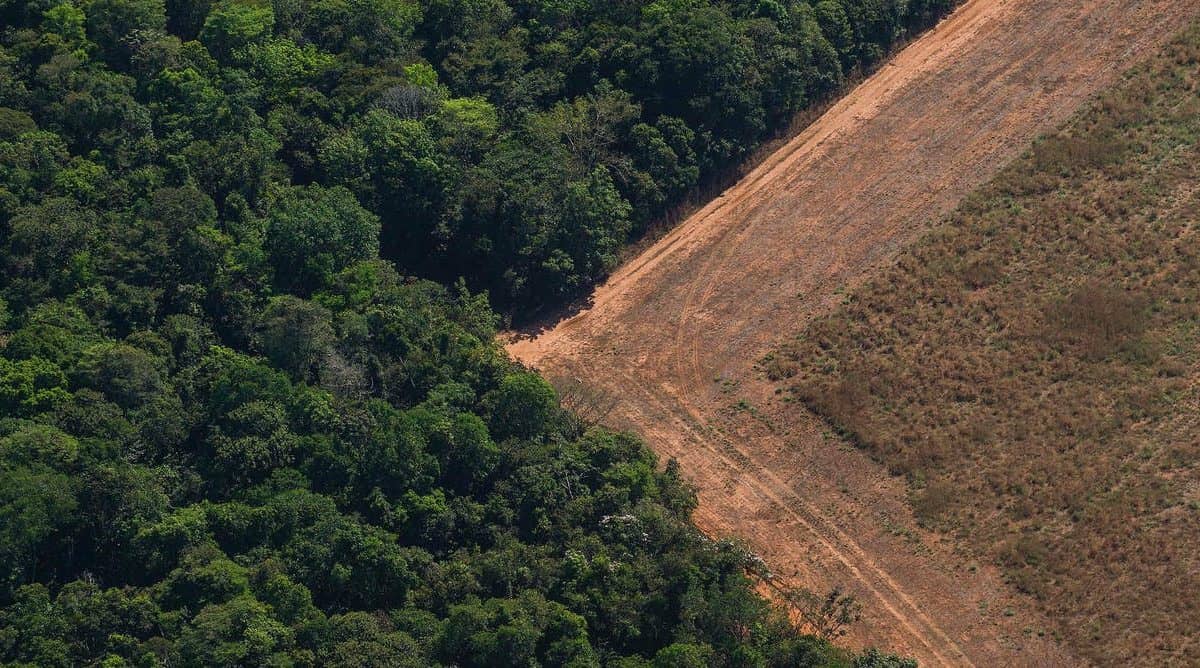
Habitat destruction is the greatest threat to wild species globally. Bruno Kelly , Author provided

Habitat destruction is the greatest threat to wild species globally. Bruno Kelly , Author provided

Hollie Booth, University of Oxford

After several early cases of COVID-19 were linked to a wet market in China, wildlife trade became central to discussions about links between public health and nature.

Some groups called for a complete ban on the consumption and trade of wildlife, with governments such as China and Vietnam acting decisively to introduce large-scale prohibitions.

The pandemic has brought humanity’s strained relationship with nature into sharp focus. It’s drawn public attention to links between environmental and human health, and led to calls for a “green recovery” that puts the environment at the heart of post-pandemic stimulus packages.

But the more pervasive environmental and health risks from animal agriculture – which would probably replace wild meat – have received little attention. My colleagues and I conducted a study to investigate the risks of removing wild meat from global food systems. Our results indicate large-scale prohibitions on wildlife use could have negative consequences for nature and human health.

Animal agriculture

While some wildlife trade drives biodiversity loss and increases the risks from emerging infectious diseases, these pale in comparison to the effects of animal agriculture.

Wildlife trade has been implicated in deadly disease outbreaks such as Ebola and Sars, with primates, bats and carnivores being high-risk species. But global analyses of emerging infectious diseases show that land-use changes, especially for agriculture, are the most significant drivers of zoonotic outbreaks – diseases spread from animals to humans. More than half of zoonotic diseases are associated with agricultural expansion and intensification.


AlsoRead...

Svitla Systems

Svitla Systems acquires Australia’s Kiandra IT to expand Global Engineering Footprint and Accelerate AI-Driven delivery

11 May 2026
How Clevero is helping Australian Service Businesses compete with Enterprises on a Fraction of the Budget

How Clevero is helping Australian Service Businesses compete with Enterprises on a Fraction of the Budget

28 April 2026
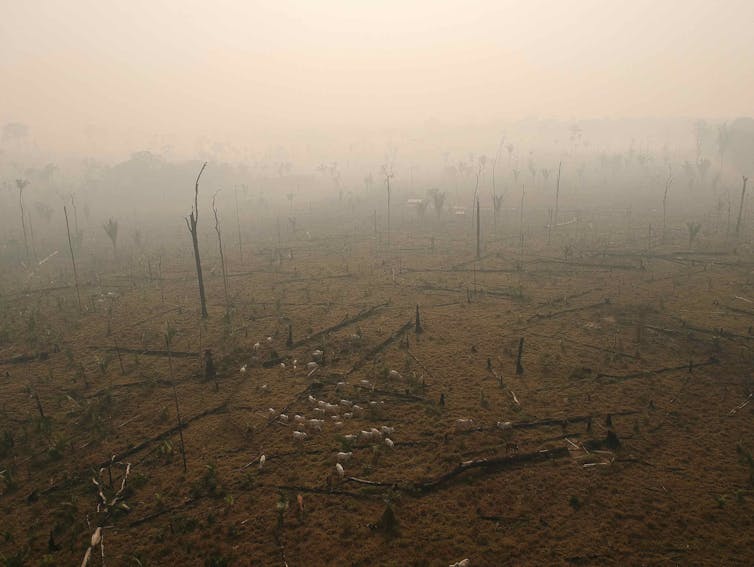
A barren, deforested landscape, with cows roaming.
Over 13,000 species are currently threatened by agricultural land clearing. Bruno Kelly, Author provided

Human expansion into natural areas carries a greater risk of diseases crossing from wildlife into livestock or people, because of greater proximity between the two. Most zoonoses – germs that spread between animals and people -– are transmitted through livestock. Declines in diverse natural ecosystems help the spread of these germs. Intensive animal farming creates perfect conditions for the development of virulent strains with pandemic potential, such as animal influenzas like bird flu and swine flu.

While roughly 3,000 species are threatened by direct exploitation (hunting and fishing), wildlife trade is not all bad. Some forms of well-managed wildlife trade can be good for nature – bighorn sheep in Mexico and crocodiles in Australia are two examples of this. In some cases, such as wild deer in the UK, wildlife trade can be a fundamental part of ecosystem management.

On the other hand, habitat destruction and degradation driven by agricultural expansion is the greatest threat to wild species globally. Over 13,000 species are threatened by agricultural land clearing and degradation alone, with future global food production on course to drive huge wildlife losses by 2050.

Unintended consequences

A narrow focus on wildlife trade may do more than just distract from more pressing concerns. Our study found it could create further risks for nature and human health.

Wildlife is an important food source in many parts of the world, including North America, sub-Saharan Africa and China. Heavy-handed restrictions on its use will leave a “nutrition gap” (reduced supply of important nutrients, such as protein and B vitamins). This gap will either be filled, most likely by increased production of domestic livestock, or people will go hungry. Both scenarios could exacerbate environmental and human health risks.
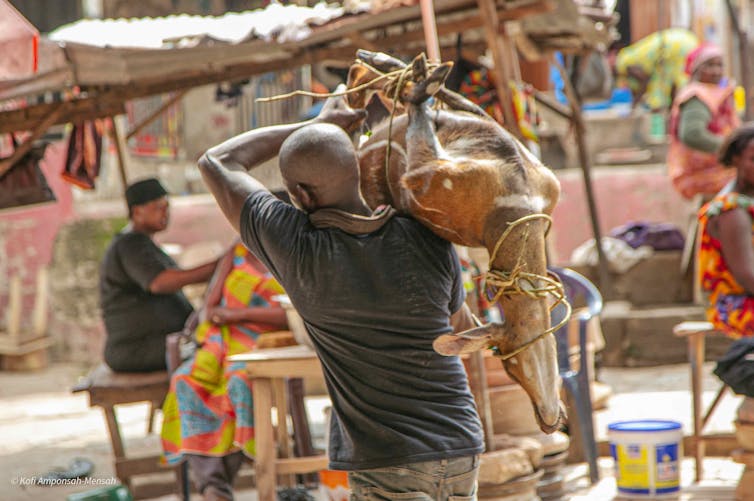
A man carrying a deer tied up in ropes, a man sitting at a wooden bench in the background.
The costs of halting wild meat consumption will simply be too high for many people. Kofi Amponsah-Mensah, Author provided

Since animal agriculture is a major driver of biodiversity loss and emerging infectious diseases risk, any increases in domestic livestock production may have serious consequences for nature and public health. For example, we conservatively estimate that over 450 million kilograms of protein would be needed each year to replace wild meat consumption globally.

This would need more than 124,000km² of extra agricultural land globally (that’s more than 23 million football pitches – an area almost the size of Greece). This could drive hundreds of species towards extinction, particularly in Latin America, sub-Saharan Africa and the US. This may also increase the risk of emerging infectious diseases, which would be highest in biodiverse forests – which includes many of the countries where wild meat bans could lead to highest levels of agricultural expansion.

But if wild meat was not replaced by livestock, millions of people could be left without enough food. Estimated per capita protein intake could fall below healthy levels in several countries, which could increase the prevalence of chronic health issues related to malnutrition. This harsh reality, and limited viable alternatives, mean the costs of halting wild meat consumption will simply be too high for many people.

Previous experiences in West Africa and Vietnam suggest prohibitions can lead to the creation of informal networks of wild animal trade, with poorer monitoring and higher public health risks than legal trade.

Ways forward

A truly green recovery, which can save wildlife and prevent future pandemics, requires broader scrutiny of global food systems. This should include risk-based regulation of wildlife trade and a change in the agricultural sector.

Taking care of environmental and human health requires all of us to change what we eat and how it’s produced – especially with reductions in meat consumption in wealthy countries. Rather than acting as a cue for more scapegoating of those who hunt and eat wildlife, this is the urgent need that COVID-19 underlines.

Hollie Booth, PhD Candidate, Conservation Science, University of Oxford

This article is republished from The Conversation under a Creative Commons license. Read the original article.


Tags: SB001
DMCA.com Protection Status

SUBSCRIBE to our NEWSLETTER

[mc4wp_form id=”2384248″]

Don't Miss

Svitla Systems acquires Australia’s Kiandra IT to expand Global Engineering Footprint and Accelerate AI-Driven delivery

by Pauline Torongo
11 May 2026
Svitla Systems
Business & Finance

Acquisition marks Svitla’s entry into the Australian market and strengthens capabilities in low-code, Microsoft technologies, and enterprise software engineering.

Read moreDetails

Residential Healthcare Practices: Revolution or Evolution?

by Pauline Torongo
11 May 2026
Residential Healthcare Practices: Revolution or Evolution?
Lifestyle

President Bill Lutz’s "revolution" was born from his background in fine dining, which instilled a disciplined, customer-focused approach.

Read moreDetails

Medicana Health Group launches HPV vaccination campaign to support cervical cancer prevention

by Pauline Torongo
28 April 2026
Medicana Health Group launches HPV vaccination campaign to support cervical cancer prevention
Health & Wellness

The Türkiye-based healthcare group has introduced a new awareness campaign focused on HPV vaccination, regular check-ups and early detection, with...

Read moreDetails

How Clevero is helping Australian Service Businesses compete with Enterprises on a Fraction of the Budget

by Pauline Torongo
28 April 2026
How Clevero is helping Australian Service Businesses compete with Enterprises on a Fraction of the Budget
Business & Finance

By consolidating CRM, scheduling, workflow automation, invoicing, reporting, and client communications into a single platform, Clevero gives smaller operators the...

Read moreDetails

How CJAM Group is building 1,100 homes across Southeast Queensland

by Pauline Torongo
24 March 2026
How CJAM Group is building 1,100 homes across Southeast Queensland
Lifestyle

The CJAM Group founder is quietly building a 1,100+ home pipeline, with projects in Hervey Bay and Toowoomba, using a...

Read moreDetails

Design Without Compromise: Where Gutter Protection Meets Modern Architecture

by Fazila Olla-Logday
20 March 2026
Design Without Compromise: Where Gutter Protection Meets Modern Architecture
Business & Finance

Design without compromise by integrating gutter protection seamlessly into modern architecture. Discover how innovative gutter systems enhance your home’s aesthetics...

Read moreDetails

How WageSafe Secured Australia’s Most Reputable Retail Business Among Its Premium Clients

by Fazila Olla-Logday
12 March 2026
How WageSafe Secured Australia’s Most Reputable Retail Business Among Its Premium Clients
at

Learn how WageSafe helps businesses stay compliant with payroll and wage regulations through reliable monitoring, risk management, and expert support—protecting...

Read moreDetails
Load More

Copyright © Blue Sky Publications Ltd. All Rights Reserved.
australiantimes.co.uk is a division of Blue Sky Publications Ltd. Reproduction without permission prohibited. DMCA.com Protection Status

  • About us
  • Write for Us
  • Advertise
  • Contact us
  • T&Cs, Privacy and GDPR
No Result
View All Result
  • News
    • Weather
    • Sport
    • Technology
    • Business & Finance
      • Currency Zone
    • Lotto Results
      • The Lott
  • Lifestyle
    • Entertainment
    • Horoscopes
    • Health & Wellness
    • Recipes
  • Travel
  • Expat Life
  • Move to Australia

Copyright © Blue Sky Publications Ltd. All Rights Reserved.
australiantimes.co.uk is a division of Blue Sky Publications Ltd. Reproduction without permission prohibited. DMCA.com Protection Status

No Result
View All Result
  • News
    • Weather
    • Sport
    • Technology
    • Business & Finance
      • Currency Zone
    • Lotto Results
      • The Lott
  • Lifestyle
    • Entertainment
    • Horoscopes
    • Health & Wellness
    • Recipes
  • Travel
  • Expat Life
  • Move to Australia

Copyright © Blue Sky Publications Ltd. All Rights Reserved.
australiantimes.co.uk is a division of Blue Sky Publications Ltd. Reproduction without permission prohibited. DMCA.com Protection Status