

Sara Wilkinson, University of Technology Sydney; Alan Morris, University of Technology Sydney, and Caroline Porto Valente, University of Technology Sydney
Many of us who endured lockdowns in Australia are familiar with the surge in energy bills at home. But for older Australians who depend on the Age Pension for income, lockdowns drove many deeper into “energy poverty”. Some faced up to 50% higher bills than in 2019, as a result of COVID.
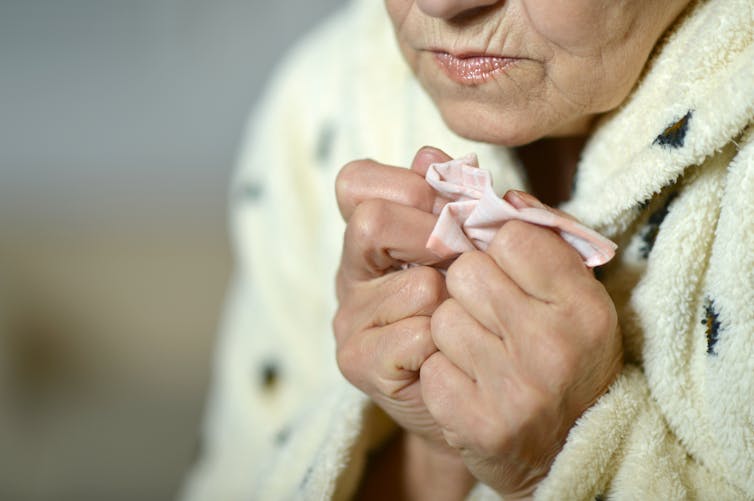
Energy poverty involves low-income households restricting their energy consumption by avoiding certain activities like showering, spending high proportions of their income on energy and, sometimes, being unable to pay bills.
A 2015 report from the Brotherhood of St Laurence found an estimated 28% of Australian households experience energy poverty on at least one measure. A third of this was made up of older households (headed by someone aged 65 or older) on the measure of income versus energy spending.
For our ongoing qualitative research, we interviewed 22 older (65 plus) low-income Australians in NSW and Victoria and analysed their bills, before and during COVID lockdowns. They present a heartbreaking picture of energy poverty and the loneliness that comes with it. It remains a neglected consequence of the pandemic.
The consequences of energy poverty
Prior to COVID, energy costs were a major concern for older Australians with many having to use a substantial proportion of their income to remain connected.
During COVID, many older Australians spent almost all their time at home. Our research, which is not yet published, found lockdowns caused their energy consumption and bills to swell 15-50% higher than in 2019, making a bad situation even tougher for already vulnerable community members.


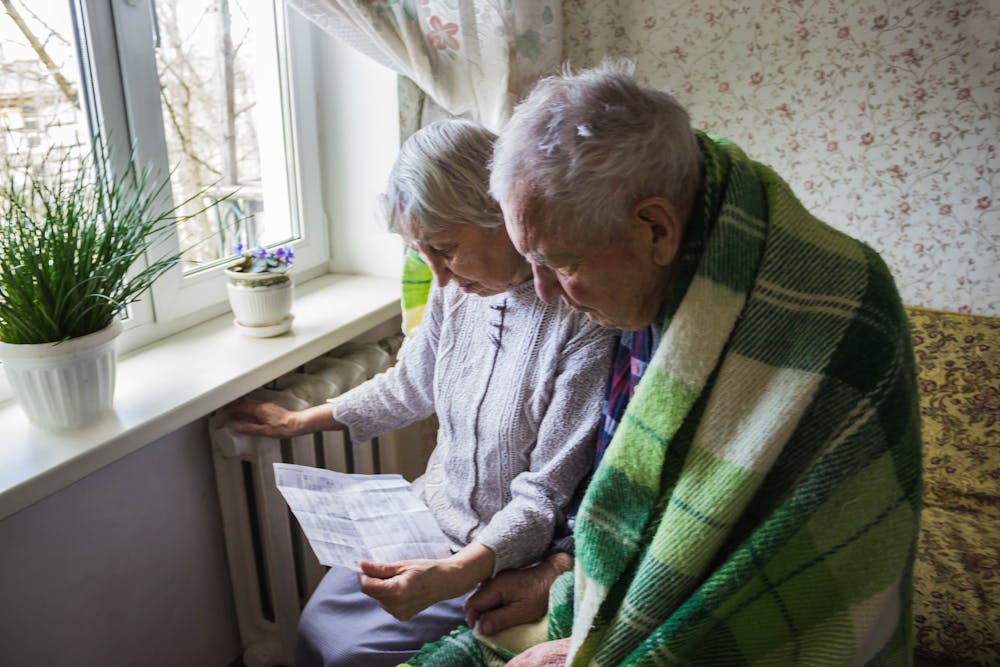
Energy poverty has serious consequences for quality of life. To compensate for potentially higher bills, people changed their behaviour and cut consumption of other essential, and non-essential items.
For example, COVID severely curtailed their social activities through the closure of community centres, which intensified their feelings of loneliness and social exclusion.
Iris, aged 78, said prior to COVID she kept her bills low by spending time at her community centre.
I try to go out so that I don’t need to use energy […] If I don’t stay [at home], and then I don’t use it. If I become too hot, I go to common room [with] the air conditioner.
In response to COVID, the community centre closed. Iris has health issues and is reluctant to go out. Her energy bill increased by A$50 to $60 per quarter. She told us:
Before COVID, I used to be extremely social. I’d be outside my home every day. Now I think the increase in my energy costs are being compensated by not going out anymore and not socialising, as I’m still afraid of exposing myself to the virus.
I’m old you know. I can’t [afford to] get sick. But even though I’m saving some money by not socialising, I can’t save money for potential emergencies as before. With the higher electricity bills and the new medical expenses, my capacity to save [has] reduced a lot.
People may also reduce their heater use in winter, and fan or air-conditioning use in summer. This is major problem during extreme weather events such as heatwaves or storms, which can have serious health consequences for older people at home. In turn, public health infrastructure is tested as more people need to see their GP or require emergency treatment.
Another overlooked problem is the connection between energy poverty and food insecurity. With a limited Age Pension income, vulnerable households may have to choose between heating or eating healthily.
We identified three reasons why. First, they try to buy the cheapest, usually unhealthy, food. Second, they purchase food that is easily prepared, which is usually more processed, to avoid using electricity or gas in cooking. And third is the need to get food from charities and food banks which, in many cases, is food that’s unwanted by others.
‘Since COVID has come in, everything has gone up, up, up’
Many of those we interviewed between February and December 2020 confirmed their bills had increased during COVID lockdowns. This included Vania, 67, who had difficulty linking her higher bills to increased consumption.
This issue of energy literacy and ability to engage with the energy market recurred in the interviews. She told us:
I think since COVID has come in, everything has gone up, up, up. I don’t understand what the bill [says]. Why are they [the energy bills], you know, going up so high? Doesn’t make sense to me.
Anthony, 69, changed his lifestyle dramatically in response to COVID.
I went from eating out, every hot meal was eating out. And then from March onwards, every hot meal was eating in […] I was out of the house one hour a week in March, April, May and June. I was home 167 hours a week.
His energy consumption increased significantly, despite trying to minimise usage. For instance, to compensate for a 15-50% increase in energy usage on heating, cooling and cooking, Anthony reduced hot water consumption by around 12%, by showering less.
His remarkably accurate records in the graphs below show consumption for different uses (he had separate meters) before and during COVID in summer, autumn and winter.
A good quality of life for pensioners
Energy poverty is a complex, multifaceted problem with no single, easy solution.
We need to advocate for increased government pensions that ensure a good quality of life for pensioners, one that guarantees pensioners aren’t living below the poverty line after housing and energy costs are deducted.
Government schemes to retrofit existing houses with better energy efficiency are also urgently needed. This could be through installing solar panels or retrofitting secondary glazing for insulation.
There are also many ways to reduce energy costs for older people who may be spending unnecessary amounts.
First, reducing confusing paperwork so older low-income households can access rebates on domestic appliance replacements. The range of appliances should include portable heaters and coolers.
Second, a low and fair single rate for low-income households across all energy retailers should be established, to ensure they’re on the best possible energy scheme. It should not depend on an individual’s energy literacy.
And finally, energy literacy training online and offline among older low-income households through community centre events and organisations, such as Council on the Ageing (COTA) NSW would be beneficial.
Sara Wilkinson, Professor, School of the Built Environment, University of Technology Sydney; Alan Morris, Professor, Institute of Public Policy and Governance, University of Technology Sydney, and Caroline Porto Valente, PhD Candidate – School of Built Environment, University of Technology Sydney
This article is republished from The Conversation under a Creative Commons license. Read the original article.