

• Advertise
  • About us
  • Terms and Conditions
  • Contact us
Sunday, December 7, 2025
Australian Times News
  • News
    • Weather
    • Sport
    • Technology
    • Business & Finance
      • Currency Zone
    • Lotto Results
      • The Lott
  • Lifestyle
    • Entertainment
    • Horoscopes
    • Health & Wellness
    • Recipes
  • Travel
  • Expat Life
  • Move to Australia
No Result
View All Result
  • News
    • Weather
    • Sport
    • Technology
    • Business & Finance
      • Currency Zone
    • Lotto Results
      • The Lott
  • Lifestyle
    • Entertainment
    • Horoscopes
    • Health & Wellness
    • Recipes
  • Travel
  • Expat Life
  • Move to Australia
No Result
View All Result
Australian Times News
No Result
View All Result
Home News

Health crisis: up to a billion tonnes of waste potentially burned in the open every year

As much as one billion tonnes of waste could be burned in open and uncontrolled fires around the world each year, according to one estimate – close to half of all the municipal solid waste generated on Earth. But even if the true total is a fraction of that amount, the impact on human health and the environment is likely to be profound, particularly for the hundreds of millions of people living in countries throughout the global south where burning rubbish outdoors is the main method of waste treatment.
The Conversation by The Conversation
08-01-2021 22:23
in News
Uncontrolled waste fires

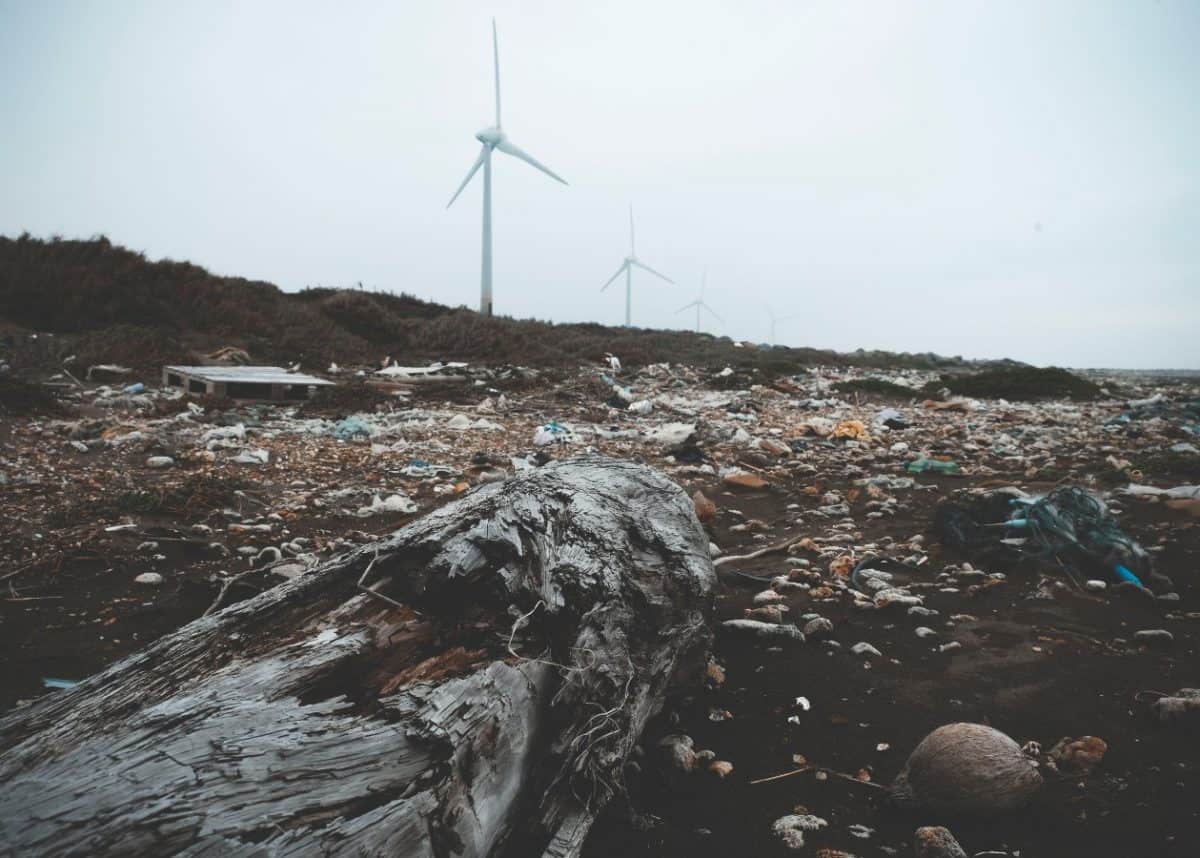
Uncontrolled waste fires Photo by Henry & Co. on Unsplash

Costas Velis, University of Leeds and Ed Cook, University of Leeds

As much as one billion tonnes of waste could be burned in open and uncontrolled fires around the world each year, according to one estimate – close to half of all the municipal solid waste generated on Earth. But even if the true total is a fraction of that amount, the impact on human health and the environment is likely to be profound, particularly for the hundreds of millions of people living in countries throughout the global south where burning rubbish outdoors is the main method of waste treatment.

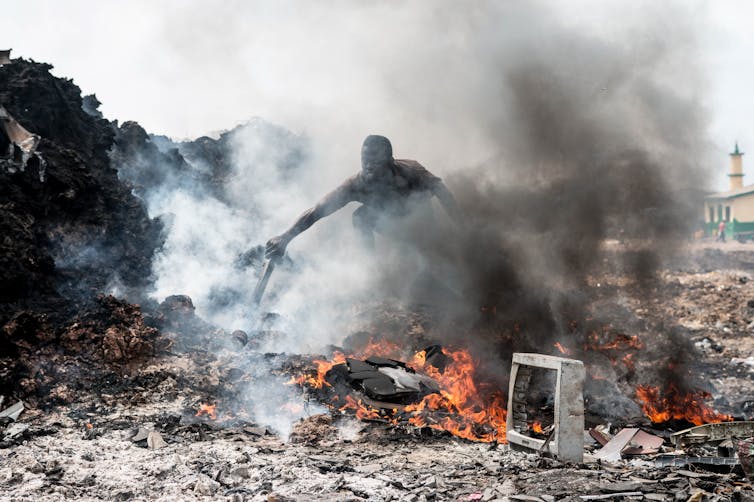
Aline Tong/Shutterstock

Uncontrolled waste fires burn at much lower and inconsistent temperatures, which means combustion is incomplete. This releases substances from the waste and creates new ones as molecules are decomposed and reformed in the flames. Dioxins and related compounds are often formed when PVC is burned in open fires. At least 30 of these types of compound are considered harmful to human health. They can persist in the environment for years and in the human body for perhaps a decade or more. There is evidence they can damage the brain and disrupt hormones.

In high-income countries such as the UK, waste incineration most often takes place in energy-from-waste plants (sometimes abbreviated as EfW), which use expensive equipment to control the burn while generating heat and electricity. It takes a lot of money and sophisticated engineering to burn solid waste safely.
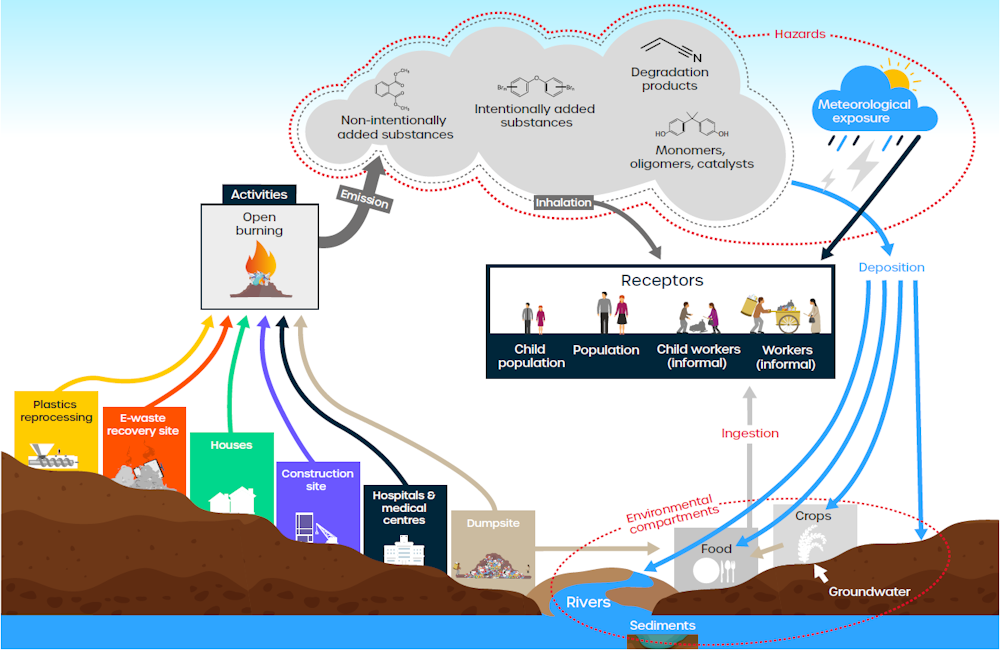
A graphic showing how hazardous emissions from waste burning reach people and the environment.
How emissions from burning waste in the open reach people and the environment. Cook & Velis (2021), Author provided

People burn waste when their options are limited. Across low- and middle-income countries, two billion people don’t have their solid waste collected at all, which means they have to take responsibility for disposing of items that have reached the end of their engineered life. If there is little space to dump on land, or no river nearby, the choice to burn becomes more appealing.

A burning issue

Our research has found that open burning is not only a necessity but a means to an end. In some developing countries, it’s common practice for informal or illegal recyclers to set fire to electrical cables and burn away the PVC insulation so the copper can be sold – a much quicker and easier method than stripping it off manually. The same goes for other electronic components, such as the printed circuit boards found in computers and other home appliances. These contain a wealth of valuable metals that are bound with plastics.
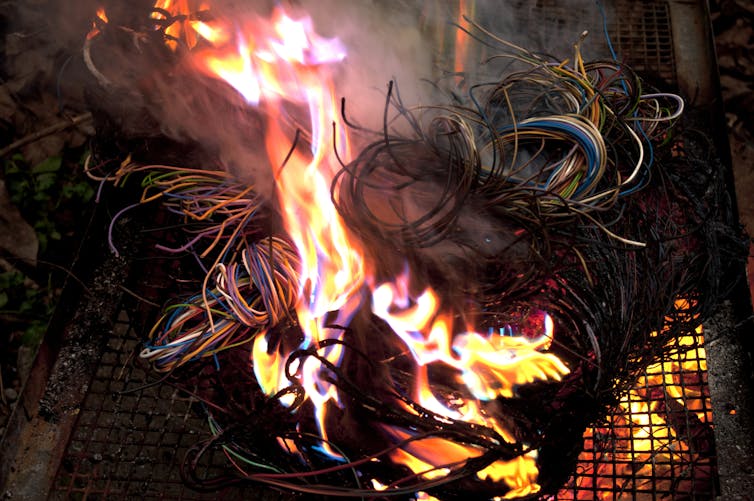
A mass of colourful plastic-coated wires engulfed in flames.
Burning plastic produces airborne compounds that are thought to be hazardous to health. Unigraphoto/Shutterstock

In households, burning food and other biological waste reduces its smell and discourages foraging animals that might transmit disease. In hospitals and medical centres, materials that could carry pathogens can be neutralised by burning them, and even the World Health Organization encourages this when there is no other option. Despite these benefits, open burning of waste threatens the health and lives of those who have few choices but to inhale the emissions.


AlsoRead...

Ryan: Building real freedom through e-commerce

Ryan: Building real freedom through e-commerce

27 November 2025
Design Australia Group: Redefining Drafting as the engine of housing growth

Design Australia Group: Redefining Drafting as the engine of housing growth

26 November 2025

Part of the challenge is that local authorities are incentivised not to pay attention to open burning. Waste burned at the roadside doesn’t have to be collected and fires in dumpsites free up valuable space to deposit more rubbish. Superficially, combustion makes waste disappear. But in reality, it’s converted into hazardous substances that are much more easily dispersed and inhaled.


Waste burning has devastating consequences for those who are most exposed to it. Overwhelmingly, it’s the urban poor and waste pickers who make up the world’s informal recycling sector. Treating this problem at the level of entire systems of waste production and management is the only way to effectively address it. This means providing waste disposal services for all communities, urban and rural. But it also means designing and manufacturing products that cause less harm when burned, particularly in areas where there is a high risk of that happening.

Much of the waste burned in open fires is plastic, which releases CO₂ and other greenhouse gasses. To make things even more challenging, those plastics that aren’t burned might pollute the land and water instead. Here lies an unsettling trade-off. Can the global community overcome decades of neglect to find a solution to one of the biggest environmental issues of our time?

Costas Velis, Lecturer in Resource Efficiency Systems, University of Leeds and Ed Cook, Research Fellow in Circular Economy Systems, University of Leeds

This article is republished from The Conversation under a Creative Commons license. Read the original article.


Tags: SB001
DMCA.com Protection Status

SUBSCRIBE to our NEWSLETTER

[mc4wp_form id=”2384248″]

Don't Miss

The evolution of Aesthetic Surgery through the lens of Dr Kourosh Tavakoli

by Pauline Torongo
4 December 2025
The evolution of Aesthetic Surgery through the lens of Dr. Kourosh Tavakoli
Health & Wellness

As global interest in Australian cosmetic surgery continues to grow, the combination of regulation, research and emerging digital tools is...

Read moreDetails

Ryan: Building real freedom through e-commerce

by Pauline Torongo
27 November 2025
Ryan: Building real freedom through e-commerce
Business & Finance

Ryan’s greatest achievement isn’t any single business or revenue milestone — it’s the ecosystem he’s built through the Change community.

Read moreDetails

Design Australia Group: Redefining Drafting as the engine of housing growth

by Pauline Torongo
26 November 2025
Design Australia Group: Redefining Drafting as the engine of housing growth
Business & Finance

Australia is under pressure to build homes faster, but design bottlenecks slow progress. Design Australia Group is fixing this by...

Read moreDetails

Louis Guy Detata builds Global Trading Empires through autonomous systems and disciplined leadership

by Pauline Torongo
25 November 2025
Louis Guy Detata builds Global Trading Empires through autonomous systems and disciplined leadership
Business & Finance

The path from investment banking to leading a global trading platform has taught Louis Detata that sustainable success requires more...

Read moreDetails

Burning Eucalyptus Wood: Tips, Advantages, Disadvantages & Alternatives

by Fazila Olla-Logday
20 November 2025
Image Supplied
Enviroment

Learn about burning eucalyptus wood for stoves and fireplaces. Discover benefits, drawbacks, harvesting tips, and better alternative firewood options for...

Read moreDetails

Everything Parents Need to Know About Baby Soft Play and Why It’s a Game Changer

by Fazila Olla-Logday
11 November 2025
Everything Parents Need to Know About Baby Soft Play
Health & Wellness

Baby soft play is a fun, safe, and educational way for little ones to explore and grow. Discover the benefits...

Read moreDetails

WOMAD Sets Up a New Camp in Wiltshire – Australian festival fans take note!

by Kris Griffiths
11 November 2025
Kumbia Boruka brought their reggae and dancehall flavour to the Taste the World Stage at WOMAD 2024 - Credit - Mike Massaro
Entertainment

With its 2026 edition moving to Neston Park in England, WOMAD offers Aussie music lovers a chance to reconnect with global...

Read moreDetails
Load More

Copyright © Blue Sky Publications Ltd. All Rights Reserved.
australiantimes.co.uk is a division of Blue Sky Publications Ltd. Reproduction without permission prohibited. DMCA.com Protection Status

  • About us
  • Write for Us
  • Advertise
  • Contact us
  • T&Cs, Privacy and GDPR
No Result
View All Result
  • News
    • Weather
    • Sport
    • Technology
    • Business & Finance
      • Currency Zone
    • Lotto Results
      • The Lott
  • Lifestyle
    • Entertainment
    • Horoscopes
    • Health & Wellness
    • Recipes
  • Travel
  • Expat Life
  • Move to Australia

Copyright © Blue Sky Publications Ltd. All Rights Reserved.
australiantimes.co.uk is a division of Blue Sky Publications Ltd. Reproduction without permission prohibited. DMCA.com Protection Status

No Result
View All Result
  • News
    • Weather
    • Sport
    • Technology
    • Business & Finance
      • Currency Zone
    • Lotto Results
      • The Lott
  • Lifestyle
    • Entertainment
    • Horoscopes
    • Health & Wellness
    • Recipes
  • Travel
  • Expat Life
  • Move to Australia

Copyright © Blue Sky Publications Ltd. All Rights Reserved.
australiantimes.co.uk is a division of Blue Sky Publications Ltd. Reproduction without permission prohibited. DMCA.com Protection Status





