

• Advertise
  • About us
  • Terms and Conditions
  • Contact us
Monday, November 23, 2026
Australian Times News
  • News
    • Weather
    • Sport
    • Technology
    • Business & Finance
      • Currency Zone
    • Lotto Results
      • The Lott
  • Lifestyle
    • Entertainment
    • Horoscopes
    • Health & Wellness
    • Recipes
  • Travel
  • Expat Life
  • Move to Australia
No Result
View All Result
  • News
    • Weather
    • Sport
    • Technology
    • Business & Finance
      • Currency Zone
    • Lotto Results
      • The Lott
  • Lifestyle
    • Entertainment
    • Horoscopes
    • Health & Wellness
    • Recipes
  • Travel
  • Expat Life
  • Move to Australia
No Result
View All Result
Australian Times News
No Result
View All Result
Home News

Six space missions to look forward to in 2021

Space exploration achieved several notable firsts in 2020 despite the COVID-19 pandemic, including commercial human spaceflight and returning samples of an asteroid to Earth.
The Conversation by The Conversation
03-01-2021 01:31
in News
Six space missions to look forward to

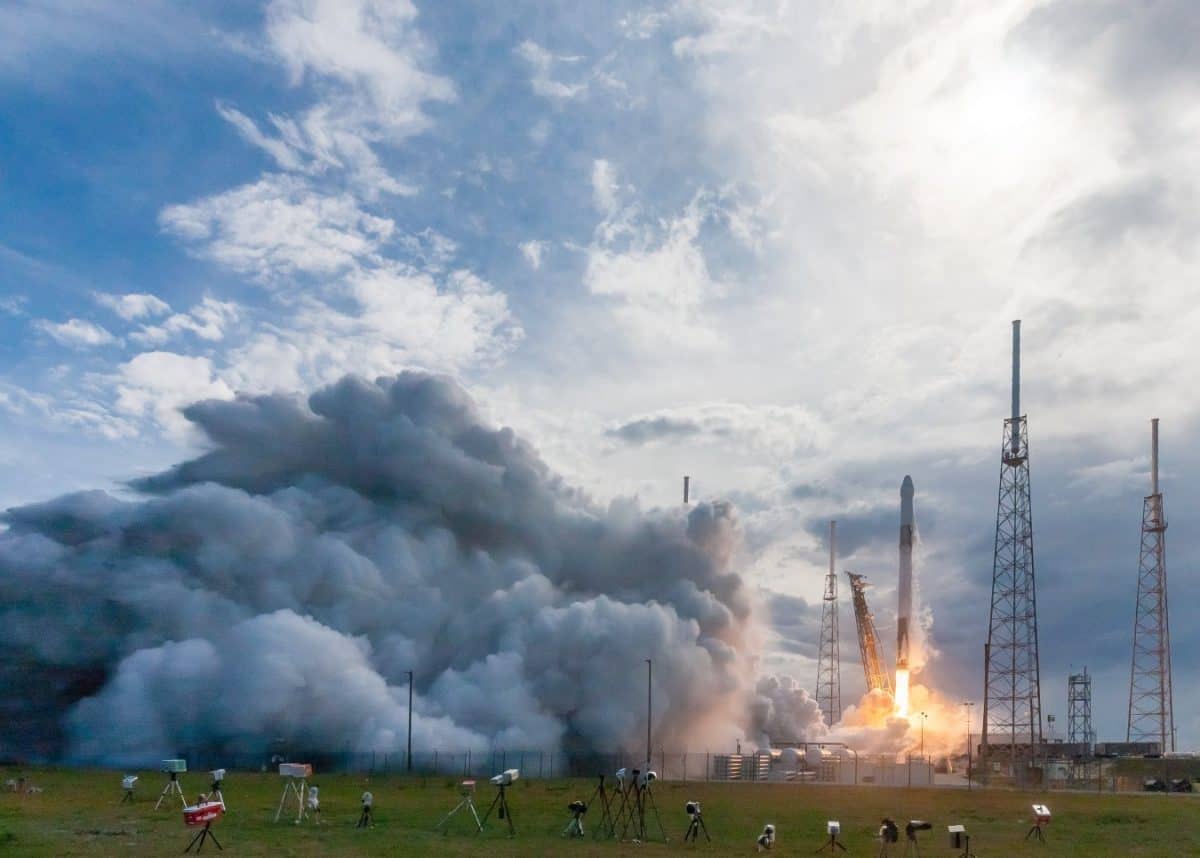
Six space missions to look forward to Photo by Bill Jelen on Unsplash

Ian Whittaker, Nottingham Trent University and Gareth Dorrian, University of Birmingham

Space exploration achieved several notable firsts in 2020 despite the COVID-19 pandemic, including commercial human spaceflight and returning samples of an asteroid to Earth.

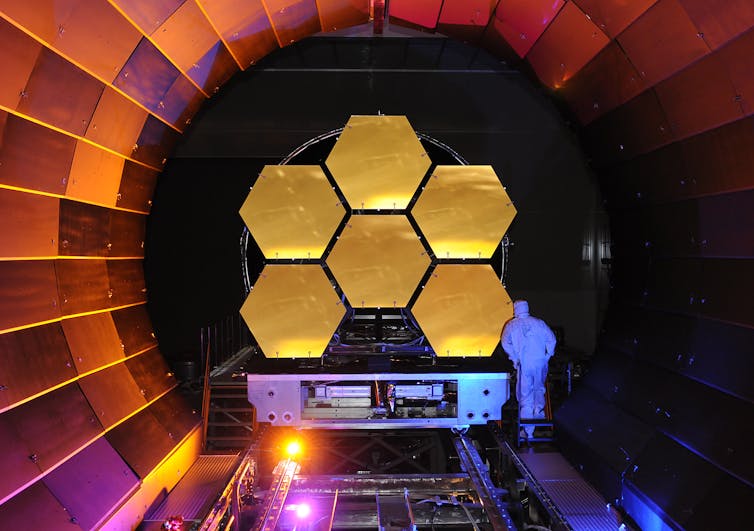
NASA’s James Webb telescope mirror undergoing cryogenic testing. Ball Aerospace/Flickr, CC BY-SA

The coming year is shaping up to be just as interesting. Here are some of the missions to keep an eye out for.

Artemis 1

Artemis 1 is the first flight of the Nasa-led, international Artemis program to return astronauts to the Moon by 2024. This will consist of an uncrewed Orion spacecraft which will be sent on a three-week flight around the Moon. IT will reach a maximum distance from Earth of 450,000km – the farthest into space that any spacecraft that can transport humans will have ever flown.

Artemis 1 will be launched into Earth orbit on the first Nasa Space Launch System, which will be the most powerful rocket in operation. From Earth orbit, the Orion will be propelled onto a different path towards the Moon by the rocket’s interim cryogenic propulsion stage. The Orion capsule will then travel to the Moon under the power provided by a service module supplied by the European Space Agency (Esa).

The mission will provide engineers back on Earth with a chance to evaluate how the spacecraft performs in deep space and serve as a prelude to later crewed lunar missions. The launch of Artemis 1 is currently scheduled for late in 2021.

Mars missions

In February, Mars will receive a flotilla of terrestrial robotic guests from several countries. The United Arab Emirates’ Al Amal (Hope) spacecraft is the Arab world’s first interplanetary mission. It is scheduled to arrive in Mars orbit on February 9, where it will spend two years monitoring the Martian weather and disappearing atmosphere.


AlsoRead...

How She Sells with Brooke helps thousands of women build new careers through high-ticket sales

How She Sells with Brooke helps thousands of women build new careers through high-ticket sales

6 October 2026
Mark Levin and Yael Eckstein: Celebrating 250 Years - The Bond Between America and Israel

Mark Levin and Yael Eckstein: Celebrating 250 Years – The Bond Between America and Israel

30 September 2026

Arriving within a couple of weeks after Al Amal will be the China National Space Administration’s Tianwen-1, consisting of an orbiter and a surface rover. The spacecraft will enter Martian orbit for several months before deploying the rover to the surface. If it succeeds, China will become the third country to land anything on Mars. The mission has several objectives including mapping the mineral composition of the surface and searching for sub-surface water deposits.

Nasa’s Perseverance rover will land at Jezero Crater on February 18 and search for any signs of ancient life which may have been preserved in the clay deposits there. Critically, it will also store a cache of Martian surface samples on board as the first part in a highly ambitious international program to return samples of Mars to Earth.

Chandrayaan-3

In March 2021, the Indian Space Research Organisation (ISRO) is planning to launch its third lunar mission: Chandrayaan-3. Chandrayaan-1 launched in 2008 and was one of the first major missions in the Indian space programme. Comprising an orbiter and a surface penetrator probe, the mission was one of the first to confirm evidence of lunar water.

Unfortunately, contact with the satellite was lost less than a year later. Sadly, there was a similar mishap with its successor, Chandrayaan-2, which consisted of an orbiter, a lander (Vikram) and a lunar rover (Pragyan).
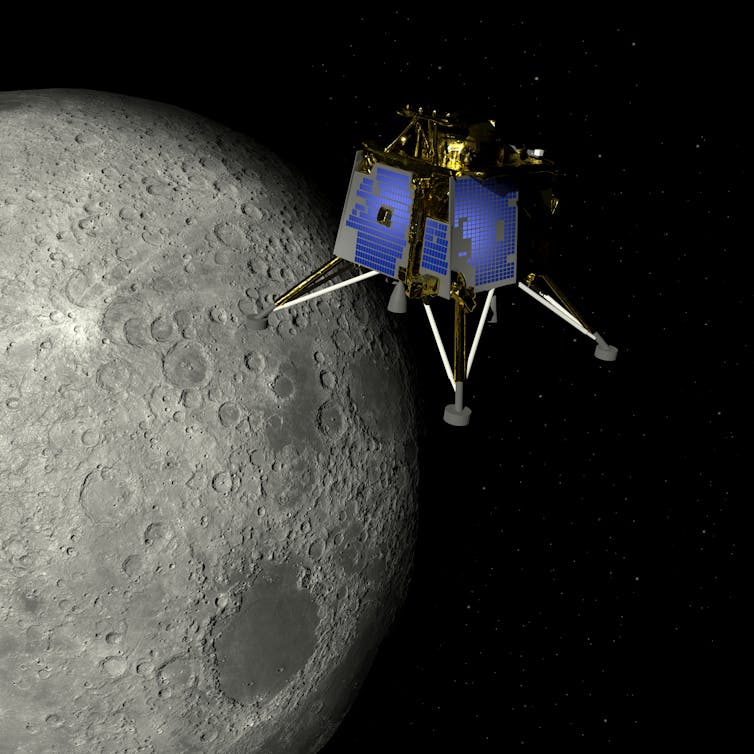
Computer image of a satellite above the Moon.
Artist depiction of the the Chandrayaan-2 lunar mission from India. Raymond Cassel/Shuttestock

Chandrayaan-3 was announced a few months later. It will consist of only a lander and rover, as the previous mission’s orbiter is still functioning and providing data.

If all goes well the Chandrayaan-3 rover will touch down in the lunar south pole’s Aitken basin. It’s of particular interest as it is thought to host numerous deposits of subsurface water ice – a vital component for any future sustainable lunar habitation.

James Webb Space Telescope

The James Webb Space Telescope is the successor to the Hubble Space Telescope, but has had a rocky path to being launched. Initially planned for a 2007 launch, the Webb telescope is almost 14 years late and has cost roughly US$10 billion (£7.4 billion) after apparent underestimates and overruns similar to those experienced by Hubble.

Whereas Hubble has provided some amazing views of the universe in visible and ultraviolet region of light, Webb is planning to focus observations in the infrared wavelength band. The reason for this is that when observing really distant objects there will probably be gas clouds in the way.
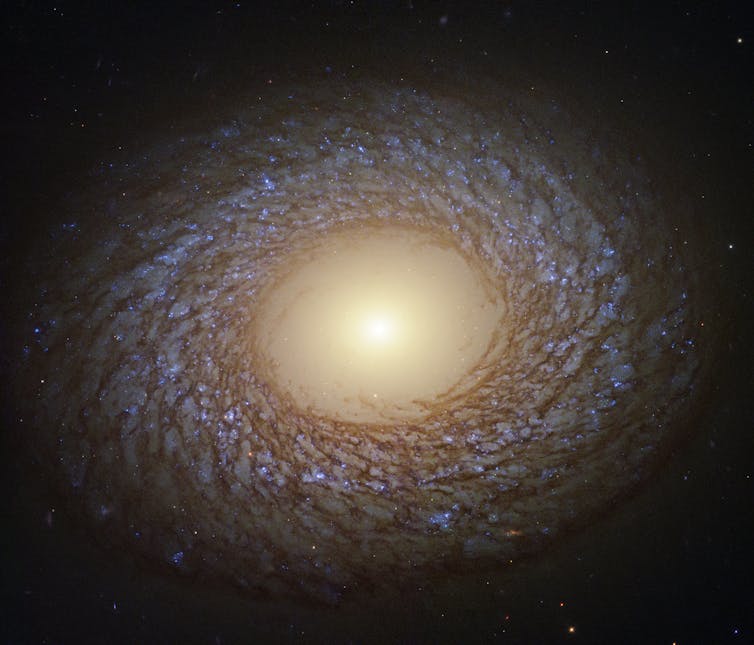
Computer enhanced image of a swirling galaxy with bright light at centre.
The galaxy NGC 2275 seen by Hubble. Esa/Hubble & Nasa, J. Lee and the PHANGS-HST Team;, CC BY-SA

These gas clouds block really small wavelengths of light, such as X-rays and ultra violet light, while longer wavelengths like infra-red, microwave and radio can get through more easily. So by observing in these longer wavelengths we should see more of the universe.

Webb also has a much bigger mirror of 6.5-metre diameter compared to Hubble’s 2.4-metre diameter mirror – essential for improving image resolution and seeing finer detail.

The primary mission of Webb is look at light from galaxies at the edge of the universe which can tell us about how the first stars, galaxies and planetary systems formed. Potentially this could include some information about the origin of life as well, as Webb is planning on imaging exoplanet atmospheres in high detail, searching for the building blocks of life. Do they exist on other planets, and if so, how did they get there?

We are also likely to be treated to some stunning images similar to those produced by Hubble. Webb is currently scheduled to launch on an Ariane 5 rocket on October 31.

Ian Whittaker, Senior Lecturer in Physics, Nottingham Trent University and Gareth Dorrian, Post Doctoral Research Fellow in Space Science, University of Birmingham

This article is republished from The Conversation under a Creative Commons license. Read the original article.


Tags: SB001
DMCA.com Protection Status

SUBSCRIBE to our NEWSLETTER

[mc4wp_form id=”2384248″]

Don't Miss

NRMA welcomes dogs at four NSW South Coast Holiday Parks

by Pauline Torongo
22 October 2026
NRMA welcomes dogs at four NSW South Coast Holiday Parks
Lifestyle

Pet-friendly stays and nearby beaches give families more coastal holiday options as Australian caravan and camping trips reach record levels.

Read moreDetails

How She Sells with Brooke helps thousands of women build new careers through high-ticket sales

by Pauline Torongo
6 October 2026
How She Sells with Brooke helps thousands of women build new careers through high-ticket sales
Business & Finance

More than 3,000 women have joined She Sells with Brooke Triplett to build careers in high-ticket sales. For many, the...

Read moreDetails

Qualities to look for in a Caribbean Luxury Cruise Experience

by Pauline Torongo
6 October 2026
Qualities to look for in a Caribbean Luxury Cruise Experience. Image: Supplied
Travel

Luxury Caribbean cruises are often associated with beaches, sunshine, and tropical ease, but they can be more than that with...

Read moreDetails

Mark Levin and Yael Eckstein: Celebrating 250 Years – The Bond Between America and Israel

by Pauline Torongo
30 September 2026
Mark Levin and Yael Eckstein: Celebrating 250 Years - The Bond Between America and Israel
News

As America marks 250 years since the Declaration of Independence, Yael Eckstein and Mark Levin explore the biblical values and...

Read moreDetails

How supporting Australia’s Care Workforce could strengthen care in the community

by Pauline Torongo
10 September 2026
How supporting Australia’s Care Workforce could strengthen care in the community
News

Australian care funding faces growing scrutiny after a 2025 ANAO report found NDIS losses from fraud, non-compliance, and payment errors...

Read moreDetails

The Future of Work Is Changing: What HR must champion next, according to Energy Collective Co

by Pauline Torongo
28 August 2026
What HR Must Champion Next, According to Energy Collective Co
Business & Finance

Energy Collective Co examines the root causes of performance by considering how work is designed, how leadership is enacted and...

Read moreDetails

From Empathy Burnout to Body-Led Recovery: What Heidi Jane of Intuition Co. learned by living through what she teaches

by Pauline Torongo
25 August 2026
What Heidi Jane of Intuition Co. learned by living through what she teaches
Lifestyle

Recognising emotional exhaustion is only the first step. While supportive habits such as rest, time in nature, hydration, and reduced...

Read moreDetails
Load More

Copyright © Blue Sky Publications Ltd. All Rights Reserved.
australiantimes.co.uk is a division of Blue Sky Publications Ltd. Reproduction without permission prohibited. DMCA.com Protection Status

  • About us
  • Write for Us
  • Advertise
  • Contact us
  • T&Cs, Privacy and GDPR
No Result
View All Result
  • News
    • Weather
    • Sport
    • Technology
    • Business & Finance
      • Currency Zone
    • Lotto Results
      • The Lott
  • Lifestyle
    • Entertainment
    • Horoscopes
    • Health & Wellness
    • Recipes
  • Travel
  • Expat Life
  • Move to Australia

Copyright © Blue Sky Publications Ltd. All Rights Reserved.
australiantimes.co.uk is a division of Blue Sky Publications Ltd. Reproduction without permission prohibited. DMCA.com Protection Status