

• Advertise
  • About us
  • Terms and Conditions
  • Contact us
Sunday, December 7, 2025
Australian Times News
  • News
    • Weather
    • Sport
    • Technology
    • Business & Finance
      • Currency Zone
    • Lotto Results
      • The Lott
  • Lifestyle
    • Entertainment
    • Horoscopes
    • Health & Wellness
    • Recipes
  • Travel
  • Expat Life
  • Move to Australia
No Result
View All Result
  • News
    • Weather
    • Sport
    • Technology
    • Business & Finance
      • Currency Zone
    • Lotto Results
      • The Lott
  • Lifestyle
    • Entertainment
    • Horoscopes
    • Health & Wellness
    • Recipes
  • Travel
  • Expat Life
  • Move to Australia
No Result
View All Result
Australian Times News
No Result
View All Result
Home News

The hopeful return of polar whales

South Georgia saw around 3,000 blue whales killed each year at the hunt’s peak in the early 20th century. The waters surrounding the island are rich in the krill these whales eat, and scientists believe their return heralds a “rediscovery” of this oceanic larder by new generations.

The Conversation by The Conversation
02-01-2021 22:11
in News
The hopeful return of polar whales

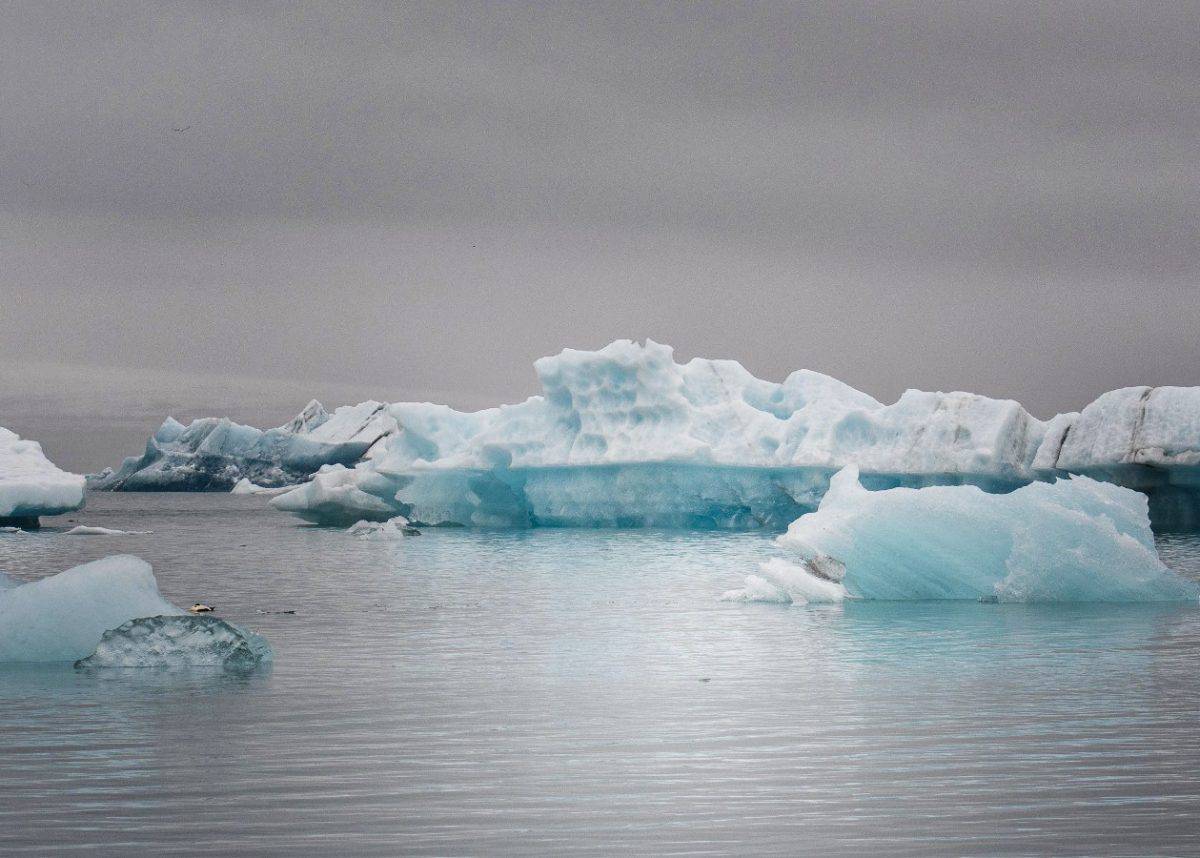
The hopeful return of polar whales Photo by Stephane YAICH on Unsplash

Lauren McWhinnie, Heriot-Watt University

The bleak history of whaling pushed many species to the brink of extinction, even in the remote waters of the north and south poles. Over 1.3 million whales were killed in just 70 years around Antarctica alone. The scale of this industrial harvest completely decimated many populations of large whales in the Southern Ocean. But nearly 40 years after commercial whaling ended, we’re finally seeing signs that some of the most heavily-targeted species are recovering.
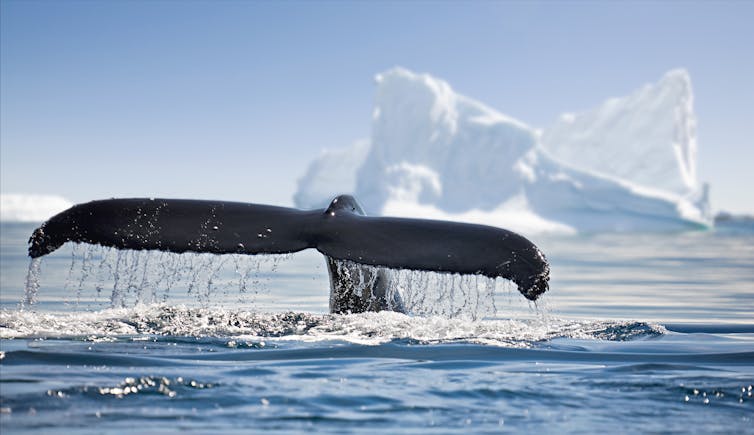
Alexey Suloev/Shutterstock

In a recent study, scientists reported that blue whales, once prized by whalers for their gargantuan size, are increasing in number in the waters surrounding the sub-Antarctic island of South Georgia, with 41 new individuals catalogued over the past nine years. South Georgia saw around 3,000 blue whales killed each year at the hunt’s peak in the early 20th century. The waters surrounding the island are rich in the krill these whales eat, and scientists believe their return heralds a “rediscovery” of this oceanic larder by new generations.
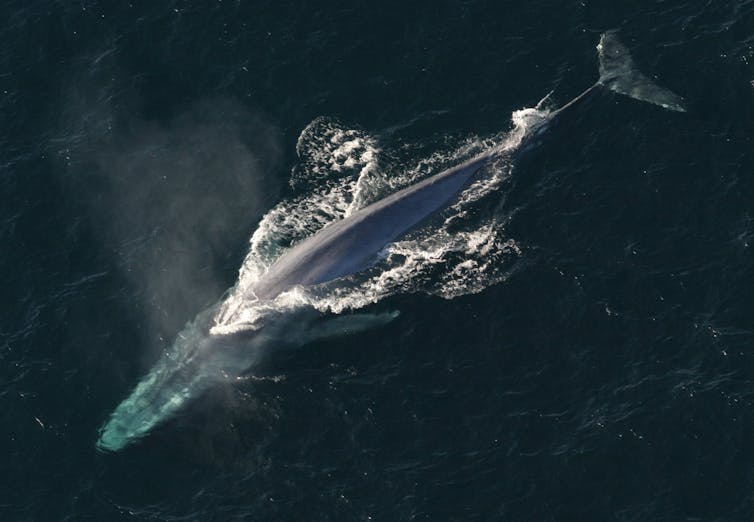
An aerial view of a blue whale surfacing.
Blue whales are thought to be the largest animals to ever exist. Anim Flickr/NOAA Photo Library

Similar signs of recovery have been documented for humpback whales around the western Antarctic Peninsula. In the far north, western Arctic bowhead whales appear to be approaching numbers last seen in pre-whaling days, while fin and minke whales are now regularly seen in the Chukchi Sea near Alaska.

This story is part of our Oceans 21 series
Five profiles open our series on the global ocean, delving into ancient Indian Ocean trade networks, Pacific plastic pollution, Arctic light and life, Atlantic fisheries and the Southern Ocean’s impact on global climate. All brought to you from The Conversation’s international network.


With the whaling industry gone, polar seas are among the best places for these ocean giants to re-establish their populations. Their habitats here are still relatively pristine and, for the moment, contain fairly stable food supplies. The Arctic still hosts subsistence harvests by indigenous communities, though these hunts are carefully managed.

The 1984 suspension of commercial whaling prevented the extinction of large whales in polar waters, but it cannot protect them from the new pressures which will emerge as global warming reshapes these regions. So what do these rapid changes mean for the still fragile recoveries of polar whale species?


AlsoRead...

Ryan: Building real freedom through e-commerce

Ryan: Building real freedom through e-commerce

27 November 2025
Design Australia Group: Redefining Drafting as the engine of housing growth

Design Australia Group: Redefining Drafting as the engine of housing growth

26 November 2025

Let’s not blow it

Over the next few decades, whales at the poles will face several new sources of stress, from warming waters disrupting their food supply to pollution and commercial fishing. With less sea ice and longer ice-free periods in the summer, easier access to the Arctic and Southern oceans and their resources is tempting many industries to expand or establish themselves in these remote waters. Vessel traffic, particularly in the Arctic, is increasing, and whales are among the most vulnerable to the increasing noise and the potentially lethal threat of collision.
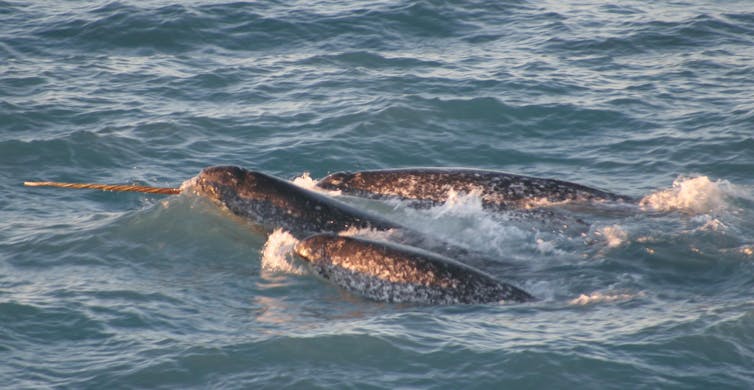
A pod of narwhals, with one tusk exposed, swimming together.
Narwhals are an Arctic species that is particularly vulnerable to boat traffic. Dr. Kristin Laidre/NOAA Photo Library

We’ve learned how to minimise the impacts of human activity on whales in busier waters outside of the Arctic and Antarctic. As part of an ongoing research project funded by the European Commission, myself and colleagues are trying to apply those lessons in the Arctic, to help protect whales from the growing presence of shipping.

We know that slowing vessels down reduces the likelihood of fatal collisions with whales, and it has the added benefit of reducing how much noise the ships produce. Much like the speed restrictions planners place in busy town centres to reduce the risk of cars hitting pedestrians, we can create slow-down areas for ships in locations we know are used by whales.

The challenge in the Arctic is finding where such measures will be most effective, where they are safe to be implemented (ice already makes sailing in the Arctic dangerous) and how we can ensure such measures are carried out when people aren’t around to easily monitor compliance.
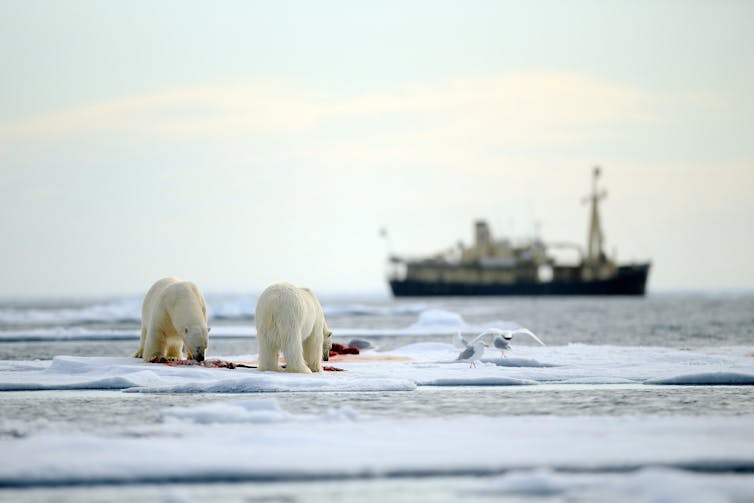
Two polar bears eat a seal on sea ice with a ship in the background.
The Arctic isn’t as isolated and ice-bound as it once was. Ondrej Prosicky/Shutterstock

One source of stress that we can monitor and assess quite well is the prevalence of marine noise pollution, thanks to underwater recording devices called hydrophones. Large ships produce loud, low-frequency noise that can travel far underwater. Whales rely on sound to help them navigate their dark underwater habitats, but vessel noise can prevent them communicating and foraging effectively. It’s a bit like trying to talk to your friend in a crowded restaurant.

But for whales, this can be more than a simple annoyance, it can be deadly: one study found that ambient noise increased the risk of humpback mothers and calves being separated. Research is now underway in the Arctic to identify areas where increasing noise from ships may be affecting whales, and where action – such as moving shipping lanes further away – might help.

In many cases, fascination has replaced greed in our relationship with whales. We now understand them as useful indicators of ocean health, as well as highly intelligent beings with complex cultures which we have an obligation to protect.

Still, it has still taken more than 40 years to get where we are, and the fact that many whale populations – including belugas, bowheads and some humpbacks – are still struggling, suggests we still have a way to go. Not all the species commercial whalers once hunted appear to be recovering, even with long-term protection measures. Sperm whales in the southern hemisphere and western grey whales in the Russian Arctic are notable examples.

As scientists, we still have much to learn. But we know enough to understand that a far-sighted view of the needs and vulnerabilities of these beautiful creatures is necessary to preserve a future for them.

Lauren McWhinnie, Assistant Professor in Marine Geography, Heriot-Watt University

This article is republished from The Conversation under a Creative Commons license. Read the original article.


Tags: SB001
DMCA.com Protection Status

SUBSCRIBE to our NEWSLETTER

[mc4wp_form id=”2384248″]

Don't Miss

The evolution of Aesthetic Surgery through the lens of Dr Kourosh Tavakoli

by Pauline Torongo
4 December 2025
The evolution of Aesthetic Surgery through the lens of Dr. Kourosh Tavakoli
Health & Wellness

As global interest in Australian cosmetic surgery continues to grow, the combination of regulation, research and emerging digital tools is...

Read moreDetails

Ryan: Building real freedom through e-commerce

by Pauline Torongo
27 November 2025
Ryan: Building real freedom through e-commerce
Business & Finance

Ryan’s greatest achievement isn’t any single business or revenue milestone — it’s the ecosystem he’s built through the Change community.

Read moreDetails

Design Australia Group: Redefining Drafting as the engine of housing growth

by Pauline Torongo
26 November 2025
Design Australia Group: Redefining Drafting as the engine of housing growth
Business & Finance

Australia is under pressure to build homes faster, but design bottlenecks slow progress. Design Australia Group is fixing this by...

Read moreDetails

Louis Guy Detata builds Global Trading Empires through autonomous systems and disciplined leadership

by Pauline Torongo
25 November 2025
Louis Guy Detata builds Global Trading Empires through autonomous systems and disciplined leadership
Business & Finance

The path from investment banking to leading a global trading platform has taught Louis Detata that sustainable success requires more...

Read moreDetails

Burning Eucalyptus Wood: Tips, Advantages, Disadvantages & Alternatives

by Fazila Olla-Logday
20 November 2025
Image Supplied
Enviroment

Learn about burning eucalyptus wood for stoves and fireplaces. Discover benefits, drawbacks, harvesting tips, and better alternative firewood options for...

Read moreDetails

Everything Parents Need to Know About Baby Soft Play and Why It’s a Game Changer

by Fazila Olla-Logday
11 November 2025
Everything Parents Need to Know About Baby Soft Play
Health & Wellness

Baby soft play is a fun, safe, and educational way for little ones to explore and grow. Discover the benefits...

Read moreDetails

WOMAD Sets Up a New Camp in Wiltshire – Australian festival fans take note!

by Kris Griffiths
11 November 2025
Kumbia Boruka brought their reggae and dancehall flavour to the Taste the World Stage at WOMAD 2024 - Credit - Mike Massaro
Entertainment

With its 2026 edition moving to Neston Park in England, WOMAD offers Aussie music lovers a chance to reconnect with global...

Read moreDetails
Load More

Copyright © Blue Sky Publications Ltd. All Rights Reserved.
australiantimes.co.uk is a division of Blue Sky Publications Ltd. Reproduction without permission prohibited. DMCA.com Protection Status

  • About us
  • Write for Us
  • Advertise
  • Contact us
  • T&Cs, Privacy and GDPR
No Result
View All Result
  • News
    • Weather
    • Sport
    • Technology
    • Business & Finance
      • Currency Zone
    • Lotto Results
      • The Lott
  • Lifestyle
    • Entertainment
    • Horoscopes
    • Health & Wellness
    • Recipes
  • Travel
  • Expat Life
  • Move to Australia

Copyright © Blue Sky Publications Ltd. All Rights Reserved.
australiantimes.co.uk is a division of Blue Sky Publications Ltd. Reproduction without permission prohibited. DMCA.com Protection Status

No Result
View All Result
  • News
    • Weather
    • Sport
    • Technology
    • Business & Finance
      • Currency Zone
    • Lotto Results
      • The Lott
  • Lifestyle
    • Entertainment
    • Horoscopes
    • Health & Wellness
    • Recipes
  • Travel
  • Expat Life
  • Move to Australia

Copyright © Blue Sky Publications Ltd. All Rights Reserved.
australiantimes.co.uk is a division of Blue Sky Publications Ltd. Reproduction without permission prohibited. DMCA.com Protection Status





