• Advertise
  • About us
  • Terms and Conditions
  • Contact us
Saturday, December 6, 2025
Australian Times News
  • News
    • Weather
    • Sport
    • Technology
    • Business & Finance
      • Currency Zone
    • Lotto Results
      • The Lott
  • Lifestyle
    • Entertainment
    • Horoscopes
    • Health & Wellness
    • Recipes
  • Travel
  • Expat Life
  • Move to Australia
No Result
View All Result
  • News
    • Weather
    • Sport
    • Technology
    • Business & Finance
      • Currency Zone
    • Lotto Results
      • The Lott
  • Lifestyle
    • Entertainment
    • Horoscopes
    • Health & Wellness
    • Recipes
  • Travel
  • Expat Life
  • Move to Australia
No Result
View All Result
Australian Times News
No Result
View All Result
Home News

COVID-19 is increasing poverty – but also support for tax rises to tackle it

Poverty and inequality were already high and rising in the UK before the coronavirus hit. Now, the pandemic is creating an even greater gulf between those whose debts are increasing and those whose savings are growing.

The Conversation by The Conversation
01-11-2020 22:21
in News
COVID-19 is increasing poverty

COVID-19 is increasing poverty Photo by Richard Burlton on Unsplash

Karen Rowlingson, University of Birmingham

Poverty and inequality were already high and rising in the UK before the coronavirus hit. Now, the pandemic is creating an even greater gulf between those whose debts are increasing and those whose savings are growing. This is according to the new Financial Inclusion Monitor report for 2020, which I coauthored with Stephen McKay of the University of Lincoln.
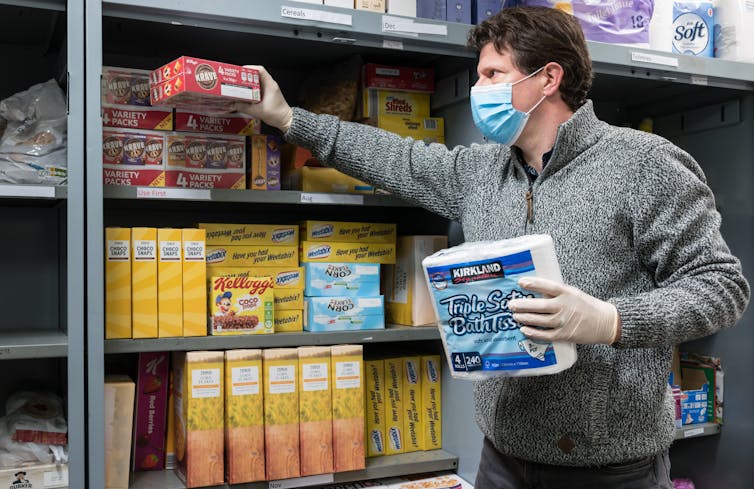
Trussell Trust food banks have seen a huge surge in demand this year. HASPhotos/Shutterstock

The pandemic is leading to a huge rise in personal debt as people struggle to repay their loans, rent and utility bills, with an extra £6 billion of borrowing accumulated from March to May this year. At the same time, poverty is rising. According to the Trussell Trust, the number of emergency food parcels going to children in April 2020 was double what it was in April 2019.

Of course, the government has introduced unprecedented levels of support during the crisis, including the furlough scheme, support for businesses, the temporary £20 weekly uplift to universal credit, bans on evictions, the extension of vouchers for free school meals throughout the summer months, and so on.

But the eviction ban for private renters ended in September, and the original furlough scheme finishes at the end of October. The universal credit uplift is also due to end in April 2021, and isn’t even available to those yet to transfer from older forms of benefits.

So what should be done now to ensure families can survive financially during – and beyond – the current pandemic crisis?

It’s time to adjust benefit limits

Various reforms to universal credit and other means-tested benefits could help create a better basic safety net for all. These reforms would include ending the minimum five-week wait for a first universal credit payment, scrapping the two-child limit on child-related benefits, removing the benefit cap, and ensuring the amounts provided are enough for people to reach a minimum income standard that allows for an acceptable standard of living in the UK.


AlsoRead...

Ryan: Building real freedom through e-commerce

Ryan: Building real freedom through e-commerce

27 November 2025
Design Australia Group: Redefining Drafting as the engine of housing growth

Design Australia Group: Redefining Drafting as the engine of housing growth

26 November 2025
Children in masks leaving school
Over 900,000 children live in households affected by the two-child limit. David Tadevosian/Shutterstock

The Institute for Fiscal Studies (IFS) has estimated that reversing the two-child limit would make about 700,000 households with children better off by an average of £3,000 per year, at an annual cost of about £2 billion. And abolishing the benefit cap would help about 100,000 working-age families by an average of roughly £2,000 per year, costing around £200 million per year.

As the IFS has suggested that the poorest UK households have seen their savings fall (or debts rise) by an average of £170 a month during the pandemic, these reforms would go some way to helping prevent further increases in poverty right now. However, they won’t be enough to fill the huge gap in household finances caused by COVID-19 on their own. The current extra support available for those in and out of work will continue to be necessary to help people avoid catastrophic rent and mortgage arrears as well as other forms of debt and deprivation.

How would we pay for this?

The cost of such support will be significant, on top of the £200 billion already spent on COVID-related support up until August. The government is currently finding the money for this through borrowing and “quantitative easing”, a process by which the Bank of England buys government bonds and increases the amount of money circulating in the economy. More could be found in this way in the short term.

At some point in the future, however, taxes will need to rise. The Financial Inclusion Monitor suggests that some households may have additional capacity to pay higher taxes as their finances have improved during the pandemic. This improvement has come as a result of some people’s incomes remaining the same during lockdown while their opportunities to spend reduced.

One indication of this is the household savings ratio, which is the proportion of disposable income that households save on average. This spiked at 28% in the second quarter of 2020, a figure twice as high as the previous 20-year peak of 13% in 2010.

The Resolution Foundation has also estimated that over one-third of the richest 20% of the population saw their savings increase in the first months of the crisis. The super-rich have also seen their wealth rise very significantly during the pandemic, with billionaires enjoying a 27% increase in their fortunes. So there is clear scope to raise taxes from those who can afford to contribute more.

A Lamborghini sports car driving through London
Surveys suggest the public would support a wealth tax to help raise government funds. Paul30/Shutterstock

But will the public support higher taxes? Taxation is rarely popular, but a recent survey of public attitudes, carried out by the University of Birmingham and Ipsos MORI in July/August 2020, showed that 44% of the public were prepared to personally pay more taxes rather than see cuts to public services.

When posed a hypothetical scenario in which the government needed to raise an extra £10 billion per year through taxes, survey respondents showed the highest level of support for introducing a new annual wealth tax. The public particularly supported introducing the tax on financial investments and property wealth (excluding people’s main residence), with a tax threshold of £500,000 and a tax rate of 1% on everything above that threshold.

The cost of tackling poverty and inequality may seem high, but the cost of doing nothing is also considerable: poverty impacts people’s health, wellbeing and life chances. As well as the huge personal cost, poverty costs the UK an estimated £78 billion a year in health and other associated welfare costs. The evidence doesn’t just show that we can afford to tackle poverty and inequality during these challenging times – but really that we can’t afford not to.

Karen Rowlingson, Professor of Social Policy, University of Birmingham

This article is republished from The Conversation under a Creative Commons license. Read the original article.


Tags: SB001
DMCA.com Protection Status

SUBSCRIBE to our NEWSLETTER

[mc4wp_form id=”2384248″]

Don't Miss

The evolution of Aesthetic Surgery through the lens of Dr Kourosh Tavakoli

by Pauline Torongo
4 December 2025
The evolution of Aesthetic Surgery through the lens of Dr. Kourosh Tavakoli
Health & Wellness

As global interest in Australian cosmetic surgery continues to grow, the combination of regulation, research and emerging digital tools is...

Read moreDetails

Ryan: Building real freedom through e-commerce

by Pauline Torongo
27 November 2025
Ryan: Building real freedom through e-commerce
Business & Finance

Ryan’s greatest achievement isn’t any single business or revenue milestone — it’s the ecosystem he’s built through the Change community.

Read moreDetails

Design Australia Group: Redefining Drafting as the engine of housing growth

by Pauline Torongo
26 November 2025
Design Australia Group: Redefining Drafting as the engine of housing growth
Business & Finance

Australia is under pressure to build homes faster, but design bottlenecks slow progress. Design Australia Group is fixing this by...

Read moreDetails

Louis Guy Detata builds Global Trading Empires through autonomous systems and disciplined leadership

by Pauline Torongo
25 November 2025
Louis Guy Detata builds Global Trading Empires through autonomous systems and disciplined leadership
Business & Finance

The path from investment banking to leading a global trading platform has taught Louis Detata that sustainable success requires more...

Read moreDetails

Burning Eucalyptus Wood: Tips, Advantages, Disadvantages & Alternatives

by Fazila Olla-Logday
20 November 2025
Image Supplied
Enviroment

Learn about burning eucalyptus wood for stoves and fireplaces. Discover benefits, drawbacks, harvesting tips, and better alternative firewood options for...

Read moreDetails

Everything Parents Need to Know About Baby Soft Play and Why It’s a Game Changer

by Fazila Olla-Logday
11 November 2025
Everything Parents Need to Know About Baby Soft Play
Health & Wellness

Baby soft play is a fun, safe, and educational way for little ones to explore and grow. Discover the benefits...

Read moreDetails

WOMAD Sets Up a New Camp in Wiltshire – Australian festival fans take note!

by Kris Griffiths
11 November 2025
Kumbia Boruka brought their reggae and dancehall flavour to the Taste the World Stage at WOMAD 2024 - Credit - Mike Massaro
Entertainment

With its 2026 edition moving to Neston Park in England, WOMAD offers Aussie music lovers a chance to reconnect with global...

Read moreDetails
Load More

Copyright © Blue Sky Publications Ltd. All Rights Reserved.
australiantimes.co.uk is a division of Blue Sky Publications Ltd. Reproduction without permission prohibited. DMCA.com Protection Status

  • About us
  • Write for Us
  • Advertise
  • Contact us
  • T&Cs, Privacy and GDPR
No Result
View All Result
  • News
    • Weather
    • Sport
    • Technology
    • Business & Finance
      • Currency Zone
    • Lotto Results
      • The Lott
  • Lifestyle
    • Entertainment
    • Horoscopes
    • Health & Wellness
    • Recipes
  • Travel
  • Expat Life
  • Move to Australia

Copyright © Blue Sky Publications Ltd. All Rights Reserved.
australiantimes.co.uk is a division of Blue Sky Publications Ltd. Reproduction without permission prohibited. DMCA.com Protection Status

No Result
View All Result
  • News
    • Weather
    • Sport
    • Technology
    • Business & Finance
      • Currency Zone
    • Lotto Results
      • The Lott
  • Lifestyle
    • Entertainment
    • Horoscopes
    • Health & Wellness
    • Recipes
  • Travel
  • Expat Life
  • Move to Australia

Copyright © Blue Sky Publications Ltd. All Rights Reserved.
australiantimes.co.uk is a division of Blue Sky Publications Ltd. Reproduction without permission prohibited. DMCA.com Protection Status