


Peter Gluckman and Alexander Gillespie, University of Waikato
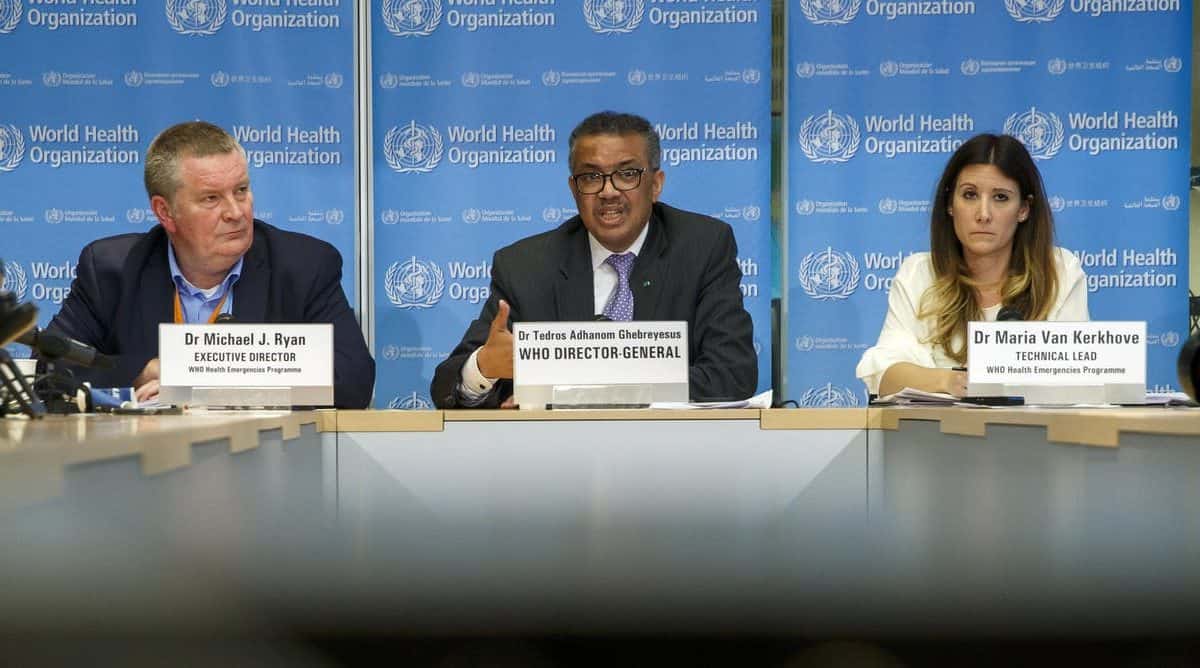
The World Health Organization (WHO) has come in for its share of criticism for its handling of the COVID-19 pandemic. While some faults are the responsibility of the WHO, others were caused by member states, which did not always act as quickly as they should have.
In our opinion, the fundamental problem was that the WHO’s current information sharing, response and organisational structure to deal with infectious diseases that may spread across borders quickly and dangerously is out of date.
We argue the global population deserves a better model — one that delivers information about the risk of emergent infectious diseases faster and in a way that is transparent, verifiable and non-politicised.
Preparing for the next pandemic
More than one million people have died of COVID-19, and that number could double before the pandemic is brought under control.
COVID-19 is not the first pandemic, nor will it be the last. The WHO was also criticised after the 2014 Ebola epidemic.
Global responses to such threats have precedents dating back to 1851 and the development of stardardised quarantine regulations. The international initiatives that have since followed, punctuated by the formation of leading international bodies such as the WHO in 1946, represent incremental progress. The most recent iteration of work in this area is the International Health Regulations of 2005.


We suggest a new protocol should be added to the WHO. We have drafted a tentative discussion document, which is available upon request, based on the following six broad ideas.
1. The WHO remains the central decision-making body
We want to strengthen the collection and sharing of information related to infectious diseases, but we believe the WHO must remain the international entity that interprets the material, raises alerts for the global community and organises responses.
Despite retaining the centrality of the WHO, we suggest a new protocol to provide the basis for the independent collection, sharing and transfer of information between countries and with the WHO. Fundamentally, we want the early-warning science to be divorced from the policy responses.
2. Obligation to issue risk warning
A clear and binding legal principle needs to be explicitly written into international law: namely, that there is an obligation to pass on, as quickly as possible, information about a hazardous risk discovered in one country that could be dangerous to others.
The international community first saw this thinking in the 1986 Convention on Early Notification of a Nuclear Accident, developed after the Chernobyl incident. We believe the same thinking should be carried over to the early notification of infectious disease threats, as they are just as great.
3. Independence in science
We need legally binding rules for the collection and sharing of information related to infectious diseases. These rules must be detailed, but have the capacity to evolve. This principle is already developing, beginning with innovative solutions to problems like regional air pollution, which separates scientists from decision-makers and removes any potential for partisan advice.
The core of this idea needs to be adapted for infectious diseases and placed within its own self-contained protocol. Signatories can then continually refine the scientific needs, whereby scientists can update what information should be collected and shared, so decision-makers can react in good time, with the best and most independent information at their fingertips.
4. Objectivity and openness
We must articulate the principle that shared scientific information should be as comprehensive, objective, open and transparent as possible. We have borrowed this idea from the Intergovernmental Panel on Climate Change (IPCC) but it needs to be supplemented by the particular requirement to tackle emergent infectious disease risks.
This may include clinical and genetic information and the sharing of biological samples to allow rapid laboratory, medical and public health developments. Incomplete information should not be a reason to delay and all information should be open source. It will also be important to add a principle from international environmental law of acting in a precautionary manner.
In the case of early notification about infectious diseases, we contend that even if there is a lack of scientific certainty over an issue, it is not a reason to hold back from sharing the information.
5. Deployment to other countries
We realise information sometimes needs to be verified independently and quickly. Our thinking here has been guided by the Chemical Weapons Convention and the use of challenge inspections. This mechanism, in times of urgency, allows inspectors to go anywhere at any time, without the right of refusal, to provide independent third-party verification.
In the case of infectious diseases, a solution might be that in times of urgency, if 75% of the members of the new protocol agree, specialist teams are deployed quickly to any country to examine all areas (except military spaces) from where further information is required. This information would then be quickly fed back into the mechanisms of the protocol.
6. Autonomy and independent funding
We suggest such a protocol must be self-governing and largely separate from the WHO, and it is essential it has its own budget and office.
This will increase the autonomy of the early-warning system and reduce the risks of being reliant on the WHO for funding (with all the vagaries that entails). If well designed, the protocol should provide a better way for state and non-state actors to contribute.
The goodwill and financial capacity of international philanthropy, transnational corporations and civil society will need to be mobilised to a much greater degree to fund the new protocol.
The authors worked with Sir Jim McLay, whose leadership contribution and input on the proposed protocol has been integral to the project.
Peter Gluckman, Director of Koi Tū, the Centre for Informed Futures; former Chief Science Advisor to the Prime Minister of New Zealand and Alexander Gillespie, Professor of Law, University of Waikato
This article is republished from The Conversation under a Creative Commons license. Read the original article.







