• Advertise
  • About us
  • Terms and Conditions
  • Contact us
Thursday, May 14, 2026
Australian Times News
  • News
    • Weather
    • Sport
    • Technology
    • Business & Finance
      • Currency Zone
    • Lotto Results
      • The Lott
  • Lifestyle
    • Entertainment
    • Horoscopes
    • Health & Wellness
    • Recipes
  • Travel
  • Expat Life
  • Move to Australia
No Result
View All Result
  • News
    • Weather
    • Sport
    • Technology
    • Business & Finance
      • Currency Zone
    • Lotto Results
      • The Lott
  • Lifestyle
    • Entertainment
    • Horoscopes
    • Health & Wellness
    • Recipes
  • Travel
  • Expat Life
  • Move to Australia
No Result
View All Result
Australian Times News
No Result
View All Result
Home News

Each budget used to have a gender impact statement. We need it back, especially now

COVID-19 has left women, more than men, economically disadvantaged through unemployment, underemployment, lowered incomes, less secure work, greater household and family demands, and increased risk of domestic violence.
The Conversation by The Conversation
30-09-2020 22:13
in News
Women’s Statement improved decisions

Women’s Statement improved decisions Photo by Aditya Joshi on Unsplash

Rhonda Sharp, University of South Australia; Monica Costa, Curtin University, and Siobhan Austen, Curtin University

COVID-19 has left women, more than men, economically disadvantaged through unemployment, underemployment, lowered incomes, less secure work, greater household and family demands, and increased risk of domestic violence.

Jeremy Dorrough/Upshot

But you’re unlikely to read about it in next week’s budget.

Instead you’re likely to read about new (male dominated) construction projects and more work in the electricity and gas industries. And tax cuts, which predominantly benefit higher earners and so are of less use to females.

Once, the gender impacts of the budget would have been apparent.

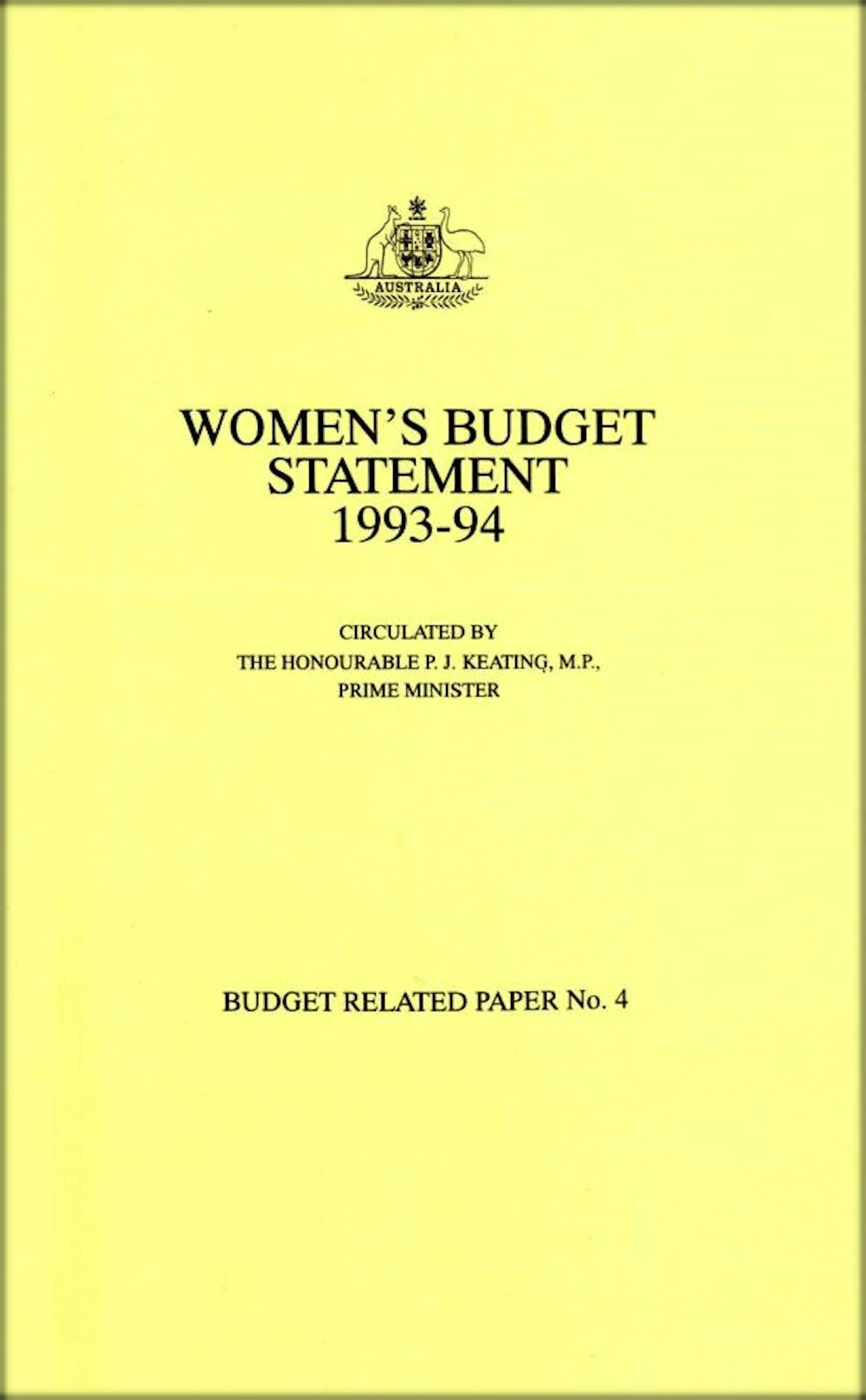
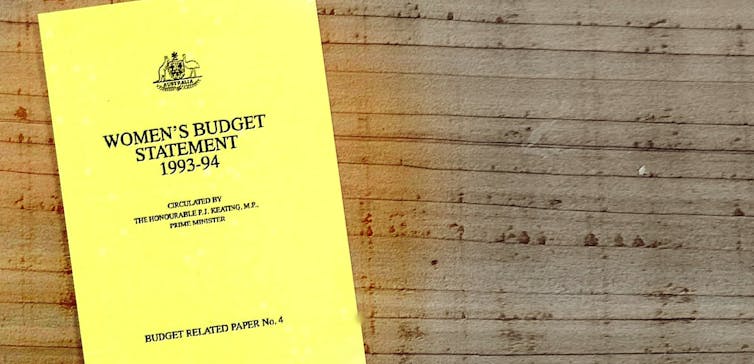
Until the first Abbott-Hockey budget in 2014, a statement of budget measures that disproportionately affect women was published at budget time.

At times given different names, the first was delivered with the Hawke government’s 1984 budget.

AlsoRead...

Svitla Systems

Svitla Systems acquires Australia’s Kiandra IT to expand Global Engineering Footprint and Accelerate AI-Driven delivery

11 May 2026
How Clevero is helping Australian Service Businesses compete with Enterprises on a Fraction of the Budget

How Clevero is helping Australian Service Businesses compete with Enterprises on a Fraction of the Budget

28 April 2026

In its foreword, then Prime Minister Hawke promised that “within the overall economic objectives of the government” important budget decisions would from then on be made “with full knowledge of their impact on women”.

These women’s budget statements shed light on the impact of decisions that might have been thought to have little to do with gender, such as the Hawke government’s reduction of tariffs on imports of clothing, textiles and footwear.

The statement pointed out that two-thirds of the workers in these industries were women and that without special support for retraining (which was given) they would be disproportionately disadvantaged.

Increasingly, and especially during the Rudd and Gillard governments, the statements made visible the economic impact of women’s greater responsibility for unpaid care work.

At its best, the Women’s Statement improved decisions

Much of its success was in raising awareness of the differential impacts of policies on women and men (and on different groups of women and men) which challenged the myth of gender neutral budgets.

Because the gender impact of budget decisions had to be reported in the statements, sometimes these decisions were improved.

Our analysis of each of the statements finds that in the later years they changed their emphasis from an analysis of budget measures to an account of the measures thought to benefit women.

This is unsurprising as governments like to celebrate their achievements. In 2013 the statement was renamed “women’s budget highlights”.

After 2014, the National Foundation of Australian Women has produced its own analysis of the impacts of on women each year as has the Labor opposition.

While these analyses are crucial for encouraging accountability, they are not a substitute for the government undertaking its own analysis of the gender impacts of its budgets and policies and ensuring they are improved.

Outside analysis isn’t the same

For one thing outside analysts don’t have access to the data treasury has. For another, they produce their reports after decisions have been made.

After the current six-year program of tax cuts was announced in 2018, the Parliamentary Budget Office found that A$92 billion of the $144 billion was likely to go to men.

The then treasurer Scott Morrison belittled the calculation, saying

you don’t fill out pink forms and blue forms on your tax return, it doesn’t look at what your gender is any more than it looks at whether you’re left handed or right handed or you barrack for the Sharks or you barrack for the Tigers

Rarely have we needed inside analysis more

COVID-19 has made the need for gender analyses more apparent. It has increased the care needs of households and demonstrated that the response to these needs, most commonly by women, is critical to maintaining the economy.

At times, this need has been acknowledged. The capacity of many parents (most typically mothers) to participate in paid work was undermined when childcare centres and schools shut down.

Recognising this, when childcare centres reopened, fees were cut to zero and places were reserved for the children of essential workers. The subsequent rolling back of these measures once again rendered the economic importance of care invisible, with negative gender impacts.

Gender responsive budgeting could make a substantial contribution, documenting the extent to which investment in childcare and other services is more likely to create jobs, and jobs for women, than spending on construction.

While the current government appears uninterested, the tide is turning.

Almost half of the 37 countries in the Organisation for Economic Co-operation and Development now have some form of gender budgeting. The former head of the International Monetary Fund has declared it good budgeting.

Rhonda Sharp, Emeritus Professor, UniSA Justice and Society, University of South Australia; Monica Costa, Senior Research Fellow, School of Economics, Curtin University, and Siobhan Austen, Professor of Economics, School of Economics & Finance, Curtin University

This article is republished from The Conversation under a Creative Commons license. Read the original article.


Tags: SB001
DMCA.com Protection Status

SUBSCRIBE to our NEWSLETTER

[mc4wp_form id=”2384248″]

Don't Miss

Svitla Systems acquires Australia’s Kiandra IT to expand Global Engineering Footprint and Accelerate AI-Driven delivery

by Pauline Torongo
11 May 2026
Svitla Systems
Business & Finance

Acquisition marks Svitla’s entry into the Australian market and strengthens capabilities in low-code, Microsoft technologies, and enterprise software engineering.

Read moreDetails

Residential Healthcare Practices: Revolution or Evolution?

by Pauline Torongo
11 May 2026
Residential Healthcare Practices: Revolution or Evolution?
Lifestyle

President Bill Lutz’s "revolution" was born from his background in fine dining, which instilled a disciplined, customer-focused approach.

Read moreDetails

Medicana Health Group launches HPV vaccination campaign to support cervical cancer prevention

by Pauline Torongo
28 April 2026
Medicana Health Group launches HPV vaccination campaign to support cervical cancer prevention
Health & Wellness

The Türkiye-based healthcare group has introduced a new awareness campaign focused on HPV vaccination, regular check-ups and early detection, with...

Read moreDetails

How Clevero is helping Australian Service Businesses compete with Enterprises on a Fraction of the Budget

by Pauline Torongo
28 April 2026
How Clevero is helping Australian Service Businesses compete with Enterprises on a Fraction of the Budget
Business & Finance

By consolidating CRM, scheduling, workflow automation, invoicing, reporting, and client communications into a single platform, Clevero gives smaller operators the...

Read moreDetails

How CJAM Group is building 1,100 homes across Southeast Queensland

by Pauline Torongo
24 March 2026
How CJAM Group is building 1,100 homes across Southeast Queensland
Lifestyle

The CJAM Group founder is quietly building a 1,100+ home pipeline, with projects in Hervey Bay and Toowoomba, using a...

Read moreDetails

Design Without Compromise: Where Gutter Protection Meets Modern Architecture

by Fazila Olla-Logday
20 March 2026
Design Without Compromise: Where Gutter Protection Meets Modern Architecture
Business & Finance

Design without compromise by integrating gutter protection seamlessly into modern architecture. Discover how innovative gutter systems enhance your home’s aesthetics...

Read moreDetails

How WageSafe Secured Australia’s Most Reputable Retail Business Among Its Premium Clients

by Fazila Olla-Logday
12 March 2026
How WageSafe Secured Australia’s Most Reputable Retail Business Among Its Premium Clients
at

Learn how WageSafe helps businesses stay compliant with payroll and wage regulations through reliable monitoring, risk management, and expert support—protecting...

Read moreDetails
Load More

Copyright © Blue Sky Publications Ltd. All Rights Reserved.
australiantimes.co.uk is a division of Blue Sky Publications Ltd. Reproduction without permission prohibited. DMCA.com Protection Status

  • About us
  • Write for Us
  • Advertise
  • Contact us
  • T&Cs, Privacy and GDPR
No Result
View All Result
  • News
    • Weather
    • Sport
    • Technology
    • Business & Finance
      • Currency Zone
    • Lotto Results
      • The Lott
  • Lifestyle
    • Entertainment
    • Horoscopes
    • Health & Wellness
    • Recipes
  • Travel
  • Expat Life
  • Move to Australia

Copyright © Blue Sky Publications Ltd. All Rights Reserved.
australiantimes.co.uk is a division of Blue Sky Publications Ltd. Reproduction without permission prohibited. DMCA.com Protection Status

No Result
View All Result
  • News
    • Weather
    • Sport
    • Technology
    • Business & Finance
      • Currency Zone
    • Lotto Results
      • The Lott
  • Lifestyle
    • Entertainment
    • Horoscopes
    • Health & Wellness
    • Recipes
  • Travel
  • Expat Life
  • Move to Australia

Copyright © Blue Sky Publications Ltd. All Rights Reserved.
australiantimes.co.uk is a division of Blue Sky Publications Ltd. Reproduction without permission prohibited. DMCA.com Protection Status