• Advertise
  • About us
  • Terms and Conditions
  • Contact us
Friday, February 6, 2026
Australian Times News
  • News
    • Weather
    • Sport
    • Technology
    • Business & Finance
      • Currency Zone
    • Lotto Results
      • The Lott
  • Lifestyle
    • Entertainment
    • Horoscopes
    • Health & Wellness
    • Recipes
  • Travel
  • Expat Life
  • Move to Australia
No Result
View All Result
  • News
    • Weather
    • Sport
    • Technology
    • Business & Finance
      • Currency Zone
    • Lotto Results
      • The Lott
  • Lifestyle
    • Entertainment
    • Horoscopes
    • Health & Wellness
    • Recipes
  • Travel
  • Expat Life
  • Move to Australia
No Result
View All Result
Australian Times News
No Result
View All Result
Home News

Votes cast in November will shape Congress through 2030

When voters cast their ballots in November, they won’t just decide who will be president in 2021 – they will also have a voice in determining the partisan makeup of Congress until 2030.

The Conversation by The Conversation
26-09-2020 06:05
in News
Votes cast in November will shape Congress

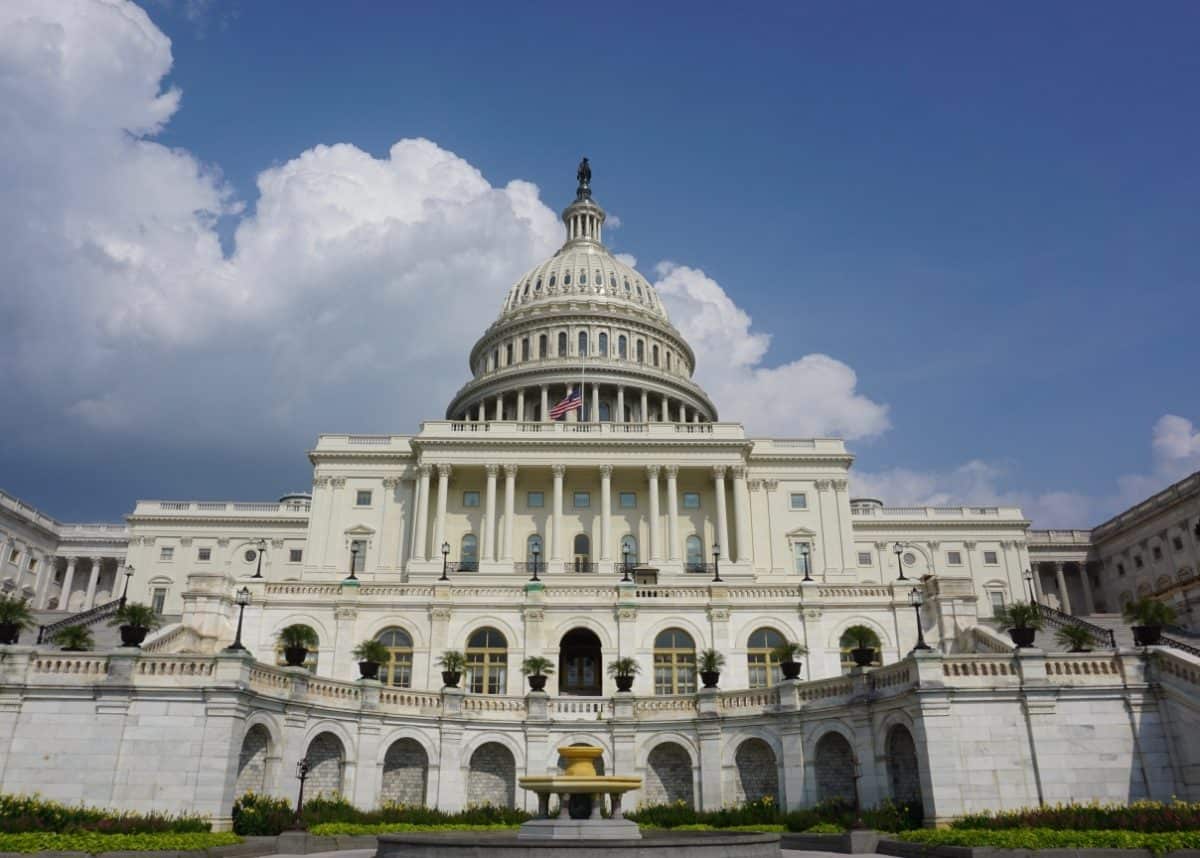
Votes cast in November will shape Congress Photo by Quick PS on Unsplash

Robin Best, Binghamton University, State University of New York and Steve Lem, Kutztown University of Pennsylvania

When voters cast their ballots in November, they won’t just decide who will be president in 2021 – they will also have a voice in determining the partisan makeup of Congress until 2030. Following each census, which happens every 10 years, states are required to adjust their congressional district boundaries to keep district populations equal.
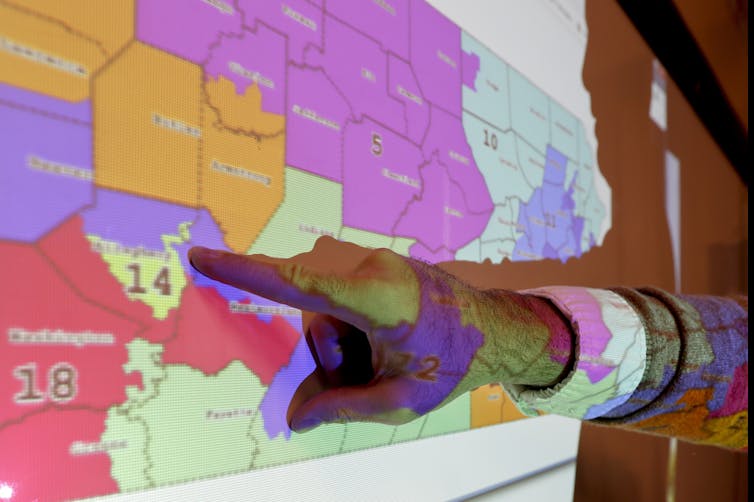
A small sliver of a congressional district in Pennsylvania crossed four counties, on a map that was ruled to be a partisan gerrymandering plan. AP Photo/Keith Srakocic

District boundaries can profoundly shape election results – most notably when they are drawn in ways that benefit one political party or the other.

In the 2011 redistricting after the 2010 census, for example, Pennsylvania’s Republican-led legislature drew up districts that significantly disadvantaged Democrats. In the state’s 2012 congressional elections, Democrats won a majority of the votes, but Republicans won two-thirds of the state’s 18 seats in Congress. Our research has found that similarly biased redistricting – called partisan gerrymandering – is common across the country.

Most states give the power to draw new boundaries to their legislatures. So when voters in November pick among the candidates for state legislatures, they are choosing the people who will make the new electoral maps. That means the 2020 election will potentially affect the balance of power and the degree of partisan conflict in the House of Representatives for the next decade.

https://datawrapper.dwcdn.net/8oSGs/2/

Legislators often draw biased lines

In drawing new boundaries, state legislators usually have very few constraints. The U.S. Constitution requires that each congressional district should represent a roughly equal number of people – except in states with too few people to have multiple districts – Alaska, Delaware, Montana, North Dakota, South Dakota, Vermont and Wyoming. They all get at least one representative in Congress.

But other than that, state lawmakers make their own rules. So it’s not surprising that congressional district lines tend to unfairly advantage the party whose members are a majority of the group drawing the lines.


AlsoRead...

Brandon Willington: The Marketing Entrepreneur turning heads across Australia

Brandon Willington: The Marketing Entrepreneur Turning Heads Across Australia

8 January 2026
How Turnkey Building Group Is Restoring Trust In An Industry Known For Customer Disappointment

How Turnkey Building Group Is Restoring Trust In An Industry Known For Customer Disappointment

17 December 2025

In the seven small, single-district states and the District of Columbia, this isn’t a problem because the state boundaries are also those of the congressional district. In five others – Hawaii, Idaho, Maine, New Hampshire and Rhode Island – there are only enough people to warrant two congressional districts, making it statistically impossible to manipulate district boundaries to advantage one party.

But of the remaining 38 states, our analysis found that 22 created gerrymandered districts that benefited one party or the other. Other political scientists have come to similar conclusions after their own analyses. This is true despite the natural, nongerrymandered tendency for like-minded people, especially Democrats, to live near each other.
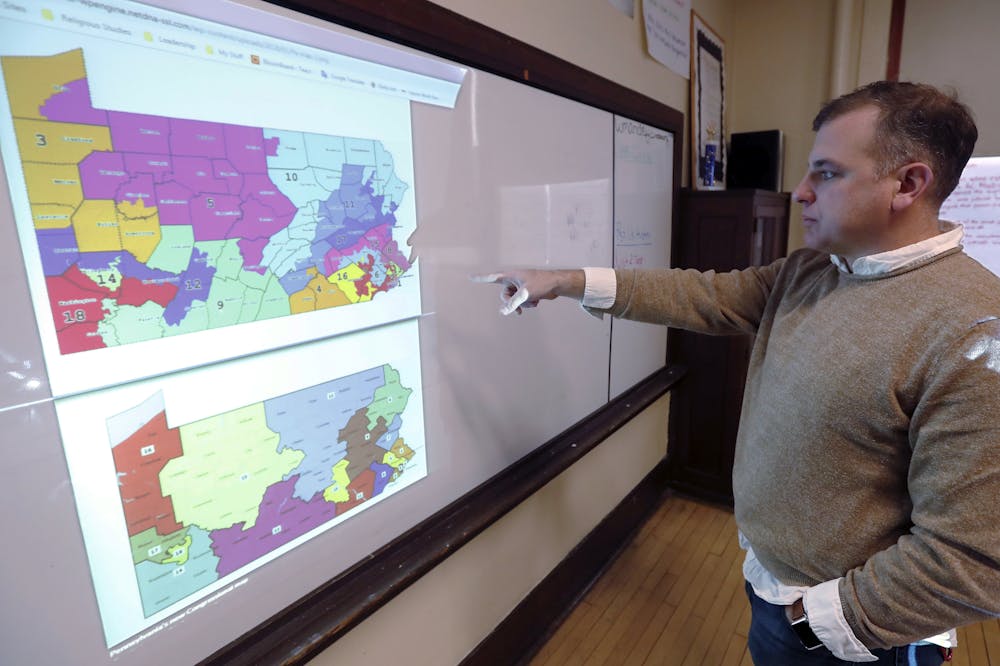
A man points at two maps of Pennsylvania congressional districts.
A Pennsylvania civics teacher points at new and old congressional district maps in his state following a 2018 court decision. AP Photo/Keith Srakocic

Most of the partisan gerrymandering created after the 2010 census benefited the Republican Party. That is because Republicans won control of many state legislatures in the 2010 elections, and then delivered congressional districts in their favor.

The bias from partisan gerrymandering was so high after the 2010 round of redistricting, particularly in seven states – Michigan, North Carolina, Pennsylvania, Ohio, Wisconsin, Virginia and Florida – that the 2012 elections produced a House of Representatives controlled by the Republican Party even though Democratic congressional candidates won more votes nationwide.

The 2020 state legislative elections will be similarly decisive of who will control the redistricting process, and what congressional elections will look like for the next decade.

Reforming the process

There are efforts to fix the redistricting process. In 2019, the Supreme Court effectively barred federal courts from considering whether partisan gerrymanders are constitutional, so reformers must look elsewhere for a solution.

Reform movements are working to take control of district boundaries out of the hands of legislators.

Several states have pioneered ways to draw their congressional boundaries more fairly. In New York, for instance, there is a commission that will advise lawmakers on potential maps that avoid partisan advantages. In Arizona and California, independent commissions have complete control over the district boundaries.

In New Jersey and Hawaii, commissions made up of politicians and political appointees draw the boundaries. And in three states – Connecticut, Indiana and Ohio – the legislature gets a first attempt to draw the boundaries, but must relinquish power to an independent commission if lawmakers can’t agree.
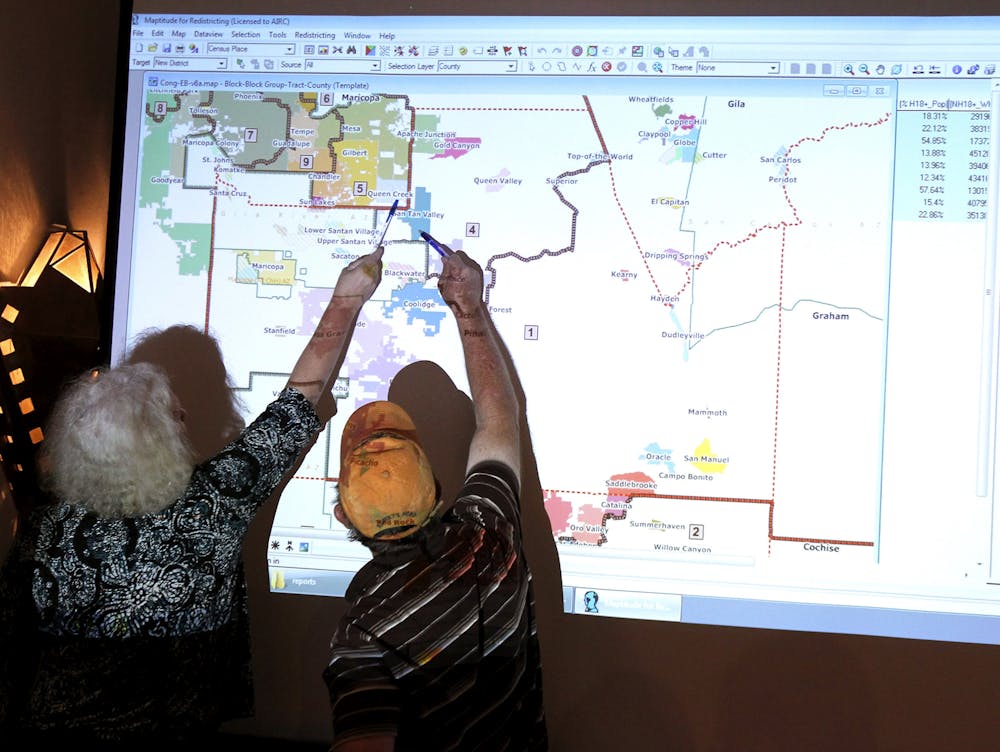
Two people point at a map
Two people discuss a detail of a district map at a 2011 meeting of Arizona’s nonpartisan redistricting commission. AP Photo/Ross D. Franklin

In some states, citizens have created independent redistricting commissions by popular referendum – through ballot propositions or initiatives – when legislators didn’t want to strip themselves of this key power. Colorado, Michigan and Utah all did this in 2018. Voters in Virginia will be given an option in the 2020 election to hand redistricting authority over to an independent commission.

Our research and others’ has found that commissions of all types tend to produce maps that are less biased than legislative ones. However, redistricting reforms in some states are now facing a backlash from state lawmakers who are attempting to reclaim power over the redistricting process through legislation, lawsuits or ballot measures of their own.

In presidential election years, the public is obviously focused on the race for the White House, but the decisions voters make in state legislative races affect the partisan composition of Congress for years to come. Without changes in who draws district lines, the U.S. is likely to enter another decade in which congressional elections are shaped not by everyday voters but by those who hold the power.

Robin Best, Associate Professor of Political Science, Binghamton University, State University of New York and Steve Lem, Professor of Political Science and Public Administration, Kutztown University of Pennsylvania

This article is republished from The Conversation under a Creative Commons license. Read the original article.


Tags: SB001
DMCA.com Protection Status

SUBSCRIBE to our NEWSLETTER

[mc4wp_form id=”2384248″]

Don't Miss

Lyca Mobile Australia’s Customer-First Overhaul Pays Off with Finder Award Win

by Fazila Olla-Logday
2 February 2026
Lyca Mobile Australia's Customer-First Overhaul Pays Off with Finder Award Win
Technology

Lyca Mobile Australia’s customer-first overhaul has earned a Finder Award, recognising its improved value, service, and stronger focus on Australian...

Read moreDetails

From Driveway to Dream Court: The Rise of High-Performance Hoops at Home in 2026

by Fazila Olla-Logday
20 January 2026
The Rise of High-Performance Hoops at Home in 2026
Sport

High-performance home basketball hoops are gaining momentum in 2026, as more homeowners invest in durable, professional-grade systems that combine advanced...

Read moreDetails

Brandon Willington: The Marketing Entrepreneur Turning Heads Across Australia

by Pauline Torongo
8 January 2026
Brandon Willington: The Marketing Entrepreneur turning heads across Australia
Business & Finance

Brandon Willington, founder of “Where U?” is changing the narrative for Australian businesses tired of inconsistent leads and empty promises.

Read moreDetails

How Turnkey Building Group Is Restoring Trust In An Industry Known For Customer Disappointment

by Fazila Olla-Logday
17 December 2025
How Turnkey Building Group Is Restoring Trust In An Industry Known For Customer Disappointment
Business & Finance

Turnkey Building Group is changing the narrative in an industry often associated with missed deadlines and broken promises. By prioritizing...

Read moreDetails

Risk Awareness for International Travellers – What Australians Should Know Before Entering Multi-State Regions

by Fazila Olla-Logday
10 December 2025
Schengen
Travel

This guide helps Australian travellers understand cross-border requirements, assess political and environmental risks, manage health and safety considerations, and prepare...

Read moreDetails

The evolution of Aesthetic Surgery through the lens of Dr Kourosh Tavakoli

by Pauline Torongo
4 December 2025
The evolution of Aesthetic Surgery through the lens of Dr. Kourosh Tavakoli
Health & Wellness

As global interest in Australian cosmetic surgery continues to grow, the combination of regulation, research and emerging digital tools is...

Read moreDetails

Ryan: Building real freedom through e-commerce

by Pauline Torongo
27 November 2025
Ryan: Building real freedom through e-commerce
Business & Finance

Ryan’s greatest achievement isn’t any single business or revenue milestone — it’s the ecosystem he’s built through the Change community.

Read moreDetails
Load More

Copyright © Blue Sky Publications Ltd. All Rights Reserved.
australiantimes.co.uk is a division of Blue Sky Publications Ltd. Reproduction without permission prohibited. DMCA.com Protection Status

  • About us
  • Write for Us
  • Advertise
  • Contact us
  • T&Cs, Privacy and GDPR
No Result
View All Result
  • News
    • Weather
    • Sport
    • Technology
    • Business & Finance
      • Currency Zone
    • Lotto Results
      • The Lott
  • Lifestyle
    • Entertainment
    • Horoscopes
    • Health & Wellness
    • Recipes
  • Travel
  • Expat Life
  • Move to Australia

Copyright © Blue Sky Publications Ltd. All Rights Reserved.
australiantimes.co.uk is a division of Blue Sky Publications Ltd. Reproduction without permission prohibited. DMCA.com Protection Status

No Result
View All Result
  • News
    • Weather
    • Sport
    • Technology
    • Business & Finance
      • Currency Zone
    • Lotto Results
      • The Lott
  • Lifestyle
    • Entertainment
    • Horoscopes
    • Health & Wellness
    • Recipes
  • Travel
  • Expat Life
  • Move to Australia

Copyright © Blue Sky Publications Ltd. All Rights Reserved.
australiantimes.co.uk is a division of Blue Sky Publications Ltd. Reproduction without permission prohibited. DMCA.com Protection Status