• Advertise
  • About us
  • Terms and Conditions
  • Contact us
Saturday, December 6, 2025
Australian Times News
  • News
    • Weather
    • Sport
    • Technology
    • Business & Finance
      • Currency Zone
    • Lotto Results
      • The Lott
  • Lifestyle
    • Entertainment
    • Horoscopes
    • Health & Wellness
    • Recipes
  • Travel
  • Expat Life
  • Move to Australia
No Result
View All Result
  • News
    • Weather
    • Sport
    • Technology
    • Business & Finance
      • Currency Zone
    • Lotto Results
      • The Lott
  • Lifestyle
    • Entertainment
    • Horoscopes
    • Health & Wellness
    • Recipes
  • Travel
  • Expat Life
  • Move to Australia
No Result
View All Result
Australian Times News
No Result
View All Result
Home News

Free ports could help Britain take back control and keep trade flowing with the EU

Britain is considering opening free ports to shore up its economy when the Brexit transition ends.

The Conversation by The Conversation
02-09-2020 01:49
in News
Keep trade flowing with the EU

Keep trade flowing with the EU Photo by Guillaume Périgois on Unsplash

Alejandro Riaño, City, University of London and Fabrice Defever, City, University of London

Britain is considering opening free ports to shore up its economy when the Brexit transition ends. The idea is that ten free ports across the country will increase trade, attract inward investment, encourage high-tech manufacturing and create employment in some of the UK’s most deprived areas.
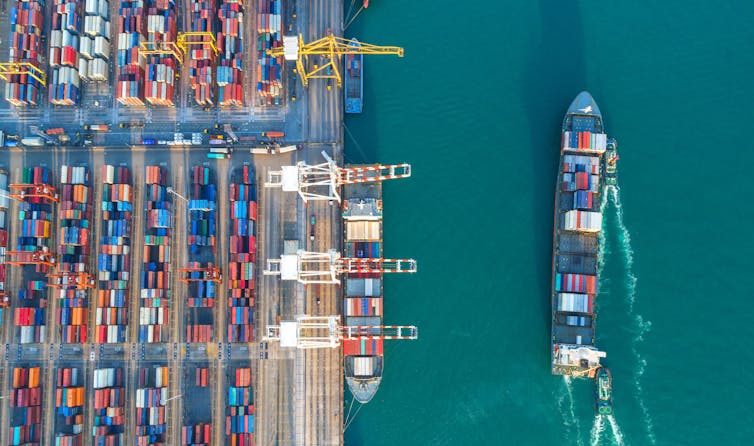
The path to freedom? Shutterstock

Free ports have been portrayed by some as a way for the UK to rediscover its maritime vocation and increase trade with the world beyond the EU after Brexit. Given that it’s effectively impossible to have a free port as a member of the EU, these free trade zones are seen as something the UK could capitalise on outside of EU law.

Our research into free ports indicates that they will not create a free trade utopia that benefits the whole country. But they can serve as a way to maintain regulatory alignment, and therefore free trade, with the EU, while at the same time making trade deals with other countries.

Success stories

A free port is an area within a country’s land border where different customs rules apply. In its most basic form, firms operating in a free port enjoy duty-free access to imports and only have to pay tariffs when they export goods to the national customs territory.

Free ports often offer a wide range of incentives for businesses to operate here. These include lower corporate taxes, providing basic utilities at below-market prices and laxer regulations and employment rules. The UK government has indicated that companies based in the new free ports would enjoy discounts in business rates (up to £275,000 over a five-year period), enhanced capital allowances on new machinery and equipment, R&D tax credits and streamlined planning procedures.

Free ports and other special economic zones are increasingly popular around the world. Out of the 5,400 zones in operation in 2019, more than 1,000 were opened during the last five years. Most have been in developing countries; notably China, the Dominican Republic, Mauritius and Mexico.


AlsoRead...

Ryan: Building real freedom through e-commerce

Ryan: Building real freedom through e-commerce

27 November 2025
Design Australia Group: Redefining Drafting as the engine of housing growth

Design Australia Group: Redefining Drafting as the engine of housing growth

26 November 2025
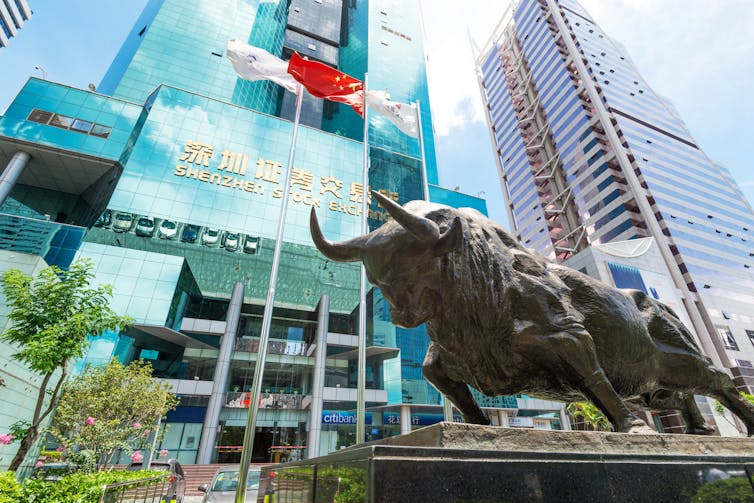
Shenzhen stock market building and bull sculpture
Special zones like Shenzhen have boosted Chinese trade and helped the country’s economy grow. zhu difeng / Shutterstock.com

The common theme linking these success stories is that their free ports were introduced against a backdrop of highly protectionist trade policies. The ports reduced the costs for exporters in these countries requiring imported parts. They enabled them to diversify their exports away from just primary commodities and facilitated the growth of firms into global value chains.

The Dominican Republic is a prime example of this transition. While in the 1960s, most of its exports were bananas, sugar, rum and cigars, the establishment of free ports allowed it to become one of the main apparel exporters to the US in the 1980s.

Costs and benefits

Given the UK’s level of development and balance of its economy between manufacturing and services, there is limited scope for free ports to bring the benefits enjoyed by developing countries. It is unlikely that the fiscal incentives provided by free ports will be generous enough to realign the UK’s exports away from services, concentrated in London, towards manufacturing elsewhere.

Free ports also entail substantial costs. The incentives offered in these free trade zones lowers the costs of exported goods, which are enjoyed by consumers abroad in the form of lower prices. Meanwhile the cost of foregone tax revenue is felt at home.

The tax incentives to attract businesses to free ports also create an uneven playing field that slows the dynamism of firms outside free ports. Products manufactured in free ports tend to be more sophisticated than those produced outside, offering limited value to the country’s economy beyond the free trade zone, creating what’s known as an enclave economy.

In countries where taxes are determined at the regional level – China being a prime example – the use of free ports and special economic zones spurred a process of intense competition among local officials seeking to attract the largest number of companies to their respective zone. Tax revenues in many of these regions suffered as a result.

Ironing out the kinks

Nonetheless, taking a page from China’s playbook, free ports could serve as effective laboratories for the UK to experiment with its future trade relationship with the EU. Having been virtually closed to international trade, the Chinese Communist Party introduced special economic zones in 1978 to test market-oriented reforms in the controlled environment of these specific zones. Doing so allowed policymakers to contain problems more easily and to iron out the kinks of certain policies before rolling them out at the wider provincial and national levels.

If regulatory alignment with the EU and “taking back control” are conflicting objectives for the UK, free ports targeting trade with the EU could offer a solution to preserve the UK’s access to the European market, while the UK pursues free trade agreements with other countries. This would be critical to sectors such as the auto industry, chemicals and electrical equipment, which rely on more than half of their inputs from the EU.

From this perspective, the key for the success of free ports is that they enjoy access to the EU single market with as little friction as possible.

Alejandro Riaño, Lecturer in Economics, City, University of London and Fabrice Defever, Professor of Economics, City, University of London

This article is republished from The Conversation under a Creative Commons license. Read the original article.


Tags: SB001
DMCA.com Protection Status

SUBSCRIBE to our NEWSLETTER

[mc4wp_form id=”2384248″]

Don't Miss

The evolution of Aesthetic Surgery through the lens of Dr Kourosh Tavakoli

by Pauline Torongo
4 December 2025
The evolution of Aesthetic Surgery through the lens of Dr. Kourosh Tavakoli
Health & Wellness

As global interest in Australian cosmetic surgery continues to grow, the combination of regulation, research and emerging digital tools is...

Read moreDetails

Ryan: Building real freedom through e-commerce

by Pauline Torongo
27 November 2025
Ryan: Building real freedom through e-commerce
Business & Finance

Ryan’s greatest achievement isn’t any single business or revenue milestone — it’s the ecosystem he’s built through the Change community.

Read moreDetails

Design Australia Group: Redefining Drafting as the engine of housing growth

by Pauline Torongo
26 November 2025
Design Australia Group: Redefining Drafting as the engine of housing growth
Business & Finance

Australia is under pressure to build homes faster, but design bottlenecks slow progress. Design Australia Group is fixing this by...

Read moreDetails

Louis Guy Detata builds Global Trading Empires through autonomous systems and disciplined leadership

by Pauline Torongo
25 November 2025
Louis Guy Detata builds Global Trading Empires through autonomous systems and disciplined leadership
Business & Finance

The path from investment banking to leading a global trading platform has taught Louis Detata that sustainable success requires more...

Read moreDetails

Burning Eucalyptus Wood: Tips, Advantages, Disadvantages & Alternatives

by Fazila Olla-Logday
20 November 2025
Image Supplied
Enviroment

Learn about burning eucalyptus wood for stoves and fireplaces. Discover benefits, drawbacks, harvesting tips, and better alternative firewood options for...

Read moreDetails

Everything Parents Need to Know About Baby Soft Play and Why It’s a Game Changer

by Fazila Olla-Logday
11 November 2025
Everything Parents Need to Know About Baby Soft Play
Health & Wellness

Baby soft play is a fun, safe, and educational way for little ones to explore and grow. Discover the benefits...

Read moreDetails

WOMAD Sets Up a New Camp in Wiltshire – Australian festival fans take note!

by Kris Griffiths
11 November 2025
Kumbia Boruka brought their reggae and dancehall flavour to the Taste the World Stage at WOMAD 2024 - Credit - Mike Massaro
Entertainment

With its 2026 edition moving to Neston Park in England, WOMAD offers Aussie music lovers a chance to reconnect with global...

Read moreDetails
Load More

Copyright © Blue Sky Publications Ltd. All Rights Reserved.
australiantimes.co.uk is a division of Blue Sky Publications Ltd. Reproduction without permission prohibited. DMCA.com Protection Status

  • About us
  • Write for Us
  • Advertise
  • Contact us
  • T&Cs, Privacy and GDPR
No Result
View All Result
  • News
    • Weather
    • Sport
    • Technology
    • Business & Finance
      • Currency Zone
    • Lotto Results
      • The Lott
  • Lifestyle
    • Entertainment
    • Horoscopes
    • Health & Wellness
    • Recipes
  • Travel
  • Expat Life
  • Move to Australia

Copyright © Blue Sky Publications Ltd. All Rights Reserved.
australiantimes.co.uk is a division of Blue Sky Publications Ltd. Reproduction without permission prohibited. DMCA.com Protection Status

No Result
View All Result
  • News
    • Weather
    • Sport
    • Technology
    • Business & Finance
      • Currency Zone
    • Lotto Results
      • The Lott
  • Lifestyle
    • Entertainment
    • Horoscopes
    • Health & Wellness
    • Recipes
  • Travel
  • Expat Life
  • Move to Australia

Copyright © Blue Sky Publications Ltd. All Rights Reserved.
australiantimes.co.uk is a division of Blue Sky Publications Ltd. Reproduction without permission prohibited. DMCA.com Protection Status