

• Advertise
  • About us
  • Terms and Conditions
  • Contact us
Saturday, December 6, 2025
Australian Times News
  • News
    • Weather
    • Sport
    • Technology
    • Business & Finance
      • Currency Zone
    • Lotto Results
      • The Lott
  • Lifestyle
    • Entertainment
    • Horoscopes
    • Health & Wellness
    • Recipes
  • Travel
  • Expat Life
  • Move to Australia
No Result
View All Result
  • News
    • Weather
    • Sport
    • Technology
    • Business & Finance
      • Currency Zone
    • Lotto Results
      • The Lott
  • Lifestyle
    • Entertainment
    • Horoscopes
    • Health & Wellness
    • Recipes
  • Travel
  • Expat Life
  • Move to Australia
No Result
View All Result
Australian Times News
No Result
View All Result
Home News

Top 1% of EU households have carbon footprints 22 times larger than climate targets allow

To keep global warming below 1.5°C, we need to reduce greenhouse gas emissions equivalent to 2.5 tonnes of CO₂ per person per year by 2030.

The Conversation by The Conversation
28-08-2020 22:09
in News
EU households have carbon footprints 22 times larger

EU households have carbon footprints 22 times larger Photo by koushik das on Unsplash

Diana Ivanova, University of Leeds and Richard Wood, Norwegian University of Science and Technology

To keep global warming below 1.5°C, we need to reduce greenhouse gas emissions equivalent to 2.5 tonnes of CO₂ per person per year by 2030. But we recently analysed more than 275,000 household budget surveys from 26 countries for an academic study, and we found that only about 5% of EU households live within these limits.
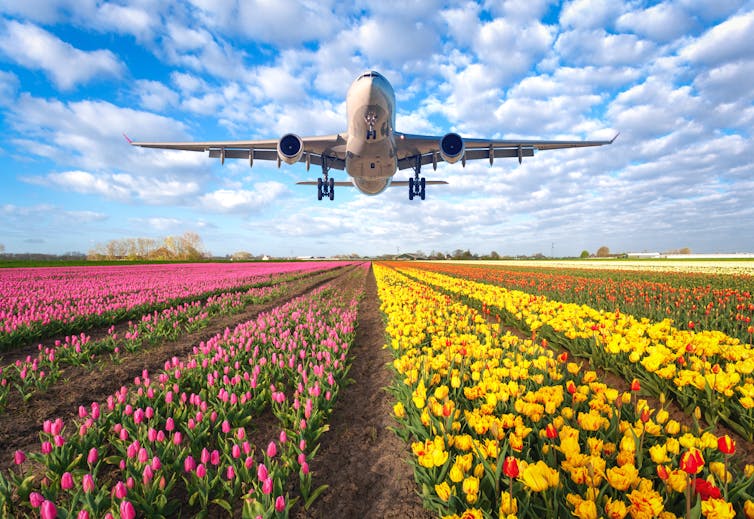
Denis Belitsky / shutterstock

Scientists aren’t certain exactly how much fossil fuel we can use and still remain below 1.5°C – that is, how big the world’s remaining carbon budget is – but it’s clear the vast majority of EU citizens are using far more than their fair share. In the EU, the average carbon footprint is equivalent to about eight tonnes of CO₂ per person, which must fall by about a third over the next decade.

But some people place even greater pressure on the environment. Households in the top 1% of polluters in the EU have carbon footprints that are 22 times larger than the safe limit of 2.5 tonnes. On average, people in this group emit greenhouse gases equivalent to 55 tonnes of CO₂ per person per year.

Consumption patterns of the top polluters

So who are these top emitters? We know they’re relatively wealthy, though perhaps not private-jet wealthy. Their annual net income is around €40,000 per person on average.

Meanwhile, the top 10% of polluters in the EU account for 27% of the total EU carbon footprint, a greater contribution than that of the bottom 50%. These stark differences in carbon footprints are rooted in the things people buy and consume.

What do the top emitters consume that produces so much waste? One of the biggest culprits in our analysis is air travel. Regular flights are responsible for 41% of the carbon footprint of the top 1% of emitters, and almost all flights taken in the EU are by the top 10% of polluters. Air travel is very unequally distributed across the population, while it is also very carbon intensive.


AlsoRead...

Ryan: Building real freedom through e-commerce

Ryan: Building real freedom through e-commerce

27 November 2025
Design Australia Group: Redefining Drafting as the engine of housing growth

Design Australia Group: Redefining Drafting as the engine of housing growth

26 November 2025

But air travel largely isn’t the focus of climate policies. Airlines rocked by the COVID-19 pandemic have received bailouts, while kerosene tax exemptions effectively subsidise flying, making it relatively cheap compared to other transport options.

Car travel also makes up close to a third of the carbon footprint among the top 10% of EU emitters. At the same time, poorer people spend a larger share of their wages on transport, including fuel, road tax and car insurance. Policies that increase the price of car travel, such as fuel duty rises, could hurt the poorest most if they aren’t accompanied by support for switching to cleaner alternatives such as public transport.
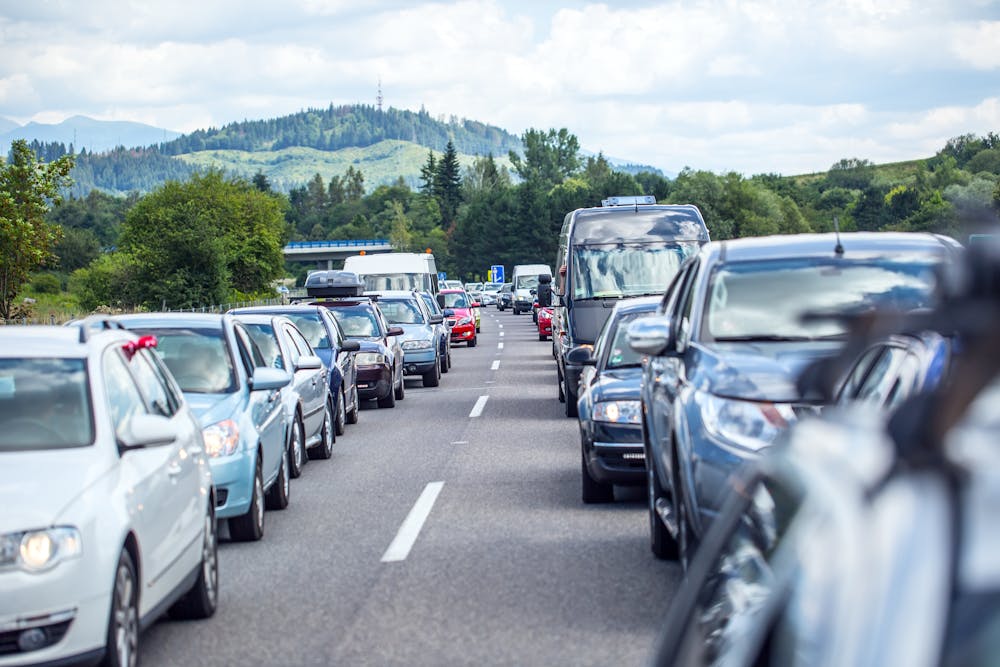
Traffic jam in countryside.
Too many Europeans still depend on their cars. Marian Weyo / shutterstock

But as households get richer, travel emissions grow faster than the growth in wealth. At one end of the income divide, there’s a structural reliance on cars for travelling to work and other necessities, while at the other end, people buy new cars they don’t need and travel more as they get richer. Policymakers need to stop incentivising luxuries like air travel and better address the car dependency that is most pronounced for people with lower incomes.

To reduce the need for cars, governments should provide adequate public transport, cycling and walking infrastructure. They should also help to redesign cities, increase urban density of residents and jobs and actively target social practices and business models that reinforce car reliance.

Avoiding flying, living car-free and eating a vegan diet can reduce personal carbon footprints. But the reductions are generally insufficient to meet the 2.5 tonnes carbon targets. This is largely because of fossil-fuel dependence throughout the economy.

Carbon footprints and wellbeing

As things stand, living within climate limits most often means living in inadequate conditions, with fewer opportunities to travel or buy things. This is especially true in EU countries that rely heavily on coal to generate energy, such as Estonia and Bulgaria.

But the link between carbon footprints and income is highly complex. While the wealthiest are clearly responsible for the highest emissions, Denmark and France have much lower carbon footprints for the same level of income compared with other European countries. This could be because they generate more of their electricity from nuclear and renewables. Both countries also have comparably robust welfare states, with expansive public services and public transport. This could ensure that people there have more of their basic needs met and aren’t as compelled to buy lots of stuff, as in other countries.

If 95% of EU households live beyond planetary limits, we need ambitious and radical change. Reducing the carbon intensity of global supply chains could ensure that everyone can have adequate nutrition, shelter, education, healthcare and mobility within planetary limits. Airport expansions, motorway extensions and fossil fuel subsidies are locking us into a future with less opportunity to achieve climate targets and a good standard of living for all in Europe and around the world.

Diana Ivanova, Research Fellow, University of Leeds and Richard Wood, Professor of Industrial Ecology, Norwegian University of Science and Technology

This article is republished from The Conversation under a Creative Commons license. Read the original article.


Tags: SB001
DMCA.com Protection Status

SUBSCRIBE to our NEWSLETTER

[mc4wp_form id=”2384248″]

Don't Miss

The evolution of Aesthetic Surgery through the lens of Dr Kourosh Tavakoli

by Pauline Torongo
4 December 2025
The evolution of Aesthetic Surgery through the lens of Dr. Kourosh Tavakoli
Health & Wellness

As global interest in Australian cosmetic surgery continues to grow, the combination of regulation, research and emerging digital tools is...

Read moreDetails

Ryan: Building real freedom through e-commerce

by Pauline Torongo
27 November 2025
Ryan: Building real freedom through e-commerce
Business & Finance

Ryan’s greatest achievement isn’t any single business or revenue milestone — it’s the ecosystem he’s built through the Change community.

Read moreDetails

Design Australia Group: Redefining Drafting as the engine of housing growth

by Pauline Torongo
26 November 2025
Design Australia Group: Redefining Drafting as the engine of housing growth
Business & Finance

Australia is under pressure to build homes faster, but design bottlenecks slow progress. Design Australia Group is fixing this by...

Read moreDetails

Louis Guy Detata builds Global Trading Empires through autonomous systems and disciplined leadership

by Pauline Torongo
25 November 2025
Louis Guy Detata builds Global Trading Empires through autonomous systems and disciplined leadership
Business & Finance

The path from investment banking to leading a global trading platform has taught Louis Detata that sustainable success requires more...

Read moreDetails

Burning Eucalyptus Wood: Tips, Advantages, Disadvantages & Alternatives

by Fazila Olla-Logday
20 November 2025
Image Supplied
Enviroment

Learn about burning eucalyptus wood for stoves and fireplaces. Discover benefits, drawbacks, harvesting tips, and better alternative firewood options for...

Read moreDetails

Everything Parents Need to Know About Baby Soft Play and Why It’s a Game Changer

by Fazila Olla-Logday
11 November 2025
Everything Parents Need to Know About Baby Soft Play
Health & Wellness

Baby soft play is a fun, safe, and educational way for little ones to explore and grow. Discover the benefits...

Read moreDetails

WOMAD Sets Up a New Camp in Wiltshire – Australian festival fans take note!

by Kris Griffiths
11 November 2025
Kumbia Boruka brought their reggae and dancehall flavour to the Taste the World Stage at WOMAD 2024 - Credit - Mike Massaro
Entertainment

With its 2026 edition moving to Neston Park in England, WOMAD offers Aussie music lovers a chance to reconnect with global...

Read moreDetails
Load More

Copyright © Blue Sky Publications Ltd. All Rights Reserved.
australiantimes.co.uk is a division of Blue Sky Publications Ltd. Reproduction without permission prohibited. DMCA.com Protection Status

  • About us
  • Write for Us
  • Advertise
  • Contact us
  • T&Cs, Privacy and GDPR
No Result
View All Result
  • News
    • Weather
    • Sport
    • Technology
    • Business & Finance
      • Currency Zone
    • Lotto Results
      • The Lott
  • Lifestyle
    • Entertainment
    • Horoscopes
    • Health & Wellness
    • Recipes
  • Travel
  • Expat Life
  • Move to Australia

Copyright © Blue Sky Publications Ltd. All Rights Reserved.
australiantimes.co.uk is a division of Blue Sky Publications Ltd. Reproduction without permission prohibited. DMCA.com Protection Status

No Result
View All Result
  • News
    • Weather
    • Sport
    • Technology
    • Business & Finance
      • Currency Zone
    • Lotto Results
      • The Lott
  • Lifestyle
    • Entertainment
    • Horoscopes
    • Health & Wellness
    • Recipes
  • Travel
  • Expat Life
  • Move to Australia

Copyright © Blue Sky Publications Ltd. All Rights Reserved.
australiantimes.co.uk is a division of Blue Sky Publications Ltd. Reproduction without permission prohibited. DMCA.com Protection Status





