

• Advertise
  • About us
  • Terms and Conditions
  • Contact us
Saturday, December 6, 2025
Australian Times News
  • News
    • Weather
    • Sport
    • Technology
    • Business & Finance
      • Currency Zone
    • Lotto Results
      • The Lott
  • Lifestyle
    • Entertainment
    • Horoscopes
    • Health & Wellness
    • Recipes
  • Travel
  • Expat Life
  • Move to Australia
No Result
View All Result
  • News
    • Weather
    • Sport
    • Technology
    • Business & Finance
      • Currency Zone
    • Lotto Results
      • The Lott
  • Lifestyle
    • Entertainment
    • Horoscopes
    • Health & Wellness
    • Recipes
  • Travel
  • Expat Life
  • Move to Australia
No Result
View All Result
Australian Times News
No Result
View All Result
Home News

EU subsidies benefit big farms while underfunding greener and poorer plots – new research

The Common Agricultural Policy, or CAP, is the European Union’s largest budget item. For the €60 billion (£53.9 billion) a year it pays in subsidies, the CAP is expected to support farmer incomes.

The Conversation by The Conversation
23-08-2020 06:19
in News
EU subsidies benefit big farms

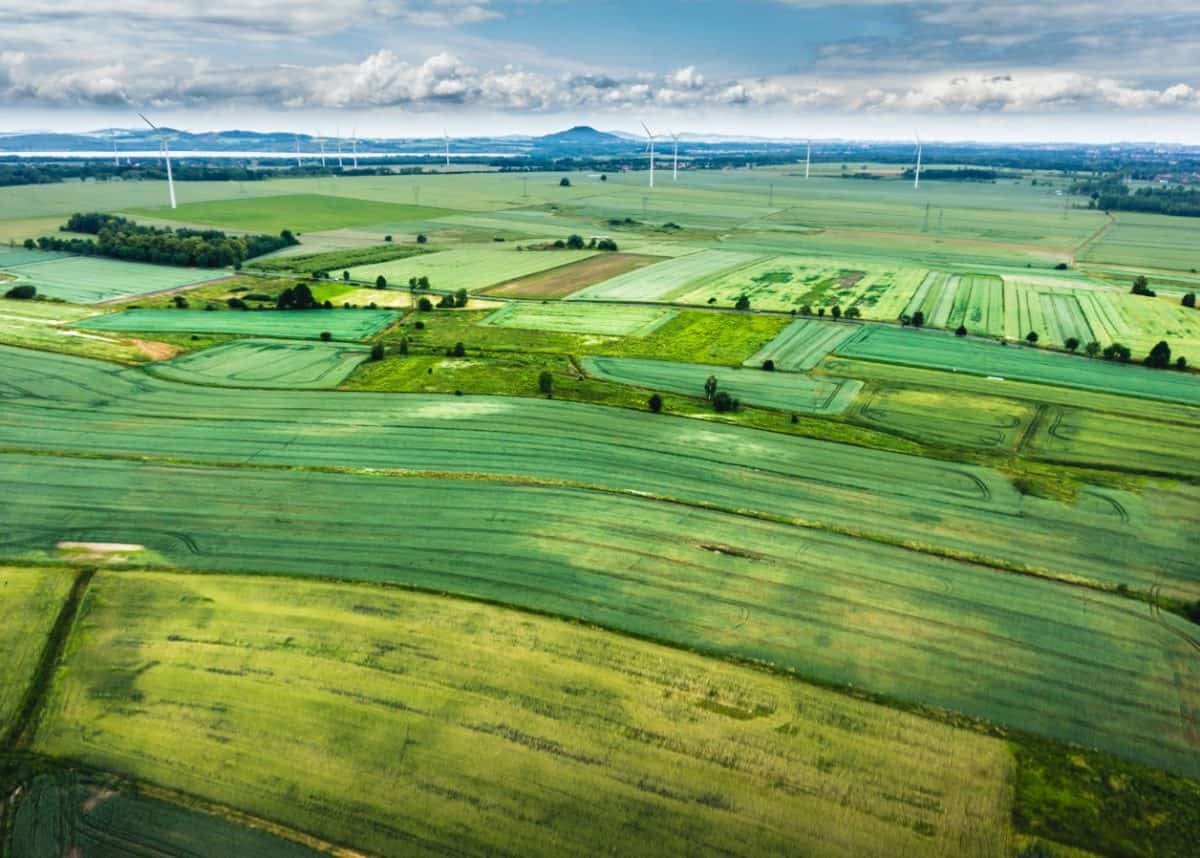
EU subsidies benefit big farms Photo by Tomasz Bazylinski on Unsplash

Murray Scown, Utrecht University; Kimberly Nicholas, Lund University, and Mark Brady, Swedish University of Agricultural Sciences

The Common Agricultural Policy, or CAP, is the European Union’s largest budget item. For the €60 billion (£53.9 billion) a year it pays in subsidies, the CAP is expected to support farmer incomes, ensure a supply of quality food, protect biodiversity, tackle climate change and encourage young people into farming.
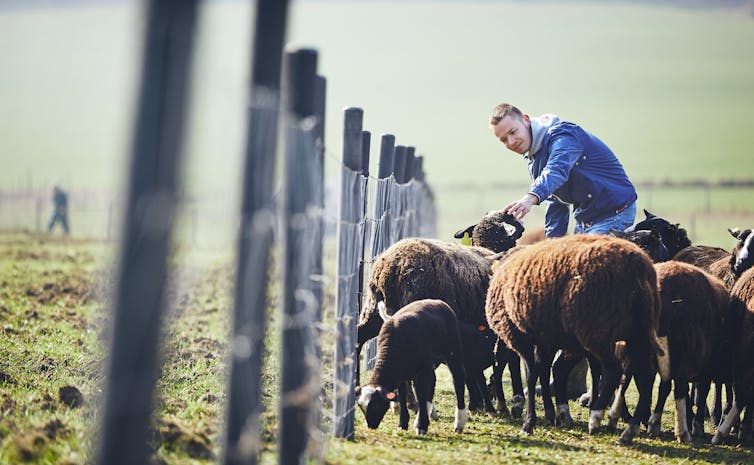
Jaromir Chalabala/Shutterstock

It’s hard to tell if the EU is succeeding in these aims because of a lack of transparency, complex reporting, and insufficient monitoring. But the success of the European Green Deal and a green recovery from COVID-19 depend on these subsidies being well spent.

In our new study, we found that the CAP isn’t living up to its promises.

Where subsidies really go

We carefully analysed how agricultural subsidies flow down from EU bureaucracy to the local level. We connected these payments to their intended CAP goal – such as improving biodiversity or creating new opportunities for young farmers – and compared where they ultimately go.

Our analysis showed that at least €24 billion a year goes to support incomes in the richest farming regions of the EU with the fewest farm jobs. Meanwhile, the poorest regions with the most farm jobs are left behind. These essentially unnecessary welfare payments would more than cover the €20 billion a year needed to meet the EU’s biodiversity strategy, or could be better spent on other goals in regions of greatest need.

Our results show that current spending is exacerbating, rather than reducing income inequality among farmers, because income payments are simply based on the area of land farmers manage, not their needs. The larger the farm, the higher their income support.


AlsoRead...

Ryan: Building real freedom through e-commerce

Ryan: Building real freedom through e-commerce

27 November 2025
Design Australia Group: Redefining Drafting as the engine of housing growth

Design Australia Group: Redefining Drafting as the engine of housing growth

26 November 2025

The way these payments are allocated requires no proof of environmental benefits – everyone gets the same payment for each hectare of land. As a result, the very premise on which the majority of CAP support is paid is gravely flawed.

In what was perhaps most surprising, we also found that substantial payments intended to support rural development are actually made to urban areas.

EU farm income compared to greenhouse gas emissions
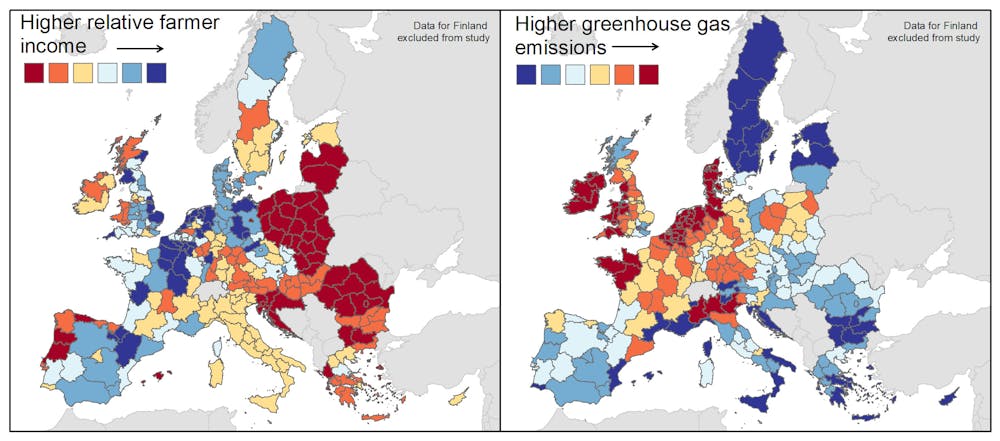
Two maps comparing farm income across the EU with greenhouse gas emissions.
Murray Scown, Author provided

Not only does the CAP fail to support the incomes of farmers most in need, our study showed it actually subsidises farming regions with the most pollution and least biodiversity-friendly farming habits. Farming regions with the highest greenhouse gas emissions from intensive livestock production are getting paid billions of euros each year without any obligation to reduce pollution.

In its current state, the CAP is unlikely to contribute to a green recovery from the pandemic, nor broader goals for sustainable development as the European Commission desires.

Rethinking the CAP

The details of the post-2020 CAP are now being wrangled among member states. But the proposals don’t address these major flaws, particularly because the main way in which payments are distributed remains unaltered in the new proposed CAP. These flaws could be addressed by, for example, removing area-based payments. But implementing these changes will take political will.

CAP income support should become needs-based, like other social welfare payments that are means-tested. That means recipients need to prove they need income support according to a particular criteria, considering all sources of income. Otherwise farmers should only be rewarded or compensated based on evidence of them providing public goods.

This would give farmers in regions with lots of pollution the support they need to reduce it. It would also give farmers in less fertile regions income for providing environmental services, such as protecting grasslands high in biodiversity. These changes would drastically improve the current model of payments being based on how much farmland a person owns.

How CAP subsidies actually benefit the environment must also be scrutinised. One easy way is to monitor, using satellites or crowd-sourced photographs, the extent of grassland habitats on farms, with subsidies reduced if these areas shrink or increased if the areas expand. These unplowed, sparsely grazed areas are very valuable to biodiversity, but they wouldn’t usually be protected without environmental payments.
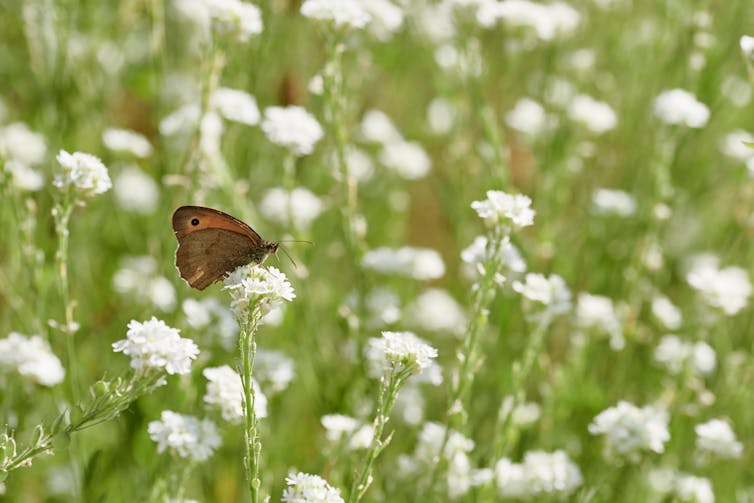
A brown butterfly rests on a white flower in a meadow.
A redesigned CAP could reward farmers based on the area of biodiverse grassland they sustain. Thomas Marx/Shutterstock

Another option is for the CAP to finance pollution reduction – such as nitrogen in waterways or greenhouse gas emissions – and continuously measure it against a baseline.

Farmers are stewards of a large portion of the EU’s land area, and its cultural landscapes, wildlife and habitats too. The future security of Europe’s food supplies will depend on maintaining healthy soils and biodiversity.

But misspent agricultural subsidies are destroying the very environment upon which farming depends worldwide. The current CAP negotiations need to change how unevenly and unwisely this huge chunk of the EU budget is being spent to safeguard food security and the environment for future generations.

Murray Scown, Postdoctoral Researcher in Environment and Sustainability, Utrecht University; Kimberly Nicholas, Associate Professor of Sustainability Science, Lund University, and Mark Brady, Associate Professor in Agricultural and Environmental Economics, Swedish University of Agricultural Sciences

This article is republished from The Conversation under a Creative Commons license. Read the original article.


Tags: SB001
DMCA.com Protection Status

SUBSCRIBE to our NEWSLETTER

[mc4wp_form id=”2384248″]

Don't Miss

The evolution of Aesthetic Surgery through the lens of Dr Kourosh Tavakoli

by Pauline Torongo
4 December 2025
The evolution of Aesthetic Surgery through the lens of Dr. Kourosh Tavakoli
Health & Wellness

As global interest in Australian cosmetic surgery continues to grow, the combination of regulation, research and emerging digital tools is...

Read moreDetails

Ryan: Building real freedom through e-commerce

by Pauline Torongo
27 November 2025
Ryan: Building real freedom through e-commerce
Business & Finance

Ryan’s greatest achievement isn’t any single business or revenue milestone — it’s the ecosystem he’s built through the Change community.

Read moreDetails

Design Australia Group: Redefining Drafting as the engine of housing growth

by Pauline Torongo
26 November 2025
Design Australia Group: Redefining Drafting as the engine of housing growth
Business & Finance

Australia is under pressure to build homes faster, but design bottlenecks slow progress. Design Australia Group is fixing this by...

Read moreDetails

Louis Guy Detata builds Global Trading Empires through autonomous systems and disciplined leadership

by Pauline Torongo
25 November 2025
Louis Guy Detata builds Global Trading Empires through autonomous systems and disciplined leadership
Business & Finance

The path from investment banking to leading a global trading platform has taught Louis Detata that sustainable success requires more...

Read moreDetails

Burning Eucalyptus Wood: Tips, Advantages, Disadvantages & Alternatives

by Fazila Olla-Logday
20 November 2025
Image Supplied
Enviroment

Learn about burning eucalyptus wood for stoves and fireplaces. Discover benefits, drawbacks, harvesting tips, and better alternative firewood options for...

Read moreDetails

Everything Parents Need to Know About Baby Soft Play and Why It’s a Game Changer

by Fazila Olla-Logday
11 November 2025
Everything Parents Need to Know About Baby Soft Play
Health & Wellness

Baby soft play is a fun, safe, and educational way for little ones to explore and grow. Discover the benefits...

Read moreDetails

WOMAD Sets Up a New Camp in Wiltshire – Australian festival fans take note!

by Kris Griffiths
11 November 2025
Kumbia Boruka brought their reggae and dancehall flavour to the Taste the World Stage at WOMAD 2024 - Credit - Mike Massaro
Entertainment

With its 2026 edition moving to Neston Park in England, WOMAD offers Aussie music lovers a chance to reconnect with global...

Read moreDetails
Load More

Copyright © Blue Sky Publications Ltd. All Rights Reserved.
australiantimes.co.uk is a division of Blue Sky Publications Ltd. Reproduction without permission prohibited. DMCA.com Protection Status

  • About us
  • Write for Us
  • Advertise
  • Contact us
  • T&Cs, Privacy and GDPR
No Result
View All Result
  • News
    • Weather
    • Sport
    • Technology
    • Business & Finance
      • Currency Zone
    • Lotto Results
      • The Lott
  • Lifestyle
    • Entertainment
    • Horoscopes
    • Health & Wellness
    • Recipes
  • Travel
  • Expat Life
  • Move to Australia

Copyright © Blue Sky Publications Ltd. All Rights Reserved.
australiantimes.co.uk is a division of Blue Sky Publications Ltd. Reproduction without permission prohibited. DMCA.com Protection Status

No Result
View All Result
  • News
    • Weather
    • Sport
    • Technology
    • Business & Finance
      • Currency Zone
    • Lotto Results
      • The Lott
  • Lifestyle
    • Entertainment
    • Horoscopes
    • Health & Wellness
    • Recipes
  • Travel
  • Expat Life
  • Move to Australia

Copyright © Blue Sky Publications Ltd. All Rights Reserved.
australiantimes.co.uk is a division of Blue Sky Publications Ltd. Reproduction without permission prohibited. DMCA.com Protection Status





