
• Advertise
  • About us
  • Terms and Conditions
  • Contact us
Wednesday, May 13, 2026
Australian Times News
  • News
    • Weather
    • Sport
    • Technology
    • Business & Finance
      • Currency Zone
    • Lotto Results
      • The Lott
  • Lifestyle
    • Entertainment
    • Horoscopes
    • Health & Wellness
    • Recipes
  • Travel
  • Expat Life
  • Move to Australia
No Result
View All Result
  • News
    • Weather
    • Sport
    • Technology
    • Business & Finance
      • Currency Zone
    • Lotto Results
      • The Lott
  • Lifestyle
    • Entertainment
    • Horoscopes
    • Health & Wellness
    • Recipes
  • Travel
  • Expat Life
  • Move to Australia
No Result
View All Result
Australian Times News
No Result
View All Result
Home News

How Earth’s plastic pollution problem could look by 2040

By identifying the ways in which this litter is produced and distributed, we’ve also discovered how best to reduce the plastic deluge.

The Conversation by The Conversation
25-07-2020 09:17
in News
Earth’s plastic pollution problem

Earth’s plastic pollution problem Photo by Volodymyr Hryshchenko on Unsplash

Costas Velis, University of Leeds and Ed Cook, University of Leeds

During a visit to a bookstore a few weeks ago, we couldn’t help but stare at a display unit featuring no fewer than ten books telling you how to rid plastics from your daily life. We’re bombarded by information on the topic of marine litter and plastic pollution, but how much do we really know about the problem?
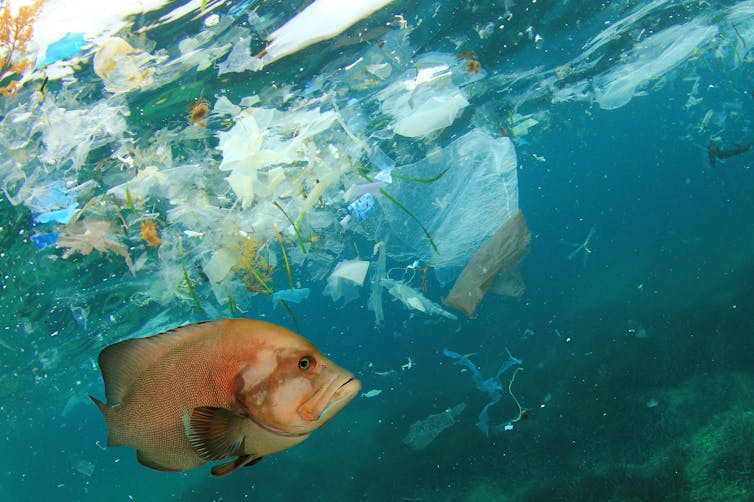
Rich Carey/Shutterstock

Think about other planetary challenges, like climate change or ozone layer depletion. Mature areas of research have developed around them, allowing scientists to identify where the gases that cause these problems come from, and how much reaches the atmosphere each year.

But when it comes to plastic pollution, we know close to nothing about how and where plastic waste is generated, managed, treated and disposed of, especially in low and middle income countries. As a result, we’re struggling to limit the amount of litter accumulating in the environment.

Our research published in Science involved a herculean effort to spot, track and model the current and future flows of plastics into the world’s land and waterbodies. We found that plastic entering the marine environment is set to double by 2040 and, unless the world acts, more than 1.3 billion tonnes of plastic waste will be dumped on land and in waterbodies.

By identifying the ways in which this litter is produced and distributed, we’ve also discovered how best to reduce the plastic deluge. In the process, we found the unsung heroes on the frontline fighting the pollution crisis who could be the world’s best hope of stemming the tide.
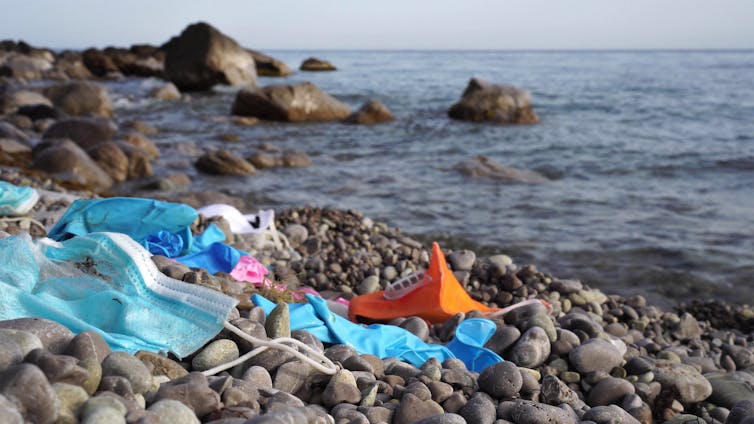
Discarded face masks on a rocky beach.
Single-use plastic consumption has increased during the pandemic. Fevziie/Shutterstock

The world’s plastic problem in numbers

We developed a model called Plastic-to-Ocean (P₂O) which combines years of accumulated knowledge on global flows of plastic. It compares our current production, use and management of waste with what is projected in the future.


AlsoRead...

Svitla Systems

Svitla Systems acquires Australia’s Kiandra IT to expand Global Engineering Footprint and Accelerate AI-Driven delivery

11 May 2026
How Clevero is helping Australian Service Businesses compete with Enterprises on a Fraction of the Budget

How Clevero is helping Australian Service Businesses compete with Enterprises on a Fraction of the Budget

28 April 2026

Do you burn your waste in the garden or in the street? Do you drop it into the river? If you answered no to both of these questions then you are possibly one of the 5.5 billion people whose waste gets collected. If you were among the remaining two billion, what would you do with your uncollected waste? Would you make use of a nearby stream, cliff edge, or perhaps squirrel the odd bag in the woods after dusk?

More often than not, uncollected plastic waste is simply set on fire as a cost-free and effective method of disposal. Our model suggests that cumulatively, more than 2.2 billion tonnes of plastic will be open burned by 2040, far more than the 850 million tonnes that’s anticipated to be dumped on land and the 480 million tonnes in rivers and seas.

Having tracked the sources of plastic items through the supply chain and their fate in the environment, we explored what might help reduce aquatic pollution. We found that the single most effective intervention is to provide a service for the two billion people who currently don’t have their waste collected.
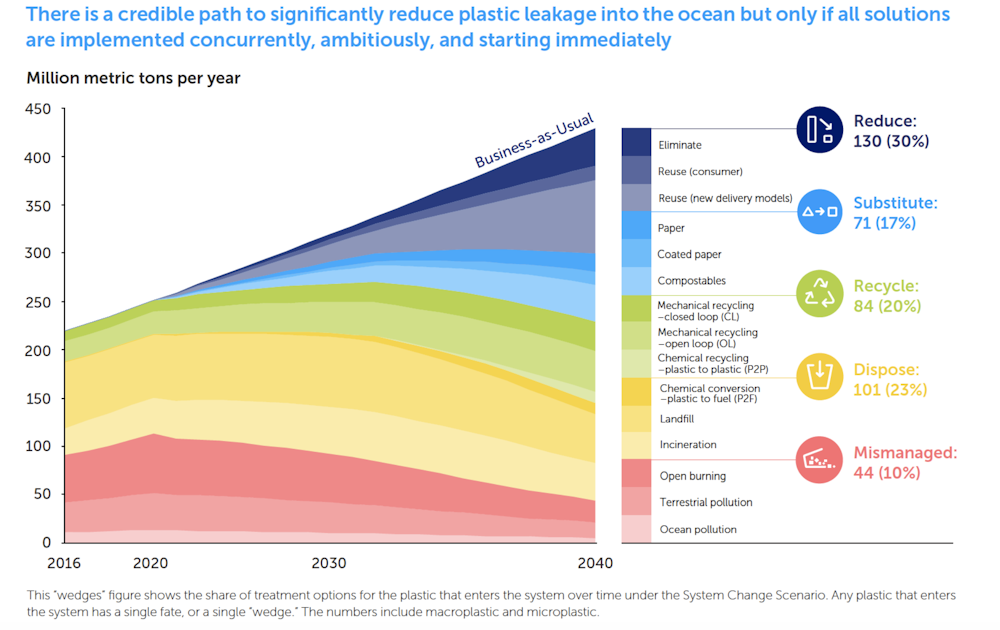
A graph showing how different measures could reduce the flow of plastic into the ocean.
Laura Margison/Pew Communications, Author provided

But, of the nine interventions we tested, none solved the problem on their own. Only an integrated approach that in addition to increasing collection coverage includes interventions such as reducing demand for single-use and unrecyclable plastic and improving the business case for mechanical recycling, could be successful. For the countries suffering most from plastic pollution, this knowledge could offer a way forward.

But even in our best-case scenario, in which the world takes the kind of concerted and immediate action proposed in our study, approximately 710 million tonnes of plastic waste will be released into the environment by 2040. That may sound a lot, but it would mean an 80% reduction in the levels of plastic pollution compared to what will happen with no action over the next two decades.

Could waste pickers save the day?

Our work also cast light on the contributions of 11 million waste pickers in low and middle-income countries. These informal workers collect waste items, including plastics, for recycling, to secure a livelihood for day-to-day survival. The model estimates that they may be responsible for 58% of all plastic waste collected for recycling worldwide – more than the combined formal collection services achieve throughout all the high-income countries put together.

Without this informal waste collection sector, the mass of plastic entering rivers and the ocean would be considerably greater. Their efforts should be integrated into municipal waste management plans, not only to recognise their tremendous contribution but to improve the appalling safety standards that they currently endure.
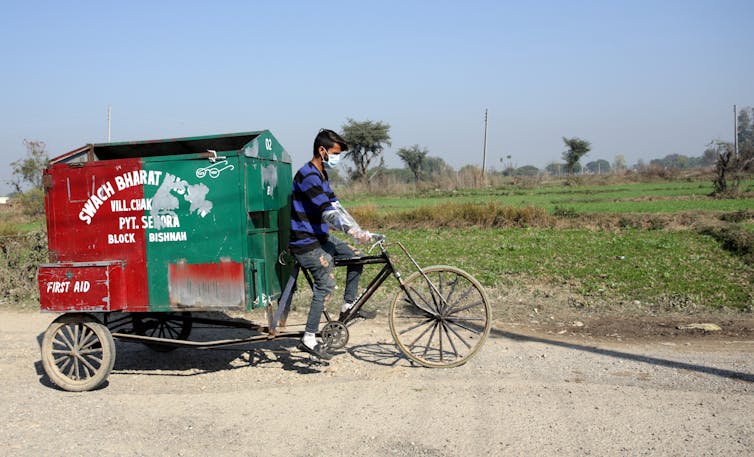
A man in India peddles a bicycle cart to collect rubbish.
An additional 500,000 people will need to be reached by waste collection services each day until 2040. EPA-EFE/JAIPAL SINGH

Establishing a comprehensive baseline estimate of sources, stocks and flows of plastic pollution, and then projecting into the future, has been an immense task. When it comes to solid waste, the availability, accuracy and international compatibility of data is notoriously insufficient.

Plastic items occur throughout the world in tens of thousands of shapes, sizes, polymer types and additive combinations. There are also considerable differences in cultural attitudes towards the way waste is managed, how plastic products are consumed, and the types of infrastructure and equipment used to manage it when it becomes waste.

Our modelling effort was a delicate and tedious exercise of simplifying and generalising this complexity. To understand how reliable, accurate, and precise our findings are likely to be, think of the first models that estimated how sensitive the climate is to human influence back in the 1970s.

Hopefully, the strong evidence base we have presented today will inform a global strategy and strong local preventive action. The plastic pollution challenge can be substantially controlled within a generation’s time. So, is anyone ready to act?

Costas Velis, Lecturer in Resource Efficiency Systems, University of Leeds and Ed Cook, Research Fellow in Circular Economy Systems, University of Leeds

This article is republished from The Conversation under a Creative Commons license. Read the original article.


Tags: SB001
DMCA.com Protection Status

SUBSCRIBE to our NEWSLETTER

[mc4wp_form id=”2384248″]

Don't Miss

Svitla Systems acquires Australia’s Kiandra IT to expand Global Engineering Footprint and Accelerate AI-Driven delivery

by Pauline Torongo
11 May 2026
Svitla Systems
Business & Finance

Acquisition marks Svitla’s entry into the Australian market and strengthens capabilities in low-code, Microsoft technologies, and enterprise software engineering.

Read moreDetails

Residential Healthcare Practices: Revolution or Evolution?

by Pauline Torongo
11 May 2026
Residential Healthcare Practices: Revolution or Evolution?
Lifestyle

President Bill Lutz’s "revolution" was born from his background in fine dining, which instilled a disciplined, customer-focused approach.

Read moreDetails

Medicana Health Group launches HPV vaccination campaign to support cervical cancer prevention

by Pauline Torongo
28 April 2026
Medicana Health Group launches HPV vaccination campaign to support cervical cancer prevention
Health & Wellness

The Türkiye-based healthcare group has introduced a new awareness campaign focused on HPV vaccination, regular check-ups and early detection, with...

Read moreDetails

How Clevero is helping Australian Service Businesses compete with Enterprises on a Fraction of the Budget

by Pauline Torongo
28 April 2026
How Clevero is helping Australian Service Businesses compete with Enterprises on a Fraction of the Budget
Business & Finance

By consolidating CRM, scheduling, workflow automation, invoicing, reporting, and client communications into a single platform, Clevero gives smaller operators the...

Read moreDetails

How CJAM Group is building 1,100 homes across Southeast Queensland

by Pauline Torongo
24 March 2026
How CJAM Group is building 1,100 homes across Southeast Queensland
Lifestyle

The CJAM Group founder is quietly building a 1,100+ home pipeline, with projects in Hervey Bay and Toowoomba, using a...

Read moreDetails

Design Without Compromise: Where Gutter Protection Meets Modern Architecture

by Fazila Olla-Logday
20 March 2026
Design Without Compromise: Where Gutter Protection Meets Modern Architecture
Business & Finance

Design without compromise by integrating gutter protection seamlessly into modern architecture. Discover how innovative gutter systems enhance your home’s aesthetics...

Read moreDetails

How WageSafe Secured Australia’s Most Reputable Retail Business Among Its Premium Clients

by Fazila Olla-Logday
12 March 2026
How WageSafe Secured Australia’s Most Reputable Retail Business Among Its Premium Clients
at

Learn how WageSafe helps businesses stay compliant with payroll and wage regulations through reliable monitoring, risk management, and expert support—protecting...

Read moreDetails
Load More

Copyright © Blue Sky Publications Ltd. All Rights Reserved.
australiantimes.co.uk is a division of Blue Sky Publications Ltd. Reproduction without permission prohibited. DMCA.com Protection Status

  • About us
  • Write for Us
  • Advertise
  • Contact us
  • T&Cs, Privacy and GDPR
No Result
View All Result
  • News
    • Weather
    • Sport
    • Technology
    • Business & Finance
      • Currency Zone
    • Lotto Results
      • The Lott
  • Lifestyle
    • Entertainment
    • Horoscopes
    • Health & Wellness
    • Recipes
  • Travel
  • Expat Life
  • Move to Australia

Copyright © Blue Sky Publications Ltd. All Rights Reserved.
australiantimes.co.uk is a division of Blue Sky Publications Ltd. Reproduction without permission prohibited. DMCA.com Protection Status

No Result
View All Result
  • News
    • Weather
    • Sport
    • Technology
    • Business & Finance
      • Currency Zone
    • Lotto Results
      • The Lott
  • Lifestyle
    • Entertainment
    • Horoscopes
    • Health & Wellness
    • Recipes
  • Travel
  • Expat Life
  • Move to Australia

Copyright © Blue Sky Publications Ltd. All Rights Reserved.
australiantimes.co.uk is a division of Blue Sky Publications Ltd. Reproduction without permission prohibited. DMCA.com Protection Status