• Advertise
  • About us
  • Terms and Conditions
  • Contact us
Saturday, December 6, 2025
Australian Times News
  • News
    • Weather
    • Sport
    • Technology
    • Business & Finance
      • Currency Zone
    • Lotto Results
      • The Lott
  • Lifestyle
    • Entertainment
    • Horoscopes
    • Health & Wellness
    • Recipes
  • Travel
  • Expat Life
  • Move to Australia
No Result
View All Result
  • News
    • Weather
    • Sport
    • Technology
    • Business & Finance
      • Currency Zone
    • Lotto Results
      • The Lott
  • Lifestyle
    • Entertainment
    • Horoscopes
    • Health & Wellness
    • Recipes
  • Travel
  • Expat Life
  • Move to Australia
No Result
View All Result
Australian Times News
No Result
View All Result
Home News

Bacteria and viruses are travelling the world on highways in the sky

Scientists first reported the existence of sky-bound bacteria in a couple of pioneering studies published in 2013 and 2018.

The Conversation by The Conversation
22-07-2020 18:09
in News
Bacteria and viruses are travelling the world

Bacteria and viruses are travelling the world Photo by Viktor Forgacs on Unsplash

Predrag Slijepcevic, Brunel University London

Microbes are the truly dominant group of lifeforms. These invisible pieces of biogenic matter have been running Earth’s affairs for billions of years. Plants and animals popped up as the by-products of microbial mergers relatively recently in our planet’s history.

Jag_cz/Shuttestock

Understanding microbes is not easy. It took us some time to learn about the existence of the human microbiome, the collection of viruses, bacteria and fungi inside and outside our bodies that connects us to the rest of the microbial cloud that exists everywhere life can survive.

We are now learning that there is even a microbiome high in the sky. These are microbes that are swept into and then reside in the lower parts of the atmosphere. This includes the mid and upper troposphere at altitudes of between 8km and 12km above the ground, and the lower stratosphere at altitudes of up to 15km. What’s more, by joining the planetary wind systems, these lifeforms create microbial highways in the sky that transport them across the world.

Scientists first reported the existence of sky-bound bacteria in a couple of pioneering studies published in 2013 and 2018. These were not isolated microorganisms found by chance. Instead, bacterial communities straddle the sky in large numbers, in the region of hundreds of thousands of bacteria for each cubic metre of air in the troposphere.

Between 60% and 100% of the bacteria in collected samples were alive and they typically lived in the sky for longer than five days. Analysing their genetic material confirmed the presence of dozens of different bacterial species. However, the tropospheric bacterial communities were less complex than some of Earth’s terrestrial habitats.

But bacteria are not the only tiny lifeforms in the sky. We now know this microbiome includes viruses and even fungi. The lower atmosphere appears to be alive and teeming with microbes.


AlsoRead...

Ryan: Building real freedom through e-commerce

Ryan: Building real freedom through e-commerce

27 November 2025
Design Australia Group: Redefining Drafting as the engine of housing growth

Design Australia Group: Redefining Drafting as the engine of housing growth

26 November 2025
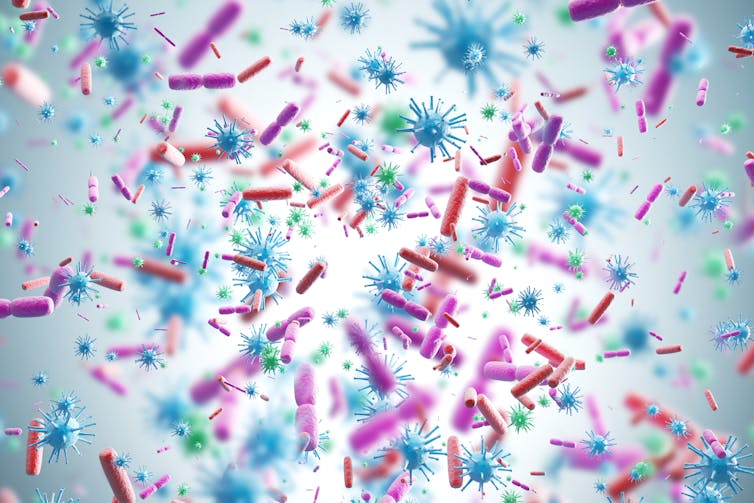
Various bacteria and virus species.
Dozens of microbe species can be found in the atmosphere. ImageFlow/Shutterstock

These microbes are well adjusted to their new environment. Only bacteria that already have mechanisms for coping with UV radiation, lack of water and high levels of dangerous oxidants such as ozone survive the journey into the sky, where they feed on the carbon compounds available in the atmosphere. Given this harsh environment, researching bacterial behaviour in the sky may be useful for understanding microbial survival in space.

Bacteria also actively grow in clouds and play an important role in the processes behind the Earth’s atmospheric chemistry. For example, some airborne bacteria encourage water in the air to freeze. This may occur in a similar way to how some plant bacteria use specialist proteins to enable ice to form on and damage leaves, opening a way for the bacteria to infect them. The airborne bacteria and the ice particles that some of them can carry can even become the nuclei needed to form clouds.

Disease route?

Understanding the atmospheric microbiome and its highways in the sky could also help us learn how disease-causing microbes are transported around the planet. In a recent study, scientists found viruses falling from the sky in large numbers, like invisible snowflakes covering the Sierra Nevada mountains in Spain where viral detectors were placed. Thanks to the microbial highways in the sky, genetically identical viruses may be found at different and distant locations across the planet.

This kind of route might be responsible for the spread of the mysterious Kawasaki disease, which can cause heart problems in children but whose exact cause is unknown. A group of Japanese scientists has produced evidence that it may be due to a fungal toxin carried through the sky over long distances from China to Japan. Analysis of air samples over Japan during the time of year when Kawasaki disease is most common found that the most dominant microbial species was the fungus Candida. Laboratory experiments have shown this fungus can produce a Kawasaki-like condition in mice.

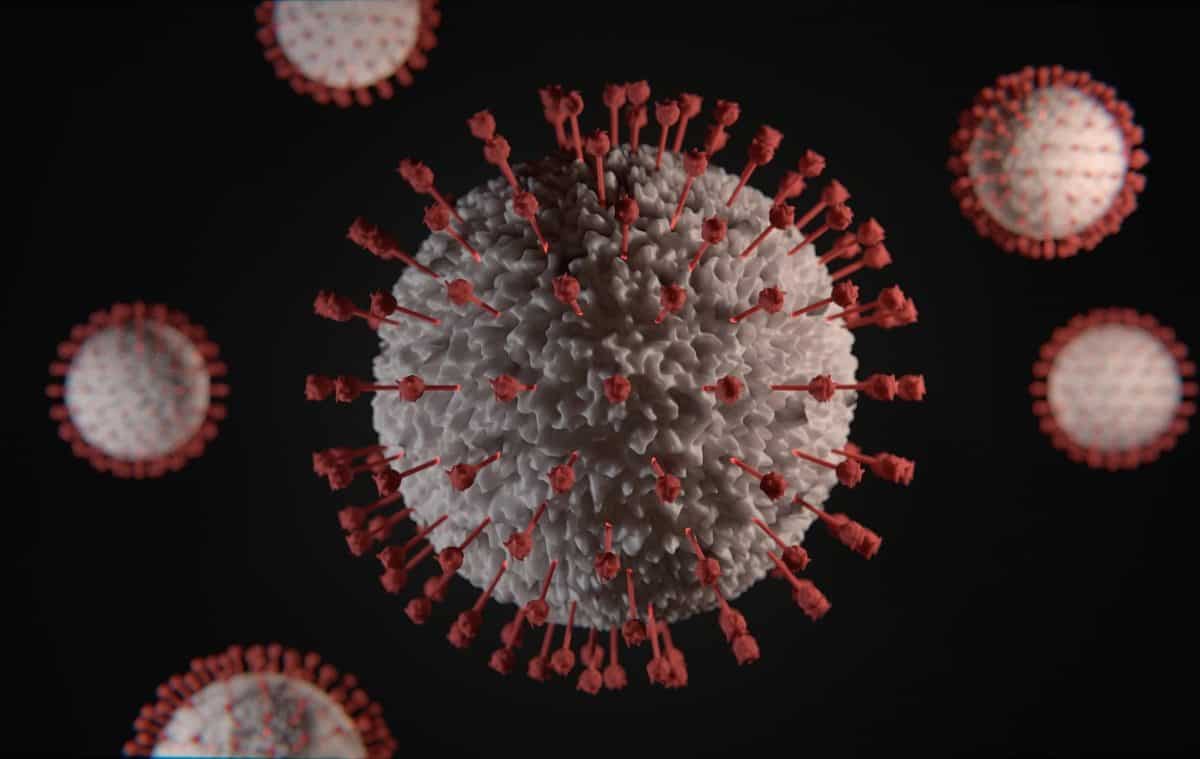
Now the whole world is watching the saga of the COVID-19 pandemic. We know the virus spreads through human contact, but a group of doctors has recently warned the World Health Organization that the viral particle may be travelling through the air. Some scientists have even speculated that the COVID-19 virus may have been carried between countries at similar latitudes by a jet stream through the atmosphere.

As we’ve only just begun to understand the role of microbes down here on Earth, it seems likely there is a huge amount more to discover about those that live above our heads.

Predrag Slijepcevic, Senior Lecturer in Biology, Brunel University London

This article is republished from The Conversation under a Creative Commons license. Read the original article.


Tags: SB001
DMCA.com Protection Status

SUBSCRIBE to our NEWSLETTER

[mc4wp_form id=”2384248″]

Don't Miss

The evolution of Aesthetic Surgery through the lens of Dr Kourosh Tavakoli

by Pauline Torongo
4 December 2025
The evolution of Aesthetic Surgery through the lens of Dr. Kourosh Tavakoli
Health & Wellness

As global interest in Australian cosmetic surgery continues to grow, the combination of regulation, research and emerging digital tools is...

Read moreDetails

Ryan: Building real freedom through e-commerce

by Pauline Torongo
27 November 2025
Ryan: Building real freedom through e-commerce
Business & Finance

Ryan’s greatest achievement isn’t any single business or revenue milestone — it’s the ecosystem he’s built through the Change community.

Read moreDetails

Design Australia Group: Redefining Drafting as the engine of housing growth

by Pauline Torongo
26 November 2025
Design Australia Group: Redefining Drafting as the engine of housing growth
Business & Finance

Australia is under pressure to build homes faster, but design bottlenecks slow progress. Design Australia Group is fixing this by...

Read moreDetails

Louis Guy Detata builds Global Trading Empires through autonomous systems and disciplined leadership

by Pauline Torongo
25 November 2025
Louis Guy Detata builds Global Trading Empires through autonomous systems and disciplined leadership
Business & Finance

The path from investment banking to leading a global trading platform has taught Louis Detata that sustainable success requires more...

Read moreDetails

Burning Eucalyptus Wood: Tips, Advantages, Disadvantages & Alternatives

by Fazila Olla-Logday
20 November 2025
Image Supplied
Enviroment

Learn about burning eucalyptus wood for stoves and fireplaces. Discover benefits, drawbacks, harvesting tips, and better alternative firewood options for...

Read moreDetails

Everything Parents Need to Know About Baby Soft Play and Why It’s a Game Changer

by Fazila Olla-Logday
11 November 2025
Everything Parents Need to Know About Baby Soft Play
Health & Wellness

Baby soft play is a fun, safe, and educational way for little ones to explore and grow. Discover the benefits...

Read moreDetails

WOMAD Sets Up a New Camp in Wiltshire – Australian festival fans take note!

by Kris Griffiths
11 November 2025
Kumbia Boruka brought their reggae and dancehall flavour to the Taste the World Stage at WOMAD 2024 - Credit - Mike Massaro
Entertainment

With its 2026 edition moving to Neston Park in England, WOMAD offers Aussie music lovers a chance to reconnect with global...

Read moreDetails
Load More

Copyright © Blue Sky Publications Ltd. All Rights Reserved.
australiantimes.co.uk is a division of Blue Sky Publications Ltd. Reproduction without permission prohibited. DMCA.com Protection Status

  • About us
  • Write for Us
  • Advertise
  • Contact us
  • T&Cs, Privacy and GDPR
No Result
View All Result
  • News
    • Weather
    • Sport
    • Technology
    • Business & Finance
      • Currency Zone
    • Lotto Results
      • The Lott
  • Lifestyle
    • Entertainment
    • Horoscopes
    • Health & Wellness
    • Recipes
  • Travel
  • Expat Life
  • Move to Australia

Copyright © Blue Sky Publications Ltd. All Rights Reserved.
australiantimes.co.uk is a division of Blue Sky Publications Ltd. Reproduction without permission prohibited. DMCA.com Protection Status

No Result
View All Result
  • News
    • Weather
    • Sport
    • Technology
    • Business & Finance
      • Currency Zone
    • Lotto Results
      • The Lott
  • Lifestyle
    • Entertainment
    • Horoscopes
    • Health & Wellness
    • Recipes
  • Travel
  • Expat Life
  • Move to Australia

Copyright © Blue Sky Publications Ltd. All Rights Reserved.
australiantimes.co.uk is a division of Blue Sky Publications Ltd. Reproduction without permission prohibited. DMCA.com Protection Status