


• Advertise
  • About us
  • Terms and Conditions
  • Contact us
Friday, December 5, 2025
Australian Times News
  • News
    • Weather
    • Sport
    • Technology
    • Business & Finance
      • Currency Zone
    • Lotto Results
      • The Lott
  • Lifestyle
    • Entertainment
    • Horoscopes
    • Health & Wellness
    • Recipes
  • Travel
  • Expat Life
  • Move to Australia
No Result
View All Result
  • News
    • Weather
    • Sport
    • Technology
    • Business & Finance
      • Currency Zone
    • Lotto Results
      • The Lott
  • Lifestyle
    • Entertainment
    • Horoscopes
    • Health & Wellness
    • Recipes
  • Travel
  • Expat Life
  • Move to Australia
No Result
View All Result
Australian Times News
No Result
View All Result
Home Technology

The science of how you sound when you talk through a face mask

It’s often harder to read a mask wearer’s attitudes and emotions, and difficulties faced by deaf people who cannot lipread from a masked talker’s mouth.

The Conversation by The Conversation
04-07-2020 06:07
in Technology
The science of how you sound

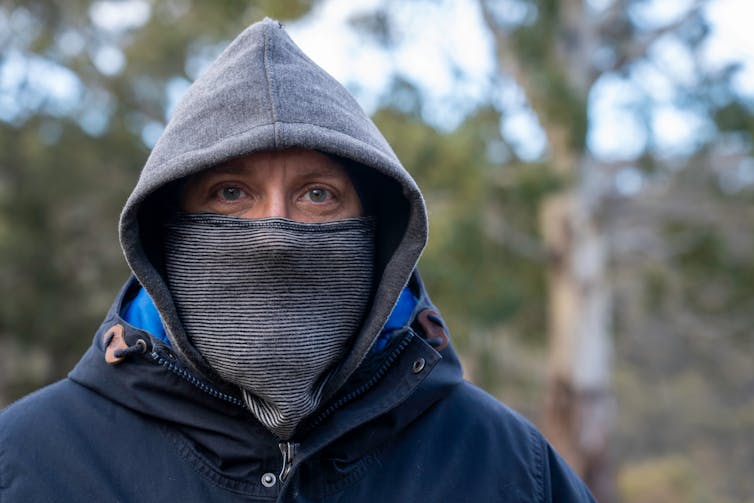
The science of how you sound Photo by Noah on Unsplash

Dominic Watt, University of York

The great face mask debate has been had, and most people agree that it’s a good idea to wear one to prevent the spread of COVID-19. And for as long as we do not have a vaccine, we can foresee that advice from national governments and the World Health Organization to wear one will be in place for some time.

Roman Samborskyi/Shutterstock

This means we might communicate very differently with each other for months or even years to come. Having a conversation with a mask on can be awkward – it’s often harder to read a mask wearer’s attitudes and emotions, and difficulties faced by deaf people who cannot lipread from a masked talker’s mouth have been well documented.

But we should also remember there’s a third source of potential miscommunication when listening to speech through facewear: the muffling effect masks can have on the sound signal itself. In recent years, our research team of forensic speech scientists has studied the different ways facewear might affect speech clarity. Here’s what we found.

What we needed to know

In a 2013 study, we tested a range of different mouth coverings to compare the effects of speaking while wearing a paper surgical mask to those of speaking while wearing a motorbike helmet, two types of balaclava (one with a mouth hole, the other without), a niqab, a scarf-hoodie combination, and a whole-head rubber mask of the kind occasionally favoured by armed robbers.
Can we still understand each other through layers of fabric? Eneems/Shutterstock

We focused on the speaker’s articulation of sounds. We theorised that masks might interfere with the motions of the wearer’s mouth: lip movements needed for the “labial” consonants – p, b, w, f, v, m – and the “rounded” vowels that we find in words like sue or saw could be restricted. Freedom to lower the jaw when producing “open” vowels like those in cat or calm might also be more limited.

We then looked at how different types of facewear material might impede the stream of air emanating from the speaker’s mouth during speech. Thicker, less porous fabrics can significantly block the airstream, diminishing the acoustic energy – which includes the loudness of a sound – that is transmitted through the air to the listener’s ear. We measured the “transmission loss” properties of facewear fabrics separately, by placing a loudspeaker and a precisely calibrated microphone on either side of our fabric samples.


AlsoRead...

Common Mistakes When Buying a Telescope

Common Mistakes When Buying a Telescope — And How to Avoid Them

1 July 2025
Leading with Trust: Why Quality still wins in the AI Era

Leading with Trust: Why Quality still wins in the AI Era

5 June 2025

Lastly, we needed to consider the mask’s influence on how listeners perceive speech. The combined effect of masks affecting articulation, impeding the airstream, and the sound absorption by fabric was one thing, but at the end of what linguists call the “speech chain” is the listener. We know that even for people who are not deaf or hard of hearing, it helps to see the person who is talking. If we are not blind or partially sighted, we’re all lipreaders, to some extent.

But is masking the speaker’s mouth the same as being unable to see the speaker at all? To test this question, we presented our participants with video footage of masked speakers talking, as well as the audio soundtrack on its own.

What we found

Our results contained some surprises. Of all the different types of facewear we tested, none interfered very much with articulation, and the effects on the airstream seemed mostly quite minor.

Some fabrics absorbed more sound energy than others. Although with surgical masks, portions of the sound frequency spectrum were actually amplified. It’s possible our speakers were unconsciously compensating for the masks they wore by talking more loudly or articulating more carefully, but we don’t know for sure.

We also found that our participants could identify speech sounds more accurately simply by being able to see the video image of the talker, even when the mouth is effectively invisible and no lip or jaw movements could be seen, as in the case of the surgical mask and the eyehole-only balaclava.

The facewear we tested therefore had surprisingly small effects on speech clarity.

The masks people wear during the current pandemic are often homemade from cloth rather than off-the-shelf products. Many are made of multiple layers of thick and stiff fabrics, and may muffle the wearer’s speech more strongly than the garments we tested.

Our research, though it is ongoing, will struggle to keep pace with this explosion in facewear diversity. More than ever before, however, this work will help us to understand any source of potential misunderstandings that stem from wearing masks.

And for now the news is good – if you’re speaking through any sort of facewear, you are likely to be understood.

Dominic Watt, Senior Lecturer in Forensic Speech Science, University of York

This article is republished from The Conversation under a Creative Commons license. Read the original article.


Tags: SB001
DMCA.com Protection Status

SUBSCRIBE to our NEWSLETTER

[mc4wp_form id=”2384248″]

Don't Miss

The evolution of Aesthetic Surgery through the lens of Dr Kourosh Tavakoli

by Pauline Torongo
4 December 2025
The evolution of Aesthetic Surgery through the lens of Dr. Kourosh Tavakoli
Health & Wellness

As global interest in Australian cosmetic surgery continues to grow, the combination of regulation, research and emerging digital tools is...

Read moreDetails

Ryan: Building real freedom through e-commerce

by Pauline Torongo
27 November 2025
Ryan: Building real freedom through e-commerce
Business & Finance

Ryan’s greatest achievement isn’t any single business or revenue milestone — it’s the ecosystem he’s built through the Change community.

Read moreDetails

Design Australia Group: Redefining Drafting as the engine of housing growth

by Pauline Torongo
26 November 2025
Design Australia Group: Redefining Drafting as the engine of housing growth
Business & Finance

Australia is under pressure to build homes faster, but design bottlenecks slow progress. Design Australia Group is fixing this by...

Read moreDetails

Louis Guy Detata builds Global Trading Empires through autonomous systems and disciplined leadership

by Pauline Torongo
25 November 2025
Louis Guy Detata builds Global Trading Empires through autonomous systems and disciplined leadership
Business & Finance

The path from investment banking to leading a global trading platform has taught Louis Detata that sustainable success requires more...

Read moreDetails

Burning Eucalyptus Wood: Tips, Advantages, Disadvantages & Alternatives

by Fazila Olla-Logday
20 November 2025
Image Supplied
Enviroment

Learn about burning eucalyptus wood for stoves and fireplaces. Discover benefits, drawbacks, harvesting tips, and better alternative firewood options for...

Read moreDetails

Everything Parents Need to Know About Baby Soft Play and Why It’s a Game Changer

by Fazila Olla-Logday
11 November 2025
Everything Parents Need to Know About Baby Soft Play
Health & Wellness

Baby soft play is a fun, safe, and educational way for little ones to explore and grow. Discover the benefits...

Read moreDetails

WOMAD Sets Up a New Camp in Wiltshire – Australian festival fans take note!

by Kris Griffiths
11 November 2025
Kumbia Boruka brought their reggae and dancehall flavour to the Taste the World Stage at WOMAD 2024 - Credit - Mike Massaro
Entertainment

With its 2026 edition moving to Neston Park in England, WOMAD offers Aussie music lovers a chance to reconnect with global...

Read moreDetails
Load More

Copyright © Blue Sky Publications Ltd. All Rights Reserved.
australiantimes.co.uk is a division of Blue Sky Publications Ltd. Reproduction without permission prohibited. DMCA.com Protection Status

  • About us
  • Write for Us
  • Advertise
  • Contact us
  • T&Cs, Privacy and GDPR
No Result
View All Result
  • News
    • Weather
    • Sport
    • Technology
    • Business & Finance
      • Currency Zone
    • Lotto Results
      • The Lott
  • Lifestyle
    • Entertainment
    • Horoscopes
    • Health & Wellness
    • Recipes
  • Travel
  • Expat Life
  • Move to Australia

Copyright © Blue Sky Publications Ltd. All Rights Reserved.
australiantimes.co.uk is a division of Blue Sky Publications Ltd. Reproduction without permission prohibited. DMCA.com Protection Status

No Result
View All Result
  • News
    • Weather
    • Sport
    • Technology
    • Business & Finance
      • Currency Zone
    • Lotto Results
      • The Lott
  • Lifestyle
    • Entertainment
    • Horoscopes
    • Health & Wellness
    • Recipes
  • Travel
  • Expat Life
  • Move to Australia

Copyright © Blue Sky Publications Ltd. All Rights Reserved.
australiantimes.co.uk is a division of Blue Sky Publications Ltd. Reproduction without permission prohibited. DMCA.com Protection Status





