

• Advertise
  • About us
  • Terms and Conditions
  • Contact us
Friday, December 5, 2025
Australian Times News
  • News
    • Weather
    • Sport
    • Technology
    • Business & Finance
      • Currency Zone
    • Lotto Results
      • The Lott
  • Lifestyle
    • Entertainment
    • Horoscopes
    • Health & Wellness
    • Recipes
  • Travel
  • Expat Life
  • Move to Australia
No Result
View All Result
  • News
    • Weather
    • Sport
    • Technology
    • Business & Finance
      • Currency Zone
    • Lotto Results
      • The Lott
  • Lifestyle
    • Entertainment
    • Horoscopes
    • Health & Wellness
    • Recipes
  • Travel
  • Expat Life
  • Move to Australia
No Result
View All Result
Australian Times News
No Result
View All Result
Home Technology

In a first discovery of its kind, researchers have uncovered an ancient Aboriginal archaeological site preserved on the seabed

When people first arrived in Australia as early as 65,000 years ago, sea levels were around 80m lower than today.

The Conversation by The Conversation
03-07-2020 01:33
in Technology
Aboriginal archaeological site preserved on the seabed

Aboriginal archaeological site preserved on the seabed Photo by Nik Shuliahin on Unsplash

Jonathan Benjamin, Flinders University; Geoff Bailey, University of York; Jo McDonald, University of Western Australia; Michael O’Leary, University of Western Australia, and Sean Ulm, James Cook University

For most of the human history of Australia, sea levels were much lower than they are today, and there was extra dry land where people lived.
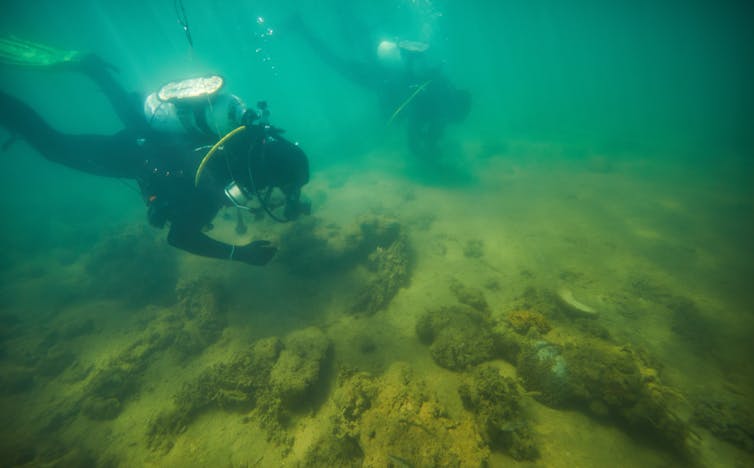
S Wright, Author provided

Archaeologists could only speculate about how people used those now-submerged lands, and whether any traces remain today.

But in a study published today in PLOS ONE, we report the first submerged ancient Aboriginal archaeological sites found on the seabed, in waters off Western Australia.

The great flood

When people first arrived in Australia as early as 65,000 years ago, sea levels were around 80m lower than today.

Sea levels fluctuated but continued to fall as the global climate cooled. As the world plunged into the last ice age, which peaked around 20,000 years ago, sea levels dropped to 130m lower than they are now.

Between 18,000 and 8,000 years ago the world warmed up. Melting ice sheets caused sea levels to rise. Tasmania was cut off from the mainland around 11,000 years ago. New Guinea separated from Australia around 8,000 years ago.


AlsoRead...

Common Mistakes When Buying a Telescope

Common Mistakes When Buying a Telescope — And How to Avoid Them

1 July 2025
Leading with Trust: Why Quality still wins in the AI Era

Leading with Trust: Why Quality still wins in the AI Era

5 June 2025

The sea-level rise flooded 2.12 million square kilometres of land on the continental shelf surrounding Australia. Thousands of generations of people would have lived out their lives on these landscapes now under water.

These ancient cultural landscapes do not end at the waterline – they continue into the blue, onto what was once dry land. Jerem Leach, DHSC Project, Author provided

Landscapes under water

For the past four years a team of archaeologists, rock art specialists, geomorphologists, geologists, specialist pilots and scientific divers on the Australian Research Council-funded Deep History of Sea Country Project have collaborated with the Murujuga Aboriginal Corporation to find and record submerged archaeological sites off the Pilbara coast in WA.
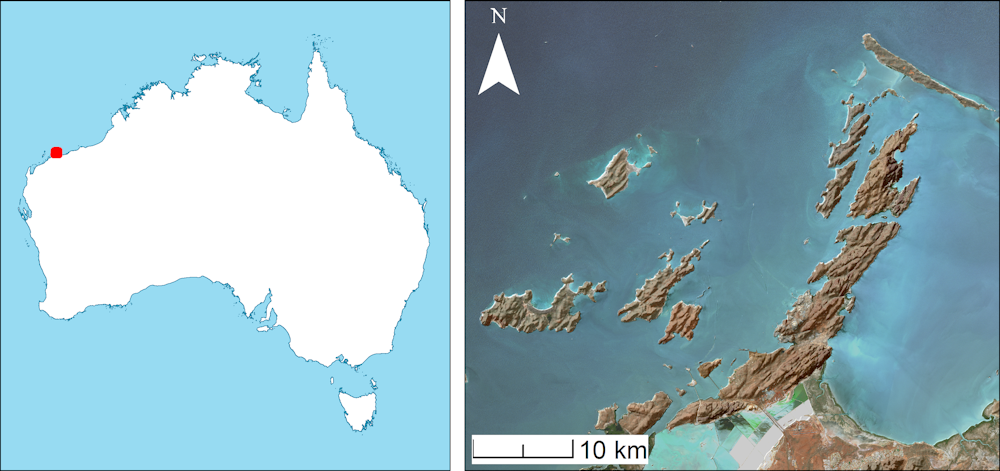
Location of the finds in northwest Australia (left) and the Dampier Archipelago (right). Copernicus Sentinel Data and Geoscience Australia, Author provided

We studied navigation charts, geological maps and archaeological sites located on the land to narrow down prospective areas before surveying the seabed using laser scanners mounted on small planes and high-resolution sonar towed behind boats.

In the final phase of the research, our team of scientific divers carried out underwater archaeological surveys to physically examine, record and sample the seabed.

Archaeologists working in the shallow waters off Western Australia. Future generations of archaeologists must be willing to get wet! Jerem Leach, DHSC Project, Author provided

We discovered two underwater archaeological sites in the Dampier Archipelago.

The first, at Cape Bruguieres, comprises hundreds of stone artefacts – including mullers and grinding stones – on the seabed at depths down to 2.4m.
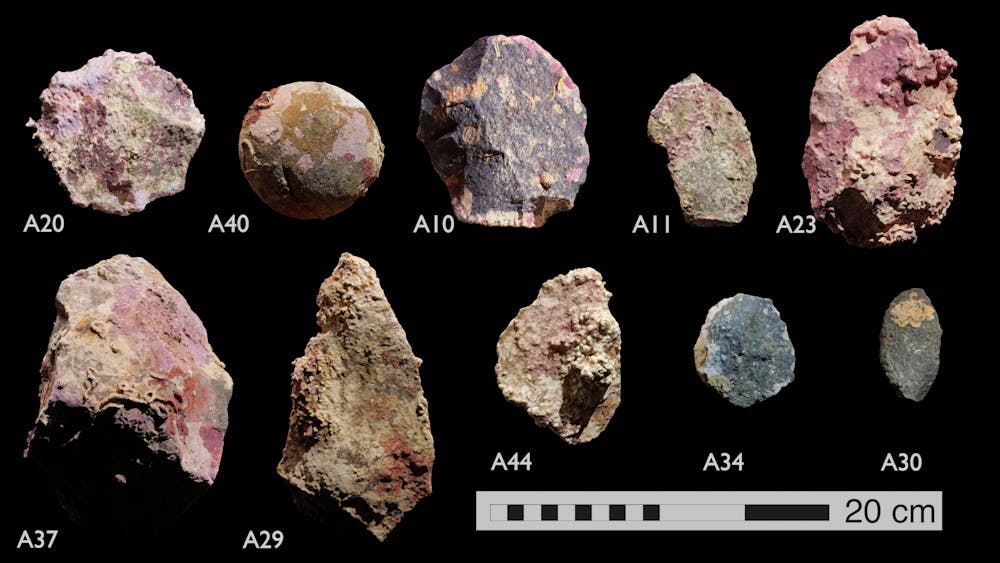
A selection of stone artefacts found on the seabed during fieldwork. John McCarthy and Chelsea Wiseman, Author provided

At the second site, in Flying Foam Passage, we discovered traces of human activity associated with a submerged freshwater spring, 14m below sea level, including at least one confirmed stone cutting tool made out of locally sourced material.

Environmental data and radiocarbon dates show these sites must have been older than 7,000 years when they were submerged by rising seas.

Our study shows archaeological sites exist on the seabed in Australia with items belonging to ancient peoples undisturbed for thousands of years.

In Murujuga (also known as the Burrup Peninsula) this adds substantially to the evidence we already have of human activity and rock art production in this important National Heritage Listed place.
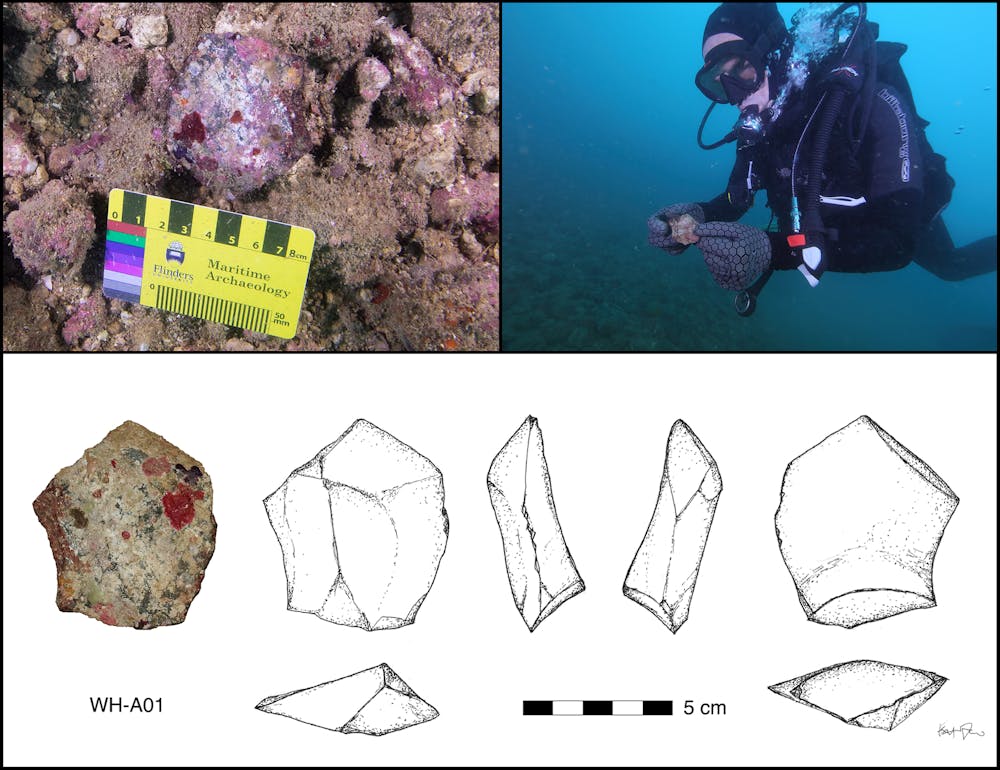
A submerged stone tool associated with a freshwater spring now 14m under water. Hiro Yoshida and Katarina Jerbić, DHSC Project, Author provided

Underwater archaeology matters

The submerged stone tools discovered at Murujuga make us rethink what we know about the past.

Our knowledge of ancient times in Australia comes from archaeological sites on land and from Indigenous oral histories. But the first people to come to Australian shores were coastal people who voyaged in boats across the islands of eastern Indonesia.

The early peopling of Australia took place on land that is now under water. To fully understand key questions in human history, as ancient as they are, researchers must turn to both archaeology and marine science.
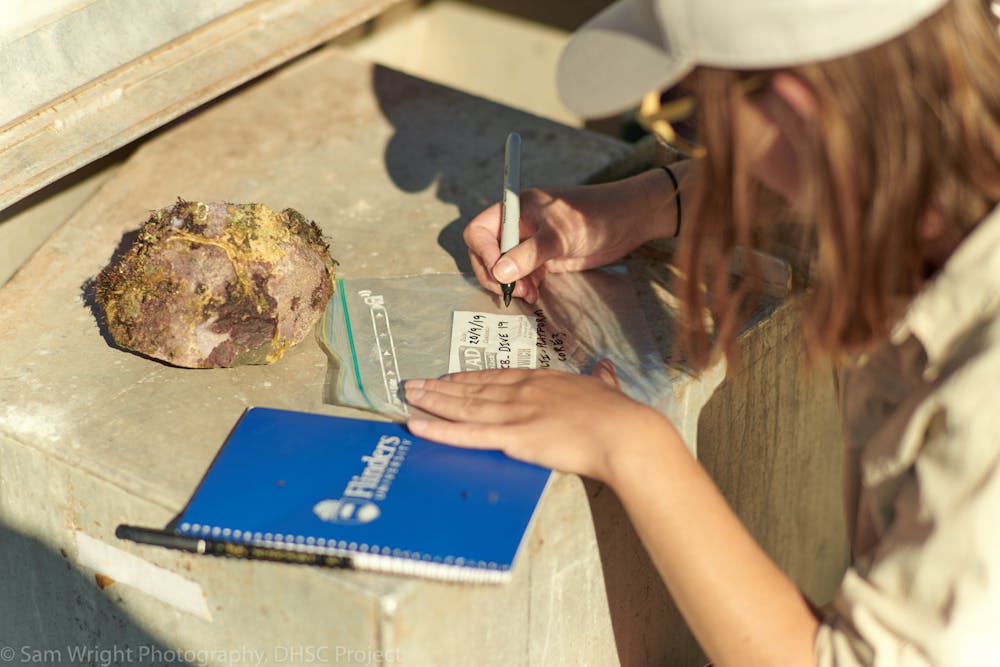
Archaeologist Chelsea Wiseman records a stone artefact covered in marine growth. Sam Wright, DHSC Project, Author provided

Protecting a priceless submerged heritage

Submerged archaeological sites are in danger of destruction by erosion and from development activities, such as oil and gas installations, pipelines, port developments, dredging, spoil dumping and industrialised fishing.

Protection of underwater cultural sites more than 100 years old is enshrined by the UNESCO Convention on the Protection of the Underwater Cultural Heritage (2001), adopted as law by more than 60 countries but not ratified by Australia.

In Australia, the federal laws that protect underwater cultural heritage in Commonwealth waters have been modernised recently with the Historic Shipwrecks Act (1976) reviewed and re-badged as Australia’s Underwater Cultural Heritage Act (2018), which came into effect in July 2019.

This new Act fails to automatically protect all types of sites and it privileges protection of non-Indigenous submerged heritage. For example, all shipwrecks older than 75 years and sunken aircraft found in Australia’s Commonwealth waters are given automatic protection.

Other types of site, regardless of age and including Aboriginal and Torres Strait Islander sites, can be protected but only with ministerial approval.

There is scope for states and territories to protect submerged Indigenous heritage based on existing laws, but regulators have conventionally only managed the underwater heritage of more recent historical periods.

With our find confirming ancient Indigenous sites can be preserved under water, we need policy makers to reconsider approaches to protecting underwater cultural heritage in Australia.

We are confident many other submerged sites will be found in the years to come. These will challenge our current understandings and lead to a more complete account of our human past, so they need our protection now.

Deep History of Sea Country: Investigating the seabed in Western Australia.

Jonathan Benjamin, Associate Professor in Maritime Archaeology, Flinders University and ARC Centre of Excellence for Australian Biodiversity and Heritage, Flinders University; Geoff Bailey, Emeritus Professor of Archaeology, University of York; Jo McDonald, Director, Centre for Rock Art Research + Management, University of Western Australia; Michael O’Leary, Senior Lecturer in Climate Geoscience, University of Western Australia, and Sean Ulm, Deputy Director, ARC Centre of Excellence for Australian Biodiversity and Heritage, James Cook University

This article is republished from The Conversation under a Creative Commons license. Read the original article.


Tags: SB001
DMCA.com Protection Status

SUBSCRIBE to our NEWSLETTER

[mc4wp_form id=”2384248″]

Don't Miss

The evolution of Aesthetic Surgery through the lens of Dr Kourosh Tavakoli

by Pauline Torongo
4 December 2025
The evolution of Aesthetic Surgery through the lens of Dr. Kourosh Tavakoli
Health & Wellness

As global interest in Australian cosmetic surgery continues to grow, the combination of regulation, research and emerging digital tools is...

Read moreDetails

Ryan: Building real freedom through e-commerce

by Pauline Torongo
27 November 2025
Ryan: Building real freedom through e-commerce
Business & Finance

Ryan’s greatest achievement isn’t any single business or revenue milestone — it’s the ecosystem he’s built through the Change community.

Read moreDetails

Design Australia Group: Redefining Drafting as the engine of housing growth

by Pauline Torongo
26 November 2025
Design Australia Group: Redefining Drafting as the engine of housing growth
Business & Finance

Australia is under pressure to build homes faster, but design bottlenecks slow progress. Design Australia Group is fixing this by...

Read moreDetails

Louis Guy Detata builds Global Trading Empires through autonomous systems and disciplined leadership

by Pauline Torongo
25 November 2025
Louis Guy Detata builds Global Trading Empires through autonomous systems and disciplined leadership
Business & Finance

The path from investment banking to leading a global trading platform has taught Louis Detata that sustainable success requires more...

Read moreDetails

Burning Eucalyptus Wood: Tips, Advantages, Disadvantages & Alternatives

by Fazila Olla-Logday
20 November 2025
Image Supplied
Enviroment

Learn about burning eucalyptus wood for stoves and fireplaces. Discover benefits, drawbacks, harvesting tips, and better alternative firewood options for...

Read moreDetails

Everything Parents Need to Know About Baby Soft Play and Why It’s a Game Changer

by Fazila Olla-Logday
11 November 2025
Everything Parents Need to Know About Baby Soft Play
Health & Wellness

Baby soft play is a fun, safe, and educational way for little ones to explore and grow. Discover the benefits...

Read moreDetails

WOMAD Sets Up a New Camp in Wiltshire – Australian festival fans take note!

by Kris Griffiths
11 November 2025
Kumbia Boruka brought their reggae and dancehall flavour to the Taste the World Stage at WOMAD 2024 - Credit - Mike Massaro
Entertainment

With its 2026 edition moving to Neston Park in England, WOMAD offers Aussie music lovers a chance to reconnect with global...

Read moreDetails
Load More

Copyright © Blue Sky Publications Ltd. All Rights Reserved.
australiantimes.co.uk is a division of Blue Sky Publications Ltd. Reproduction without permission prohibited. DMCA.com Protection Status

  • About us
  • Write for Us
  • Advertise
  • Contact us
  • T&Cs, Privacy and GDPR
No Result
View All Result
  • News
    • Weather
    • Sport
    • Technology
    • Business & Finance
      • Currency Zone
    • Lotto Results
      • The Lott
  • Lifestyle
    • Entertainment
    • Horoscopes
    • Health & Wellness
    • Recipes
  • Travel
  • Expat Life
  • Move to Australia

Copyright © Blue Sky Publications Ltd. All Rights Reserved.
australiantimes.co.uk is a division of Blue Sky Publications Ltd. Reproduction without permission prohibited. DMCA.com Protection Status

No Result
View All Result
  • News
    • Weather
    • Sport
    • Technology
    • Business & Finance
      • Currency Zone
    • Lotto Results
      • The Lott
  • Lifestyle
    • Entertainment
    • Horoscopes
    • Health & Wellness
    • Recipes
  • Travel
  • Expat Life
  • Move to Australia

Copyright © Blue Sky Publications Ltd. All Rights Reserved.
australiantimes.co.uk is a division of Blue Sky Publications Ltd. Reproduction without permission prohibited. DMCA.com Protection Status





