• Advertise
  • About us
  • Terms and Conditions
  • Contact us
Monday, March 23, 2026
Australian Times News
  • News
    • Weather
    • Sport
    • Technology
    • Business & Finance
      • Currency Zone
    • Lotto Results
      • The Lott
  • Lifestyle
    • Entertainment
    • Horoscopes
    • Health & Wellness
    • Recipes
  • Travel
  • Expat Life
  • Move to Australia
No Result
View All Result
  • News
    • Weather
    • Sport
    • Technology
    • Business & Finance
      • Currency Zone
    • Lotto Results
      • The Lott
  • Lifestyle
    • Entertainment
    • Horoscopes
    • Health & Wellness
    • Recipes
  • Travel
  • Expat Life
  • Move to Australia
No Result
View All Result
Australian Times News
No Result
View All Result
Home News

Was coronavirus really in Europe in March 2019?

The novel coronavirus – SARS-CoV-2 – may have been in Europe for longer than previously thought.

The Conversation by The Conversation
30-06-2020 06:09
in News
Was coronavirus really in Europe in March

Was coronavirus really in Europe in March Photo by Manuel on Unsplash

Claire Crossan, Glasgow Caledonian University

The novel coronavirus – SARS-CoV-2 – may have been in Europe for longer than previously thought. Recent studies have suggested that it was circulating in Italy as early as December 2019. More surprisingly, researchers at the University of Barcelona found traces of the virus when testing untreated wastewater samples dated March 12, 2019.

The study was recently published on a preprint server, medRxiv. The paper is currently being subject to critical review by outside experts in preparation for publication in a scientific journal. Until this process of peer review has been completed, though, the evidence needs to be treated with caution.

So, how was the experiment conducted and what exactly did the scientists find?

One of the early findings about SARS-CoV-2 is that it is found in the faeces of infected people. As the virus makes its way through the gut – where it can cause gastrointestinal symptoms – it loses its outer protein layer, but bits of genetic material called RNA survive the journey intact and are “shed” in faeces. At this point, it is no longer infectious – as far as current evidence tells us.

But the fact that these bits of coronavirus RNA can be found in untreated wastewater (known as “influent”) is useful for tracking outbreaks. Indeed, they can predict where an outbreak is likely to occur a week to ten days before they show up in official figures – the reason being that people shed coronavirus before symptoms become evident. These “pre-symptomatic” people then have to get sick enough to be tested, get the results, and be admitted to a hospital as an official “case”, hence the week or so lag.

As a result, many countries, including Spain, are now monitoring wastewater for traces of coronavirus. In this particular study, wastewater epidemiologists were examining frozen samples of influent between January 2018 and December 2019 to see when the virus made its debut in the city.


AlsoRead...

Design Without Compromise: Where Gutter Protection Meets Modern Architecture

Design Without Compromise: Where Gutter Protection Meets Modern Architecture

20 March 2026
The Rise of This Lead Generation Workshop Across Australia

The Rise of This Lead Generation Workshop Across Australia

13 February 2026
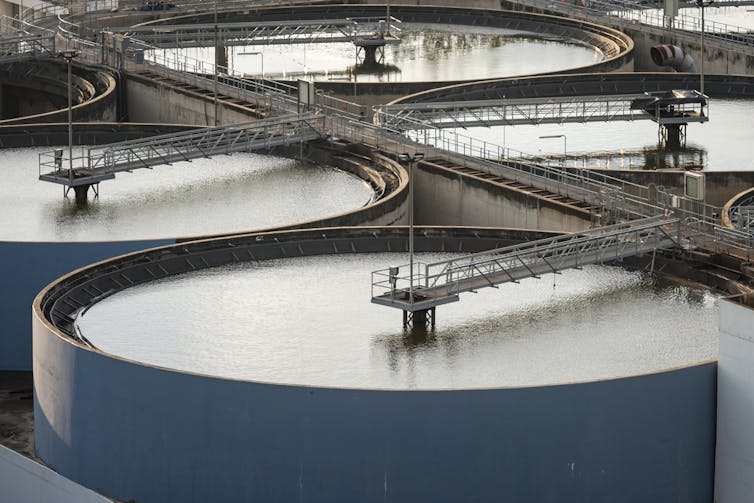
Experts around the world are monitoring wastewater for signs of coronavirus. arhendrix/Shutterstock.com

They found evidence of the virus on January 15, 2020, 41 days before the first official case was declared on February 25, 2020. All the samples before this date were negative, except for a sample from March 12, 2019, which gave a positive result in their PCR test for coronavirus. PCR is the standard way of testing to see if someone currently has the disease.

PCR involves getting samples of saliva, mucus, frozen wastewater or whatever else the virus is thought to be lurking in, clearing all the unnecessary stuff out of the sample, then converting the RNA – which is a single strand of genetic material – into DNA (the famous double-stranded helix). The DNA is then “amplified” in successive cycles until key bits of genetic material that are known to only exist in a particular virus are plentiful enough to be detected with a fluorescent probe.

Not highly specific

In coronavirus testing, scientists typically screen for more than one gene. In this case, the researchers tested for three. They had a positive result for the March 2019 sample in one of the three genes tested – the RdRp gene. They screened for two regions of this gene and both were only detected around the 39th cycle of amplification. (PCR tests become less “specific” with increasing rounds of amplification. Scientists generally use 40 to 45 rounds of amplification.)

There are several explanations for this positive result. One is that SARS-CoV-2 is present in the sewage at a very low level. Another is that the test reaction was accidentally contaminated with SARS-CoV-2 in the laboratory. This sometimes happens in labs as positive samples are regularly being handled, and it can be difficult to prevent very small traces of positive sample contaminating others.

Another explanation is that there is other RNA or DNA in the sample that resembles the test target site enough for it to give a positive result at the 39th cycle of amplification.

Further tests need to be carried out to conclude that the sample contains SARS-CoV-2, and a finding of that magnitude would need to be replicated separately by independent laboratories.

Reasons to be circumspect

A curious thing about this finding is that it disagrees with epidemiological data about the virus. The authors don’t cite reports of a spike in the number of respiratory disease cases in the local population following the date of the sampling.

Also, we know SARS-CoV-2 to be highly transmissible, at least in its current form. If this result is a true positive it suggests the virus was present in the population at a high enough incidence to be detected in an 800ml sample of sewage, but then not present at a high enough incidence to be detected for nine months, when no control measures were in place.

So, until further studies are carried out, it is best not to draw definitive conclusions.

Claire Crossan, Research Fellow, Virology, Glasgow Caledonian University

This article is republished from The Conversation under a Creative Commons license. Read the original article.


Tags: SB001
DMCA.com Protection Status

SUBSCRIBE to our NEWSLETTER

[mc4wp_form id=”2384248″]

Don't Miss

Design Without Compromise: Where Gutter Protection Meets Modern Architecture

by Fazila Olla-Logday
20 March 2026
Design Without Compromise: Where Gutter Protection Meets Modern Architecture
Business & Finance

Design without compromise by integrating gutter protection seamlessly into modern architecture. Discover how innovative gutter systems enhance your home’s aesthetics...

Read moreDetails

How WageSafe Secured Australia’s Most Reputable Retail Business Among Its Premium Clients

by Fazila Olla-Logday
12 March 2026
How WageSafe Secured Australia’s Most Reputable Retail Business Among Its Premium Clients
at

Learn how WageSafe helps businesses stay compliant with payroll and wage regulations through reliable monitoring, risk management, and expert support—protecting...

Read moreDetails

Zakeke AI Agent Studio Removes the E-Commerce Content Bottleneck With Outputs in Seconds

by Fazila Olla-Logday
3 March 2026
Zakeke AI Agent Studio Removes the E-Commerce Content Bottleneck With Outputs in Seconds
at

Zakeke AI Agent Studio removes the e-commerce content bottleneck by generating product content and visuals in seconds, enabling brands to...

Read moreDetails

Empire Traveller launches to give Small and Medium Businesses Enterprise-Level Travel rates

by Pauline Torongo
20 February 2026
Empire Traveller launches to give Small and Medium Businesses Enterprise-Level Travel rates
Travel

Empire Traveller suggests the travel sector may be entering a more inclusive phase — one where advantage is shaped less...

Read moreDetails

Is Feng Shui Master Xu Really A Modern Genius?

by Fazila Olla-Logday
19 February 2026
Is Feng Shui Master Xu Really A Modern Genius?
at

Is Feng Shui Master Xu truly a modern genius, or simply a master of timeless wisdom? Blending ancient Feng Shui...

Read moreDetails

The Rise of This Lead Generation Workshop Across Australia

by Pauline Torongo
13 February 2026
The Rise of This Lead Generation Workshop Across Australia
Business & Finance

“Where U?”, is a two-day in-person lead generation workshop that teaches Australian business owners how to build their own acquisition...

Read moreDetails

Lyca Mobile Australia’s Customer-First Overhaul Pays Off with Finder Award Win

by Fazila Olla-Logday
2 February 2026
Lyca Mobile Australia's Customer-First Overhaul Pays Off with Finder Award Win
Technology

Lyca Mobile Australia’s customer-first overhaul has earned a Finder Award, recognising its improved value, service, and stronger focus on Australian...

Read moreDetails
Load More

Copyright © Blue Sky Publications Ltd. All Rights Reserved.
australiantimes.co.uk is a division of Blue Sky Publications Ltd. Reproduction without permission prohibited. DMCA.com Protection Status

  • About us
  • Write for Us
  • Advertise
  • Contact us
  • T&Cs, Privacy and GDPR
No Result
View All Result
  • News
    • Weather
    • Sport
    • Technology
    • Business & Finance
      • Currency Zone
    • Lotto Results
      • The Lott
  • Lifestyle
    • Entertainment
    • Horoscopes
    • Health & Wellness
    • Recipes
  • Travel
  • Expat Life
  • Move to Australia

Copyright © Blue Sky Publications Ltd. All Rights Reserved.
australiantimes.co.uk is a division of Blue Sky Publications Ltd. Reproduction without permission prohibited. DMCA.com Protection Status

No Result
View All Result
  • News
    • Weather
    • Sport
    • Technology
    • Business & Finance
      • Currency Zone
    • Lotto Results
      • The Lott
  • Lifestyle
    • Entertainment
    • Horoscopes
    • Health & Wellness
    • Recipes
  • Travel
  • Expat Life
  • Move to Australia

Copyright © Blue Sky Publications Ltd. All Rights Reserved.
australiantimes.co.uk is a division of Blue Sky Publications Ltd. Reproduction without permission prohibited. DMCA.com Protection Status