


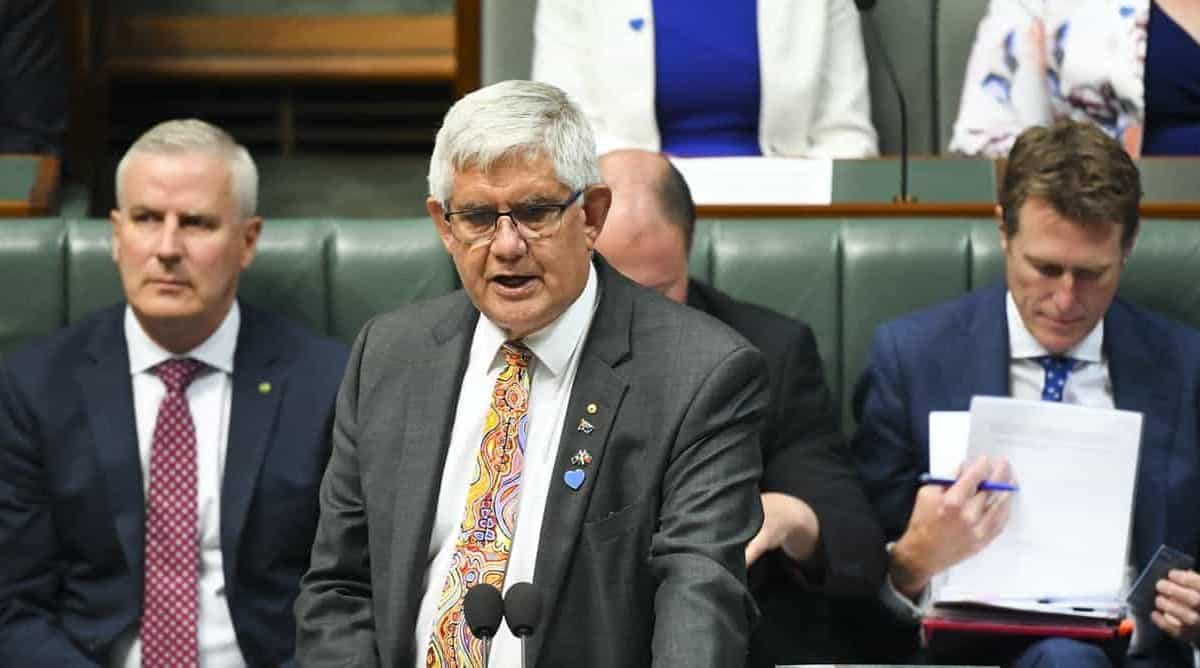
When Ken Wyatt, the Minister for Indigenous Australians, last week effectively pronounced dead the prospect of a referendum on indigenous recognition being put to the people this parliamentary term, the demise of his hoped-for timetable received little attention.
Partly, this was because Wyatt’s aspiration had always seemed unrealistic.
But centrally, it was that the pandemic has thrust aside nearly all other issues, including those that once generated big headlines and vociferous debate.
This total re-ordering of agendas and priorities has been understandable and necessary. When 1.6 million Australians are on the dole, millions of others are being publicly subsidised, the economy is in recession and no one can be sure how rocky to path to recovery will be, the government must concentrate all its efforts on the main task.
Certainly that’s what most Australians would want.
Still, while the government has seldom been so (usefully) busy, it is worth giving a thought to what’s been shoved aside.


Asked last week where things were up to on three issues, the indigenous recognition referendum, religious freedom legislation and the proposed anti-corruption commission, Scott Morrison fudged on the first (later clarified by Wyatt) and indicated cabinet hadn’t thought about the others for a long time.
The government already has an unreleased exposure draft for the federal anti-corruption body. There is pressure to act on this front, and it seems more than likely the legislation will be brought forward.
The religious discrimination legislation is another story. Its origins go back to the same sex marriage vote when Malcolm Turnbull, as a sop to the conservatives on the losing side, promised an inquiry into religious freedom, which was chaired by one-time Liberal minister Philip Ruddock.
Morrison got some mileage with the issue among religious communities at last year’s election, but it has subsequently turned into a nightmare.
None of the religious stakeholders like the draft legislation. They have varying objections but at the core is that they believe it doesn’t go far enough.
Liberal backbencher Concetta Fierravanti-Wells, who always wanted to go further, says: “Despite theological differences, religious leaders across the spectrum have expressed serious concerns about the draft bills”.
Attorney-General Christian Porter had carriage of the negotiations, which COVID stalled. While he’d obviously deny it, it’s fair to say his heart wasn’t really in the task.
(Porter, incidentally, is absurdly overloaded. As well as attorney-general, he is minister for industrial relations, and leader of the House of Representatives. He’ll have a great deal to do on IR for the rest of this term, given it is a central part of the government’s reform agenda. Apart from religious freedom, the anti-corruption commission also comes within his remit.)
The demands of the stakeholders on religious freedom will not be met by the government, and the legislation appears to have hit a dead end.
Fierravanti-Wells says: “No bill is better than this flawed bill. I suspect it will now be quietly shelved by the government.” She is advocating, as an alternative, the consolidation of discrimination laws across the country into federal legislation to get consistency.
On the other side of the religious freedom argument, critics think this legislation should not have been pursued in the first place – that it is unnecessary and could have undesirable consequences.
The most sensible course would be simply to inter it as soon as decently possible.
If the religious freedom legislation is yet to be formally killed off, the prospect of recognising indigenous people in the constitution would seem minimal under a Coalition government even in a subsequent term of parliament (assuming Morrison was re-elected).
Laying aside the referendum Wyatt, whose comments came during National Reconciliation Week, said: “COVID-19 has presented many challenges – unfortunately a referendum is unlikely in this term … This is too important to rush and too important to fail”.
But even without COVID, Wyatt in the next few months would surely have had to admit a referendum next year had become too hard.
In the early days of the Coalition government (under Tony Abbott) there appeared to be a window. But divisions within the Coalition’s ranks and base, Labor’s insistence the wording must go further than the government would ever accept, the expectations of First Australians, the argument over a “voice” to parliament, the high hurdle for changing the constitution – all these have made it extremely difficult (if not impossible) for the necessary support to be achieved.
It’s questionable whether a Labor government could do any better.
Current events in the United States have inevitably refocused attention on Australian indigenous issues. This is not to suggest equivalence. But we’re seeing demonstrations of solidarity, and local injustices and problems freshly highlighted.
Deaths of indigenous people in custody continue – more than 400 over the last three decades – as does excessive use of force on occasion (which happened this week with a policeman’s reaction to the threatening language used by an Aboriginal youth in Sydney).
The high rate of incarceration of indigenous Australians remains unaddressed; appalling conditions exist in many communities.
Labor’s shadow minister for Indigenous Australians, Linda Burney, herself indigenous, said this week that “in some parts of Australia, particularly in the north, the incarcerated population – adult and juvenile – are almost all Indigenous”.
“Many First Nations Australians are in custody for short periods of time. But we need to consider factors which are prompting interactions with the justice system and the nature of those interactions, such as bail laws or police training,” she said.
Incarceration, bad living conditions, and the general disadvantage of many First Australians remain blights on our society.
In policy terms they are “wicked problems”, not capable of ready solutions, though both advocates and their opponents would often have you believe otherwise.
Neither constitutional recognition, nor even a “voice” – and remember the government treated dismissively the call in the Uluru Statement from the Heart for a voice to parliament and instead is promoting an ill-defined alternative – would solve them.
But constitutional recognition would be symbolically important to First Australians as well as a proper completion of our constitution.
And an effective “voice” could be an important practical contribution to making what have been such intractable issues a little more tractable.
Yet we seem to find these steps harder to deal with than the immense challenges of a pandemic.
Michelle Grattan, Professorial Fellow, University of Canberra
This article is republished from The Conversation under a Creative Commons license. Read the original article.







