


Daiane Scaraboto, University of Melbourne; Alison M Joubert, The University of Queensland, and Claudia Gonzalez-Arcos, The University of Queensland
In eight years, US environmentalist and social media star Lauren Singer had never sent an item of rubbish to landfill. But last month, in an impassioned post to her 383,000 Instagram followers, she admitted the reality of COVID-19 has changed that.
I sacrificed my values and bought items in plastic. Lots of it, and plastic that I know isn’t recyclable in NYC (New York City) recycling or maybe even anywhere … why would I go against something that I have actively prioritised and promoted?
Singer wrote that as the seriousness of COVID-19 dawned, she stocked up on items she’d need if confined to her home for a long period – much of it packaged in plastic.
Her confession encapsulates how the pandemic has challenged those of us who are trying to reduce our waste. Many sustainability-conscious people may now find themselves with cupboards stocked with plastic bottles of hand sanitiser, disposable wipes and takeaway food containers.
So let’s look at why this is happening, and what to do about it.
Sustainability out the window
We research how consumers respond to change, such as why consumers largely resisted single-use plastic bag bans. Recently we’ve explored how the coronavirus has changed the use of plastic bags, containers and other disposable products.
Amid understandable concern over health and hygiene during the pandemic, the problem of disposable plastics has taken a back seat.


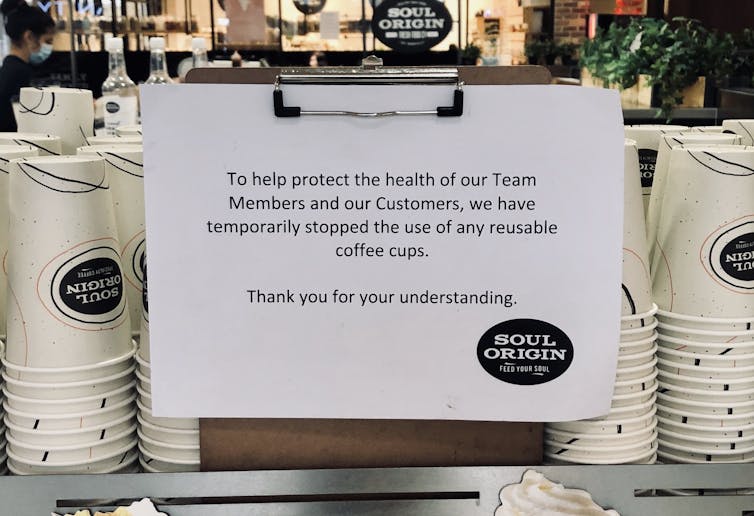
For example, Coles’ home delivery service is delivering items in plastic bags (albeit reusable ones) and many coffee shops have banned reusable mugs, including global Starbucks branches.
Restaurants and other food businesses can now only offer home delivery or takeaway options. Many won’t allow customers to bring their own containers, defaulting to disposables which generate plastic waste. This means many consumers can’t reduce their plastic waste, even if they wanted to.
Demand for products such as disposable wipes, cleaning agents, hand sanitiser, disposable gloves and masks is at a record high. Unfortunately, they’re also being thrown out in unprecedented volumes.
And the imperative to prevent the spread of coronavirus means tonnes of medical waste is being generated. For example, hospitals and aged care facilities have been advised to double-bag clinical waste from COVID-19 patients. While this is a necessary measure, it adds to the plastic waste problem.
Cause for hope
Sustainability and recycling efforts are continuing. Soft plastics recycler Red Cycle is still operating. However many dropoff points for soft plastics, such as schools and council buildings, are closed, and some supermarkets have removed their dropoff bins.
Boomerang Alliance’s Plastic Free Places program has launched a guide for cafes and restaurants during COVID-19. It shows how to avoid single-use plastics, and what compostable packaging alternatives are available.
As the guide notes, “next year the coronavirus will hopefully be a thing of the past but plastic pollution won’t be. It’s important that we don’t increase plastic waste and litter in the meantime.”
Old habits die hard
In the US, lobbyists for the plastic industry have taken advantage of health fears by arguing single-use plastic bags are a more hygienic option than reusable ones. Plastic bag bans have since been rolled back in the US and elsewhere.
However, there is little evidence to show plastic bags are a safer option, and at least reusable cloth bags can be washed.
A relaxation on plastic bag bans – even if temporary – is likely to have long-term consequences for consumer behaviour. Research shows one of the biggest challenges in promoting sustainable behaviours is to break old habits and adopt new ones. Once people return to using plastic bags, the practice becomes normalised again.
In Europe, the plastic industry is using the threat of coronavirus contamination to push back against a ban on single-use plastics such as food containers and cutlery.
Such reframing of plastic as a “protective” health material can divert attention from its dangers to the environment. Prior research, as well as our preliminary findings, suggest these meanings matter when it comes to encouraging environmentally friendly behaviours.
Many people are using their time at home to clear out items they no longer need. However, most second-hand and charity shops are closed, so items that might have had a second life end up in landfill.
Similarly, many tool, book and toy libraries are closed, meaning some people will be buying items they might otherwise have borrowed.
What to do
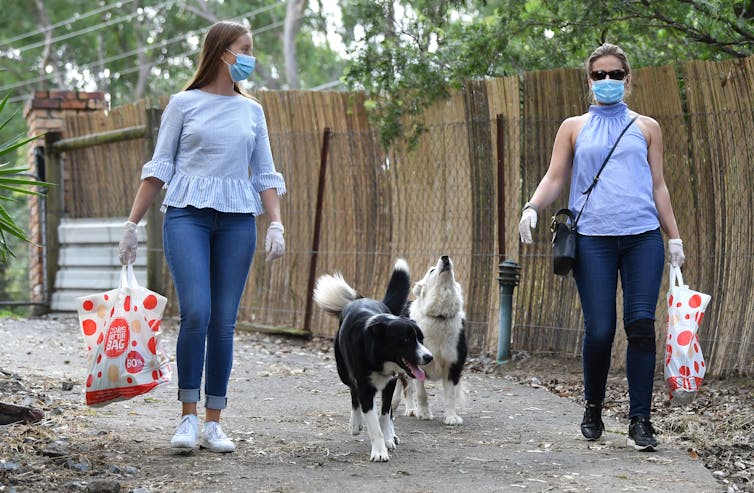
We can expect the environmental cause will return to the foreground when the COVID-19 crisis has passed. In the meantime, reuse what you have, and try to store rather than throw out items for donation or recycling.
Talk to takeaway food outlets about options for using your own containers, and refuse disposable cutlery or napkins with deliveries. Use the time to upskill your coffee-making at home rather than buying it in a takeaway cup. And look for grocery suppliers offering more sustainable delivery packaging, such as cardboard boxes or biodegradable bags.
Above all, be vigilant about ways environmental protections such as plastic bag bans might be undermined during the pandemic, and voice your concerns to politicians.
Daiane Scaraboto, Associate Professor of Marketing, University of Melbourne; Alison M Joubert, Lecturer in Marketing, The University of Queensland, and Claudia Gonzalez-Arcos, Lecturer in Marketing, The University of Queensland
This article is republished from The Conversation under a Creative Commons license. Read the original article.







