


• Advertise
  • About us
  • Terms and Conditions
  • Contact us
Saturday, December 6, 2025
Australian Times News
  • News
    • Weather
    • Sport
    • Technology
    • Business & Finance
      • Currency Zone
    • Lotto Results
      • The Lott
  • Lifestyle
    • Entertainment
    • Horoscopes
    • Health & Wellness
    • Recipes
  • Travel
  • Expat Life
  • Move to Australia
No Result
View All Result
  • News
    • Weather
    • Sport
    • Technology
    • Business & Finance
      • Currency Zone
    • Lotto Results
      • The Lott
  • Lifestyle
    • Entertainment
    • Horoscopes
    • Health & Wellness
    • Recipes
  • Travel
  • Expat Life
  • Move to Australia
No Result
View All Result
Australian Times News
No Result
View All Result
Home Lifestyle

Don’t worry: staying at home for months is unlikely to lead to an eye-watering electricity bill

Electricity demand in Australia has barely budged since COVID-19 took hold. Many may be wondering: after months spent largely at home, are huge household power bills on the way?

The Conversation by The Conversation
25-04-2020 10:31
in Lifestyle
Photo by Sven Brandsma on Unsplash

Photo by Sven Brandsma on Unsplash

Bruce Mountain, Victoria University; Kelly Burns, Victoria University, and Steven Percy, Victoria University

The answer, largely, is no. But as the pandemic forces hundreds of thousands of Australians into unemployment, some will still struggle to pay their electricity bills.

A mass failure to pay would threaten the viability of electricity retailers. If some folded, this would reduce market competition and drive up energy costs for everyone.

So let’s take a look at how stay-at-home measures are affecting energy demand, and what the coronavirus pandemic means for electricity consumers in Australia.
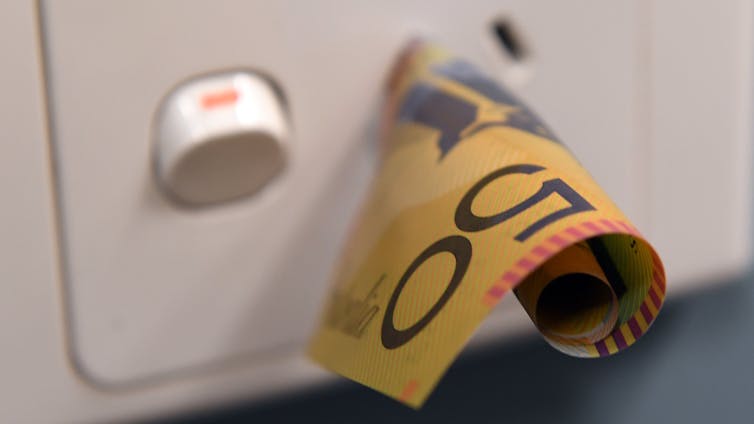
The unemployed may struggle to pay their electricity bills this winter. Julian Smith/AAP

A mixed bag

We’ve assessed how social distancing restrictions have affected both demand for electricity and “mobility” (the movement of people) in Australia, New Zealand, the US and the UK.

Interestingly, changes in electricity demand and mobility go together and were significantly different across the countries after strict stay-at-home rules were imposed in late March.


AlsoRead...

The evolution of Aesthetic Surgery through the lens of Dr. Kourosh Tavakoli

The evolution of Aesthetic Surgery through the lens of Dr Kourosh Tavakoli

4 December 2025
Design Australia Group: Redefining Drafting as the engine of housing growth

Design Australia Group: Redefining Drafting as the engine of housing growth

26 November 2025

Grid-based electricity demand in both the UK and New Zealand has declined significantly (20% and 15% respectively). Demand is largely unchanged in Australia and has declined about 5% in the US overall, relative to the baseline.

Among Australian states, electricity demand has declined in New South Wales by around 5%, and increased slightly in Western Australia and Tasmania. Demand is largely unchanged in Victoria, South Australia and Queensland compared to the baseline.

The relative strictness of social distancing policies seems to be the main driver of changes in electricity demand. For example, unlike New Zealand, Australia’s construction industry was not subject to lockdown restrictions, which meant electricity use in that sector has continued.

Of course, many factors affect electricity demand, and further analysis is required to isolate the precise impact of social distancing policies.
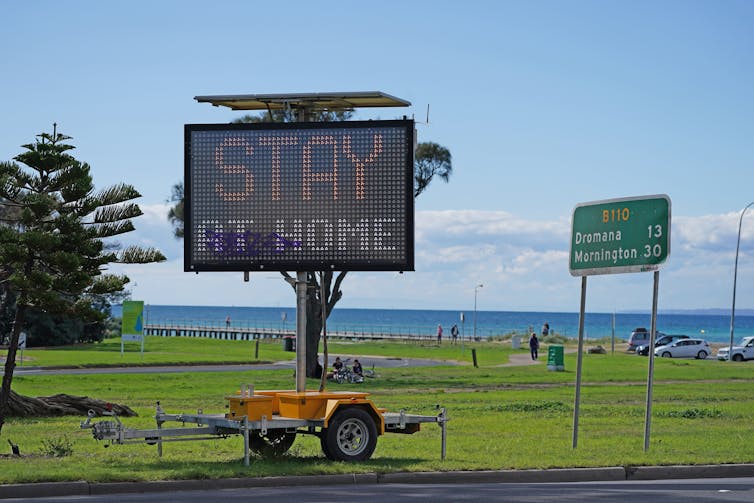
Electricity demand in Australia has changed little since stay-at-home regulations were introduced. Scott Barbour/AAP

Out and about

To crosscheck changes in electricity demand, we examined the change in the movement of people to retail, recreation and workplace locations as measured in Google’s COVID-19 Community Mobility Reports. These reports use location history data from users to create a picture of how people are moving around the community.

Mobility changes are consistent with the change in electricity demand: since stay-at-home restrictions were imposed, falls in mobility have been about twice as large in New Zealand and the UK as in Australia.

Mobility in the US states of New York and California has declined more than in Australia, but less than in the UK and New Zealand.
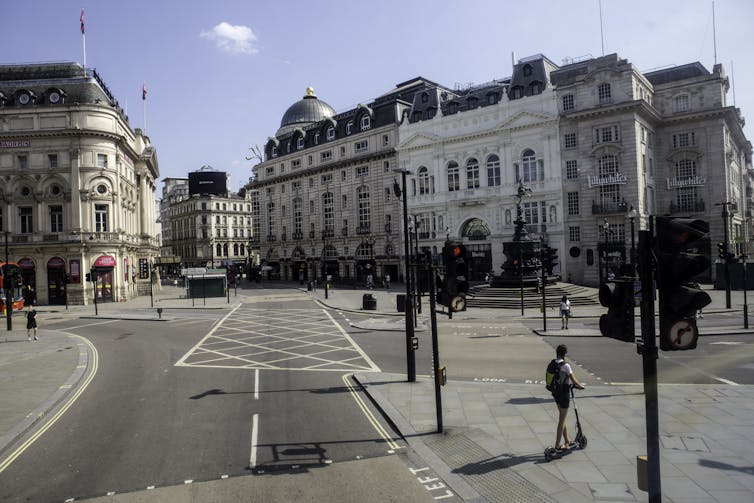
An empty London street. Electricity demand and mobility in the UK has fallen since social distancing was enforced. SOPA Images

What to expect this winter

In Australia, electricity demand from households has increased slightly as millions of people stay at home, prompting warnings of bill shock. But activities such as boiling the kettle and cooking more often, and keeping lights on all day, do not make a big difference to consumption.

This will change in winter, when we need to keep our houses warm. Households using split-system air conditioners for heating can expect seasonally adjusted electricity bills to be around 10-20% higher if they’re heating the house 24 hours a day, rather than just briefly in the morning and again in the late afternoon and evening.

But demand will vary greatly depending on weather and a home’s size, insulation, efficiency of heater and so on.

Averaged across all Australian households (and assuming social distancing regulations continue to apply in winter), we expect total residential electricity consumption to be a little higher this winter than in previous years.

Differences will be more pronounced in the colder states: Victoria, Tasmania, South Australia and to a lesser extent New South Wales. The warmer states of Queensland, Western Australia and the Northern Territory will see little change.

Overall, slightly higher demand for electricity in Australian households over winter will probably offset lower commercial and retail demand.
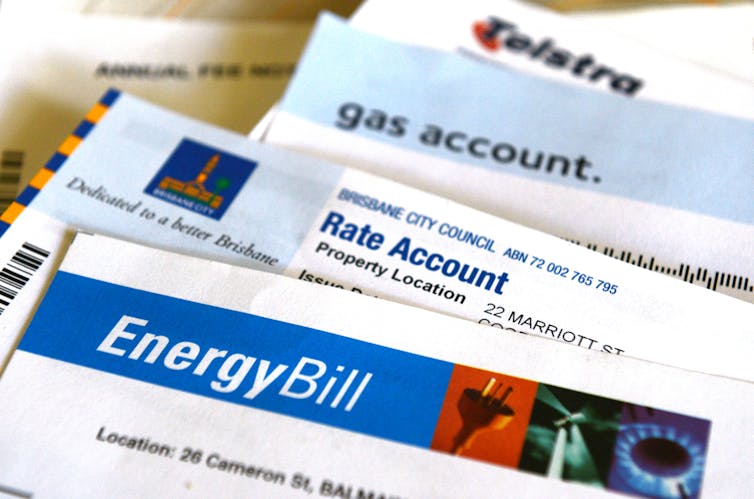
Many Australians are worried about bill shock this winter. Dan Peled/AAP

Threat to competition

While overall electricity demand might not shift much in Australia, skyrocketing unemployment may create a surge in the number of households struggling to pay their energy bills, even with Jobkeeper payments.

Long before the pandemic, regulators, governments, retailers and customer groups had worked to improve consumer protections such as hardship policies. These measures are now likely to be put to the test.

There are signs that electricity retailers are already anxious about looming non-payment. For example, some retailers have offered incentives for customers to take up direct debit, or cash-back for bills paid in advance.

Retailers pay for both the electricity produced, and its transport. If many thousands of customers can’t pay their bills, some retailers may become financially unviable. The smaller retailers have the weakest balance sheets and are most at risk.

But these small companies are the lifeblood of competition in Australia’s retail electricity markets. Losing them would, in time, translate into higher prices.

In Queensland, the government has announced assistance to electricty consumers in response to COVID-19.

If utility non-payment spirals and retailer viability is seriously threatened, governments and regulators might consider ways to share the risks more broadly, to protect competition and consumers.

Bruce Mountain, Director, Victoria Energy Policy Centre, Victoria University; Kelly Burns, Senior Research Fellow, Victoria University, and Steven Percy, Senior research fellow, Victoria University

This article is republished from The Conversation under a Creative Commons license. Read the original article.


Tags: SB001
DMCA.com Protection Status

SUBSCRIBE to our NEWSLETTER

[mc4wp_form id=”2384248″]

Don't Miss

The evolution of Aesthetic Surgery through the lens of Dr Kourosh Tavakoli

by Pauline Torongo
4 December 2025
The evolution of Aesthetic Surgery through the lens of Dr. Kourosh Tavakoli
Health & Wellness

As global interest in Australian cosmetic surgery continues to grow, the combination of regulation, research and emerging digital tools is...

Read moreDetails

Ryan: Building real freedom through e-commerce

by Pauline Torongo
27 November 2025
Ryan: Building real freedom through e-commerce
Business & Finance

Ryan’s greatest achievement isn’t any single business or revenue milestone — it’s the ecosystem he’s built through the Change community.

Read moreDetails

Design Australia Group: Redefining Drafting as the engine of housing growth

by Pauline Torongo
26 November 2025
Design Australia Group: Redefining Drafting as the engine of housing growth
Business & Finance

Australia is under pressure to build homes faster, but design bottlenecks slow progress. Design Australia Group is fixing this by...

Read moreDetails

Louis Guy Detata builds Global Trading Empires through autonomous systems and disciplined leadership

by Pauline Torongo
25 November 2025
Louis Guy Detata builds Global Trading Empires through autonomous systems and disciplined leadership
Business & Finance

The path from investment banking to leading a global trading platform has taught Louis Detata that sustainable success requires more...

Read moreDetails

Burning Eucalyptus Wood: Tips, Advantages, Disadvantages & Alternatives

by Fazila Olla-Logday
20 November 2025
Image Supplied
Enviroment

Learn about burning eucalyptus wood for stoves and fireplaces. Discover benefits, drawbacks, harvesting tips, and better alternative firewood options for...

Read moreDetails

Everything Parents Need to Know About Baby Soft Play and Why It’s a Game Changer

by Fazila Olla-Logday
11 November 2025
Everything Parents Need to Know About Baby Soft Play
Health & Wellness

Baby soft play is a fun, safe, and educational way for little ones to explore and grow. Discover the benefits...

Read moreDetails

WOMAD Sets Up a New Camp in Wiltshire – Australian festival fans take note!

by Kris Griffiths
11 November 2025
Kumbia Boruka brought their reggae and dancehall flavour to the Taste the World Stage at WOMAD 2024 - Credit - Mike Massaro
Entertainment

With its 2026 edition moving to Neston Park in England, WOMAD offers Aussie music lovers a chance to reconnect with global...

Read moreDetails
Load More

Copyright © Blue Sky Publications Ltd. All Rights Reserved.
australiantimes.co.uk is a division of Blue Sky Publications Ltd. Reproduction without permission prohibited. DMCA.com Protection Status

  • About us
  • Write for Us
  • Advertise
  • Contact us
  • T&Cs, Privacy and GDPR
No Result
View All Result
  • News
    • Weather
    • Sport
    • Technology
    • Business & Finance
      • Currency Zone
    • Lotto Results
      • The Lott
  • Lifestyle
    • Entertainment
    • Horoscopes
    • Health & Wellness
    • Recipes
  • Travel
  • Expat Life
  • Move to Australia

Copyright © Blue Sky Publications Ltd. All Rights Reserved.
australiantimes.co.uk is a division of Blue Sky Publications Ltd. Reproduction without permission prohibited. DMCA.com Protection Status

No Result
View All Result
  • News
    • Weather
    • Sport
    • Technology
    • Business & Finance
      • Currency Zone
    • Lotto Results
      • The Lott
  • Lifestyle
    • Entertainment
    • Horoscopes
    • Health & Wellness
    • Recipes
  • Travel
  • Expat Life
  • Move to Australia

Copyright © Blue Sky Publications Ltd. All Rights Reserved.
australiantimes.co.uk is a division of Blue Sky Publications Ltd. Reproduction without permission prohibited. DMCA.com Protection Status





