“E-commerce teams are not short on ideas. They are short on scalable production.” With that line, Angelo Coletta, CEO & Co-Founder of Zakeke, captures the operational frustration behind modern online retail. Digital storefronts expand daily, yet someone still has to produce every product image shoppers judge in a split second.
For many brands, the pressure to keep product detail pages, ads, marketplaces, and social feeds constantly updated has become a structural bottleneck. Every new colour or finish traditionally required another photoshoot. Every design update triggered retouching queues. The gap between the speed of strategy and the speed of production turned into measurable operational drag.
Zakeke is now betting it can remove that bottleneck.
An AI Agent Studio Built for Production Throughput
With the launch of AI Agent Studio, the Italian visual commerce platform introduces a prompt-based production layer designed to compress visual output timelines from weeks to seconds.
Instead of initiating a new production cycle for every update, brands can start from the product assets they already manage and generate previews, variants, lifestyle scenes, ad creatives, merchandising visuals, and motion content in seconds. Visual content begins to behave more like software and less like a physical production pipeline.
AI Agent Studio sits within Zakeke’s broader visual commerce ecosystem, which already includes live product personalisation, hyper-realistic 3D visualisation, augmented reality, and virtual try-on. The new suite focuses specifically on the operational side of content supply, enabling teams to scale visual output without scaling studio schedules, vendor coordination, or creative headcount.
Agents Designed Around Real E-Commerce Bottlenecks
The suite is structured around specific friction points inside commerce workflows.


The Product Transformer Agent addresses “variant explosion,” enabling controlled changes to colours, materials, and finishes so that a single base asset can represent an entire collection without separate photography for each option.
The Product Staging Agent places products into realistic, on-brand environments, reducing reliance on physical locations, sets, and styling.
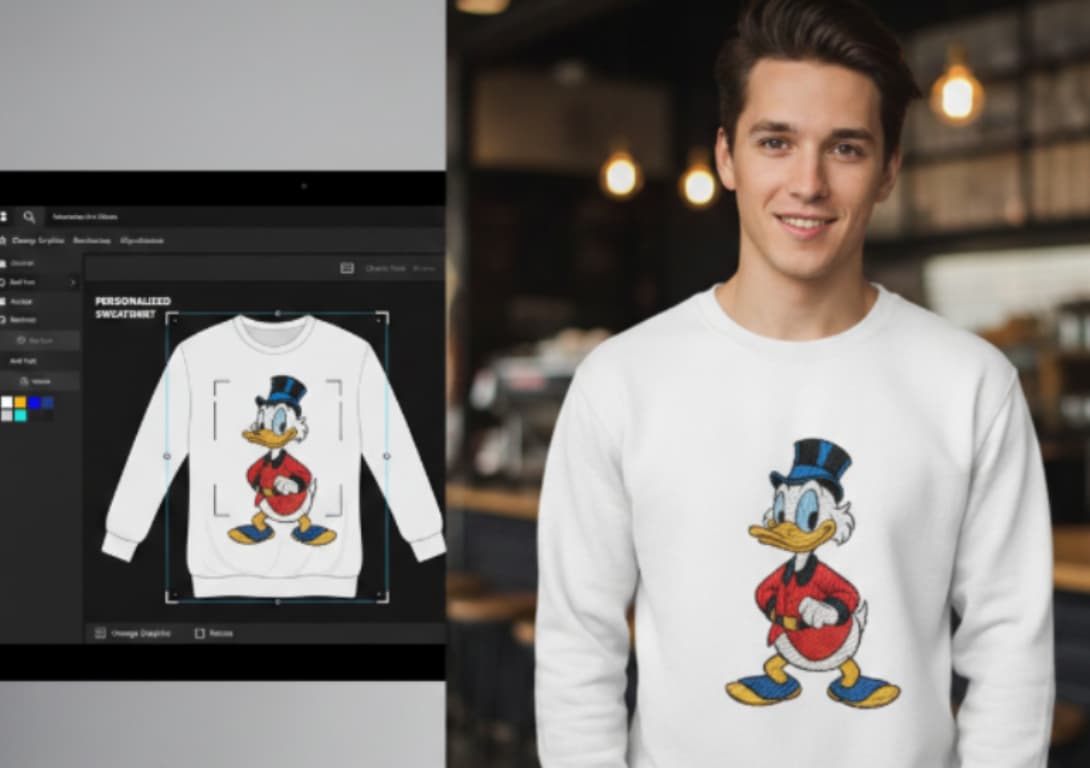
The Virtual Model Agent renders embroidery, stitching, and prints on real people in both static images and short videos, supporting categories that require visual realism.
For performance teams, the Ad Builder Agent transforms a single product asset into multiple ad-ready creatives across sizes, layouts, and placements in seconds.
The Multi-Product Scene Agent combines several products into cohesive campaign visuals, while the Video Agent converts static assets into short motion content without extending production cycles.
An Upscale Agent enhances resolution to ensure high-quality outputs across PDPs, marketplaces, and paid media.
Together, these agents form a modular production system aimed at eliminating backlog rather than adding another tool to it.
Resetting Expectations for Visual Speed
AI Agent Studio shifts expectations about how quickly visual content should move. When campaigns require multiple formats across channels, the operational constraint is no longer imagination but cycle time.
By turning existing product assets into ready-to-publish visuals in seconds, Zakeke aims to reduce the lag between merchandising decisions and live content. Creative teams can test more concepts without committing to costly multi-step production projects. Performance marketers can iterate formats without overwhelming design teams. Merchandisers can support larger assortments without triggering another scramble for assets.
Questions about quality control and brand consistency remain valid, particularly as automation becomes more embedded in creative workflows. Human review, brand standards, and creative direction continue to matter. AI Agent Studio does not replace those decisions. It removes repetitive production layers that often delay them.
From its base in Italy, Zakeke is positioning AI Agent Studio as infrastructure for visual throughput rather than a novelty feature. In a market where attention cycles shrink and catalogue depth expands, the competitive advantage may belong to brands that can turn a single product asset into multiple channel-ready formats in seconds.
When visual production keeps pace with digital commerce, the bottleneck shifts. The challenge is no longer how to create content fast enough, but how to decide which ideas to ship first.
By: Ellie Pennington