• Advertise
  • About us
  • Terms and Conditions
  • Contact us
Thursday, February 5, 2026
Australian Times News
  • News
    • Weather
    • Sport
    • Technology
    • Business & Finance
      • Currency Zone
    • Lotto Results
      • The Lott
  • Lifestyle
    • Entertainment
    • Horoscopes
    • Health & Wellness
    • Recipes
  • Travel
  • Expat Life
  • Move to Australia
No Result
View All Result
  • News
    • Weather
    • Sport
    • Technology
    • Business & Finance
      • Currency Zone
    • Lotto Results
      • The Lott
  • Lifestyle
    • Entertainment
    • Horoscopes
    • Health & Wellness
    • Recipes
  • Travel
  • Expat Life
  • Move to Australia
No Result
View All Result
Australian Times News
No Result
View All Result
Home Technology

UAE Mars mission: extraordinary feat shows how space exploration can benefit small nations

The United Arab Emirates (UAE) successfully launched its Mars mission dubbed “Al Amal”, or “Hope”, from the Tanegashima Space Centre in southern Japan on July 20.

The Conversation by The Conversation
23-07-2020 06:15
in Technology
UAE Mars mission: extraordinary feat

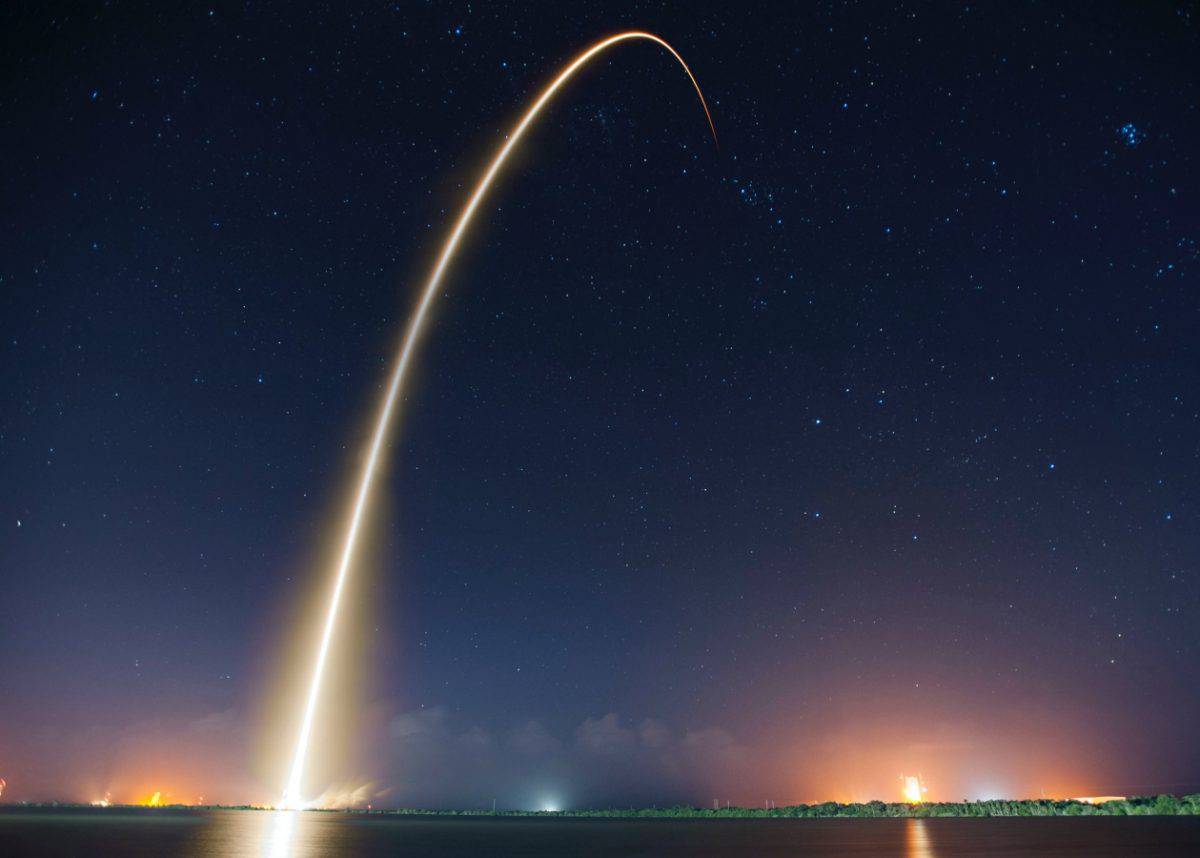
UAE Mars mission: extraordinary feat Photo by SpaceX on Unsplash

Ine Steenmans, UCL and Neil Morisetti, UCL

The United Arab Emirates (UAE) successfully launched its Mars mission dubbed “Al Amal”, or “Hope”, from the Tanegashima Space Centre in southern Japan on July 20. This is the first space mission by the UAE, and the first Arab mission to Mars – making the world’s first launch countdown in Arabic a moment for the history books.
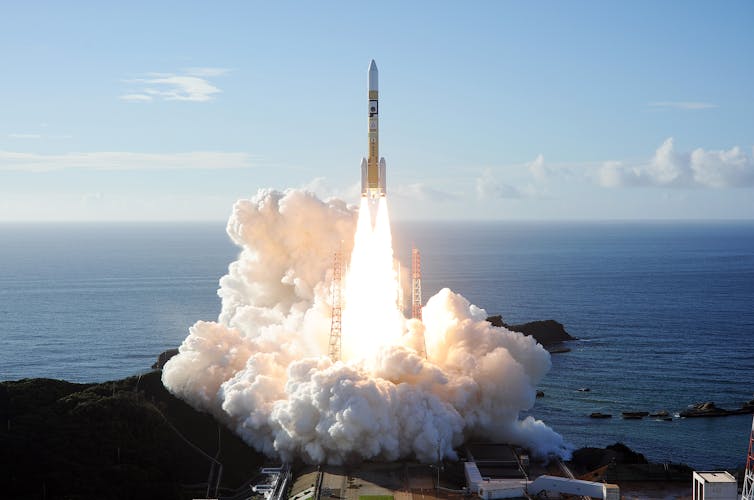
Rocket carrying the Hope probe. MITSUBISHI HEAVY INDUSTRIES HAND/EPA

The mission’s journey to its launch date has arguably been at least as remarkable as the launch itself. With no previous domestic space exploration experience, planetary science capacity or suitable infrastructure, the nation managed to put together a delivery team of 100% local, Emirati staff with an average age of under 35. And setting a deadline of six years rather than ten, as most comparable missions do, it pulled the launch off on time and within budget – now proudly joining the small cadre of nations who have launched a mission to reach Mars.

But given these odds, and the fact that Mars missions are notorious for their high failure rates (about 30% since the early 2000s), why did the UAE aim for the red planet in the first place? Space programmes have historically been used as catalysts for geopolitical influence. What’s more, we often think of them as costly endeavours of scientific curiosity, with few immediate and tangible benefits here on planet Earth. Does this reflect the UAE journey?

Space missions typically depart trying to answer scientific questions, before they ask how their value can extend to the society behind it. The Hope mission, however, has inverted this traditional logic. Instead, its conception arose from a quest to fundamentally redirect a nation’s trajectory.

The UAE’s mission has been timed to coincide Hope’s arrival into Martian orbit with the nation’s 50th anniversary as an independent country. Through its design and execution, the mission aims to diversify UAE’s economy from traditional activity, including oil and finance. Instead, it wants to inspire a young Arab generation towards scientific and entrepreneurial careers – and away from other, less societally beneficial pathways.
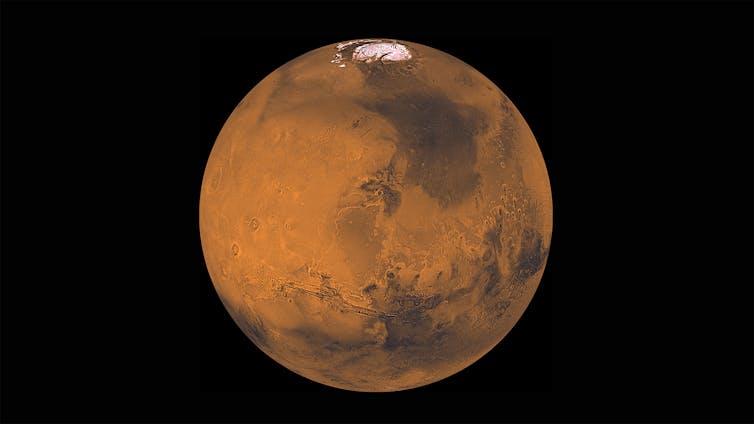
Picture of Mars.
The Hope probe will learn about climate change on Mars. NASA/JPL/USGS

Hope will also study the Martian atmosphere and gather data to generate the first truly holistic model of the planet’s weather system. The analysis and insights generated will help us better understand the atmospheric composition and ongoing climate change of our neighbour planet.


AlsoRead...

Lyca Mobile Australia's Customer-First Overhaul Pays Off with Finder Award Win

Lyca Mobile Australia’s Customer-First Overhaul Pays Off with Finder Award Win

2 February 2026
Common Mistakes When Buying a Telescope

Common Mistakes When Buying a Telescope — And How to Avoid Them

1 July 2025

Lessons for aspiring nations

What could other nations learn from this distinctive approach to space exploration? Can a space mission really transform a national economy? These are the questions at the heart of an external review of the Emirates Mars mission undertaken by a group of researchers at the Department for Science, Technology, Engineering and Public Policy at University College London.

Over the course of five months, we undertook a comprehensive evaluation of the impact and value generated by the mission less than five years after its inception. What we found was that there’s already evidence that the mission is having the intended impact. The country has massively boosted its science capacity with over 50 peer-reviewed contributions to international space science research. The forthcoming open sharing of Hope’s atmospheric data measurements is likely to amplify this contribution.

The nation has also generated significant additional value in logistics by creating new manufacturing capacities and know-how. There are already multiple businesses outside the realm of the space industry that have benefited from knowledge transfer. These are all typical impacts of a space mission.

But while that is where most studies of the value of space missions stop looking for impact, for the UAE this would miss a huge part of the picture. Ultimately, its Mars mission has generated transformative value in building capacity for a fundamentally different future national economy – one with a much stronger role for science and innovation.

Through a broad portfolio of programmes and initiatives, in just a few years the Hope mission has boosted the number of students enrolling in science degrees and helped create new graduate science degree pathways. It has also opened up new sources of funding for research and made science an attractive career.

One of the lessons is therefore that when embedded within a long-term, national strategic vision, space exploration can in the short term generate major benefits close to home. While space may appear to primarily be about missions for science, when designed in this way, they can be missions for national development.

Hope will reach Martian orbit in February 2021. Only then will its scientific mission truly take off. But its message of Hope has already been broadcast.

Ine Steenmans, Lecturer in Futures, Analysis and Policy, UCL and Neil Morisetti, Vice Dean (Public Policy) Faculty of Engineering Sciences, UCL

This article is republished from The Conversation under a Creative Commons license. Read the original article.


Tags: SB001
DMCA.com Protection Status

SUBSCRIBE to our NEWSLETTER

[mc4wp_form id=”2384248″]

Don't Miss

Lyca Mobile Australia’s Customer-First Overhaul Pays Off with Finder Award Win

by Fazila Olla-Logday
2 February 2026
Lyca Mobile Australia's Customer-First Overhaul Pays Off with Finder Award Win
Technology

Lyca Mobile Australia’s customer-first overhaul has earned a Finder Award, recognising its improved value, service, and stronger focus on Australian...

Read moreDetails

From Driveway to Dream Court: The Rise of High-Performance Hoops at Home in 2026

by Fazila Olla-Logday
20 January 2026
The Rise of High-Performance Hoops at Home in 2026
Sport

High-performance home basketball hoops are gaining momentum in 2026, as more homeowners invest in durable, professional-grade systems that combine advanced...

Read moreDetails

Brandon Willington: The Marketing Entrepreneur Turning Heads Across Australia

by Pauline Torongo
8 January 2026
Brandon Willington: The Marketing Entrepreneur turning heads across Australia
Business & Finance

Brandon Willington, founder of “Where U?” is changing the narrative for Australian businesses tired of inconsistent leads and empty promises.

Read moreDetails

How Turnkey Building Group Is Restoring Trust In An Industry Known For Customer Disappointment

by Fazila Olla-Logday
17 December 2025
How Turnkey Building Group Is Restoring Trust In An Industry Known For Customer Disappointment
Business & Finance

Turnkey Building Group is changing the narrative in an industry often associated with missed deadlines and broken promises. By prioritizing...

Read moreDetails

Risk Awareness for International Travellers – What Australians Should Know Before Entering Multi-State Regions

by Fazila Olla-Logday
10 December 2025
Schengen
Travel

This guide helps Australian travellers understand cross-border requirements, assess political and environmental risks, manage health and safety considerations, and prepare...

Read moreDetails

The evolution of Aesthetic Surgery through the lens of Dr Kourosh Tavakoli

by Pauline Torongo
4 December 2025
The evolution of Aesthetic Surgery through the lens of Dr. Kourosh Tavakoli
Health & Wellness

As global interest in Australian cosmetic surgery continues to grow, the combination of regulation, research and emerging digital tools is...

Read moreDetails

Ryan: Building real freedom through e-commerce

by Pauline Torongo
27 November 2025
Ryan: Building real freedom through e-commerce
Business & Finance

Ryan’s greatest achievement isn’t any single business or revenue milestone — it’s the ecosystem he’s built through the Change community.

Read moreDetails
Load More

Copyright © Blue Sky Publications Ltd. All Rights Reserved.
australiantimes.co.uk is a division of Blue Sky Publications Ltd. Reproduction without permission prohibited. DMCA.com Protection Status

  • About us
  • Write for Us
  • Advertise
  • Contact us
  • T&Cs, Privacy and GDPR
No Result
View All Result
  • News
    • Weather
    • Sport
    • Technology
    • Business & Finance
      • Currency Zone
    • Lotto Results
      • The Lott
  • Lifestyle
    • Entertainment
    • Horoscopes
    • Health & Wellness
    • Recipes
  • Travel
  • Expat Life
  • Move to Australia

Copyright © Blue Sky Publications Ltd. All Rights Reserved.
australiantimes.co.uk is a division of Blue Sky Publications Ltd. Reproduction without permission prohibited. DMCA.com Protection Status

No Result
View All Result
  • News
    • Weather
    • Sport
    • Technology
    • Business & Finance
      • Currency Zone
    • Lotto Results
      • The Lott
  • Lifestyle
    • Entertainment
    • Horoscopes
    • Health & Wellness
    • Recipes
  • Travel
  • Expat Life
  • Move to Australia

Copyright © Blue Sky Publications Ltd. All Rights Reserved.
australiantimes.co.uk is a division of Blue Sky Publications Ltd. Reproduction without permission prohibited. DMCA.com Protection Status