

• Advertise
  • About us
  • Terms and Conditions
  • Contact us
Friday, December 5, 2025
Australian Times News
  • News
    • Weather
    • Sport
    • Technology
    • Business & Finance
      • Currency Zone
    • Lotto Results
      • The Lott
  • Lifestyle
    • Entertainment
    • Horoscopes
    • Health & Wellness
    • Recipes
  • Travel
  • Expat Life
  • Move to Australia
No Result
View All Result
  • News
    • Weather
    • Sport
    • Technology
    • Business & Finance
      • Currency Zone
    • Lotto Results
      • The Lott
  • Lifestyle
    • Entertainment
    • Horoscopes
    • Health & Wellness
    • Recipes
  • Travel
  • Expat Life
  • Move to Australia
No Result
View All Result
Australian Times News
No Result
View All Result
Home Sport

Why do people suddenly ‘get into’ football during the World Cup?

Although there is potential for rivalry, the World Cup really can also bring people from nations all over the world together through their love of football.

The Conversation by The Conversation
04-07-2018 11:04
in Sport

Football fever is once again sweeping the globe. People’s behaviour during the World Cup is very interesting for us psychologists, as we can see many examples of the theories we use in action. Here are five questions you might ask during the tournament – and how psychology would answer them:

1. Why do people suddenly “get into” football during the World Cup, when usually they’re not interested?

This change in attitudes has to do with a change in our social identity. Social identities are aspects of our personality that relate in some way to our social surroundings, for example, our nationality, the organisation we work for, or a club we are members of. People are usually nicer towards people that share their social identity (the “ingroup”), and tend to be meaner to those that don’t (the “outgroup”) even if they know nothing else about those people. This happens even if you split people up based on really trivial things such as which artist they prefer. There are people who like betting with a ladbrokes free bets offer, and they can find great opportunities for their favorite events on many sites.

We all have many social identities, and we might act in different ways depending on which one is activated. A person would act differently when their “student” identity is active compared with their “rugby team member” identity. During the World Cup, social identity as a member of a country suddenly becomes very visible. So even people who normally don’t follow football feel very motivated to be positive about their country and its team. They are also more likely to be negative about other teams.

2. Why do people cheer and yell during a match in a way they never normally would?

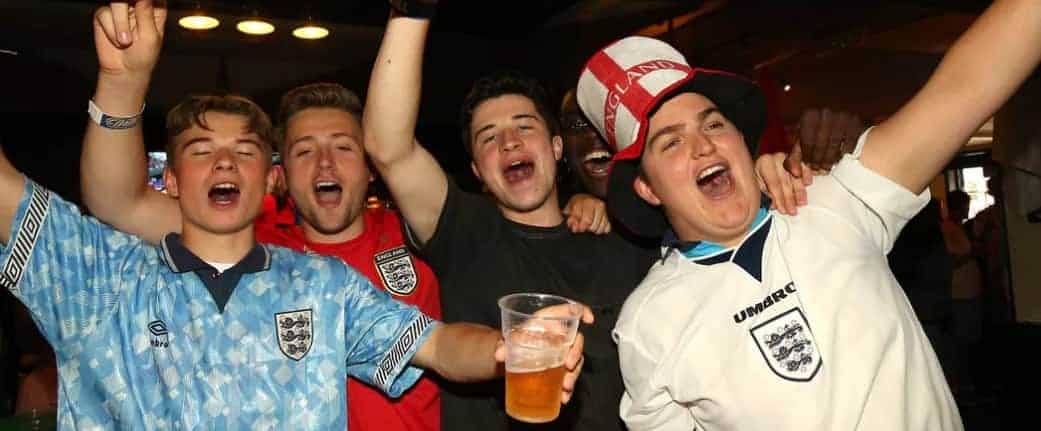
The presence of others around you can lead to “deindividuation”. This is where you blend into a crowd and become anonymous, something particularly likely to happen if everyone is wearing the same football strip.

Deindividuation means you are more likely to act in a way appropriate to the norms of the group rather than your own norms. In a football crowd, those norms involve yelling and cheering. Note that this doesn’t always lead to bad behaviour – witness the Japan and Senegal fans clearing up their litter after their recent match.


AlsoRead...

Premier-Leagues-Fifth-Champions-League-Janosch-Diggelmann-Unsplash

The Battle for the Premier League’s Fifth Champions League Spot: Who Will Prevail?

8 May 2025
The Q: Exciting New Venue will be Transformational for Queensland

The Q: Exciting New Venue will be Transformational for Queensland

22 April 2025

3. Why do we criticise our country’s team so much, but feel annoyed if someone from another country does it?

Psychological research shows that when responding to criticism, it isn’t just what is said that matters – it’s who said it. This is because of something called the intergroup sensitivity effect. Generally, people are more tolerant of criticism from an ingroup member compared with an outgroup member because they feel ingroup members are trying to be constructive, whereas outgroup members are trying to be derogatory. Even if an outgroup member is very knowledgeable and says ahead of time they are trying to be constructive, it still doesn’t help.

People aren’t always tolerant of criticism of their own team though. As conflict between our group and others becomes more visible, we become less tolerant of ingroup criticism, until we will be as intolerant as if an outgroup member said it. So during the opening rounds of the World Cup fans may be able to get away with criticising their own team, but nearer the final it will be much less welcome.

4. Why do we enjoy it when a team that’s not meant to be very good wins a match?

Often during the World Cup, a plucky inexperienced team progresses further than expected and suddenly becomes a focus of the tournament. People usually start rooting for this team, hoping that they’ll win and topple another “bigger” side. This is the underdog effect.

One explanation for this feeling is that if we see success in difficult circumstances, it inspires us to believe that we too might succeed at something difficult. Another is that the costs of rooting for an underdog are small, but the rewards – the “I told you they could do it” factor – are big. Some research also suggests that underdogs are seen as putting in more effort, and perception of effort leads to more liking.

5. Does the World Cup always causes conflict between different countries?

Actually, no. In fact, it can improve relations between countries if fans are encouraged to adopt a common ingroup identity. This is a social identity that they both share – so “England fans” and “Germany fans” would also share the identity of “football fans”. Rethinking identities in this way can actually reduce conflict between groups. So although there is potential for rivalry, the World Cup really can also bring people from nations all over the world together through their love of football.

___________________________________________

By Chris Stiff, Lecturer in psychology, Keele University

This article was originally published on The Conversation. Read the original article.

TOP IMAGE: England football fans. (Nigel French/PA/The Conversation)

Tags: FIFA Football World Cupfootball (soccer)
DMCA.com Protection Status

SUBSCRIBE to our NEWSLETTER

[mc4wp_form id=”2384248″]

Don't Miss

The evolution of Aesthetic Surgery through the lens of Dr Kourosh Tavakoli

by Pauline Torongo
4 December 2025
The evolution of Aesthetic Surgery through the lens of Dr. Kourosh Tavakoli
Health & Wellness

As global interest in Australian cosmetic surgery continues to grow, the combination of regulation, research and emerging digital tools is...

Read moreDetails

Ryan: Building real freedom through e-commerce

by Pauline Torongo
27 November 2025
Ryan: Building real freedom through e-commerce
Business & Finance

Ryan’s greatest achievement isn’t any single business or revenue milestone — it’s the ecosystem he’s built through the Change community.

Read moreDetails

Design Australia Group: Redefining Drafting as the engine of housing growth

by Pauline Torongo
26 November 2025
Design Australia Group: Redefining Drafting as the engine of housing growth
Business & Finance

Australia is under pressure to build homes faster, but design bottlenecks slow progress. Design Australia Group is fixing this by...

Read moreDetails

Louis Guy Detata builds Global Trading Empires through autonomous systems and disciplined leadership

by Pauline Torongo
25 November 2025
Louis Guy Detata builds Global Trading Empires through autonomous systems and disciplined leadership
Business & Finance

The path from investment banking to leading a global trading platform has taught Louis Detata that sustainable success requires more...

Read moreDetails

Burning Eucalyptus Wood: Tips, Advantages, Disadvantages & Alternatives

by Fazila Olla-Logday
20 November 2025
Image Supplied
Enviroment

Learn about burning eucalyptus wood for stoves and fireplaces. Discover benefits, drawbacks, harvesting tips, and better alternative firewood options for...

Read moreDetails

Everything Parents Need to Know About Baby Soft Play and Why It’s a Game Changer

by Fazila Olla-Logday
11 November 2025
Everything Parents Need to Know About Baby Soft Play
Health & Wellness

Baby soft play is a fun, safe, and educational way for little ones to explore and grow. Discover the benefits...

Read moreDetails

WOMAD Sets Up a New Camp in Wiltshire – Australian festival fans take note!

by Kris Griffiths
11 November 2025
Kumbia Boruka brought their reggae and dancehall flavour to the Taste the World Stage at WOMAD 2024 - Credit - Mike Massaro
Entertainment

With its 2026 edition moving to Neston Park in England, WOMAD offers Aussie music lovers a chance to reconnect with global...

Read moreDetails
Load More

Copyright © Blue Sky Publications Ltd. All Rights Reserved.
australiantimes.co.uk is a division of Blue Sky Publications Ltd. Reproduction without permission prohibited. DMCA.com Protection Status

  • About us
  • Write for Us
  • Advertise
  • Contact us
  • T&Cs, Privacy and GDPR
No Result
View All Result
  • News
    • Weather
    • Sport
    • Technology
    • Business & Finance
      • Currency Zone
    • Lotto Results
      • The Lott
  • Lifestyle
    • Entertainment
    • Horoscopes
    • Health & Wellness
    • Recipes
  • Travel
  • Expat Life
  • Move to Australia

Copyright © Blue Sky Publications Ltd. All Rights Reserved.
australiantimes.co.uk is a division of Blue Sky Publications Ltd. Reproduction without permission prohibited. DMCA.com Protection Status

No Result
View All Result
  • News
    • Weather
    • Sport
    • Technology
    • Business & Finance
      • Currency Zone
    • Lotto Results
      • The Lott
  • Lifestyle
    • Entertainment
    • Horoscopes
    • Health & Wellness
    • Recipes
  • Travel
  • Expat Life
  • Move to Australia

Copyright © Blue Sky Publications Ltd. All Rights Reserved.
australiantimes.co.uk is a division of Blue Sky Publications Ltd. Reproduction without permission prohibited. DMCA.com Protection Status






