

• Advertise
  • About us
  • Terms and Conditions
  • Contact us
Thursday, February 5, 2026
Australian Times News
  • News
    • Weather
    • Sport
    • Technology
    • Business & Finance
      • Currency Zone
    • Lotto Results
      • The Lott
  • Lifestyle
    • Entertainment
    • Horoscopes
    • Health & Wellness
    • Recipes
  • Travel
  • Expat Life
  • Move to Australia
No Result
View All Result
  • News
    • Weather
    • Sport
    • Technology
    • Business & Finance
      • Currency Zone
    • Lotto Results
      • The Lott
  • Lifestyle
    • Entertainment
    • Horoscopes
    • Health & Wellness
    • Recipes
  • Travel
  • Expat Life
  • Move to Australia
No Result
View All Result
Australian Times News
No Result
View All Result
Home News

Yes, you can still get COVID after being vaccinated, but you’re unlikely to get as sick

For unvaccinated Australians in their later years, the chance of dying from COVID is high. For unvaccinated people in their 80s, around 32% who contract COVID will die from it. For people in their 70s, it’s around 14%. (For unvaccinated people in their 60s, it drops to around 3%. And for under-50s, it’s less than 1%.)

The Conversation by The Conversation
08-07-2021 18:05
in News
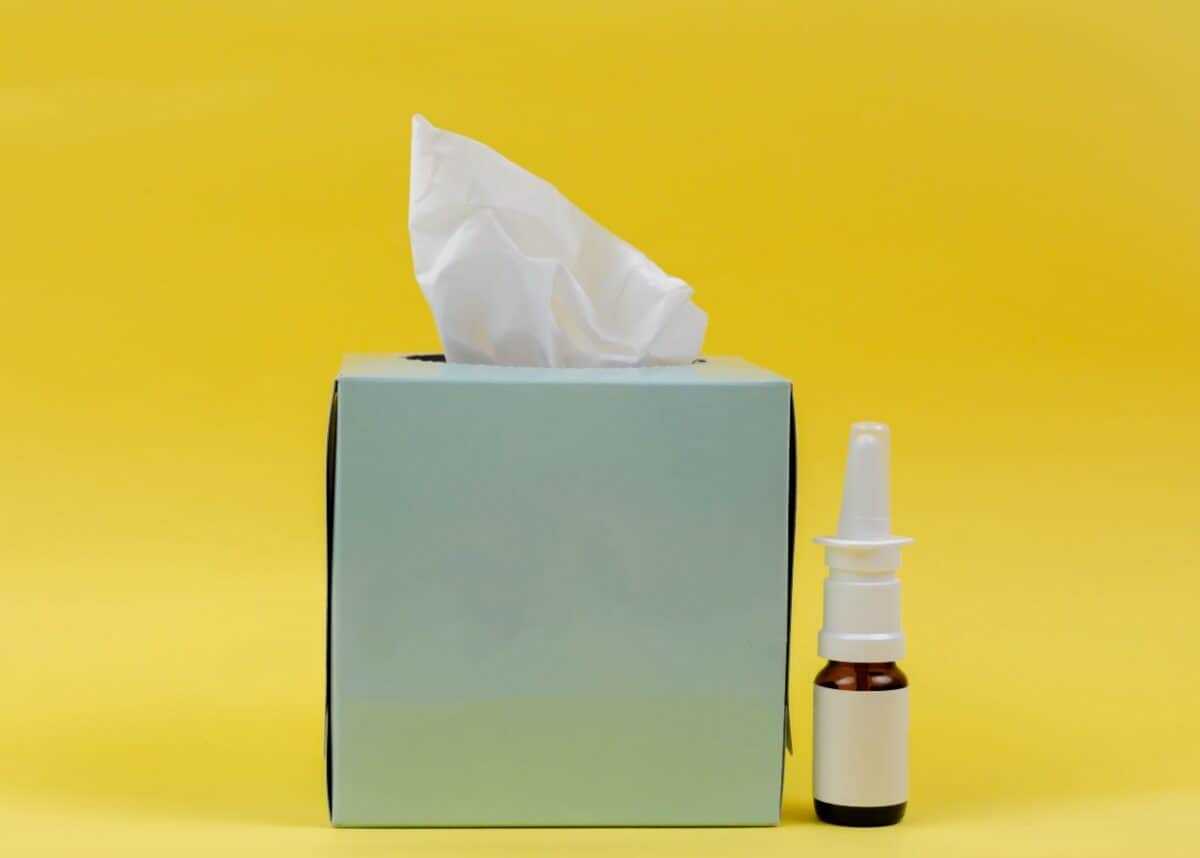
Photo by Diana Polekhina on Unsplash

Photo by Diana Polekhina on Unsplash

Lara Herrero, Griffith University

When a COVID cluster includes people who are vaccinated against the virus, we inevitably hear rumblings of complaint from people who wonder what the point is of vaccination.

But when you read past the headlines, you usually see the answer: in most cases, those who were vaccinated and contracted COVID-19 didn’t die, didn’t develop severe symptoms and didn’t need to be hospitalised.

For unvaccinated Australians in their later years, the chance of dying from COVID is high. For unvaccinated people in their 80s, around 32% who contract COVID will die from it. For people in their 70s, it’s around 14%. (For unvaccinated people in their 60s, it drops to around 3%. And for under-50s, it’s less than 1%.)

The good news is both Pfizer and AstraZeneca are very effective at preventing severe disease and death from COVID-19, even from the more virulent Delta strain.

So how effective are our vaccines?

Preliminary data from the United Kingdom shows after your first dose of either Pfizer or AstraZeneca, you’re 33% less likely than an unvaccinated person to contract the Delta variant.

Two weeks after your second dose, this rises to 60% for AstraZeneca and 88% for Pfizer. This data is for any form of COVID-19, from mild to severe.


AlsoRead...

Brandon Willington: The Marketing Entrepreneur turning heads across Australia

Brandon Willington: The Marketing Entrepreneur Turning Heads Across Australia

8 January 2026
How Turnkey Building Group Is Restoring Trust In An Industry Known For Customer Disappointment

How Turnkey Building Group Is Restoring Trust In An Industry Known For Customer Disappointment

17 December 2025

But when you look at how much the vaccines reduce your risk of developing severe illness that requires hospitalisation, the coverage is high for both. Pfizer and Astrazeneca vaccines are 96% and 92% effective (respectively) in preventing Delta variant hospitalisations.

Why do some people still get COVID after being vaccinated?

Vaccines aren’t magic barriers. They don’t kill the virus or pathogen they target.

Rather, vaccines stimulate a person’s immune system to create antibodies. These antibodies are specific against the virus or pathogen for the vaccine and allows the body to fight infection before it takes hold and causes severe disease.

However, some people won’t have a strong enough immune response to the vaccine and may still be susceptible to developing COVID-19 if exposed to the virus.

How a person responds to a vaccine is impacted by a number of host factors, including our age, gender, medications, diet, exercise, health and stress levels.


It’s not easy to tell who hasn’t developed a strong enough immune response to the vaccine. Measuring a person’s immune response to a vaccine is not simple and requires detailed laboratory tests.

And while side effects from the vaccine indicate you’re having a response, the absence of symptoms doesn’t mean you’re having a weak response.

It also takes time for the immune system to respond to vaccines and produce antibodies. For most two-shot vaccines, antibody levels rise and then dip after the first dose. These antibodies are then boosted after the second.

But you’re not optimally covered until your antibody levels rise after the second dose.
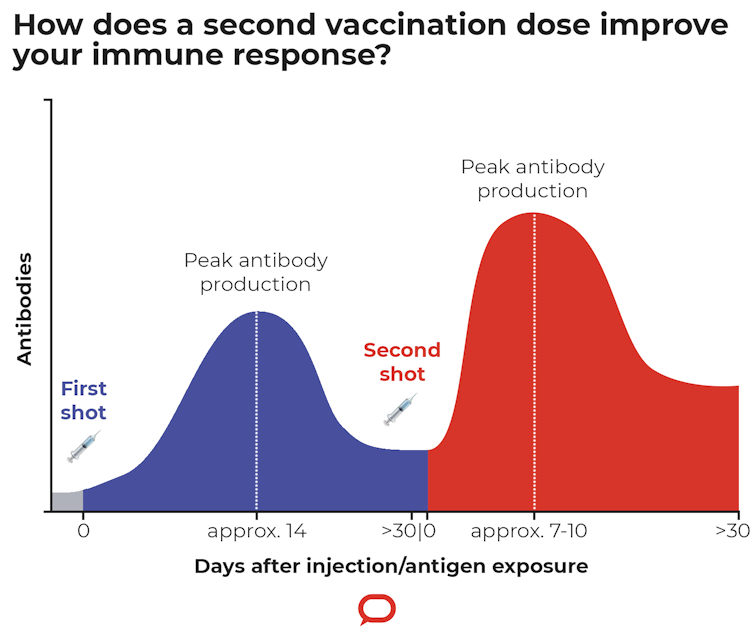
The Conversation (adapted from Vaccine Immunology, Plotkin’s Vaccines [Seventh Edition] 2018), CC BY-ND

What does COVID look like after being vaccinated?

The PCR tests we use to detect SARS-CoV-2, the virus that causes COVID-19, are very sensitive and can detect a positive case even if you have low levels of the virus in your system. This means a person can test positive for SARS-CoV-2 but still not have symptoms of COVID-19.

Of those vaccinated people who have reported symptoms, the vast majority report mild ones, with a shorter duration.
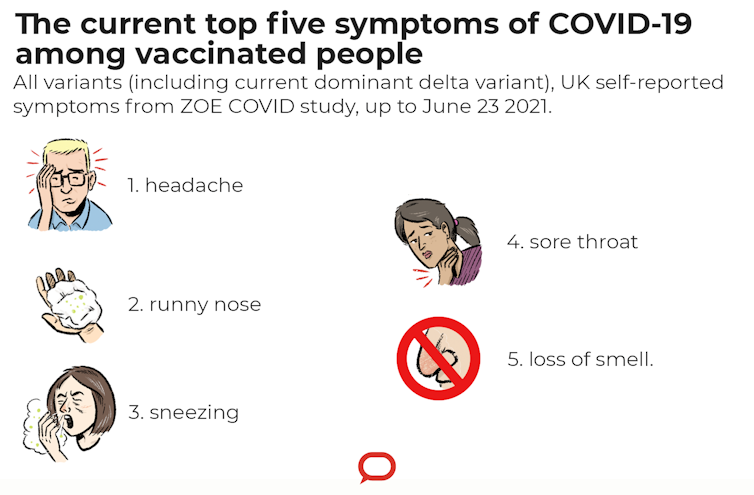

The Conversation/ZOE COVID Symptom Study app, CC BY-ND

There is always a chance a vaccinated person could pass the virus onto a non-vaccinated person without having symptoms themselves.

But vaccinated people who develop COVID-19 will likely have a lower viral load than unvaccinated people, meaning they’re less likely to spread the virus.

One study estimated those who were vaccinated with either Pfizer or AstraZeneca were 50% less likely to pass it on to an unvaccinated household contact than someone who wasn’t vaccinated. This transmission will likely reduce again if both household members are vaccinated.

But if you’re not vaccinated and contract COVID-19, you’re much more likely to spread the virus.

What about future variants?

So far, the preliminary data (some of which is ongoing and/or yet to be peer reviewed) shows our current vaccines are effective at protecting against circulating variants.

But as the virus mutates, there is increasing chance of viral escape. This means there is a greater chance the virus will develop mutations that make it fitter against, or more easily able to evade, vaccinations.

Scientist are closely monitoring to ensure our current and/or future vaccines are effective against the circulating strains.

To help the fight against COVID-19 the best thing we can do is minimise the spread of the virus. This means get vaccinated when you can, ensure you maintain social distancing when required and get tested if you have any symptoms.


Lara Herrero, Research Leader in Virology and Infectious Disease, Griffith University

This article is republished from The Conversation under a Creative Commons license. Read the original article.


Tags: SB001
DMCA.com Protection Status

SUBSCRIBE to our NEWSLETTER

[mc4wp_form id=”2384248″]

Don't Miss

Lyca Mobile Australia’s Customer-First Overhaul Pays Off with Finder Award Win

by Fazila Olla-Logday
2 February 2026
Lyca Mobile Australia's Customer-First Overhaul Pays Off with Finder Award Win
Technology

Lyca Mobile Australia’s customer-first overhaul has earned a Finder Award, recognising its improved value, service, and stronger focus on Australian...

Read moreDetails

From Driveway to Dream Court: The Rise of High-Performance Hoops at Home in 2026

by Fazila Olla-Logday
20 January 2026
The Rise of High-Performance Hoops at Home in 2026
Sport

High-performance home basketball hoops are gaining momentum in 2026, as more homeowners invest in durable, professional-grade systems that combine advanced...

Read moreDetails

Brandon Willington: The Marketing Entrepreneur Turning Heads Across Australia

by Pauline Torongo
8 January 2026
Brandon Willington: The Marketing Entrepreneur turning heads across Australia
Business & Finance

Brandon Willington, founder of “Where U?” is changing the narrative for Australian businesses tired of inconsistent leads and empty promises.

Read moreDetails

How Turnkey Building Group Is Restoring Trust In An Industry Known For Customer Disappointment

by Fazila Olla-Logday
17 December 2025
How Turnkey Building Group Is Restoring Trust In An Industry Known For Customer Disappointment
Business & Finance

Turnkey Building Group is changing the narrative in an industry often associated with missed deadlines and broken promises. By prioritizing...

Read moreDetails

Risk Awareness for International Travellers – What Australians Should Know Before Entering Multi-State Regions

by Fazila Olla-Logday
10 December 2025
Schengen
Travel

This guide helps Australian travellers understand cross-border requirements, assess political and environmental risks, manage health and safety considerations, and prepare...

Read moreDetails

The evolution of Aesthetic Surgery through the lens of Dr Kourosh Tavakoli

by Pauline Torongo
4 December 2025
The evolution of Aesthetic Surgery through the lens of Dr. Kourosh Tavakoli
Health & Wellness

As global interest in Australian cosmetic surgery continues to grow, the combination of regulation, research and emerging digital tools is...

Read moreDetails

Ryan: Building real freedom through e-commerce

by Pauline Torongo
27 November 2025
Ryan: Building real freedom through e-commerce
Business & Finance

Ryan’s greatest achievement isn’t any single business or revenue milestone — it’s the ecosystem he’s built through the Change community.

Read moreDetails
Load More

Copyright © Blue Sky Publications Ltd. All Rights Reserved.
australiantimes.co.uk is a division of Blue Sky Publications Ltd. Reproduction without permission prohibited. DMCA.com Protection Status

  • About us
  • Write for Us
  • Advertise
  • Contact us
  • T&Cs, Privacy and GDPR
No Result
View All Result
  • News
    • Weather
    • Sport
    • Technology
    • Business & Finance
      • Currency Zone
    • Lotto Results
      • The Lott
  • Lifestyle
    • Entertainment
    • Horoscopes
    • Health & Wellness
    • Recipes
  • Travel
  • Expat Life
  • Move to Australia

Copyright © Blue Sky Publications Ltd. All Rights Reserved.
australiantimes.co.uk is a division of Blue Sky Publications Ltd. Reproduction without permission prohibited. DMCA.com Protection Status

No Result
View All Result
  • News
    • Weather
    • Sport
    • Technology
    • Business & Finance
      • Currency Zone
    • Lotto Results
      • The Lott
  • Lifestyle
    • Entertainment
    • Horoscopes
    • Health & Wellness
    • Recipes
  • Travel
  • Expat Life
  • Move to Australia

Copyright © Blue Sky Publications Ltd. All Rights Reserved.
australiantimes.co.uk is a division of Blue Sky Publications Ltd. Reproduction without permission prohibited. DMCA.com Protection Status





