

• Advertise
  • About us
  • Terms and Conditions
  • Contact us
Friday, December 5, 2025
Australian Times News
  • News
    • Weather
    • Sport
    • Technology
    • Business & Finance
      • Currency Zone
    • Lotto Results
      • The Lott
  • Lifestyle
    • Entertainment
    • Horoscopes
    • Health & Wellness
    • Recipes
  • Travel
  • Expat Life
  • Move to Australia
No Result
View All Result
  • News
    • Weather
    • Sport
    • Technology
    • Business & Finance
      • Currency Zone
    • Lotto Results
      • The Lott
  • Lifestyle
    • Entertainment
    • Horoscopes
    • Health & Wellness
    • Recipes
  • Travel
  • Expat Life
  • Move to Australia
No Result
View All Result
Australian Times News
No Result
View All Result
Home News

Year-on-year bleaching threatens Great Barrier Reef’s World Heritage status

ANALYSIS & OPINION: The extreme marine heatwave in 2016 killed two-thirds of the corals along a 700km stretch of the northern Great Barrier Reef, from Port Douglas to Papua New Guinea. It was a game-changer for the reef and for how we manage it.

The Conversation by The Conversation
16-03-2017 03:33
in News

By Terry Hughes, James Cook University; Barry Hart, Monash University, and Karen Hussey, The University of Queensland

The Great Barrier Reef has already been badly damaged by global warming during three extreme heatwaves, in 1998, 2002 and 2016. A new bleaching event is under way now. The Conversation

As shown in a study published in Nature today, climate change is not some distant future threat. It has already degraded large tracts of the Great Barrier Reef over the past two decades.

The extreme marine heatwave in 2016 killed two-thirds of the corals along a 700km stretch of the northern Great Barrier Reef, from Port Douglas to Papua New Guinea. It was a game-changer for the reef and for how we manage it.

Our study shows that we cannot climate-proof coral reefs by improving water quality or reducing fishing pressure. Reefs in clear water were damaged as much as muddy ones, and the hot water didn’t stop at the boundaries of no-fishing zones. There is nowhere to hide from global warming. The process of replacement of dead corals in the northern third of the reef will take at least 10-15 years for the fastest-growing species.

The Great Barrier Reef is internationally recognised as a World Heritage Area. In 2015 UNESCO, the world body with oversight of World Heritage Areas, considered listing the reef as a site “in danger” in light of declines in its health.

Australia’s response falling short

In response to concerns from UNESCO, Australia devised a plan, called the Reef 2050 Long-term Sustainability Plan. Its ultimate goal is to improve the “Outstanding Universal Value” of the reef: the attributes of the Great Barrier Reef that led to its inscription as a World Heritage Area in 1981.


AlsoRead...

Ryan: Building real freedom through e-commerce

Ryan: Building real freedom through e-commerce

27 November 2025
Design Australia Group: Redefining Drafting as the engine of housing growth

Design Australia Group: Redefining Drafting as the engine of housing growth

26 November 2025

We have written an independent analysis, delivered to UNESCO, which concludes that to date the implementation of the plan is far too slow and has not been adequately funded to prevent further degradation and loss of the reef’s values. A major shortcoming of the plan is that it virtually ignores the greatest current impact on the Great Barrier Reef: human-caused climate change.

The unprecedented loss of corals in 2016 has substantially diminished the condition of the World Heritage Area, reducing its biodiversity and aesthetic values. Key ecological processes are under threat, such as providing habitat, calcification (the formation of corals’ reef-building stony skeletons) and predation (creatures eating and being eaten by corals). Global warming means that Australia’s aim of ensuring the Great Barrier Reef’s values improve every decade between now and 2050 is no longer attainable for at least the next two decades.

What needs to change

Our report makes 27 recommendations for getting the Reef 2050 Plan back on track. The following are critical:

  • Address climate change and reduce emissions, both nationally and globally. The current lack of action on climate is a major policy failure for the Great Barrier Reef. Local action on water quality (the focus of the Reef 2050 Plan) does not prevent bleaching, or “buy time” for future action on emissions. Importantly, though, it does contribute to the recovery of coral reefs after major bleaching.
  • Reduce run-off of sediment, nutrients and pollutants from our towns and farms. To date the progress towards achieving the water quality targets and uptake of best management practice by farmers is very poor. Improving water quality can help recovery of corals, even if it doesn’t prevent mortality during extreme heatwaves.
  • Provide adequate funding for reaching net zero carbon emissions, for achieving the Reef 2050 Plan targets for improved water quality, and limiting other direct pressures on the reef.

At this stage, we do not recommend that the reef be listed as “in danger”. But if we see more die-backs of corals in the next few years, little if any action on emissions and inadequate progress on water quality, then an “in danger” listing in 2020, when UNESCO will reconsider the Great Barrier Reef’s status, seems inevitable.


This article was co-authored by Diane Tarte, co-director of Marine Ecosystem Policy Advisors Pty Ltd. She was a co-author of the independent report to UNESCO on the Great Barrier Reef.

By Terry Hughes, Distinguished Professor, James Cook University, James Cook University; Barry Hart, Emeritus Professor Water Science, Monash University, and Karen Hussey, Deputy Director, Global Change Institute, The University of Queensland

This article was originally published on The Conversation. Read the original article and disclosure statement.

______________________

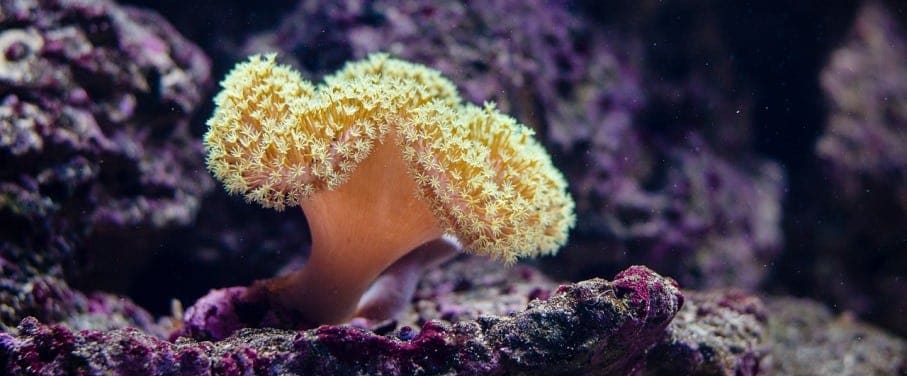
TOP IMAGE: Via Pixabay

Tags: AustraliaenvironmentGreat Barrier Reefscience
DMCA.com Protection Status

SUBSCRIBE to our NEWSLETTER

[mc4wp_form id=”2384248″]

Don't Miss

The evolution of Aesthetic Surgery through the lens of Dr Kourosh Tavakoli

by Pauline Torongo
4 December 2025
The evolution of Aesthetic Surgery through the lens of Dr. Kourosh Tavakoli
Health & Wellness

As global interest in Australian cosmetic surgery continues to grow, the combination of regulation, research and emerging digital tools is...

Read moreDetails

Ryan: Building real freedom through e-commerce

by Pauline Torongo
27 November 2025
Ryan: Building real freedom through e-commerce
Business & Finance

Ryan’s greatest achievement isn’t any single business or revenue milestone — it’s the ecosystem he’s built through the Change community.

Read moreDetails

Design Australia Group: Redefining Drafting as the engine of housing growth

by Pauline Torongo
26 November 2025
Design Australia Group: Redefining Drafting as the engine of housing growth
Business & Finance

Australia is under pressure to build homes faster, but design bottlenecks slow progress. Design Australia Group is fixing this by...

Read moreDetails

Louis Guy Detata builds Global Trading Empires through autonomous systems and disciplined leadership

by Pauline Torongo
25 November 2025
Louis Guy Detata builds Global Trading Empires through autonomous systems and disciplined leadership
Business & Finance

The path from investment banking to leading a global trading platform has taught Louis Detata that sustainable success requires more...

Read moreDetails

Burning Eucalyptus Wood: Tips, Advantages, Disadvantages & Alternatives

by Fazila Olla-Logday
20 November 2025
Image Supplied
Enviroment

Learn about burning eucalyptus wood for stoves and fireplaces. Discover benefits, drawbacks, harvesting tips, and better alternative firewood options for...

Read moreDetails

Everything Parents Need to Know About Baby Soft Play and Why It’s a Game Changer

by Fazila Olla-Logday
11 November 2025
Everything Parents Need to Know About Baby Soft Play
Health & Wellness

Baby soft play is a fun, safe, and educational way for little ones to explore and grow. Discover the benefits...

Read moreDetails

WOMAD Sets Up a New Camp in Wiltshire – Australian festival fans take note!

by Kris Griffiths
11 November 2025
Kumbia Boruka brought their reggae and dancehall flavour to the Taste the World Stage at WOMAD 2024 - Credit - Mike Massaro
Entertainment

With its 2026 edition moving to Neston Park in England, WOMAD offers Aussie music lovers a chance to reconnect with global...

Read moreDetails
Load More

Copyright © Blue Sky Publications Ltd. All Rights Reserved.
australiantimes.co.uk is a division of Blue Sky Publications Ltd. Reproduction without permission prohibited. DMCA.com Protection Status

  • About us
  • Write for Us
  • Advertise
  • Contact us
  • T&Cs, Privacy and GDPR
No Result
View All Result
  • News
    • Weather
    • Sport
    • Technology
    • Business & Finance
      • Currency Zone
    • Lotto Results
      • The Lott
  • Lifestyle
    • Entertainment
    • Horoscopes
    • Health & Wellness
    • Recipes
  • Travel
  • Expat Life
  • Move to Australia

Copyright © Blue Sky Publications Ltd. All Rights Reserved.
australiantimes.co.uk is a division of Blue Sky Publications Ltd. Reproduction without permission prohibited. DMCA.com Protection Status

No Result
View All Result
  • News
    • Weather
    • Sport
    • Technology
    • Business & Finance
      • Currency Zone
    • Lotto Results
      • The Lott
  • Lifestyle
    • Entertainment
    • Horoscopes
    • Health & Wellness
    • Recipes
  • Travel
  • Expat Life
  • Move to Australia

Copyright © Blue Sky Publications Ltd. All Rights Reserved.
australiantimes.co.uk is a division of Blue Sky Publications Ltd. Reproduction without permission prohibited. DMCA.com Protection Status






