

• Advertise
  • About us
  • Terms and Conditions
  • Contact us
Sunday, December 7, 2025
Australian Times News
  • News
    • Weather
    • Sport
    • Technology
    • Business & Finance
      • Currency Zone
    • Lotto Results
      • The Lott
  • Lifestyle
    • Entertainment
    • Horoscopes
    • Health & Wellness
    • Recipes
  • Travel
  • Expat Life
  • Move to Australia
No Result
View All Result
  • News
    • Weather
    • Sport
    • Technology
    • Business & Finance
      • Currency Zone
    • Lotto Results
      • The Lott
  • Lifestyle
    • Entertainment
    • Horoscopes
    • Health & Wellness
    • Recipes
  • Travel
  • Expat Life
  • Move to Australia
No Result
View All Result
Australian Times News
No Result
View All Result
Home News

Will the COVID pandemic cause London’s population to decline?

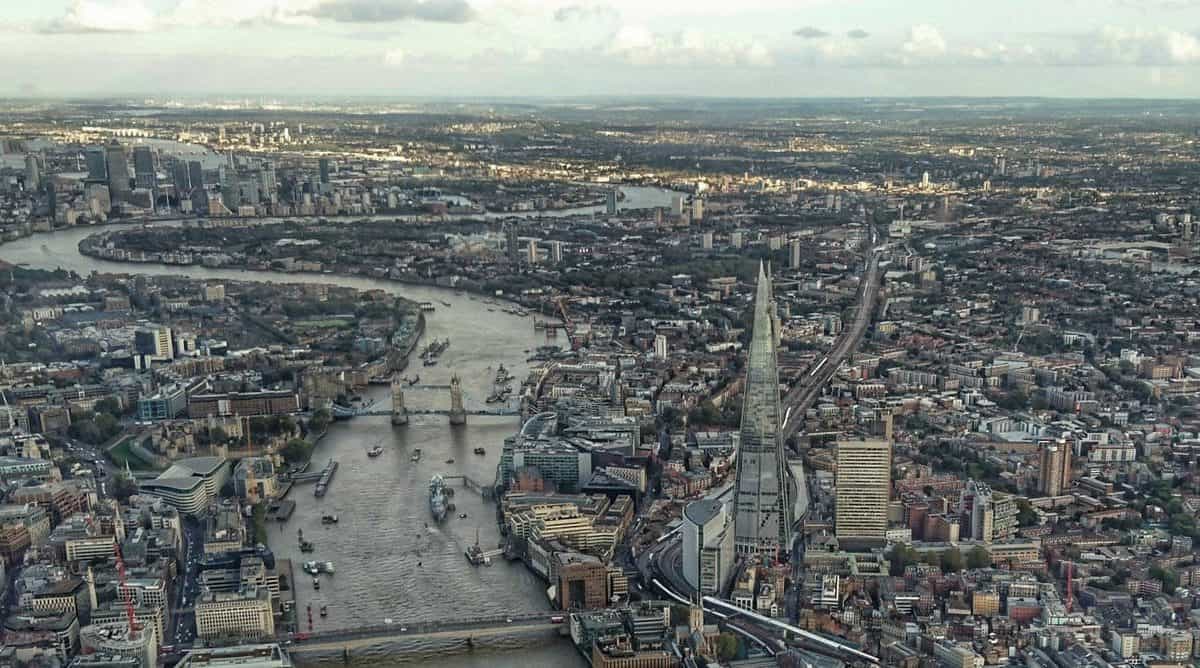
A recent report by audit and consultancy firm PwC predicts that the impact of COVID-19 will lead London to see its first population decline in decades. Is this set to be a blip, quickly reversed – or a turning point which will mark the start of long-term population decline in the city?

The Conversation by The Conversation
11-02-2021 06:17
in News
heliray/Shutterstock

heliray/Shutterstock

Humphrey Southall, University of Portsmouth

The purpose of a city is to allow people to live and work close together, so social distancing has the potential to threaten cities’ very existence.

A recent report by audit and consultancy firm PwC predicts that the impact of COVID-19 will lead London to see its first population decline in decades. Is this set to be a blip, quickly reversed – or a turning point which will mark the start of long-term population decline in the city?

Steady population change is normally easy to forecast by projecting forward existing trends, but identifying turning points is much harder. However, we can gain insight by looking at past turning points in London’s population.
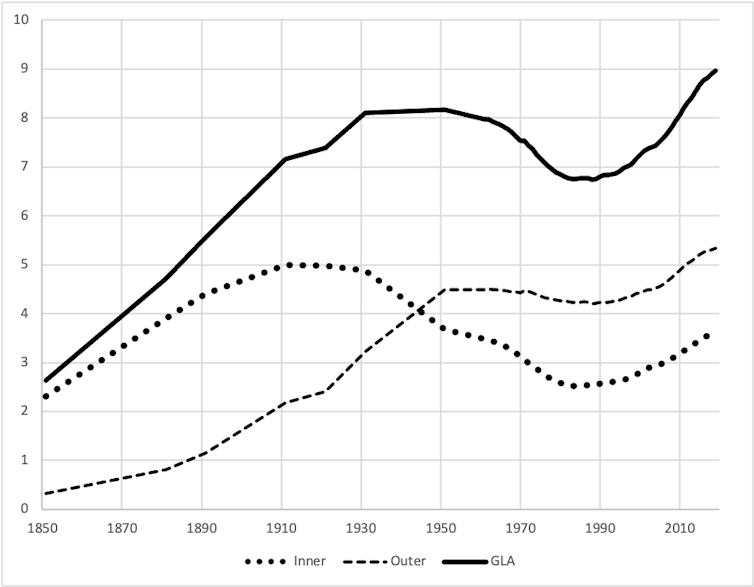
Time series graph showing total population for Greater London, and its sub-divisions into inner and outer London
Greater London population 1851-2019. 1961-2019: Office of National Statistics mid-year population estimates; 1851-1951: calculations by author from GB Historical GIS, Author provided

The graph shows that from 1850 the population of Greater London grew steadily, before declining between 1951 and 1988. This was then followed by new expansion.

By 1900, inner London was almost completely built up, and improved public transport let people live further from work, so expansion moved outward. The population decline in the city after 1950 was the product of government policy. The green belt limited London’s sprawl, and bombed inner city areas were rebuilt at lower densities. Inner city residents moved to new and expanded towns built beyond the green belt.
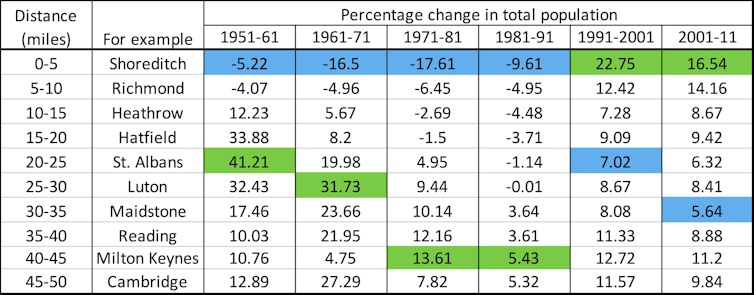
Table showing percentage change in total population of local government wards in each ten-year period 1951 to 2011
Inter censal population change 1951-2011, by distance from central London. Calculations by author from 1961 census report and later Census Small Area Statistics., Author provided

This table shows the impact of these policies. Together with colleagues, I used detailed statistics from every census between 1951 and 2011 to estimate the populations of each local government ward, as defined in 2011. We then grouped the wards into rings by their distance from the centre of London, and calculated rates of change for each decade. The ring with fastest growth is shown in green, and the most rapid decline (or slowest growth) in blue.


AlsoRead...

Ryan: Building real freedom through e-commerce

Ryan: Building real freedom through e-commerce

27 November 2025
Design Australia Group: Redefining Drafting as the engine of housing growth

Design Australia Group: Redefining Drafting as the engine of housing growth

26 November 2025

In all decades from 1951 to 1991, the innermost ring, within five miles of Nelson’s Column, shrank fastest. The band between 15 and 20 miles out roughly corresponds to the green belt, and in the 1950s the next ring out, containing the original new towns, grew fastest. After this, the fastest growth took place far outside any definition of Greater London, but was still based on workers commuting into London or otherwise serving London’s economy.

The second turning point is emphatic: from 1991, the innermost ring went directly from decline to being the fastest growing part of the city. There are a number of reasons for this. Firstly, 1980s dock closures and manufacturing decline freed up large areas for new housing, often apartment complexes clustered around transport links.

Secondly, the deregulation of London’s financial markets in 1986 – known as the “Big Bang” – boosted London’s financial services, while pre-internet computer networks allowed London to dominate financial markets globally. This resulted in longer working hours, discouraging long commutes from outside the city.

More broadly, increased population density in inner London was a result of the rise of the “creative city”. Cultural industries are hard to identify in employment statistics, but London is clearly a dominant world city not just in finance but in sectors such as fashion and video production.

These sectors do not need large or specialised factories, but do need easy interaction between many small firms, and a flexible, often freelance workforce – so they gravitated not to science parks but to old workshops in central districts like Soho and Shoreditch.

The impact of lockdown

The immediate consequences of the pandemic are clear: after a year confined to their homes, city dwellers are looking for more space. Upmarket estate agent Knight Frank has described 2020 as “dominated by the escape to the country trend”. A particularly high proportion of London’s workers normally sit at computer screens, allowing for a rapid shift to home working. If any London residents have second homes in the country – something that does not show up in existing census data – they may have been spending more time there.

These trends are real, and maybe permanent. However, the counter-argument is that once social distancing ends, the gravitational pull of the city will reassert itself. Inner London’s post-1990 resurgence was driven by creative sectors that now appear well suited to home working, so we need to understand what more they need from a location than a computer and a network connection.
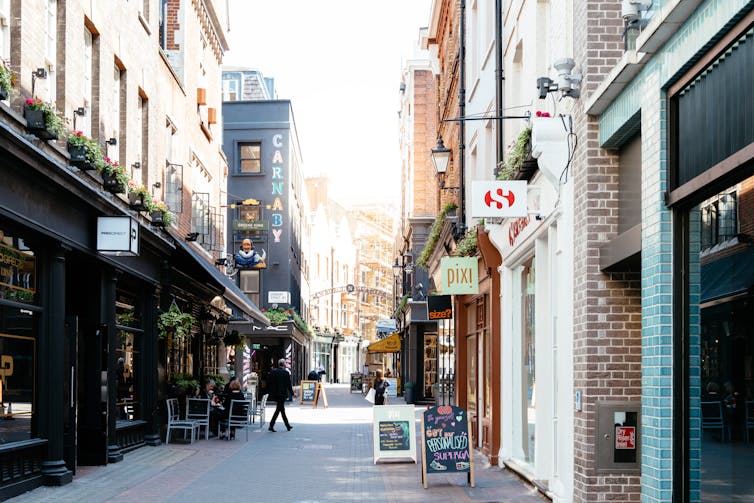
View of street and shops
Creative industries have flocked to locations like Soho in central London. JJFarq/Shutterstock

London’s gravitational pull is partly lifestyle. A young and educated workforce prefers nightclubs and theatres to large gardens, so long as they are not closed. The ease of international travel from London – before quarantine – is also a draw. But for businesses, too, the higher costs of operating from a city are accompanied by real economic benefits.

Creativity is far harder in isolation: many of us are learning that we can write, compose or even perform from home, but this is not always enjoyable or inspiring. Sustaining creative industries needs cities. In financial services, traders can beat the financial markets only if they know something the other guy does not, so need access to to less formal information circuits – to gossip.

The networks that led to London’s dominance of financial services from the early 1990s promoted a division of labour around the globe, with routine back office work moving from towns like Worthing to locations such as India. However, the dealmakers, and elite workforces in many other globalised sectors, did not disperse – despite inner London’s higher costs.

As long as the pandemic is brought to an end, then, it is unlikely to lead to a turning point in London’s population. While the internet allows for remote working, the past 30 years has shown that the value of working in close proximity with others can outweigh this benefit.

Humphrey Southall, Professor of Historical Geography, University of Portsmouth

This article is republished from The Conversation under a Creative Commons license. Read the original article.


Tags: SB001
DMCA.com Protection Status

SUBSCRIBE to our NEWSLETTER

[mc4wp_form id=”2384248″]

Don't Miss

The evolution of Aesthetic Surgery through the lens of Dr Kourosh Tavakoli

by Pauline Torongo
4 December 2025
The evolution of Aesthetic Surgery through the lens of Dr. Kourosh Tavakoli
Health & Wellness

As global interest in Australian cosmetic surgery continues to grow, the combination of regulation, research and emerging digital tools is...

Read moreDetails

Ryan: Building real freedom through e-commerce

by Pauline Torongo
27 November 2025
Ryan: Building real freedom through e-commerce
Business & Finance

Ryan’s greatest achievement isn’t any single business or revenue milestone — it’s the ecosystem he’s built through the Change community.

Read moreDetails

Design Australia Group: Redefining Drafting as the engine of housing growth

by Pauline Torongo
26 November 2025
Design Australia Group: Redefining Drafting as the engine of housing growth
Business & Finance

Australia is under pressure to build homes faster, but design bottlenecks slow progress. Design Australia Group is fixing this by...

Read moreDetails

Louis Guy Detata builds Global Trading Empires through autonomous systems and disciplined leadership

by Pauline Torongo
25 November 2025
Louis Guy Detata builds Global Trading Empires through autonomous systems and disciplined leadership
Business & Finance

The path from investment banking to leading a global trading platform has taught Louis Detata that sustainable success requires more...

Read moreDetails

Burning Eucalyptus Wood: Tips, Advantages, Disadvantages & Alternatives

by Fazila Olla-Logday
20 November 2025
Image Supplied
Enviroment

Learn about burning eucalyptus wood for stoves and fireplaces. Discover benefits, drawbacks, harvesting tips, and better alternative firewood options for...

Read moreDetails

Everything Parents Need to Know About Baby Soft Play and Why It’s a Game Changer

by Fazila Olla-Logday
11 November 2025
Everything Parents Need to Know About Baby Soft Play
Health & Wellness

Baby soft play is a fun, safe, and educational way for little ones to explore and grow. Discover the benefits...

Read moreDetails

WOMAD Sets Up a New Camp in Wiltshire – Australian festival fans take note!

by Kris Griffiths
11 November 2025
Kumbia Boruka brought their reggae and dancehall flavour to the Taste the World Stage at WOMAD 2024 - Credit - Mike Massaro
Entertainment

With its 2026 edition moving to Neston Park in England, WOMAD offers Aussie music lovers a chance to reconnect with global...

Read moreDetails
Load More

Copyright © Blue Sky Publications Ltd. All Rights Reserved.
australiantimes.co.uk is a division of Blue Sky Publications Ltd. Reproduction without permission prohibited. DMCA.com Protection Status

  • About us
  • Write for Us
  • Advertise
  • Contact us
  • T&Cs, Privacy and GDPR
No Result
View All Result
  • News
    • Weather
    • Sport
    • Technology
    • Business & Finance
      • Currency Zone
    • Lotto Results
      • The Lott
  • Lifestyle
    • Entertainment
    • Horoscopes
    • Health & Wellness
    • Recipes
  • Travel
  • Expat Life
  • Move to Australia

Copyright © Blue Sky Publications Ltd. All Rights Reserved.
australiantimes.co.uk is a division of Blue Sky Publications Ltd. Reproduction without permission prohibited. DMCA.com Protection Status

No Result
View All Result
  • News
    • Weather
    • Sport
    • Technology
    • Business & Finance
      • Currency Zone
    • Lotto Results
      • The Lott
  • Lifestyle
    • Entertainment
    • Horoscopes
    • Health & Wellness
    • Recipes
  • Travel
  • Expat Life
  • Move to Australia

Copyright © Blue Sky Publications Ltd. All Rights Reserved.
australiantimes.co.uk is a division of Blue Sky Publications Ltd. Reproduction without permission prohibited. DMCA.com Protection Status





