

• Advertise
  • About us
  • Terms and Conditions
  • Contact us
Saturday, December 6, 2025
Australian Times News
  • News
    • Weather
    • Sport
    • Technology
    • Business & Finance
      • Currency Zone
    • Lotto Results
      • The Lott
  • Lifestyle
    • Entertainment
    • Horoscopes
    • Health & Wellness
    • Recipes
  • Travel
  • Expat Life
  • Move to Australia
No Result
View All Result
  • News
    • Weather
    • Sport
    • Technology
    • Business & Finance
      • Currency Zone
    • Lotto Results
      • The Lott
  • Lifestyle
    • Entertainment
    • Horoscopes
    • Health & Wellness
    • Recipes
  • Travel
  • Expat Life
  • Move to Australia
No Result
View All Result
Australian Times News
No Result
View All Result
Home News

Why did a military superpower fail in Afghanistan?

U.S. military intervention in Afghanistan, and in Iraq, was initially justified by a need to dismantle immediate and serious national security threats: al-Qaida and fears of weapons of mass destruction.

The Conversation by The Conversation
19-08-2021 22:35
in News
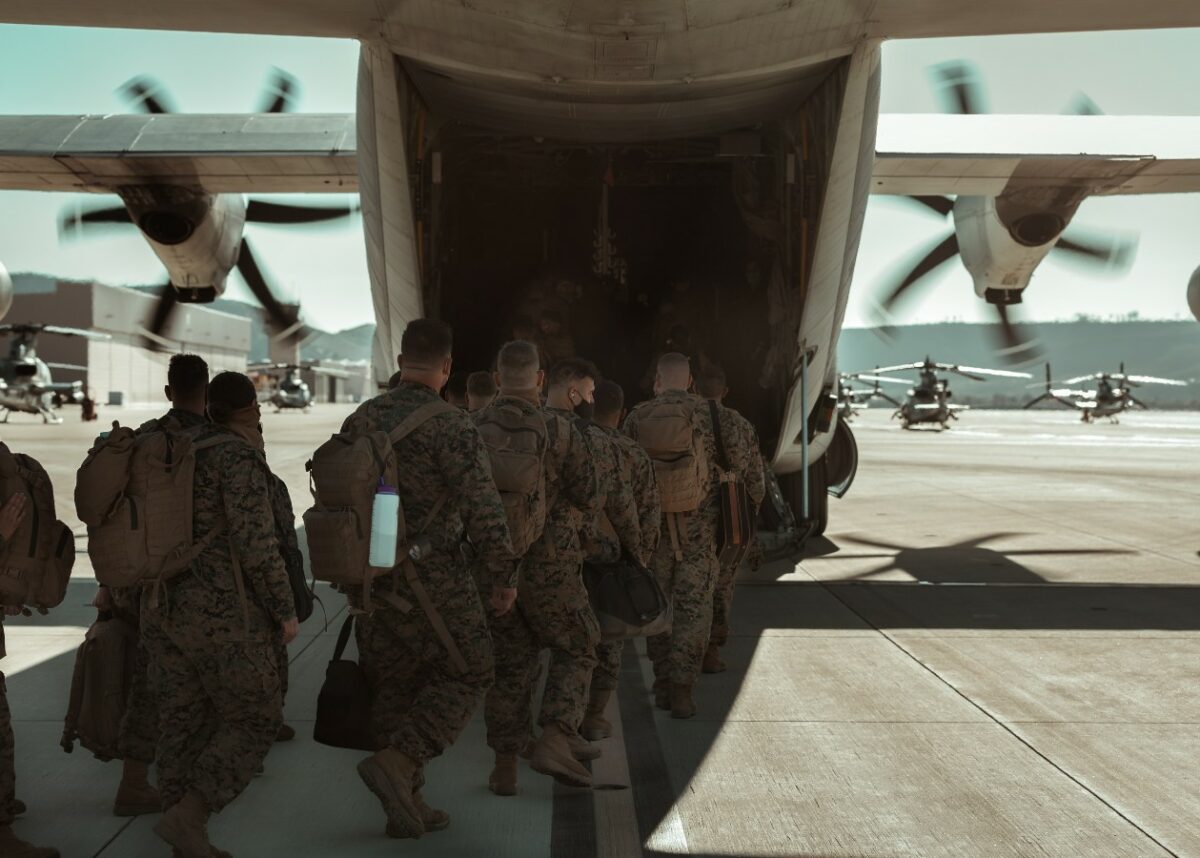
Photo by Joel Rivera-Camacho on Unsplash

Photo by Joel Rivera-Camacho on Unsplash

Arie Perliger, University of Massachusetts Lowell

The speed and efficiency with which Taliban forces were able to complete the occupation of most of Afghanistan, as well as the quick collapse of the Afghan government, has led to criticism of President Joe Biden’s decision to end U.S. military presence in Afghanistan and of the withdrawal’s logistics.

But the criticisms, while valid, may be beside the point. I have studied conflicts like those in Afghanistan for more than 20 years. My experience has taught me that there are more fundamental problems with the United States’ strategy in the 20-year war, of which the current chaos is only the latest manifestation. They stem from an approach in which military seizures of territory are intended to fight international extremist movements and ideologies, in Afghanistan and elsewhere.

Nation-building is not a military strategy

U.S. military intervention in Afghanistan, and in Iraq, was initially justified by a need to dismantle immediate and serious national security threats: al-Qaida and fears of weapons of mass destruction.

However, those short-term goals were quickly replaced by a longer-term goal of preventing future threats from those countries, such as new extremist groups. That led the U.S., with other nations, to occupy both nations and attempt to provide stability and security so that the people of those countries could set up their own governments.

It may be attractive to think that promoting democracy in occupied foreign countries is a morally justified and effective path for restoring security and stability. But political reform is more successful when it originates from the local societies and political cultures. In Tunisia, for example, local political movements were able to transform their government, a success due in part to a lack of foreign involvement.

In Afghanistan, international groups like the U.N., alongside nonprofits and independent aid agencies, spent millions of dollars and untold hours of work trying to build democracy, write a constitution, create a bill of rights and otherwise create a new political society.


AlsoRead...

Ryan: Building real freedom through e-commerce

Ryan: Building real freedom through e-commerce

27 November 2025
Design Australia Group: Redefining Drafting as the engine of housing growth

Design Australia Group: Redefining Drafting as the engine of housing growth

26 November 2025

But this external approach, based on military occupation, was “doomed to fail,” according to official assessments published in 2009 by the Center for Complex Operations at the U.S. military’s National Defense University. That assessment said “nation-building in Iraq and Afghanistan has been a debacle” and recommended the military resume its historic focus on preparing for war.

Military organizations are not equipped or trained to engage effectively in civilian-centered missions such as fostering national identity, forming political institutions or instilling democratic practices of accountability. Promoting stability is different from promoting democracy, and stability can in fact be present even under very undemocratic governments.

The history of military interventions in places such as the West Bank and Gaza, Lebanon, Somalia and Iraq shows that when local leaders are dependent on foreign military forces to maintain power, it’s hard to build popular legitimacy, govern effectively and build a shared national identity.
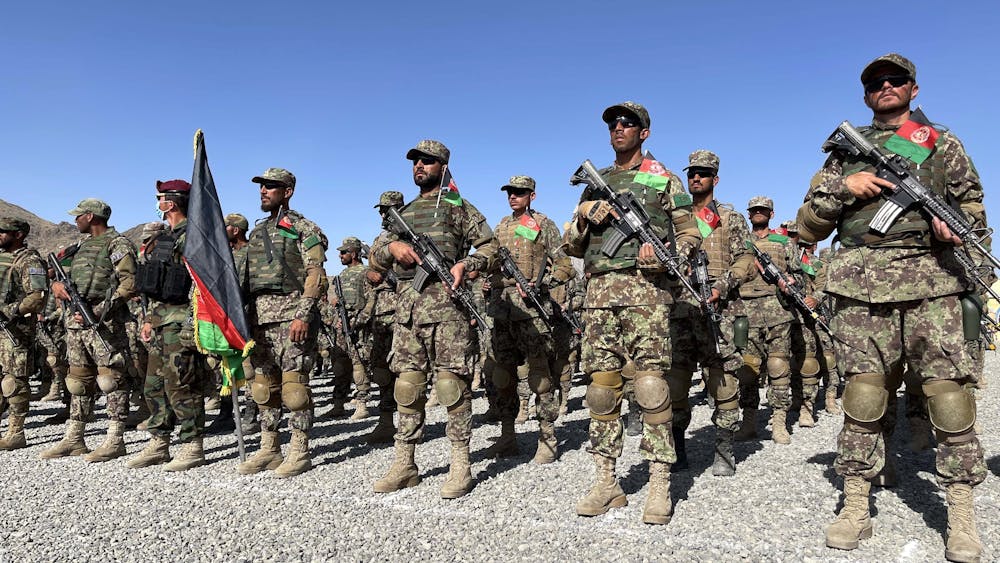
A group of people in camouflage uniforms carry rifles while standing in a formation behind the Afghan flag.
As recently as May 2021, Afghan military personnel were completing specialized combat training. Haroon Sabawoon/Anadolu Agency via Getty Images

The misuse of military power in counterterrorism

Boots-on-the-ground military forces aren’t good at nation-building or democracy-fostering. Nor are they good at information warfare – fighting effectively in the battlefield of ideas.

Terrorism, at its essence, is a form of symbolic but deadly violence used to communicate a political message. The conflict is not just over who controls which pieces of land, but rather whose narrative is most influential.

In Afghanistan, decades of Western military superiority failed to uproot the Taliban’s ideological narrative regarding the corrupted nature of Afghan leaders and their allies and their betrayal of Islamic traditions and practices. Nor could that superiority strengthen a unified national identity that might at least partially erode tribal attachments, which were exploited so successfully by the Taliban.

And even when their forces were driven off targeted territory, both the Islamic State group and al-Qaida developed new bases and strongholds far from the fighting. They did this not exclusively by military force, but also through the power of their ideas and by providing an alluring alternative ideological narrative.

The correct conclusions from Afghanistan

After 20 years, the U.S. presence in Afghanistan has failed to establish any coherent and sustainable political structure with popular legitimacy. Based on that experience, and the experiences in other countries in other circumstances, there is no reason to think that a continued troop presence would change that.

Locally based political movements that seek democracy and civil liberties – in Afghanistan or elsewhere – can benefit from U.S. support, but not from military force. Forcing societies to embrace democratic practices can lead to political instability, conflict and a decline in citizens’ safety.

In my view, the clear conclusion from all the evidence is that military intervention should be focused on military objectives, and should not diverge into political or social engineering.

[_Get The Conversation’s most important politics headlines, in our Politics Weekly newsletter.]

Arie Perliger, Director of Security Studies and Professor of Criminology and Justice Studies, University of Massachusetts Lowell

This article is republished from The Conversation under a Creative Commons license. Read the original article.


Tags: SB001
DMCA.com Protection Status

SUBSCRIBE to our NEWSLETTER

[mc4wp_form id=”2384248″]

Don't Miss

The evolution of Aesthetic Surgery through the lens of Dr Kourosh Tavakoli

by Pauline Torongo
4 December 2025
The evolution of Aesthetic Surgery through the lens of Dr. Kourosh Tavakoli
Health & Wellness

As global interest in Australian cosmetic surgery continues to grow, the combination of regulation, research and emerging digital tools is...

Read moreDetails

Ryan: Building real freedom through e-commerce

by Pauline Torongo
27 November 2025
Ryan: Building real freedom through e-commerce
Business & Finance

Ryan’s greatest achievement isn’t any single business or revenue milestone — it’s the ecosystem he’s built through the Change community.

Read moreDetails

Design Australia Group: Redefining Drafting as the engine of housing growth

by Pauline Torongo
26 November 2025
Design Australia Group: Redefining Drafting as the engine of housing growth
Business & Finance

Australia is under pressure to build homes faster, but design bottlenecks slow progress. Design Australia Group is fixing this by...

Read moreDetails

Louis Guy Detata builds Global Trading Empires through autonomous systems and disciplined leadership

by Pauline Torongo
25 November 2025
Louis Guy Detata builds Global Trading Empires through autonomous systems and disciplined leadership
Business & Finance

The path from investment banking to leading a global trading platform has taught Louis Detata that sustainable success requires more...

Read moreDetails

Burning Eucalyptus Wood: Tips, Advantages, Disadvantages & Alternatives

by Fazila Olla-Logday
20 November 2025
Image Supplied
Enviroment

Learn about burning eucalyptus wood for stoves and fireplaces. Discover benefits, drawbacks, harvesting tips, and better alternative firewood options for...

Read moreDetails

Everything Parents Need to Know About Baby Soft Play and Why It’s a Game Changer

by Fazila Olla-Logday
11 November 2025
Everything Parents Need to Know About Baby Soft Play
Health & Wellness

Baby soft play is a fun, safe, and educational way for little ones to explore and grow. Discover the benefits...

Read moreDetails

WOMAD Sets Up a New Camp in Wiltshire – Australian festival fans take note!

by Kris Griffiths
11 November 2025
Kumbia Boruka brought their reggae and dancehall flavour to the Taste the World Stage at WOMAD 2024 - Credit - Mike Massaro
Entertainment

With its 2026 edition moving to Neston Park in England, WOMAD offers Aussie music lovers a chance to reconnect with global...

Read moreDetails
Load More

Copyright © Blue Sky Publications Ltd. All Rights Reserved.
australiantimes.co.uk is a division of Blue Sky Publications Ltd. Reproduction without permission prohibited. DMCA.com Protection Status

  • About us
  • Write for Us
  • Advertise
  • Contact us
  • T&Cs, Privacy and GDPR
No Result
View All Result
  • News
    • Weather
    • Sport
    • Technology
    • Business & Finance
      • Currency Zone
    • Lotto Results
      • The Lott
  • Lifestyle
    • Entertainment
    • Horoscopes
    • Health & Wellness
    • Recipes
  • Travel
  • Expat Life
  • Move to Australia

Copyright © Blue Sky Publications Ltd. All Rights Reserved.
australiantimes.co.uk is a division of Blue Sky Publications Ltd. Reproduction without permission prohibited. DMCA.com Protection Status

No Result
View All Result
  • News
    • Weather
    • Sport
    • Technology
    • Business & Finance
      • Currency Zone
    • Lotto Results
      • The Lott
  • Lifestyle
    • Entertainment
    • Horoscopes
    • Health & Wellness
    • Recipes
  • Travel
  • Expat Life
  • Move to Australia

Copyright © Blue Sky Publications Ltd. All Rights Reserved.
australiantimes.co.uk is a division of Blue Sky Publications Ltd. Reproduction without permission prohibited. DMCA.com Protection Status





