

• Advertise
  • About us
  • Terms and Conditions
  • Contact us
Monday, March 23, 2026
Australian Times News
  • News
    • Weather
    • Sport
    • Technology
    • Business & Finance
      • Currency Zone
    • Lotto Results
      • The Lott
  • Lifestyle
    • Entertainment
    • Horoscopes
    • Health & Wellness
    • Recipes
  • Travel
  • Expat Life
  • Move to Australia
No Result
View All Result
  • News
    • Weather
    • Sport
    • Technology
    • Business & Finance
      • Currency Zone
    • Lotto Results
      • The Lott
  • Lifestyle
    • Entertainment
    • Horoscopes
    • Health & Wellness
    • Recipes
  • Travel
  • Expat Life
  • Move to Australia
No Result
View All Result
Australian Times News
No Result
View All Result
Home News

When COVID patients are intubated in ICU, the trauma can stay with them long after this breathing emergency

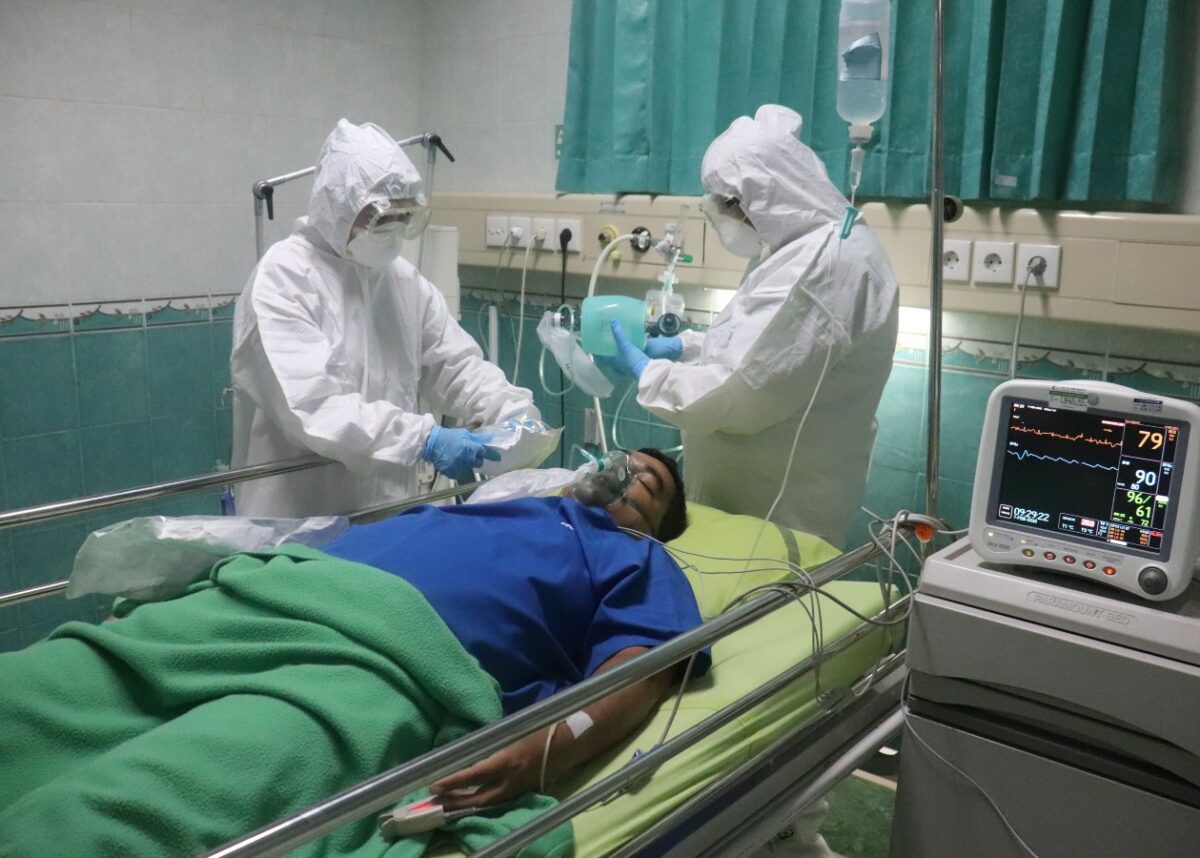
The current wave of COVID cases is leading to more hospital and intensive care (ICU) admissions. Frontline health workers and experts use the term “intubation” for the extra breathing support some patients need in an emergency.

The Conversation by The Conversation
18-09-2021 22:23
in News
Photo by Mufid Majnun on Unsplash

Photo by Mufid Majnun on Unsplash

Deb Massey, Southern Cross University

The current wave of COVID cases is leading to more hospital and intensive care (ICU) admissions. Frontline health workers and experts use the term “intubation” for the extra breathing support some patients need in an emergency.

But many people don’t know what this procedure involves and the trauma it can cause.

Patients with COVID-19 who deteriorate and need additional support with their breathing require intubating and ventilating. That means a tube is inserted and a ventilation machine delivers oxygen straight to the lungs.

Inserting the tube

Intubating a patient is a highly skilled procedure and involves inserting a tube through the patient’s mouth and into their airway:

  1. patients are usually sedated, allowing their mouth and airway to relax. They often lie on their back, while the health-care professional stands near the top of the bed, facing the patient’s feet
  2. the patient’s mouth is gently opened. An instrument called a laryngoscope is used to flatten the tongue and illuminate the throat. The tube is steered into the throat and advanced into the airway, pushing apart the vocal chords
  3. a small balloon around the tube is inflated to keep the tube in place and prevent air from escaping. Once this balloon is inflated, the tube must be tied or taped in place at the mouth
  4. successful placement is checked by listening to the lungs with a stethoscope and confirmed via a chest x-ray.
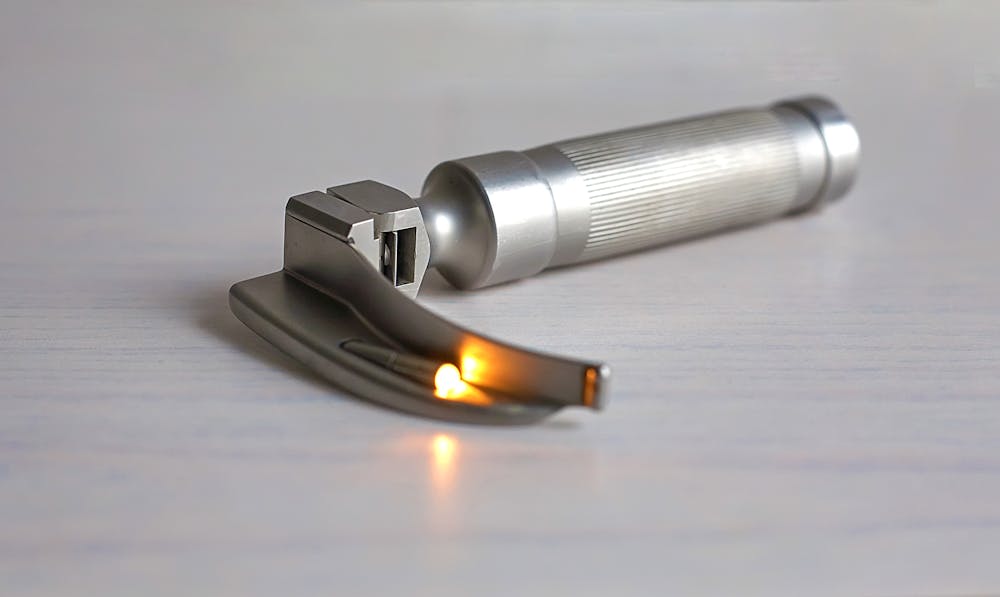
surgical instrument
A laryngoscope is used to guide a tube into the airway. Shutterstock


Can breathe, can’t speak or swallow

While intubated patients are attached to a ventilator and their breathing is supported, they are unable to talk or swallow food, drink or their saliva.

They often remain sedated to enable them to tolerate the tube. They can’t attend to any of their own needs and disconnection from the ventilator can be catastrophic.


AlsoRead...

Design Without Compromise: Where Gutter Protection Meets Modern Architecture

Design Without Compromise: Where Gutter Protection Meets Modern Architecture

20 March 2026
The Rise of This Lead Generation Workshop Across Australia

The Rise of This Lead Generation Workshop Across Australia

13 February 2026

For this reason any patient who is intubated and ventilated is cared for in an intensive care unit with a registered nurse constantly by their bedside.

American lawyer and editor David Latt recalled his experience of being intubated and ventilated following a diagnosis of COVID-19, saying:

When they were giving me anesthesia to put me to sleep so they could put a tube in my mouth that would enable me to breathe, I just remember thinking, ‘I might die.’ Sometimes in the abstract, you think, ‘If it’s my time, it’s my time.’ But when I was on that table […] I just thought, ‘No, I don’t want to go.’

Latt feared he would never see his two-year-old son or his partner again.

Taking the tube out

The length of time a COVID patient requires intubation and ventilation varies and depends on the reasons for it and the response to treatment. However, there are reports of patients being intubated and ventilated for over 100 days.

Once a patient’s respiration improves and they no longer require breathing support, the tube is removed in a procedure called “extubation”. Like intubation, extubation requires highly skilled health-care workers to manage the process. It involves:

  1. a spontaneous breathing trial, which assesses the patient’s capacity to breathe unassisted before extubation to decrease the risk of respiratory failure
  2. an assessment by the treating doctor, intensive care nurse, speech pathologist or physiotherapist of the patient’s ability to cough (so they can effectively clear their own throat and prevent substances entering the lungs)
  3. treatment from a physiotherapist is usually required before and after extubation if the patient has had mechanical ventilation for more than 48 hours. This is to ease the process of weaning the patient off the ventilator and help them learn to breathe independently again.

Once extubated, patients remain in ICU and are closely monitored to ensure they can safely maintain a clear and effective airway. Once they are able to do this and are stable enough to transfer to the ward they are discharged from the ICU.

Intubation, ICU and trauma

Patients with COVID-19 who require intubation and ventilation have witnessed a number of stressful events in the ICU, such as emergency resuscitation procedures and deaths. This may increase the risk of post-traumatic stress disorder, anxiety, and depression.

Although we don’t have definitive long-term data, patients who have been critically ill from COVID often have a long and difficult journey of recovery. They will likely remain dependant on health care services for some time.

Many patients who have been intubated and ventilated recall it as being one of the worst experiences of their lives. Clearly it is something we should try to avoid for as many people as possible.

There are currently 138 patients patients intubated and ventilated in ICUs across Australia. That’s 138 patients who cannot communicate with their loved ones, who are scared, frightened and vulnerable.

Most of these patients have not been vaccinated. The most important thing we can do to reduce the risk of being intubated and ventilated as a result of COVID-19 is get vaccinated.


Deb Massey, Associate Professor, Faculty of Health, School of Nursing, Southern Cross University

This article is republished from The Conversation under a Creative Commons license. Read the original article.


Tags: SB001
DMCA.com Protection Status

SUBSCRIBE to our NEWSLETTER

[mc4wp_form id=”2384248″]

Don't Miss

Design Without Compromise: Where Gutter Protection Meets Modern Architecture

by Fazila Olla-Logday
20 March 2026
Design Without Compromise: Where Gutter Protection Meets Modern Architecture
Business & Finance

Design without compromise by integrating gutter protection seamlessly into modern architecture. Discover how innovative gutter systems enhance your home’s aesthetics...

Read moreDetails

How WageSafe Secured Australia’s Most Reputable Retail Business Among Its Premium Clients

by Fazila Olla-Logday
12 March 2026
How WageSafe Secured Australia’s Most Reputable Retail Business Among Its Premium Clients
at

Learn how WageSafe helps businesses stay compliant with payroll and wage regulations through reliable monitoring, risk management, and expert support—protecting...

Read moreDetails

Zakeke AI Agent Studio Removes the E-Commerce Content Bottleneck With Outputs in Seconds

by Fazila Olla-Logday
3 March 2026
Zakeke AI Agent Studio Removes the E-Commerce Content Bottleneck With Outputs in Seconds
at

Zakeke AI Agent Studio removes the e-commerce content bottleneck by generating product content and visuals in seconds, enabling brands to...

Read moreDetails

Empire Traveller launches to give Small and Medium Businesses Enterprise-Level Travel rates

by Pauline Torongo
20 February 2026
Empire Traveller launches to give Small and Medium Businesses Enterprise-Level Travel rates
Travel

Empire Traveller suggests the travel sector may be entering a more inclusive phase — one where advantage is shaped less...

Read moreDetails

Is Feng Shui Master Xu Really A Modern Genius?

by Fazila Olla-Logday
19 February 2026
Is Feng Shui Master Xu Really A Modern Genius?
at

Is Feng Shui Master Xu truly a modern genius, or simply a master of timeless wisdom? Blending ancient Feng Shui...

Read moreDetails

The Rise of This Lead Generation Workshop Across Australia

by Pauline Torongo
13 February 2026
The Rise of This Lead Generation Workshop Across Australia
Business & Finance

“Where U?”, is a two-day in-person lead generation workshop that teaches Australian business owners how to build their own acquisition...

Read moreDetails

Lyca Mobile Australia’s Customer-First Overhaul Pays Off with Finder Award Win

by Fazila Olla-Logday
2 February 2026
Lyca Mobile Australia's Customer-First Overhaul Pays Off with Finder Award Win
Technology

Lyca Mobile Australia’s customer-first overhaul has earned a Finder Award, recognising its improved value, service, and stronger focus on Australian...

Read moreDetails
Load More

Copyright © Blue Sky Publications Ltd. All Rights Reserved.
australiantimes.co.uk is a division of Blue Sky Publications Ltd. Reproduction without permission prohibited. DMCA.com Protection Status

  • About us
  • Write for Us
  • Advertise
  • Contact us
  • T&Cs, Privacy and GDPR
No Result
View All Result
  • News
    • Weather
    • Sport
    • Technology
    • Business & Finance
      • Currency Zone
    • Lotto Results
      • The Lott
  • Lifestyle
    • Entertainment
    • Horoscopes
    • Health & Wellness
    • Recipes
  • Travel
  • Expat Life
  • Move to Australia

Copyright © Blue Sky Publications Ltd. All Rights Reserved.
australiantimes.co.uk is a division of Blue Sky Publications Ltd. Reproduction without permission prohibited. DMCA.com Protection Status

No Result
View All Result
  • News
    • Weather
    • Sport
    • Technology
    • Business & Finance
      • Currency Zone
    • Lotto Results
      • The Lott
  • Lifestyle
    • Entertainment
    • Horoscopes
    • Health & Wellness
    • Recipes
  • Travel
  • Expat Life
  • Move to Australia

Copyright © Blue Sky Publications Ltd. All Rights Reserved.
australiantimes.co.uk is a division of Blue Sky Publications Ltd. Reproduction without permission prohibited. DMCA.com Protection Status





