



Christina Hanna, University of Waikato; Bruce Glavovic, Massey University, and Iain White, University of Waikato
Despite living in dynamic environments and facing an uncertain future due to climate change, New Zealanders generally expect their land and property rights will endure indefinitely.
But little stays the same. As last week’s offshore earthquakes and tsunami alerts reminded us, our coasts and the people who live near them are vulnerable to a range of hazards. Such risks will only increase as sea level rises due to climate change.
The government has announced that the Resource Management Act will be replaced by three new laws, including a Managed Retreat and Climate Change Adaptation Act. The writing is on the wall: planners and communities need to prepare for change.
For those living in highly exposed places, managed retreat may be necessary to save lives and secure public safety.
These “managed retreats” — from low-lying shorelines vulnerable to rising sea level, areas that flood regularly and unstable or exposed land — may be a bitter pill to swallow. Especially so in the midst of a national housing crisis and a global pandemic.
But the impacts of climate change are already being felt, and will compound natural hazard risks well into the future. Some existing developments are already proving untenable, exposing people and the things they cherish to severe harm.


So it’s imperative to include the option of managed retreat in adaptation planning for the most at-risk communities.
What are managed retreats?
Basically, managed retreats involve the strategic relocation of people, assets and activities to reduce risk.
For obvious reasons, retreats require difficult sacrifices for individuals, families and communities. The process can involve a range of mechanisms, including providing risk maps, official notices on land information memorandums (LIMs), development restrictions and financial incentives to relocate.
Planners and academics have been calling for a national managed retreat strategy, and the law change provides a unique opportunity.
Aside from compulsory acquisition powers used to deliver public works, Aotearoa New Zealand may be the first country to develop specific legislation for managed retreats. The world will be watching with interest.
Managing retreats that are sensitive to the dislocation of people from their homes, livelihoods, landscapes and culture is challenging. Developing the new legislation will involve difficult decisions about why, when, how and where retreats take place — and at whose cost.
Putting people first
Just how these retreats will be managed, however, is yet to be determined. Our latest research examines who manages retreats and how. It’s a timely cue to examine the broad policy options and planning implications.
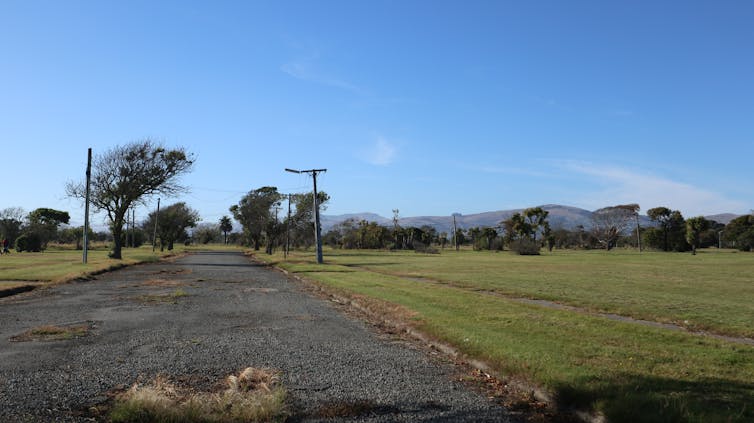
The proposed legislation presents an opportunity to transform land use patterns in Aotearoa New Zealand. But as we have seen in Canterbury, Matatā and elsewhere, the way managed retreats are handled matters greatly to the people affected.
At present, local managed retreat interventions are risky – professionally, politically, financially, culturally and socially. The necessary planning frameworks and resources are seldom available to support effective and equitable outcomes.
Some communities exposed to hazards and climate perils also face the risk of maladaptation — paradoxically, their vulnerability is increased by inaction or misguided efforts.
Who manages retreats and how?
Our research distinguishes three approaches to making policy for a spectrum of possible retreats. Broadly speaking, these are:
- government control: using legislation, standards, policies and regulations, central or local government may restrict certain developments or compulsorily acquire property to enforce retreat
- co-operative managed retreats: collaborative decision-making and negotiation between government agencies and affected parties, using instruments such as opt-in buyouts, relocation subsidies or land swaps
- unmanaged retreats: individual choices influenced by factors such as loss of insurance cover and other market changes, decisions not to invest more in a property or to sell it (potentially at a loss), or to remain in place and face the risk.
Using our framework, we consider the risks and implications of each form of retreat. We draw on decades of lessons from international practice in disaster resettlement and planned relocation.
Getting the law right
Fundamentally, we argue that facilitating co-operative managed retreats is preferable. This means people and communities are embedded in the retreat strategy design, decision-making and delivery.
Necessarily then, flexible, collaborative and fit-for-purpose policies and practices are important. To manage expectations around at-risk, transient and marginal land, regulation of new development or land use is also required (such as placing time limits on consents).
Managed, co-operative and unmanaged retreats each have a role to play. But their associated practices and policy interventions must be strategically planned. To promote public safety, justice and equity, co-operation must be a central focus when managing the relocation of people.
Aotearoa New Zealand has an opportunity to foster long-term resilience in the face of climate change and many other land use challenges. Determining who manages retreats, how, and who pays is important work.
The shape of the new legislation — the processes and outcomes it encourages — will influence the lives and well-being of current and future generations.
Christina Hanna, Lecturer, Environmental Planning, University of Waikato; Bruce Glavovic, Professor, Massey University, and Iain White, Professor of Environmental Planning, University of Waikato
This article is republished from The Conversation under a Creative Commons license. Read the original article.







