

• Advertise
  • About us
  • Terms and Conditions
  • Contact us
Sunday, December 7, 2025
Australian Times News
  • News
    • Weather
    • Sport
    • Technology
    • Business & Finance
      • Currency Zone
    • Lotto Results
      • The Lott
  • Lifestyle
    • Entertainment
    • Horoscopes
    • Health & Wellness
    • Recipes
  • Travel
  • Expat Life
  • Move to Australia
No Result
View All Result
  • News
    • Weather
    • Sport
    • Technology
    • Business & Finance
      • Currency Zone
    • Lotto Results
      • The Lott
  • Lifestyle
    • Entertainment
    • Horoscopes
    • Health & Wellness
    • Recipes
  • Travel
  • Expat Life
  • Move to Australia
No Result
View All Result
Australian Times News
No Result
View All Result
Home News

Water markets are not perfect, but vital to the future of the Murray-Darling Basin

One of many issues raised in the Australian Competition and Consumer Commission interim report was the design of the trading rules, including limits on how much water can move between regions.

The Conversation by The Conversation
03-03-2021 01:59
in News

Neal Hughes, Australian Bureau of Agricultural and Resource Economics and Sciences (ABARES)

Water markets have come in for some bad press lately, fuelled in part by the severe drought of 2019 and resulting high water prices.

They have also been the subject of an Australian Competition and Consumer Commission inquiry, whose interim report released last year documented a range of problems with the way water markets work in the Murray-Darling Basin. The final report was handed to the treasurer last week.

While water markets are far from perfect, new research from the Australian Bureau of Agricultural and Resource Economics and Sciences (ABARES) has found they are vital in helping the region cope with drought and climate change, producing benefits in the order of A$117 million per year.

To make the most of water markets, we will need to keep improving the rules and systems which support them. But with few “off-the-shelf” solutions, further reform will require both perseverance and innovation.

Water markets generate big benefits

Australia’s biggest and most active water markets are in the southern Murray-Darling Basin, which covers the Murray River and its tributaries in Victoria, NSW and South Australia.
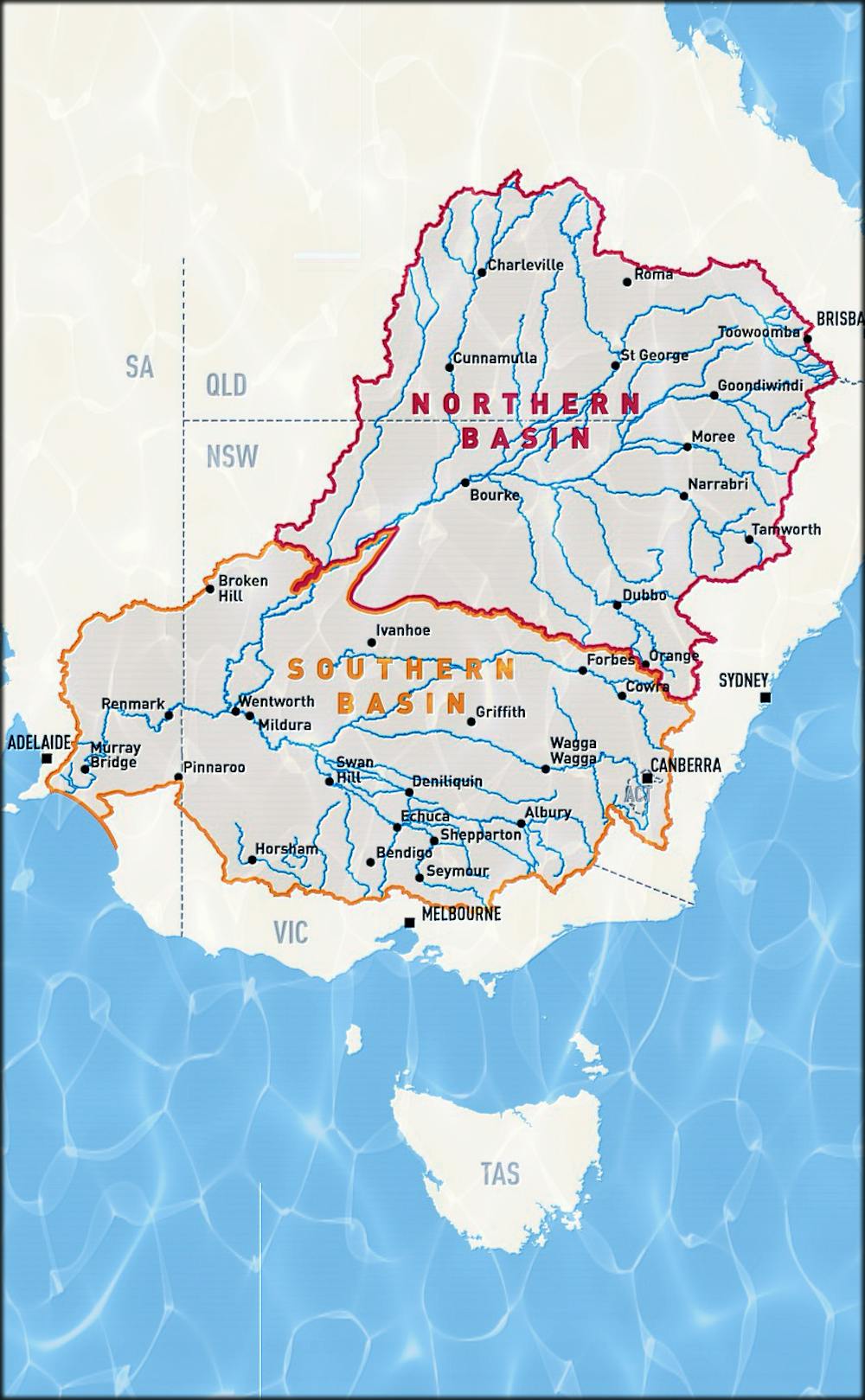
Murray Darling Basin. MDBA

Each year water right holders are assigned “allocations”: shares of water in the rivers’ major dams. These allocations can be traded across the river system, helping to get water where it is most needed.


AlsoRead...

Ryan: Building real freedom through e-commerce

Ryan: Building real freedom through e-commerce

27 November 2025
Design Australia Group: Redefining Drafting as the engine of housing growth

Design Australia Group: Redefining Drafting as the engine of housing growth

26 November 2025

Water markets also allow for “carryover”: where rights holders store rather than use their allocations, holding them in dams for use in future droughts.

Our research estimates that water trading and carryover generate benefits to water users in the southern Murray-Darling, of A$117 million on average per year (around 12% of the value of water rights) with even larger gains in dry years. Carryover plays a key role, accounting for around half of these benefits.

Together water trading and carryover act to smooth variability in water prices, while also slightly lowering average prices across the basin.

There’s room for improvement

One of many issues raised in the Australian Competition and Consumer Commission interim report was the design of the trading rules, including limits on how much water can move between regions.

These rules are intended to reflect the physical limits of the river system, however getting them right is extremely difficult.

The rules we have are relatively blunt, such that there is potential at different times for either too much water to be traded or too little.
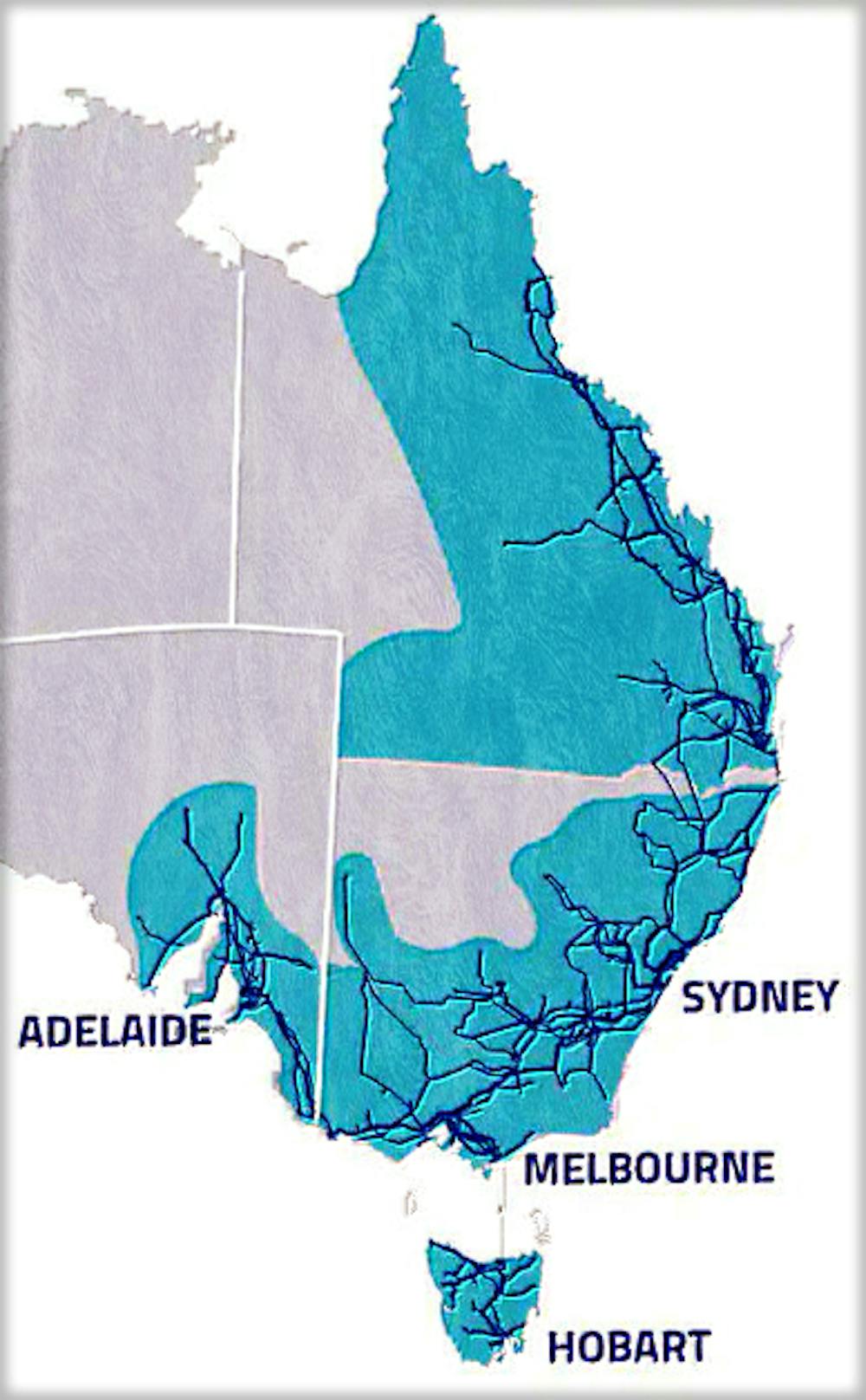
National Electricity Market. AGL

One possible refinement is a shift from a rules-based system to one with more central coordination.

For example, in electricity, these problems are addressed via so-called “smart markets”: centralised computer systems which balance demand and supply across the grid in real-time.

Such an approach is unlikely to be feasible for water in the foreseeable future.

But a similar outcome could be achieved by establishing a central agency to determine inter-regional trade volumes, taking into account user demands, river constraints, seasonal conditions and environmental objectives.

While novel in Australia, the approach has parallels in the government-operated “drought water banks” that have emerged in some parts of the United States.

Some of the good ideas are our own

Another possible refinement involves water sharing rules, which specify how water allocations are determined and how they are carried over between years.

At present these rules are often complex and lacking in transparency. This can lead to a perceived disconnect between water allocations and physical water supply, creating uncertainty for users and undermining confidence in the market.

Although markets in the northern Murray-Darling Basin are generally less advanced than the south, some sophisticated water sharing systems have evolved in the north to deal with the region’s unique hydrology (highly variable river flows and small dams).
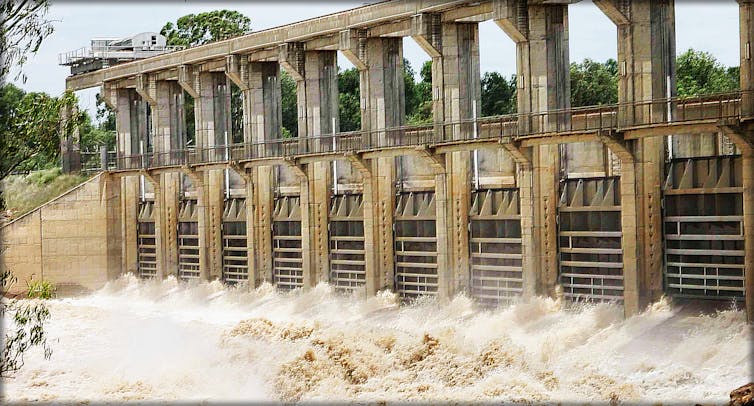
Beardmore Dam at St George in Southern Queensland, where water markets operate under a capacity sharing system. ABARES

There is potential for the southern basin to make use of these northern innovations (known as “capacity sharing” or “continuous accounting”) to improve transparency and carryover decisions.

Don’t throw the market out with the river water

Governance failures in the water market have led to understandable frustration.

But it is important to remember how vital trading and carryover are in smoothing variations in water prices and making sure water gets where it is needed, especially during droughts.

The ACCC’s final report (due soon) will provide an opportunity to take stock and develop a roadmap for the future.


Water markets will be discussed at Today’s ABARES Outlook 2021 conference in an online panel session at 3-4pm AEDT.

Neal Hughes, Senior Economist, Australian Bureau of Agricultural and Resource Economics and Sciences (ABARES)

This article is republished from The Conversation under a Creative Commons license. Read the original article.


Tags: SB001
DMCA.com Protection Status

SUBSCRIBE to our NEWSLETTER

[mc4wp_form id=”2384248″]

Don't Miss

The evolution of Aesthetic Surgery through the lens of Dr Kourosh Tavakoli

by Pauline Torongo
4 December 2025
The evolution of Aesthetic Surgery through the lens of Dr. Kourosh Tavakoli
Health & Wellness

As global interest in Australian cosmetic surgery continues to grow, the combination of regulation, research and emerging digital tools is...

Read moreDetails

Ryan: Building real freedom through e-commerce

by Pauline Torongo
27 November 2025
Ryan: Building real freedom through e-commerce
Business & Finance

Ryan’s greatest achievement isn’t any single business or revenue milestone — it’s the ecosystem he’s built through the Change community.

Read moreDetails

Design Australia Group: Redefining Drafting as the engine of housing growth

by Pauline Torongo
26 November 2025
Design Australia Group: Redefining Drafting as the engine of housing growth
Business & Finance

Australia is under pressure to build homes faster, but design bottlenecks slow progress. Design Australia Group is fixing this by...

Read moreDetails

Louis Guy Detata builds Global Trading Empires through autonomous systems and disciplined leadership

by Pauline Torongo
25 November 2025
Louis Guy Detata builds Global Trading Empires through autonomous systems and disciplined leadership
Business & Finance

The path from investment banking to leading a global trading platform has taught Louis Detata that sustainable success requires more...

Read moreDetails

Burning Eucalyptus Wood: Tips, Advantages, Disadvantages & Alternatives

by Fazila Olla-Logday
20 November 2025
Image Supplied
Enviroment

Learn about burning eucalyptus wood for stoves and fireplaces. Discover benefits, drawbacks, harvesting tips, and better alternative firewood options for...

Read moreDetails

Everything Parents Need to Know About Baby Soft Play and Why It’s a Game Changer

by Fazila Olla-Logday
11 November 2025
Everything Parents Need to Know About Baby Soft Play
Health & Wellness

Baby soft play is a fun, safe, and educational way for little ones to explore and grow. Discover the benefits...

Read moreDetails

WOMAD Sets Up a New Camp in Wiltshire – Australian festival fans take note!

by Kris Griffiths
11 November 2025
Kumbia Boruka brought their reggae and dancehall flavour to the Taste the World Stage at WOMAD 2024 - Credit - Mike Massaro
Entertainment

With its 2026 edition moving to Neston Park in England, WOMAD offers Aussie music lovers a chance to reconnect with global...

Read moreDetails
Load More

Copyright © Blue Sky Publications Ltd. All Rights Reserved.
australiantimes.co.uk is a division of Blue Sky Publications Ltd. Reproduction without permission prohibited. DMCA.com Protection Status

  • About us
  • Write for Us
  • Advertise
  • Contact us
  • T&Cs, Privacy and GDPR
No Result
View All Result
  • News
    • Weather
    • Sport
    • Technology
    • Business & Finance
      • Currency Zone
    • Lotto Results
      • The Lott
  • Lifestyle
    • Entertainment
    • Horoscopes
    • Health & Wellness
    • Recipes
  • Travel
  • Expat Life
  • Move to Australia

Copyright © Blue Sky Publications Ltd. All Rights Reserved.
australiantimes.co.uk is a division of Blue Sky Publications Ltd. Reproduction without permission prohibited. DMCA.com Protection Status

No Result
View All Result
  • News
    • Weather
    • Sport
    • Technology
    • Business & Finance
      • Currency Zone
    • Lotto Results
      • The Lott
  • Lifestyle
    • Entertainment
    • Horoscopes
    • Health & Wellness
    • Recipes
  • Travel
  • Expat Life
  • Move to Australia

Copyright © Blue Sky Publications Ltd. All Rights Reserved.
australiantimes.co.uk is a division of Blue Sky Publications Ltd. Reproduction without permission prohibited. DMCA.com Protection Status





